




Trust Administration Attorney SoCal: Why Expert Guidance Matters
Administering a trust involves managing assets, filing taxes, and navigating complex legal requirements. Many trustees in Southern California face costly mistakes when handling these responsibilities alone.
At Law Offices of Roshni T. Desai, we help trustees avoid pitfalls that lead to liability and delays. A trust administration attorney in SoCal can guide you through each step and protect your interests.
What Trust Administration Actually Requires
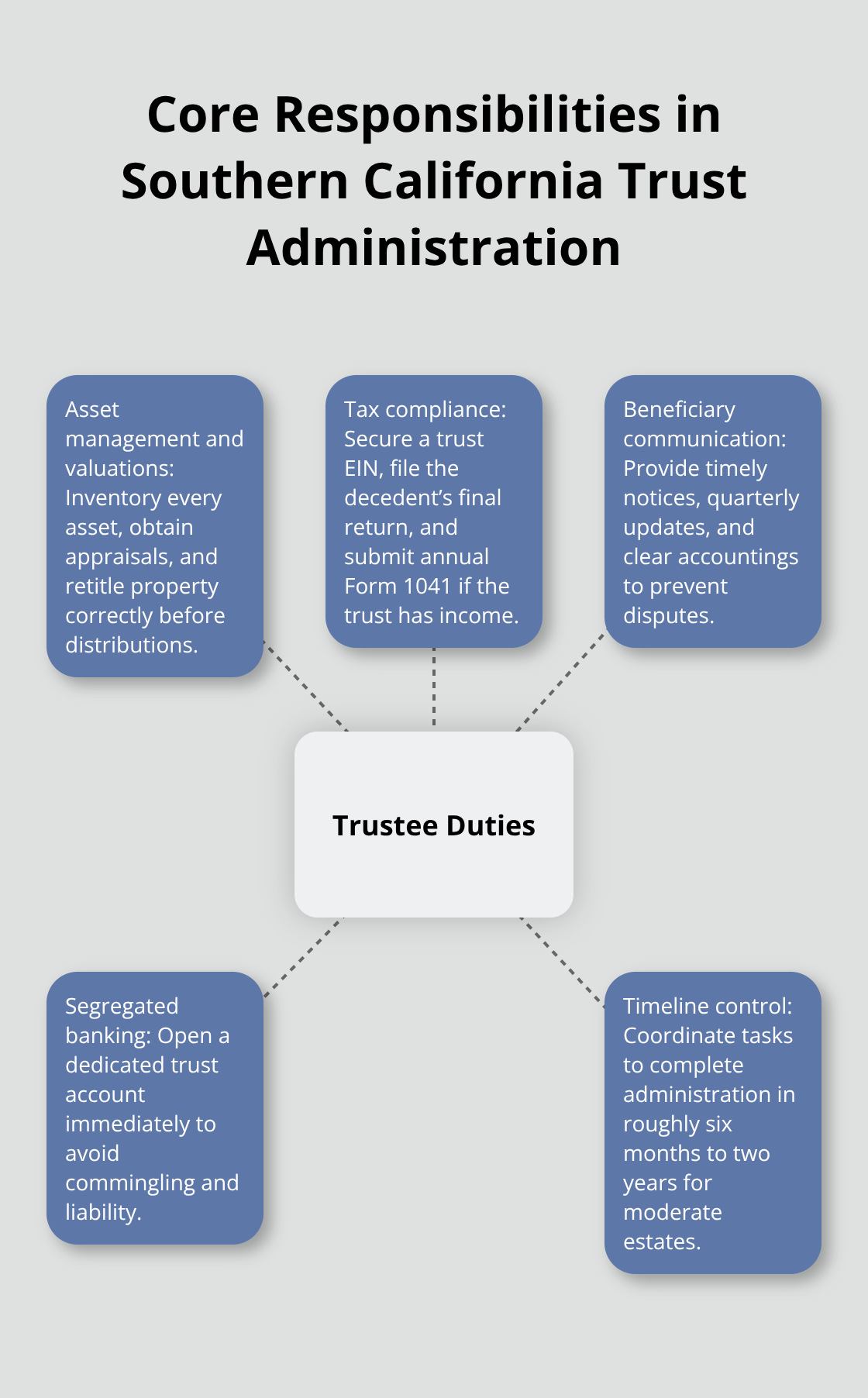
Trust administration in Southern California demands three interconnected responsibilities that most trustees underestimate. Managing trust assets involves more than just holding money-you must inventory every property, obtain appraisals where needed, retitle assets into the trust name, and eventually distribute them according to the trust document. Real estate appraisals run $300–$600 each, business valuations can exceed $10,000, and recording fees add $50–$150 per property. For a moderately complex estate, this process typically takes six months to two years. You also need to open a separate trust bank account immediately to keep trust funds distinct from your personal money-commingling assets creates serious liability exposure and invites beneficiary disputes.
Tax Filing and Financial Obligations
Tax obligations are where trustees stumble hardest without guidance. You must file the deceased’s final income tax return, obtain a trust tax identification number from the IRS, and file annual trust income tax returns on Form 1041 if the trust generates income. The final return typically costs $300–$800, trust filings run $500–$1,500, and estate tax returns for larger estates can reach $5,000–$15,000 or more. California imposes strict notice requirements within 60 days of the settlor’s death, and missed deadlines trigger penalties you personally may owe. You must pay debts and taxes in the correct order-secured debts and administrative costs first, then other claims. Without proper documentation, the IRS and California Franchise Tax Board audit trust administrations at higher rates, particularly when trustees handle filings alone.
Beneficiary Communication and Dispute Prevention
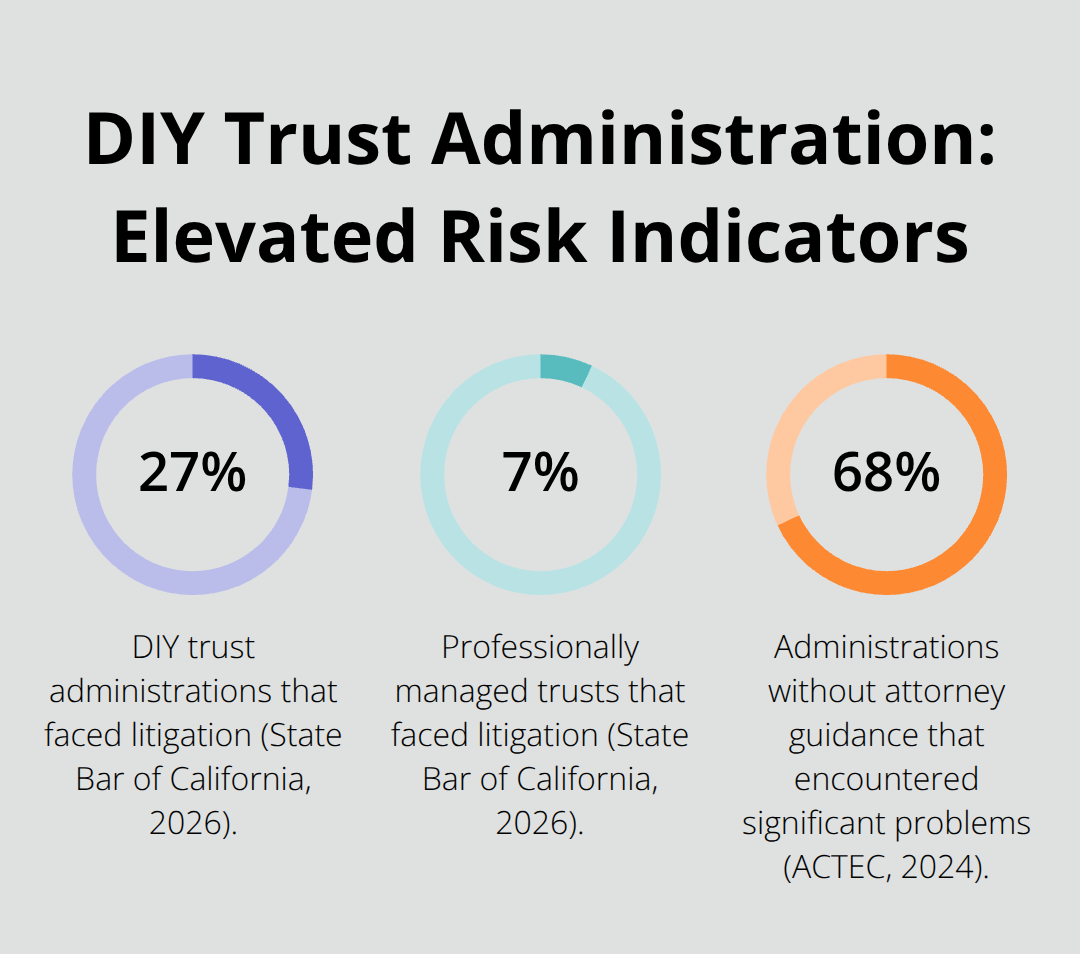
Silent beneficiaries become litigious beneficiaries fast. California law requires you to notify all beneficiaries of the trust within 60 days, and providing quarterly updates, asset valuations, and documented debt payments prevents most disputes. ACTEC’s 2024 survey found that 68% of trust administrations without attorney guidance encountered significant problems, primarily from poor communication. Litigation costs from beneficiary disputes range from $20,000 to $50,000 or more, dramatically reducing what beneficiaries ultimately receive. Transparency is not optional-it is the single most effective shield against conflict. You should prepare a full accounting of all assets, debts paid, and expenses before any distributions, and obtain written releases from beneficiaries to protect yourself from future claims.
Why Mistakes Compound Quickly
Each misstep in asset valuation, deadline compliance, or beneficiary notification compounds into larger problems. A missed 60-day notice deadline can trigger beneficiary challenges to the trust itself. An unrecorded deed transfer leaves real estate in limbo and complicates future sales. Incomplete tax filings invite audits that cost thousands to resolve. These errors accumulate because trustees often lack visibility into what they don’t know-California probate law changes, IRS requirements, and community property rules all intersect in ways that catch unprepared trustees off guard. The cost of correcting mistakes after the fact far exceeds the cost of getting it right from the start, which is why many trustees in Southern California turn to professional guidance to navigate these interconnected obligations.
Where Trustees Go Wrong
Trustees operating without professional guidance make three categories of mistakes that systematically drain trust assets and create personal liability.
Asset Handling and Valuation Errors
Many trustees fail to obtain proper appraisals before distributions, which means beneficiaries receive assets worth far less than their actual value or the trust overpays estate taxes on undervalued property. Real estate appraisals cost $300–$600 each, but skipping this step costs thousands more when the IRS later audits valuations or beneficiaries sue over unfair distributions. A second critical error is incomplete asset retitling. Deeds must be recorded properly into the trust’s name, investment accounts must be transferred, and vehicles must be re-registered-missing even one property creates title defects that surface years later when a beneficiary tries to sell. The State Bar of California’s 2026 survey found that 40% of DIY trusts remain partially unfunded or incorrectly titled, making probate avoidance impossible and forcing families back into court at enormous cost. Trustees also mishandle asset inventories by failing to document condition, location, and value upfront, which invites disputes when beneficiaries later question whether assets were properly managed or sold at fair prices.
Deadline and Compliance Failures
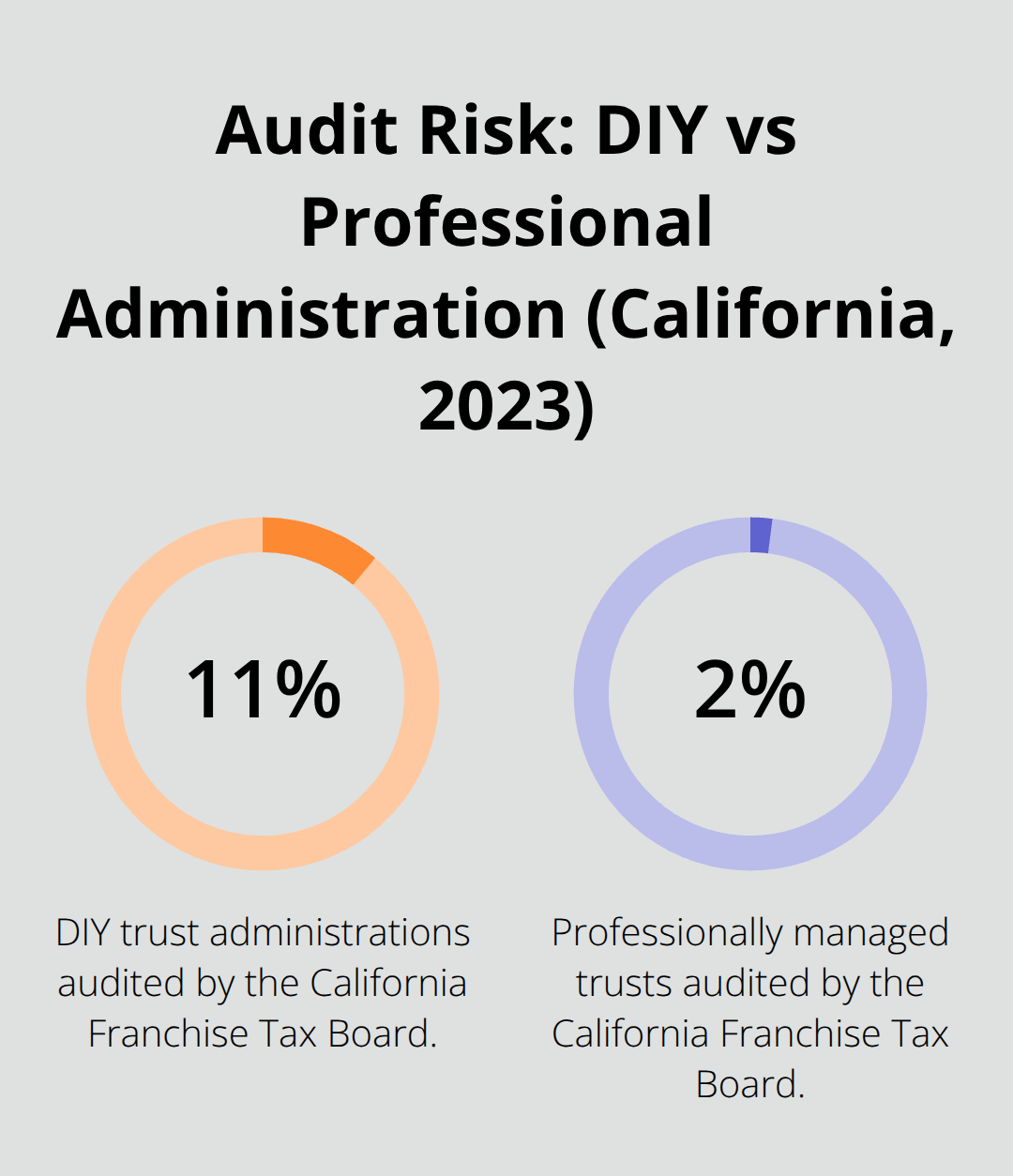
California law requires trustees to notify all beneficiaries within 60 days of the settlor’s death-this is not a suggestion but a hard deadline with real penalties. Missing this deadline allows beneficiaries to challenge the trust itself, potentially invalidating years of planning. Tax filing deadlines are equally unforgiving. The final income tax return, the trust’s Form 1041, and any estate tax returns must be filed on time or the trustee faces IRS penalties that come directly from personal funds, not trust assets. Many trustees also fail to obtain a trust tax identification number from the IRS, which complicates future filings and invites audits. The California Franchise Tax Board audited roughly 11% of DIY trust administrations in 2023 for tax reporting errors, compared to just 2% of professionally managed trusts. Recording fees ($50–$150 per property) pile up when trustees delay deed transfers, and each delay extends the administration timeline beyond the typical six months to two years.
Beneficiary Communication Breakdowns
Trustees who provide no updates, no asset valuations, and no documentation of expenses breed suspicion and litigation. ACTEC’s 2024 survey shows 68% of administrations without attorney guidance encountered significant problems, most stemming from poor transparency. Beneficiaries who receive no quarterly updates and no clear accounting become convinced the trustee is hiding something, and litigation costs from disputes range from $20,000 to $50,000 or more, often exceeding the value of assets in smaller trusts. Trustees also fail to obtain written releases from beneficiaries after distributions, leaving themselves vulnerable to lawsuits for up to four years after the trust closes.
These three mistake categories feed off each other-poor communication triggers disputes, which delay the timeline and increase costs, which then forces trustees to cut corners on appraisals or tax compliance. This downward spiral ultimately reduces what beneficiaries receive and creates the exact liability exposure that professional guidance prevents. Understanding these pitfalls is the first step; the next is recognizing how they translate into real costs and personal risk for the trustee.
How Professional Guidance Shields You From Costly Mistakes
The Real Cost of Handling Administration Alone
The financial case for hiring a trust administration attorney is straightforward: prevention costs far less than correction. When trustees handle administration alone, mistakes compound into liability that comes directly from their personal assets. California law holds trustees to the highest fiduciary standard, meaning beneficiaries can sue you personally for mismanagement, unpaid taxes, missed deadlines, or incomplete distributions. Litigation costs from beneficiary disputes range from $20,000 to $50,000 or more, and that money flows out of the trust or from your pocket. The State Bar of California’s 2026 data shows that 27% of DIY trust administrations faced litigation compared to just 7% of professionally managed trusts-a 20-percentage-point difference that translates directly to your personal exposure.
A trust administration attorney guides you through each required step, documents your compliance, and provides the paper trail that protects you from future claims. The average cost to correct a DIY trust after mistakes occur is around $9,500, whereas professionally drafted and administered trusts cost roughly $1,200 to maintain properly. For a $1 million trust, professional guidance typically runs $10,000 in total administration fees, while the same trust handled without guidance and later corrected can exceed $25,000 when you factor in litigation, tax corrections, and deed re-recordings.
Navigating California’s Specific Requirements
The attorney handles California’s specific requirements that most trustees miss entirely. The 60-day beneficiary notice, the precise deed language for real estate transfers, the Form 1041 tax filings, and the formal accounting standards that the state demands all require careful attention to detail. Missing even one of these details invites penalties, audits, and beneficiary challenges that derail the entire administration timeline. The attorney also coordinates your trust administration with any durable powers of attorney, advance healthcare directives, and beneficiary designations you hold, ensuring that all documents work together rather than create conflicts.
Compressing the Timeline and Reducing Delays
Administrations without attorney support average 18 to 24 months due to delays in asset valuations, missed tax deadlines, and beneficiary disputes that force rework. A trust administration attorney compresses this timeline by coordinating appraisals, tax filings, and distributions in sequence and by handling the complex interactions between California probate law and federal tax rules that most trustees don’t anticipate. The attorney also navigates community property rules, which California imposes on married couples and which DIY trustees mishandle in roughly 22% of disputed cases in Los Angeles County.
Maximizing Tax Efficiency and Avoiding Audits
Tax efficiency matters enormously for larger estates. For a trust generating capital gains when assets are sold, an attorney applies step-up basis rules correctly, times distributions to beneficiaries to minimize income tax, and ensures that the trust’s Form 1041 reporting avoids IRS audit flags. The California Franchise Tax Board audited roughly 11% of DIY trust administrations in 2023 for tax errors, and those audits cost thousands to resolve and delay final distributions by months. Professionally managed trusts faced audit rates of just 2%. An attorney also streamlines estate-related property sales and transactions to reduce costs, delays, and communication hassles-particularly valuable when the trust holds real estate that requires sale or transfer during administration.
Final Thoughts
Trust administration in Southern California demands precision, timing, and knowledge of interconnected California and federal rules that catch unprepared trustees off guard. The three core challenges-managing assets and valuations, meeting strict deadlines, and maintaining transparent communication with beneficiaries-compound quickly when you handle them alone. A single missed deadline, an incomplete deed transfer, or poor beneficiary communication can trigger litigation that costs $20,000 to $50,000 or more and drains trust assets before distributions reach beneficiaries.
The financial case for professional guidance is clear. DIY trust administrations face litigation at rates 20 percentage points higher than professionally managed trusts, and the cost to correct mistakes after the fact averages $9,500 compared to roughly $1,200 for proper ongoing administration. For a $1 million trust, professional guidance typically costs around $10,000 total, while the same trust handled without guidance and later corrected can exceed $25,000 when you factor in litigation, tax corrections, and deed re-recordings. A trust administration attorney in SoCal can compress your timeline from 18 to 24 months down to six months or less by coordinating appraisals, tax filings, and distributions in sequence while navigating California’s specific requirements that most trustees miss entirely.
We at Law Offices of Roshni T. Desai help trustees avoid these pitfalls through personalized guidance tailored to your trust’s size and complexity. We offer free consultations with flexible home or office visits to fit your schedule, and we provide upfront cost guidance so you know exactly what to expect before committing to administration support. Contact us today to discuss your trust administration needs and learn how professional guidance protects your interests while ensuring beneficiaries receive what the trust document promises.