




Probate Attorney Fees: What to Expect and How to Compare
Probate attorney fees often catch families off guard. The costs vary widely depending on how your estate is structured and which state you’re in.
We at Law Offices of Roshni T. Desai help families understand these expenses upfront so there are no surprises later. This guide breaks down the different fee structures, what drives costs up or down, and how to find an attorney whose pricing works for your situation.
Probate Attorney Fee Structures
Hourly Rates and What They Cover
Probate attorneys who charge hourly rates typically ask for $250 to $500 per hour, depending on their experience and location. This model protects the attorney if unexpected complications arise, but it leaves you vulnerable to bill shock if the probate takes longer than anticipated. You’ll receive monthly invoices that track time spent on your case across multiple billing cycles, and the final cost remains unknown until the work concludes.
Hourly billing works well when you anticipate complications or disputes. The attorney has no incentive to rush through your case, and you only pay for actual work performed. However, many clients dislike this structure because the total expense can spiral beyond initial estimates. You also bear the responsibility of reviewing detailed time entries and questioning charges that seem excessive.
Flat Fees for Specific Services
Flat fees lock in a single price upfront for a defined set of services. A straightforward probate with a valid will might cost $4,500 as a flat fee, while the same case under hourly billing could easily exceed that if complications emerge. Flat fees work best when the probate is straightforward-no disputes among heirs, minimal debt, and a clear will.
The problem arises when unexpected issues surface, such as a creditor claim or a property valuation dispute. Some attorneys will renegotiate the flat fee if the scope expands significantly, but others won’t, leaving you stuck paying extra or switching lawyers mid-process. Before accepting a flat fee, ask the attorney exactly which tasks are included and what triggers additional charges. This clarity prevents disputes later and protects both you and the firm.
Percentage-Based Fees
Percentage-based fees tie the cost directly to your estate’s value. In Florida, the statutory schedule starts at 3% of the probate inventory and decreases as the estate grows larger. For a $500,000 estate in Florida, you’d pay roughly $3,000 plus 3% of the amount over $100,000, which comes to about $15,000 total. In Texas, percentage fees range from 1% to 7% depending on the estate’s complexity and size.
This model aligns the attorney’s interests with yours-the firm wants to settle the estate quickly and efficiently to move forward. However, percentage fees can feel expensive on large estates, and they don’t account for whether your probate is simple or tangled.
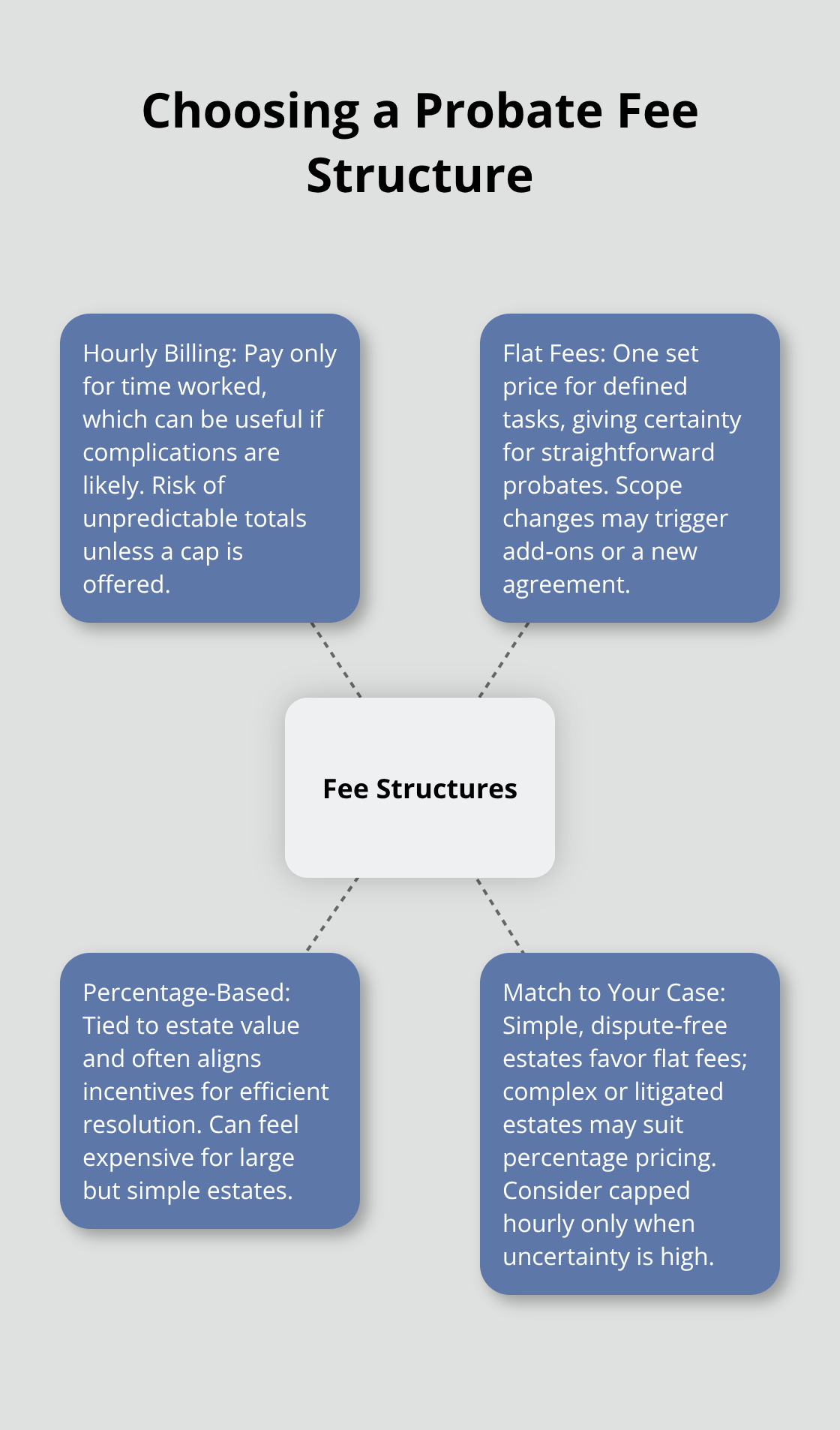
Complex estates with multiple properties or potential litigation benefit from percentage-based fees because they scale with the actual work involved. Simple estates with no disputes favor flat fees because you know the cost and the work is predictable. Hourly billing should be your last choice unless the attorney offers a capped hourly rate, which limits your total exposure.
Understanding these three models helps you compare attorneys fairly and predict what you’ll actually pay. The next section examines the specific factors that push costs up or down, regardless of which fee structure you choose.
Factors That Affect Probate Attorney Costs
Estate Complexity Drives the Biggest Price Swings
Estate complexity stands as the single biggest cost driver, and it’s not what most people think. A messy estate with multiple properties, business interests, or significant debt costs far more than a simple one with a single bank account and a house. Multiple properties, a family business, or investment accounts spread across institutions force the attorney to spend time on valuations, tax considerations, and asset transfers that don’t apply to straightforward cases. Litigation and disputes among heirs multiply costs dramatically-contested wills, executor misconduct claims, or creditor battles push total fees into the tens of thousands. A simple probate with no disputes typically costs $3,000 to $7,000 total, while contested estates regularly exceed $10,000 and climb much higher if the case goes to trial.
State and Local Rules Shape Your Bottom Line
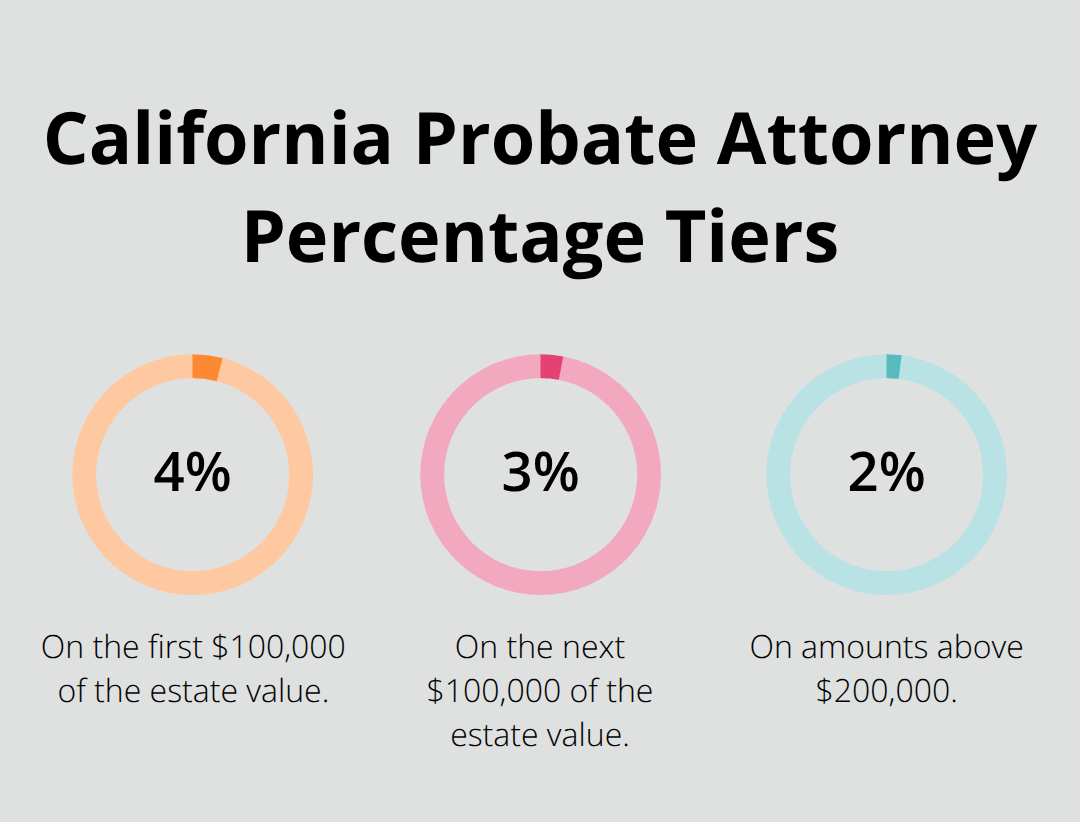
Your state and local jurisdiction matter enormously because fees are governed by statute in some states but negotiable in others. Florida follows a statutory schedule where estates up to $40,000 pay a fixed $1,500, estates from $40,000 to $70,000 pay $2,250, and estates from $100,000 to $1,000,000 pay $3,000 plus 3% of the value over $100,000. Texas probate costs range from 1% to 7% of the estate value depending on complexity, with a straightforward independent administration typically running $1,000 to $1,500 in attorney fees plus roughly $480 in court costs. California charges around $435 per petition filing fee, but attorney fees follow percentage tiers of 4% on the first $100,000, 3% on the next $100,000, and 2% on amounts above that.
Hard costs vary by county and add up quickly. Court filing fees, bond premiums (typically 0.5% to 1% of the bond amount), creditor publication notices, and citation fees all come from the estate. In Pinellas County, Florida, typical hard costs run around $1,000, while Tarrant County in Texas charges about $400 for a Small Estate Affidavit filing alone.
Duration and Administration Type Affect Your Timeline and Cost
Duration affects your bill under hourly arrangements but not flat fees. An uncomplicated probate finishes in 3 to 12 months, but dependent administration (requiring court approval at each step) takes longer and costs more than independent administration, which needs minimal court involvement. If your state requires formal probate administration only when the estate exceeds $75,000, you might qualify for a faster Small Estate Affidavit process costing $1,000 to $3,000 total instead of full probate.
What You Need to Know Before Moving Forward
The takeaway is straightforward: obtain a written fee estimate that specifies exactly which tasks are included, ask whether costs are calculated on probate assets only (excluding homestead property and non-probate assets like life insurance), and confirm what triggers extra charges. These details matter because they separate reasonable fees from hidden surprises. With this foundation in place, you’re ready to learn how to compare attorneys side by side and identify which fee structure actually works for your situation.
How to Compare Probate Attorneys and Control Costs
Request Written Fee Estimates from Multiple Attorneys
Contact three to five attorneys and request written fee estimates that you can compare side by side. When you reach out, ask for a detailed breakdown that specifies the hourly rate or flat fee, which tasks are included in that price, and what services trigger additional charges. An attorney quoting $4,500 flat for probate might include filing the will and obtaining Letters Testamentary but exclude creditor claim review or real estate appraisals, while another attorney at the same price might handle all of those tasks. Request this information before scheduling a consultation because many attorneys provide estimates without charging for the initial conversation.
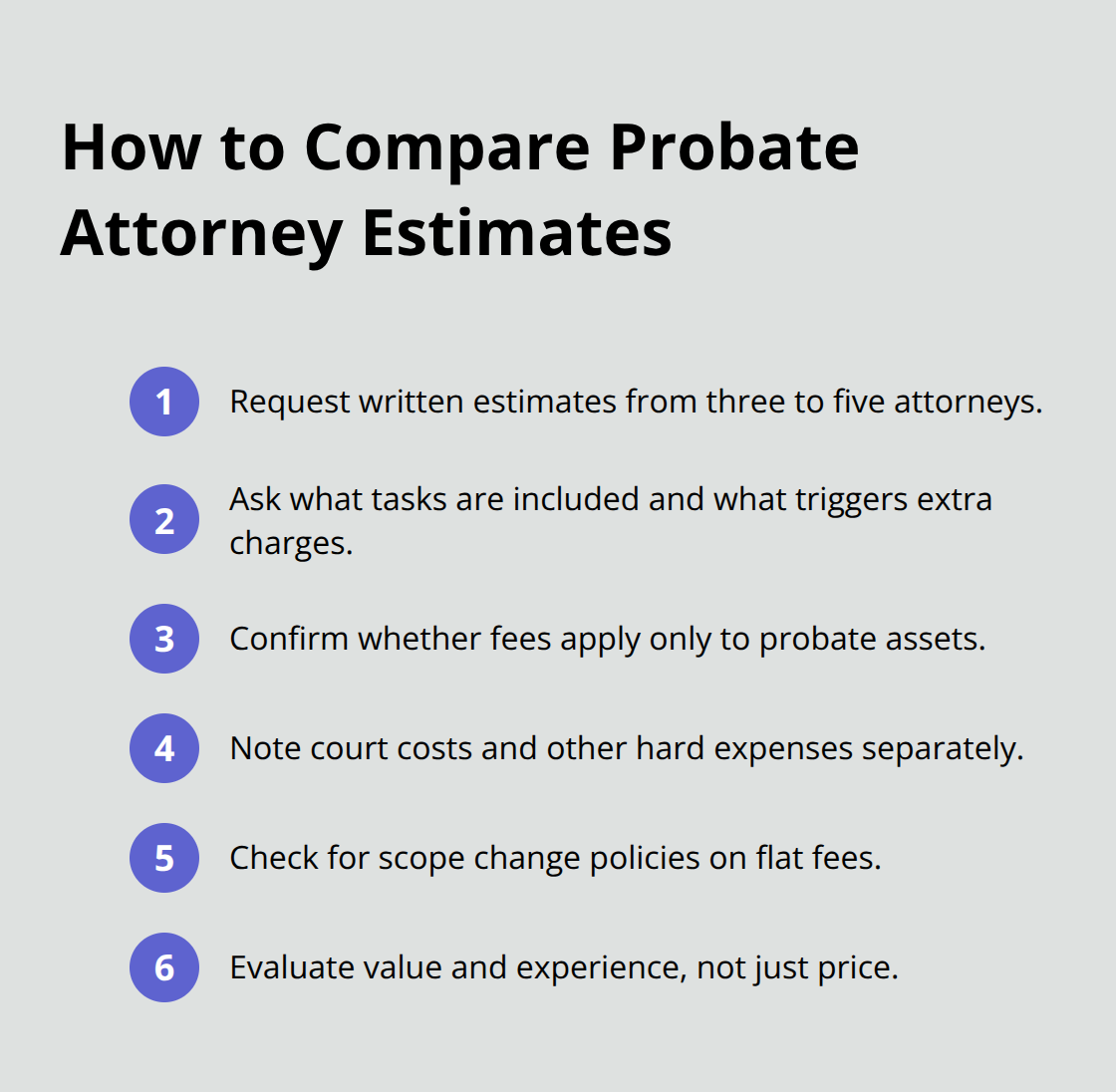
Once you have multiple estimates in front of you, look beyond the total number and examine what each firm actually delivers for that cost. The lowest price often signals that the attorney is either inexperienced, planning to upsell you later with surprise charges, or genuinely efficient at handling straightforward cases. The highest price doesn’t guarantee better service-it may simply reflect a premium location or reputation rather than superior probate work.
Clarify What Services Are Included in the Fee
What services are included matters far more than the fee structure itself because this is where hidden costs hide. Ask whether the attorney’s fee covers only probate assets or if it includes non-probate property like life insurance proceeds and joint accounts, which shouldn’t count toward the fee basis anyway. Confirm whether homestead property is excluded from the calculation, as Florida law and other states specifically remove it from the probate fee calculation.
Find out if the estimate covers the entire probate process from filing through final accounting, or if it stops at obtaining court approval with additional charges for closing tasks. Ask directly what happens if a creditor files a claim, if you need a property appraisal, or if a family dispute emerges-will the fee stay the same, or will the attorney bill hourly for those complications?
Use Free Consultations to Interview Attorneys
Many firms offer free consultations where you can discuss these details upfront and compare not just fees but also communication style and willingness to explain costs clearly. Transparent attorneys who answer your cost questions thoroughly without becoming defensive are more likely to avoid disputes later. These conversations reveal whether an attorney prioritizes your understanding or simply wants to close the engagement.
Understand Payment Terms and Options
Ask about payment options because some firms require a retainer upfront while others invoice as work progresses, and some allow you to pay the estate for attorney fees rather than paying out of pocket. These payment terms can affect your cash flow significantly, especially if you’re administering the estate and waiting for assets to be distributed. A firm offering flexible payment arrangements (such as billing the estate directly) removes financial pressure during an already stressful time.
Final Thoughts
Probate attorney fees don’t have to feel like a mystery. The three fee structures-hourly, flat, and percentage-based-each serve different situations, and understanding which one fits your estate prevents costly surprises. Hourly rates protect attorneys when complications arise but leave you exposed to unpredictable bills, while flat fees offer certainty for straightforward probates but may not account for unexpected disputes. Percentage-based fees scale with your estate’s complexity and value, aligning the attorney’s incentive with efficient administration.
The factors that drive costs-estate complexity, state regulations, and administration type-operate independently of fee structure. A contested will in California costs far more than a simple probate in Texas, regardless of whether you pay hourly or flat. Creditor claims, property disputes, and family disagreements multiply expenses dramatically, sometimes pushing costs from thousands into tens of thousands.
Contact three to five attorneys and request written estimates that specify exactly what services are included and what triggers additional charges. Transparent pricing separates firms that respect your budget from those that hide costs until the bill arrives, and during free consultations, listen carefully to how attorneys explain probate attorney fees-those who answer your questions directly and acknowledge potential complications are more trustworthy than those who rush through cost discussions. We at Law Offices of Roshni T. Desai discuss costs upfront and explain exactly what you’ll pay, so visit Law Offices of Roshni T. Desai to schedule your consultation and get answers to your specific questions about probate costs.