




Securing Your Family’s Future With Trustee Succession Planning California
A trustee who can’t serve creates immediate problems for your family and your assets. Without a clear succession plan, California courts may appoint someone you wouldn’t have chosen, delays can tie up your estate, and family conflicts often emerge.
At Law Offices of Roshni T. Desai, we’ve seen how trustee succession planning in California prevents these crises. This guide walks you through building a plan that protects what matters most.
What Happens When Your Trustee Cannot Serve
The Immediate Crisis of Missing Succession
When a trustee dies, becomes incapacitated, or resigns without a named successor, your family faces a legal vacuum. California Probate Code Section 15621 addresses trustee vacancies, but the process of filling one creates delays that stretch months or longer. During this gap, bills accumulate, assets remain frozen, and beneficiaries receive no distributions. The trustee’s duties don’t pause-they compound. Someone must still manage bank accounts, pay property taxes, coordinate with creditors, and maintain insurance on real estate. Without a clear succession plan, your family either scrambles to petition the court for a trustee appointment or watches the trust sit dormant while legal paperwork moves through the system.
Why Courts Make Poor Choices for Your Family
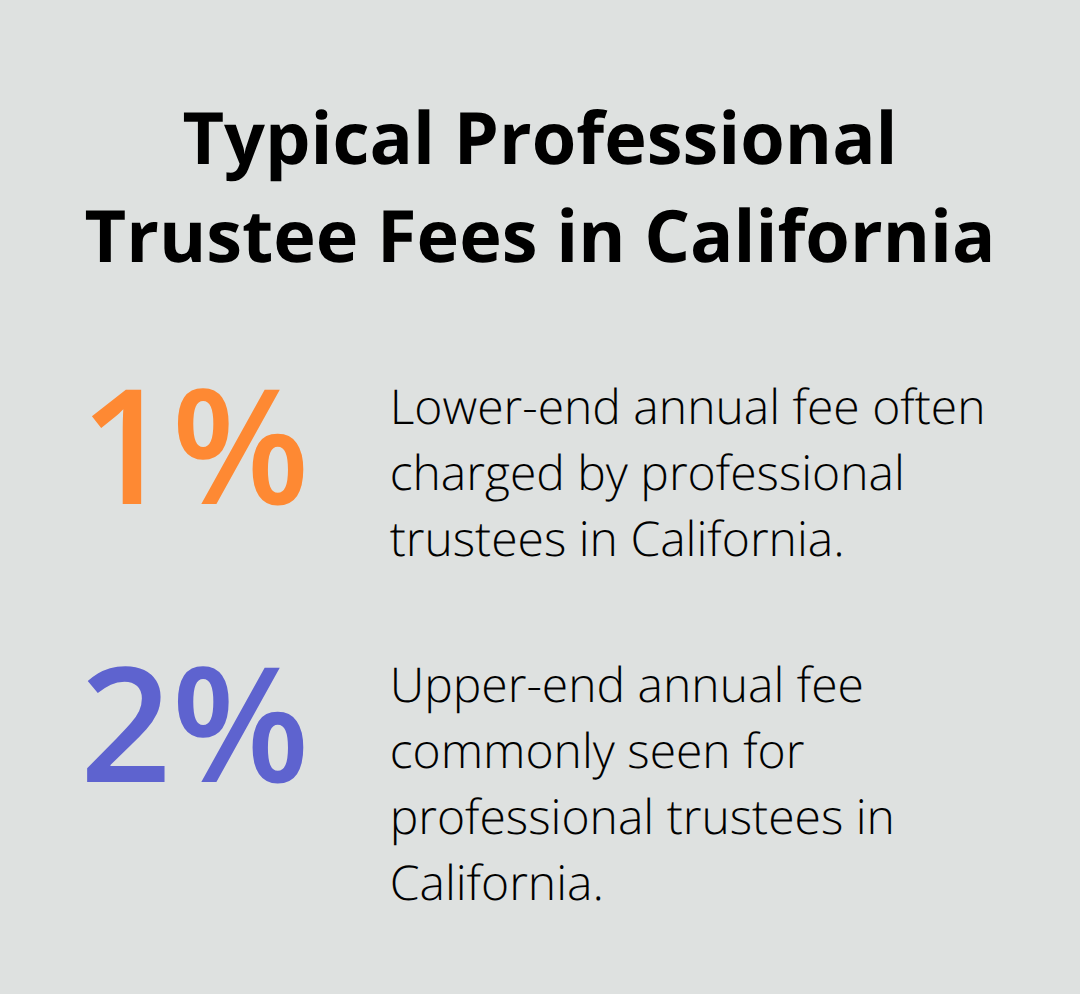
If your trust names no successor and all named successors cannot serve, California courts step in under Probate Code Section 17200. The judge doesn’t know your family dynamics, your asset preferences, or who you’d actually trust. Courts typically appoint the public guardian only when no other qualified person is available, which means your family may face appointment of a professional trustee you never would have selected-at costs you didn’t budget for. A professional trustee can charge 1% to 2% of trust assets annually according to standard California practice, eating into what should go to your beneficiaries. Court-appointed trustees also require court supervision and periodic accountings that add legal fees and administrative complexity.
More concerning, disputes over the court’s choice often trigger trust contests among family members, turning grief into litigation.
How Succession Planning Prevents Court Intervention
A simple succession plan written into your trust document prevents court intervention entirely. You control who manages your assets and when the transition happens-not a judge making a decision based on limited information about your wishes and your family’s needs. The right succession plan names a primary successor trustee, identifies backup options, and documents clear expectations for how the transition should occur. This approach keeps your family out of court, reduces administrative costs, and ensures your assets transfer to the people you actually trust. When you establish this plan now, you eliminate the uncertainty that creates family conflict and financial waste later. The next section walks you through the key elements that make a succession plan work.
Building Your Succession Plan: Who Steps In and How
A strong succession plan starts with naming the right people in the right order. Most families make the mistake of naming only one successor trustee, then panic when that person declines the role or becomes unavailable. You should name at least two backup successors in your trust document. California Probate Code Section 15621 allows for successor appointments, but only if you clearly identify them beforehand. Your primary successor should live in California or be willing to relocate temporarily during administration, since the trustee must handle bank accounts, real estate transfers, and court filings in person. A family member often works well for this role if they possess financial competence and time availability. Your first backup should be a different family member or trusted friend who shares your values. Your second backup should be a professional trustee-a bank trust department, licensed California private fiduciary, or attorney-as a final safety net. This three-tier approach ensures your trust never sits without leadership.
Name Successors in the Right Order
The order matters more than most people realize. If your primary successor cannot serve when the time comes, your successor trustee automatically moves to the first backup without court involvement. California law recognizes this chain of command, so you avoid delays and legal fees. Write the names and contact information clearly in your trust document. Include phone numbers and addresses so your family can locate successors quickly after your death or incapacity. Many families also discuss the role with each potential successor before finalizing the trust, which prevents surprises and allows people to decline if they cannot commit.
Document Expectations to Prevent Misunderstandings
Naming successors is only half the job. You must also document what each trustee is responsible for and when they should act. Many trusts fail because they name successors but never explain whether the trustee should pay beneficiaries immediately after your death or wait until debts and taxes are settled. California Probate Code Sections 16060-16069 require trustees to follow the trust terms exactly, but vague terms create disputes. Write specific instructions: Does your trustee sell the family home, or hold it for a beneficiary to live in? Should they pay for a beneficiary’s college tuition, or only cover basic living expenses? When should they distribute assets-immediately, in stages, or only when a beneficiary reaches a certain age? Professional trustees typically charge 1% to 2% of trust assets annually according to California practice, so clarity about their scope of work helps manage costs. Include instructions about hiring professionals like accountants and attorneys. Family trustees often underestimate the workload and feel overwhelmed by tax deadlines, creditor claims, and beneficiary requests. A detailed instruction memo attached to your trust removes guesswork and protects both the trustee and your beneficiaries.
Address Family Conflict Before It Emerges
Family conflict during trust administration destroys relationships and drains assets into legal fees. The most common source of conflict arises when one beneficiary serves as trustee and other beneficiaries suspect favoritism. California law requires trustees to act impartially under Probate Code Section 16060, but impartiality is hard to prove when emotions run high. If you appoint a family member as trustee, consider naming a professional co-trustee to provide oversight and neutrality. Many California families use this hybrid approach: a family member handles day-to-day decisions and communications because they know the beneficiaries personally, while a professional trustee approves major distributions and investments. This structure costs less than a full professional trustee but prevents the appearance of bias. Another conflict prevention strategy is to address anticipated disputes upfront in your trust document. If you leave unequal amounts to different children, explain why in a separate letter to your trustee. This does not change the legal outcome, but it prevents beneficiaries from assuming the trustee made a mistake or acted unfairly. Finally, select a trustee who communicates well.
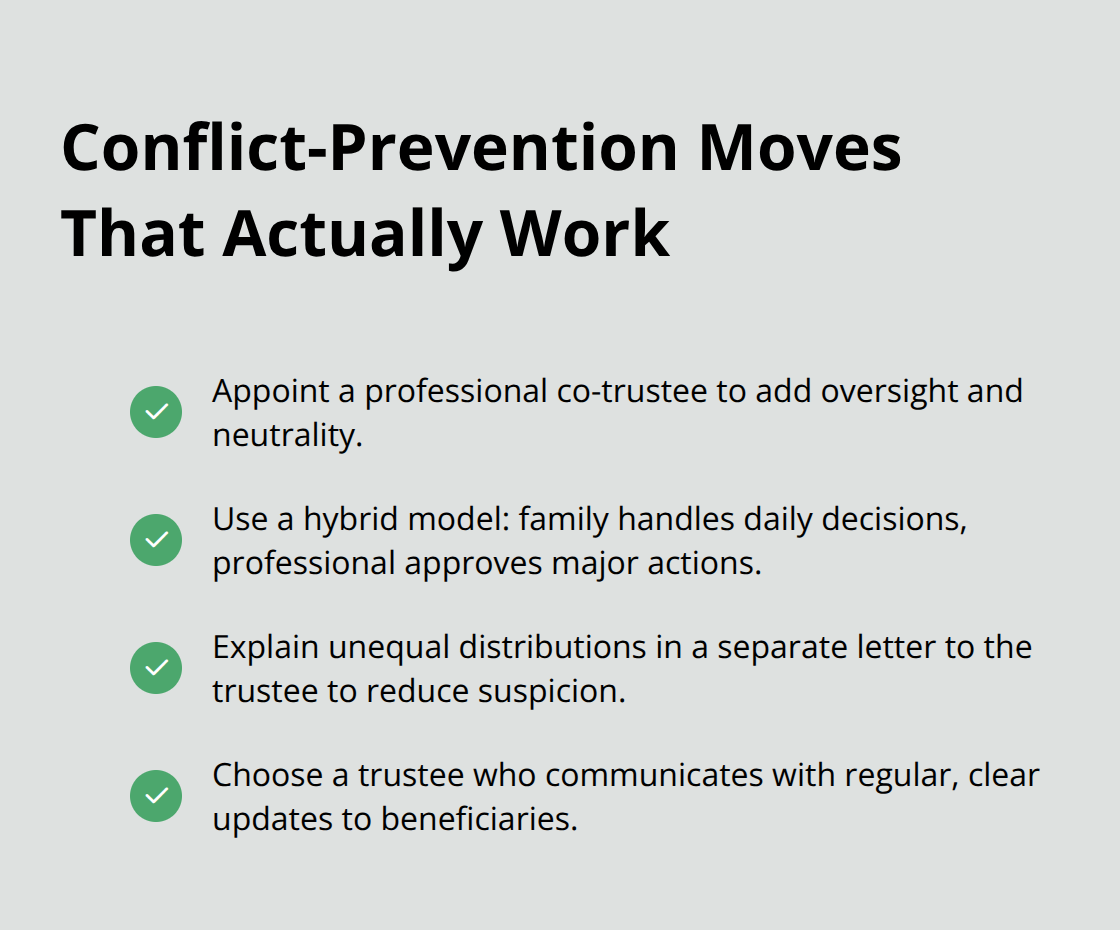
Silence breeds suspicion. A trustee who sends quarterly updates on asset values, expenses paid, and upcoming distributions prevents most beneficiary complaints before they escalate.
Choose Between Family and Professional Trustees
Your choice between a family member and a professional trustee depends on your specific situation. A family member knows your beneficiaries, understands your values, and typically charges no fee or a modest one. However, family trustees may lack the financial knowledge to manage complex assets, and their involvement can trigger resentment among other family members. A professional trustee brings experience, impartiality, and accountability (since they carry liability insurance and answer to state regulations). The trade-off is cost: professional trustees charge 1% to 2% of trust assets annually. Many families split the difference by naming a family member as primary trustee with a professional backup, or by pairing them as co-trustees. The right choice depends on your family dynamics, the size of your estate, and the complexity of your assets. California law permits all these arrangements as long as you document them clearly in your trust.
The next section covers the specific California laws that govern how your successor trustee must operate, including notification deadlines and accounting requirements that protect your beneficiaries.
How California Law Shapes Your Trustee’s Role
California Probate Code Section 15621 governs what happens when your named trustee cannot serve, but the statute alone doesn’t tell you what actually occurs in practice. The code allows successor trustees to step in without court involvement if you’ve named them clearly in your trust document-this is the critical advantage of succession planning. However, the moment your successor trustee takes over, they become bound by California Probate Code Sections 16060 through 16069, which impose strict fiduciary duties that few family members understand before accepting the role.
Understanding Fiduciary Duties
These duties require your trustee to follow your trust document exactly, act in your beneficiaries’ best interests, avoid conflicts of interest, keep trust assets separate from personal funds, invest prudently, and provide accountings as required by law. Your trustee cannot use trust money for personal expenses, cannot favor one beneficiary over another without clear trust instructions, and cannot delegate major decisions without authority from your trust document. Violation of these duties can trigger a lawsuit from beneficiaries, resulting in removal of the trustee and personal liability for damages. This is why clear documentation of your trustee’s powers and limitations matters so much-vague instructions force your trustee to make educated guesses about what you wanted, and those guesses often lead to disputes.
The 60-Day Notification Deadline
California Probate Code Section 16061.7 requires your successor trustee to notify all beneficiaries and heirs within 60 days of your death, providing their names, the location where trust administration will occur, and information about how to obtain a copy of your trust document. This deadline is strict, and failure to meet it can trigger beneficiary complaints and court intervention. Beyond this initial notice, your trustee must provide accountings at least annually if requested by a beneficiary, showing all income received, expenses paid, and assets held.
Why Family Trustees Struggle With Compliance
Family trustees often miss deadlines or provide incomplete accountings, which creates suspicion among beneficiaries and invites legal challenges. If your trustee withholds information or fails to provide requested accountings, California Probate Code Section 17200 allows beneficiaries to petition the court to compel reporting or even remove the trustee. Additional notices must reach public offices: the County Assessor within 150 days if the trust owns real estate, and the Director of Health Services and Victim Compensation Board within 90 days in certain situations. These technical requirements exist to prevent fraud and ensure transparency, but they create administrative burden that catches many family trustees off guard.
Professional Trustees and Regulatory Compliance
Professional trustees like banks, trust companies, and licensed California private fiduciaries handle these notifications automatically because state regulations require it, and they maintain systems to track deadlines. If you choose a family member as trustee, strongly consider hiring an attorney or accountant to manage the notification and accounting requirements, which typically costs far less than the legal fees triggered by missed deadlines or beneficiary disputes. We at Law Offices of Roshni T. Desai can help you navigate these requirements and ensure your successor trustee understands their obligations before they accept the role.
Final Thoughts
Trustee succession planning in California protects your family from court delays, unexpected costs, and family conflict that emerges when no clear plan exists. Without succession planning, your assets sit frozen while courts appoint strangers to manage what matters most. With a solid plan in place, your family avoids probate court entirely and your chosen trustees step in immediately to handle your affairs according to your wishes.
The path forward requires four concrete actions. Name a primary successor trustee and at least two backups in your trust document with clear contact information and their consent to serve.
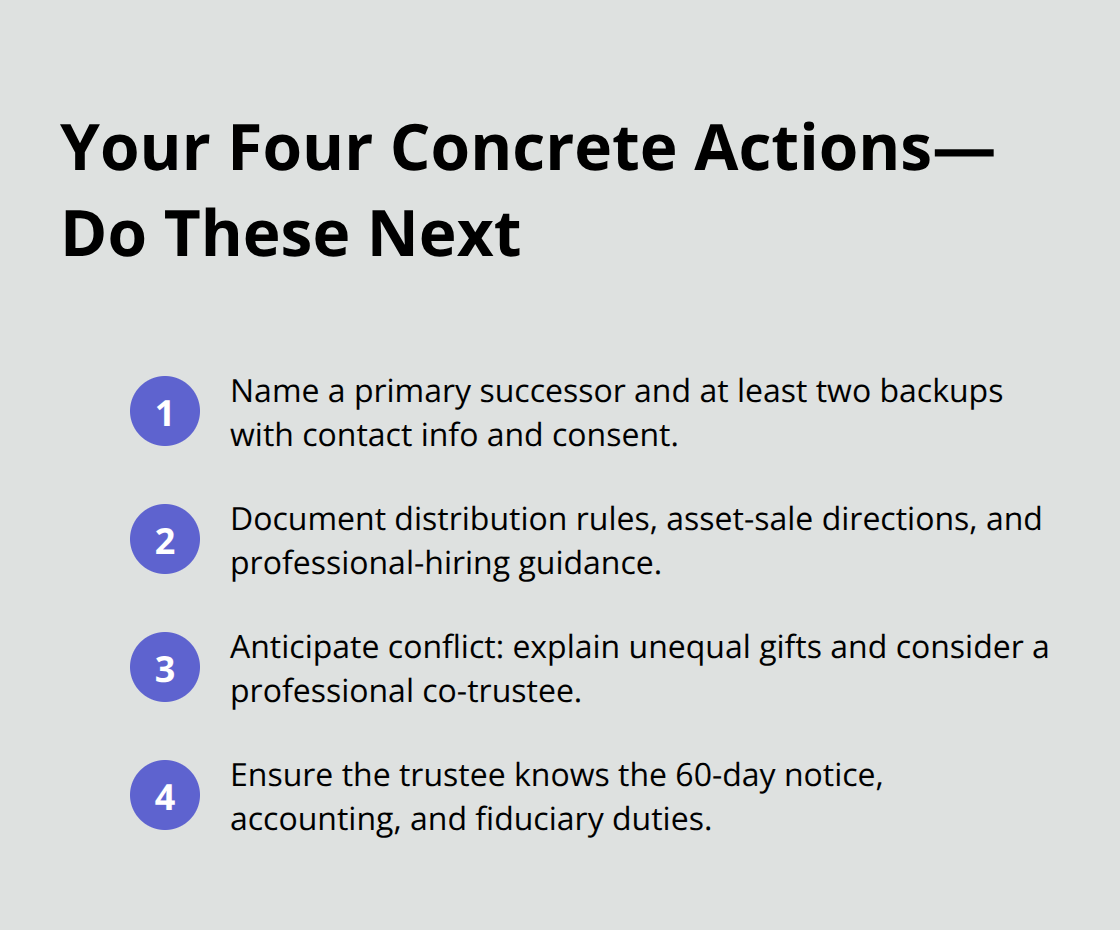
Document specific instructions about how your trustee should handle distributions, asset sales, and professional hiring so they understand their role without guessing. Address potential family conflicts by explaining unequal distributions, considering a professional co-trustee for oversight, or selecting a trustee known for clear communication. Ensure your trustee understands California’s notification deadlines (60 days to notify beneficiaries), accounting requirements, and fiduciary duties under Probate Code Sections 16060-16069.
We at Law Offices of Roshni T. Desai help families across Southern California build trustee succession plans that work. Contact us to schedule your free consultation and build the succession plan your family deserves.