



Trust Deed Review SoCal: Ensure Your Deed Matches Your Plan
A trust deed review in SoCal can reveal whether your property is actually protected the way you think it is. Many people set up trusts but never verify that their deeds match their intentions, leaving their families vulnerable to probate delays and unnecessary costs.
We at Law Offices of Roshni T. Desai help clients catch these misalignments before they become problems. This guide walks you through what to look for and how to fix it.
What Trust Deeds Actually Do in California
A trust deed in California is fundamentally different from what most property owners think it is. It’s not a document that transfers your property into a trust-that’s what a grant deed does. A trust deed is a financing tool that secures a loan by creating a lien against your real property.
The Three-Party Structure
In California, when you borrow money to buy a home, the lender doesn’t take a mortgage like they do in other states. Instead, three parties are involved: you as the trustor (borrower), the lender as the beneficiary, and a neutral third party like a title company as the trustee. The trustee holds legal title and has the power to foreclose without court involvement if you stop paying-a process called nonjudicial foreclosure that’s typically faster than court-supervised alternatives.
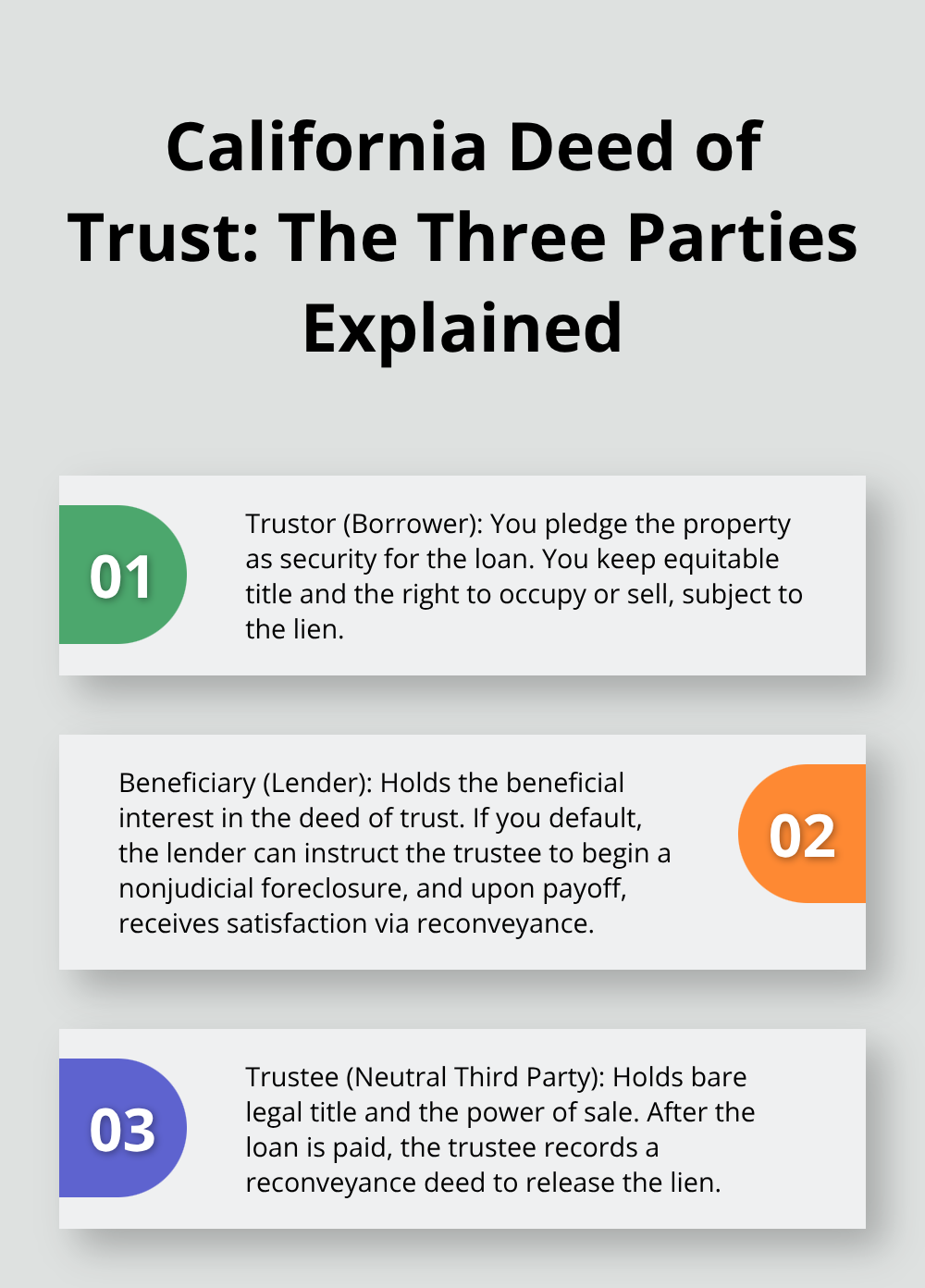
When you pay off the loan, the trustee records a reconveyance deed that releases the lien from your property.
Why Unreleased Deeds Create Title Problems
This structure matters for your estate plan because an unreleased trust deed clouds your title, meaning your heirs can’t sell, refinance, or transfer the property cleanly. Many people don’t realize that a trust deed remains attached to the property even after decades, and if the original lender dissolved or lost records, removing it becomes complicated. California’s Marketable Record Title Act allows you to eliminate certain old liens automatically-if the deed of trust specifies a final maturity date, the lien expires 10 years after that date; if no maturity date exists, the lien expires 60 years from recordation. However, disputes or missing documentation can still require a quiet title action to clear the property.
How Misaligned Deeds Derail Estate Plans
The biggest mistake property owners make is treating trust deeds as if they’re separate from their overall estate strategy. You might create a revocable living trust to avoid probate, but if your property title doesn’t match your trust documents, the property still goes through probate when you die-defeating the entire purpose. California allows you to use a transfer-on-death deed or to retitle property directly into your trust during your lifetime, but many people skip this step. If your deed is titled in your individual name and your will or trust names different beneficiaries, or if your trust doesn’t actually own the property, your family faces delays, public court proceedings, and higher costs.
A misaligned deed also creates problems if you become incapacitated. If property isn’t in your trust and you can’t sign documents, your family may need a conservatorship to manage or sell it, which is expensive and public. The federal estate tax exemption sits at 13.99 million dollars per individual in 2025, which means most SoCal families won’t face federal taxes, but California has no state estate tax-so the real issue is avoiding probate delays, not taxes.
These misalignments don’t fix themselves. Your next step is to identify which red flags apply to your situation so you can address them before they affect your family.
Red Flags Your Deed Doesn’t Match Your Plan
Property Titled in Your Individual Name While Your Trust Sits Empty
Property titled in your individual name while your trust sits empty is the most common problem we see. You created the trust to avoid probate, but if the deed still shows only your name, the property bypasses the trust entirely and goes through probate when you die. Check your county recorder’s records right now-search your property address and see whose name appears on the recorded deed. If it says John Smith instead of the John Smith Living Trust, you have a title mismatch.
This happens because people set up trusts but never follow through with the retitling step, which requires recording a grant deed that transfers the property from your individual name into the trust. Many assume the trust automatically owns everything they own, but that’s not how it works in California. The trust only controls assets you’ve explicitly titled in its name.
Beneficiary Designations That Conflict with Your Deed Ownership
Another red flag appears when your beneficiary designations conflict with your deed ownership. If your will names your children as equal beneficiaries but your property deed is titled solely in your spouse’s name, your spouse controls that asset entirely-your children inherit nothing unless your spouse decides to leave it to them. Similarly, if you’ve named a specific person as beneficiary on a bank account or retirement plan, but your will directs all assets to different people, the conflicting designations create confusion and potential litigation among your family.
Your deed, your will, your trust, your beneficiary designations on retirement accounts, and your transfer-on-death registrations must all point in the same direction. If they don’t, your estate plan fails. Check every account you own-bank accounts, investment accounts, insurance policies, retirement accounts-and verify who you’ve named as beneficiary. Then cross-reference those names against your will and trust.
Outdated Deeds That No Longer Reflect Your Current Situation
Outdated deeds create additional problems, particularly when your life circumstances have changed significantly. A deed recorded 15 years ago might still show a former spouse’s name, or it might be titled in only one spouse’s name when you now want community property ownership. Life events like marriage, divorce, remarriage, the birth of children, or changes in your financial situation should trigger a deed review.
If you’ve moved to California from another state, your out-of-state property might not be titled correctly for California probate avoidance. If you’ve become a business owner or your income has grown substantially, your title structure might not align with asset protection strategies anymore. These changes don’t automatically update your deeds-you must initiate the changes yourself by recording new documents with the county recorder.
How These Misalignments Affect Your Family
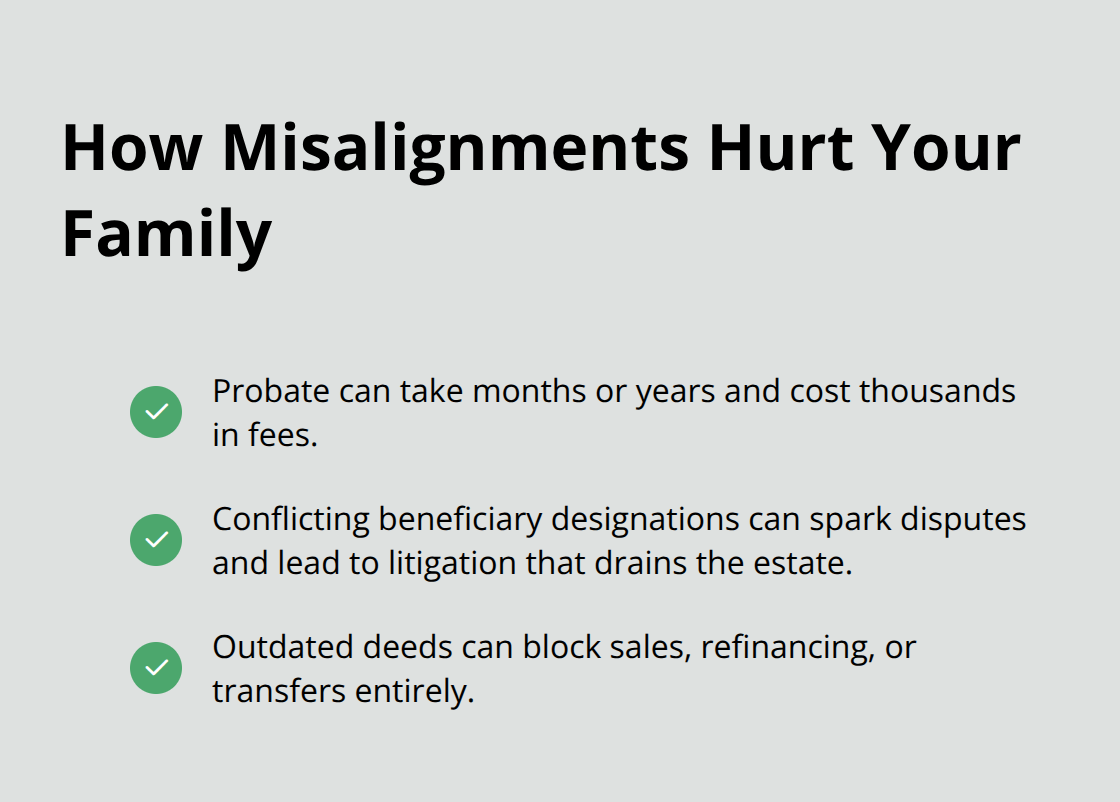
Each of these red flags creates real consequences for your family. A property that remains titled in your individual name forces your heirs through probate court, which takes months or years and costs thousands in fees. Conflicting beneficiary designations spark disputes among family members and sometimes lead to litigation that drains the estate. Outdated deeds with former spouses’ names or incorrect ownership structures can block sales, refinancing, or transfers entirely.
The good news is that identifying these problems now gives you time to fix them. The next chapter walks you through how to assess your current deed situation and what steps you need to take to align your property with your overall estate strategy.
How to Fix Title Mismatches Before They Cause Problems
Start with Your Current Deed
Obtain a certified copy of your current deed from your county recorder’s office. You can order this online for most California counties, and it typically costs between $5 and $15 per copy. Once you have it in hand, compare the names on the deed against the names in your trust documents. If they don’t match exactly, you have a title mismatch that needs correction.
Assess Your Full Estate Picture
A deed review requires looking beyond the property document itself. You must examine your will, your trust, your beneficiary designations on retirement accounts and insurance policies, and any other documents that control how your assets pass. This cross-check reveals conflicts that many people miss.
For example, if your will names your children as beneficiaries but your property is titled in your spouse’s name alone, the property won’t follow your will-it will pass to your spouse automatically, regardless of what your will says. Your deed, your will, your trust, your beneficiary designations on retirement accounts, and your transfer-on-death registrations must all point in the same direction. If they don’t, your estate plan fails.
Execute the Retitling Process
The retitling process itself is straightforward but requires precision. You’ll need to prepare a grant deed that transfers the property from your current title into your trust’s name. California Civil Code sections 2920 through 2955 govern how this transfer works, and the document must be notarized before recording with your county recorder.
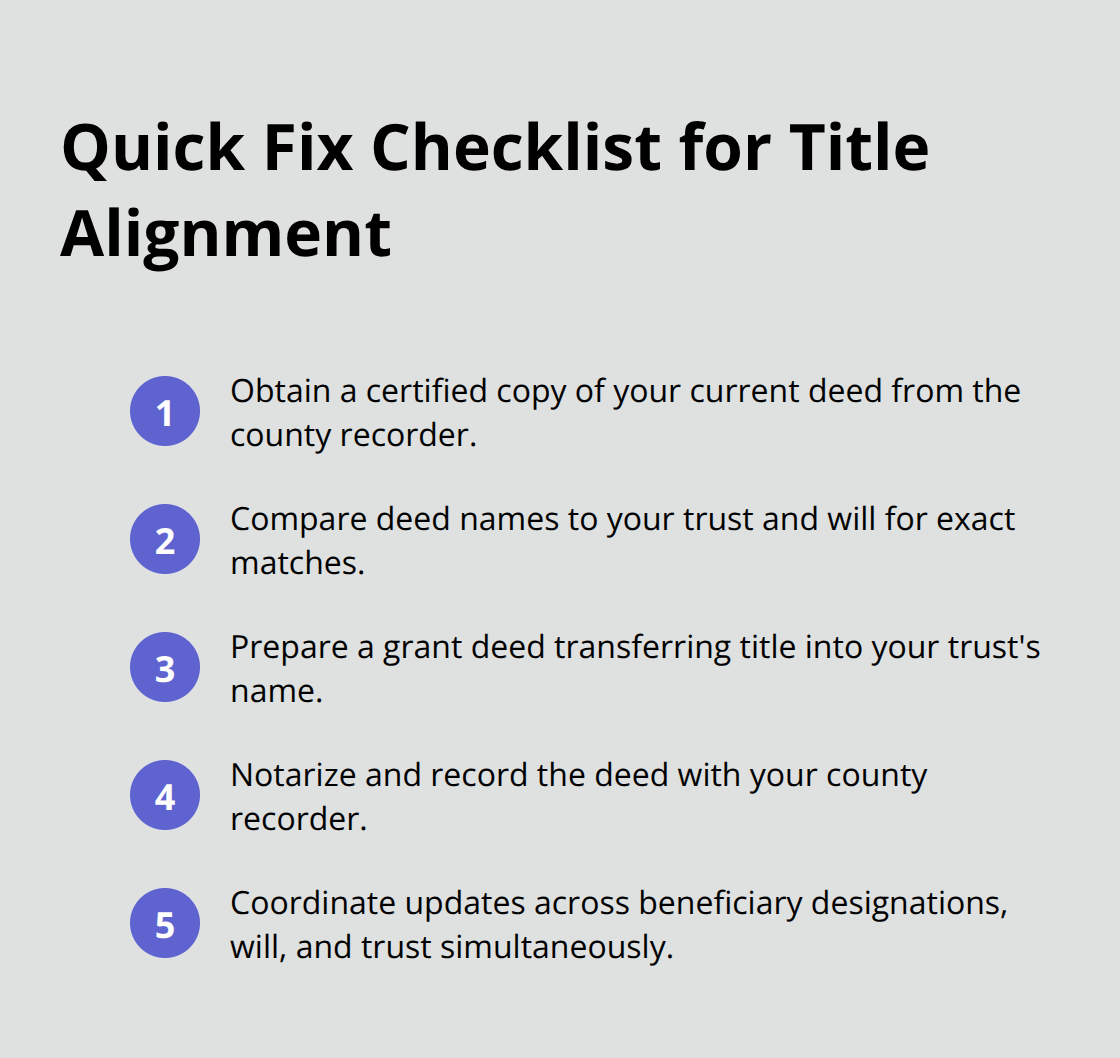
The recording fee typically ranges from $30 to $50 depending on your county, though some counties charge based on document length.
After recording, your trust officially owns the property, and the property will pass directly to your beneficiaries without probate when you die. Fixing a title mismatch requires either retitling the property into joint ownership, into your trust, or into a transfer-on-death deed, depending on your circumstances and your spouse’s wishes.
Coordinate All Changes Simultaneously
If you’re updating your deed along with other estate planning documents-such as updating your power of attorney, creating or modifying your healthcare directive, or adjusting beneficiary designations-handle all these changes together rather than piecemeal. This prevents gaps where one document says one thing and another document says something different.
If you’re retitling property into your trust but your will still directs assets to different beneficiaries than your trust names, your family faces confusion and potential litigation. The goal is alignment across every document, every account, and every title. Law Offices of Roshni T. Desai can coordinate these changes, ensuring your entire estate plan points in the same direction.
Final Thoughts
A trust deed review in SoCal isn’t something you complete once and forget about. Your property titles, beneficiary designations, and estate documents require periodic verification to stay aligned with your actual wishes and your current circumstances. Life changes-marriages, divorces, children, moves, business ventures-and your deed structure must adapt accordingly, or your family faces probate delays, conflicting documents, and unnecessary costs that you could have prevented with a few hours of attention now.
The steps are straightforward: obtain your current deed, compare it against your trust and will, identify any mismatches, and execute the necessary retitling or updates. If your property sits titled in your individual name while your trust remains empty, fix it. If your beneficiary designations conflict with your deed ownership, align them. If your deed no longer reflects your current situation, update it. These tasks demand precision and coordination across multiple documents, but they aren’t complicated.
We at Law Offices of Roshni T. Desai handle this coordination for you, providing personalized estate planning and probate services across Southern California. Contact Law Offices of Roshni T. Desai today to schedule your trust deed review and verify that your property aligns with your plan.