




Probate Real Estate Sales: Streamlining Property Liquidation in Probate
Selling property through probate involves navigating court requirements, timelines, and multiple stakeholders. The process can feel overwhelming, especially when family emotions and property conditions complicate matters.
At Law Offices of Roshni T. Desai, we help estates move through probate real estate sales efficiently. This guide walks you through the process and shows how to avoid costly delays.
How Probate Real Estate Sales Actually Work
The Legal Authority to Sell
Probate real estate sales follow a structured sequence that varies significantly by state, but the core mechanics remain consistent. The personal representative-either an executor named in the will or an administrator appointed by the court-must first obtain Letters Testamentary or Letters of Administration from the probate court. These documents grant legal authority to sell the property on behalf of the estate. In California, which uses the Independent Administration of Estates Act, an executor with full authority can list and sell property with minimal court involvement by issuing a Notice of Proposed Action at least 15 days before closing; beneficiaries can object within that window, but if no objections surface, the sale closes without a hearing. Texas takes a different approach through independent administration under the Texas Estates Code, allowing executors to sell property with far less court oversight than formal probate requires. Florida streamlines matters further with summary administration for smaller estates, significantly compressing timelines.
Tax Basis and Creditor Deadlines
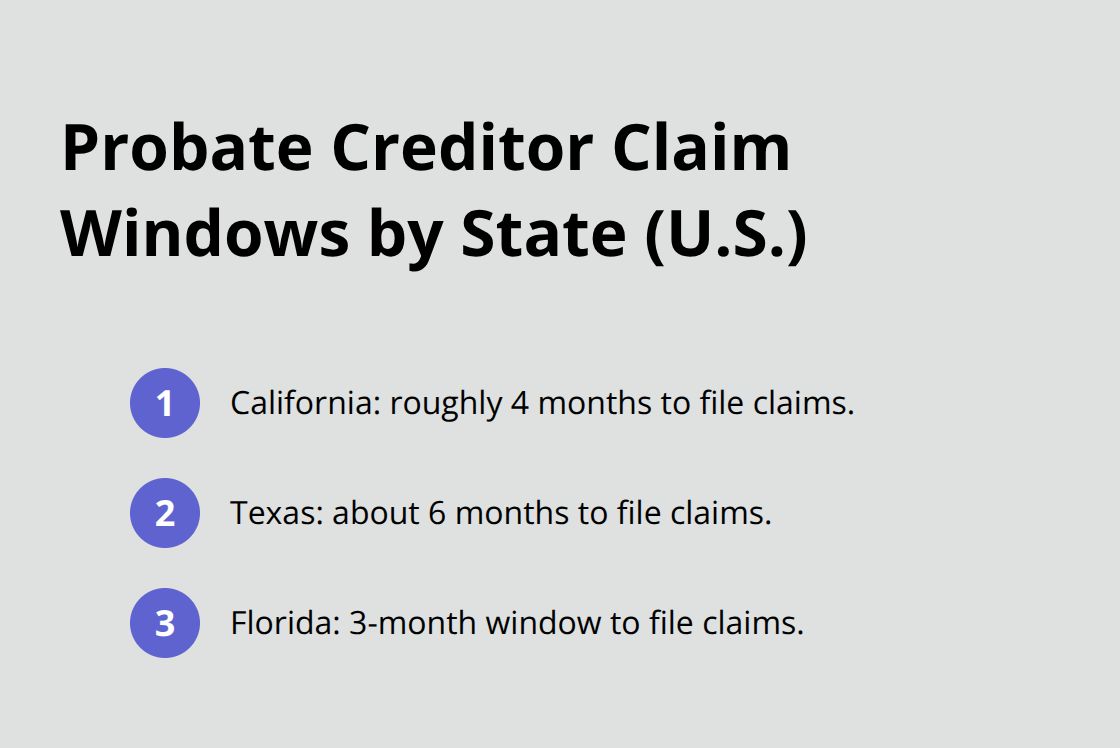
The personal representative must secure a date-of-death appraisal to establish the stepped-up basis for tax purposes-this valuation determines what heirs owe in capital gains taxes when they eventually sell, per IRS Publication 559. Creditor claims create another timing constraint; California allows roughly four months for creditors to file claims, Texas permits about six months, and Florida sets a three-month window. These deadlines matter because the estate cannot fully distribute assets until claims expire or are resolved.
Timeline Realities and Fiduciary Duties
The typical probate sale takes nine to twenty-four months from start to finish, far longer than conventional real estate transactions. This extended timeline stems from court calendars, appraisal delays, and the requirement to notify all interested parties. The personal representative carries fiduciary duties to act in the estate’s and beneficiaries’ best interests, meaning the sale must occur at fair market value on commercially reasonable terms-not a distressed fire sale.
Accelerating Sales Through Strategic Choices
Cash offers can compress closing to twenty-one to sixty days after acceptance, eliminating buyer financing contingencies that slow traditional listings. The choice between a traditional MLS listing, a probate-specialist agent, or an off-market cash sale hinges on market conditions and the estate’s priorities-speed versus maximum sale price represent the primary trade-off, and that decision shapes everything downstream. When dual competency in both law and real estate combines in one professional, communication gaps narrow and timelines accelerate, allowing estates to move forward without the friction that typically plagues property liquidation. The next section examines the specific challenges that arise during probate property sales and how to address them head-on.
What Really Stops Probate Property Sales
Property Condition and the Disclosure Dilemma
Probate properties face obstacles that standard real estate transactions never encounter, and understanding these barriers upfront separates estates that close efficiently from those that languish on the market. Property condition sits at the center of the problem. Probate homes often sit vacant for months or years before sale, which means deferred maintenance accelerates in ways standard transactions never experience-roofs leak, plumbing fails, and foundations crack while the estate waits for court appointments.
California probate law requires full disclosure of property defects to buyers, but here’s the tension: the personal representative must disclose known issues while also avoiding liability for undiscovered problems. This creates pressure to conduct thorough inspections before listing, yet inspection costs eat into estate proceeds. The practical solution involves ordering a professional home inspection early, budgeting for necessary repairs that affect marketability (foundation issues, major systems), and accepting that cosmetic problems should stay unfixed-buyers purchasing probate properties expect lower condition and price accordingly.
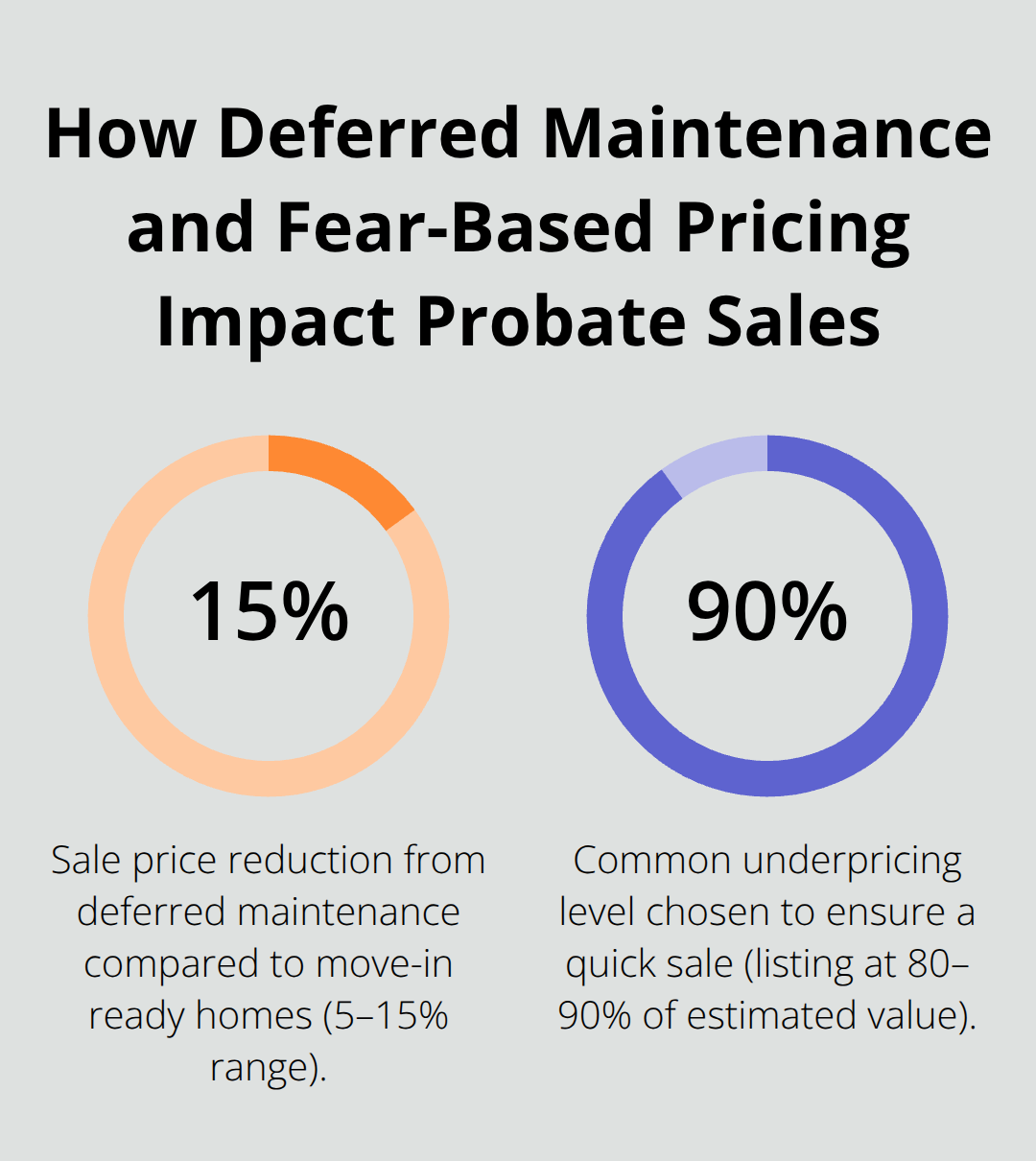
Deferred maintenance typically reduces sale price by five to fifteen percent compared to move-in ready homes, according to real estate market analysis, so the math favors spending two to five thousand dollars on critical repairs rather than accepting a substantially lower offer.
Pricing Strategy in a Moving Market
Pricing complications emerge because probate properties lack recent comparable sales data. The date-of-death appraisal establishes tax basis but doesn’t reflect current market conditions-a property appraised at four hundred thousand dollars in month one may face a different market by month six or twelve. Personal representatives often underprice from fear, listing at eighty to ninety percent of estimated value to ensure a quick sale, which leaves tens of thousands on the table. A probate-savvy real estate professional tracks market shifts month by month and adjusts pricing strategy as court approvals progress. This approach prevents the costly mistake of locking in an outdated price while the estate waits for court decisions.
Managing Family Conflict Over Property Decisions
Family conflict over property decisions adds another layer of friction. Beneficiaries sometimes disagree on whether to sell or hold, dispute the asking price, or object to necessary repairs. These disagreements stall listings for weeks or months while the personal representative navigates competing interests. Clear communication early-sharing the appraisal, explaining fiduciary duties, and presenting market data-prevents conflicts from derailing sales. When family tension rises, a neutral third party like a probate attorney can mediate and clarify that the personal representative’s duty runs to the estate and beneficiaries collectively, not individual preferences. These obstacles demand more than standard real estate knowledge; they require someone who understands both probate law and property markets. The next section explores how to assemble the right team and execute a streamlined sale strategy.
How to Build a Probate Sales Team That Actually Works
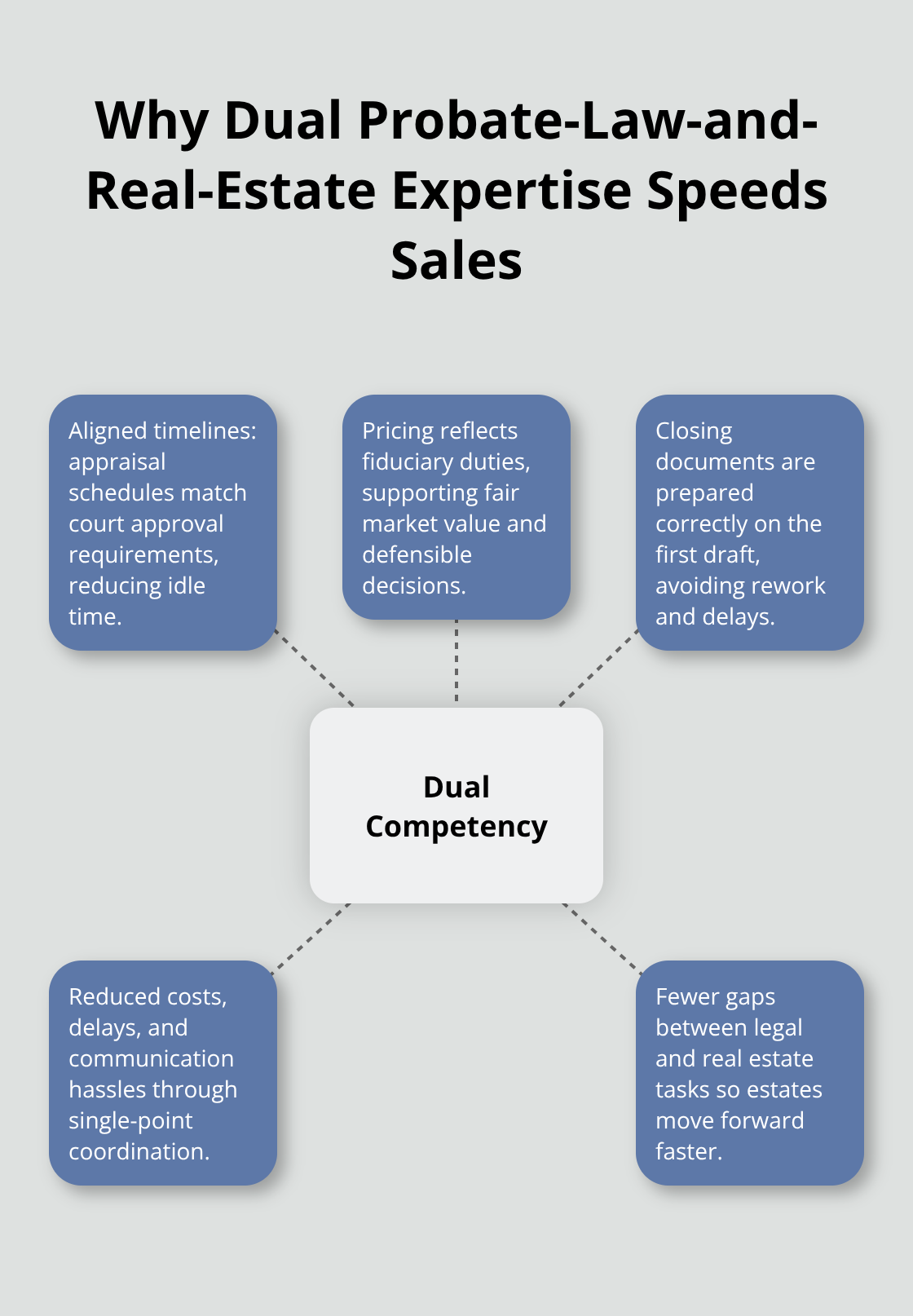
Assembling the right team makes the difference between a probate sale that closes in reasonable time and one that stretches across years. Most estates fail because they treat probate property sales like standard real estate transactions, hiring a listing agent who knows nothing about court deadlines and a lawyer who has never negotiated with buyers. This split creates friction: the agent pushes for aggressive marketing while the attorney worries about legal compliance, and the personal representative gets caught between competing advice. The solution sounds simple but remains rare in practice-find professionals who understand both probate law and real estate simultaneously. Ms. Desai holds dual licensure as an attorney and real estate professional, which streamlines estate-related property sales and transactions to reduce costs, delays, and communication hassles, eliminating the back-and-forth that typically plagues probate liquidation. When one person holds both credentials, the appraisal timeline aligns with court approval requirements, pricing strategy accounts for fiduciary duties, and closing documents get prepared correctly on the first draft.
Start with Professional Property Assessment
A professional home inspection before listing prevents costly surprises later. Many personal representatives skip this step to save two thousand to three thousand dollars on inspection costs, then watch the sale price drop by fifty thousand dollars when buyers discover hidden issues during their own inspections. The inspection identifies what absolutely must be fixed-foundation cracks, roof leaks, HVAC failures-versus cosmetic issues that should remain unfixed. Budget for critical repairs that affect safety and marketability; accept that probate buyers expect lower condition and price accordingly. Once you know what the property needs, pricing becomes rational rather than fear-based.
Price Based on Current Market Data
A probate-savvy real estate professional conducts a current market analysis specific to your property type and neighborhood, not relying on the date-of-death appraisal alone. This analysis accounts for seasonal market shifts-a property appraised at four hundred thousand dollars in January may command higher offers by June if the market strengthens. Adjust your pricing strategy as court approvals progress rather than locking in an outdated price while waiting for legal clearances. Personal representatives often underprice from fear, listing at eighty to ninety percent of estimated value to ensure a quick sale, which leaves tens of thousands on the table.
Share Information to Prevent Family Conflict
Share inspection results and market data with all beneficiaries simultaneously, before listing. When beneficiaries understand why the property needs certain repairs and why the asking price reflects current conditions, objections rarely materialize. Personal representatives often withhold information to avoid conflict, which backfires when beneficiaries discover details later and question decision-making. Present the appraisal, show comparable sales, explain fiduciary duties clearly-these conversations take an hour but prevent months of delays. If family tension rises despite transparency, bring in a neutral third party like a probate attorney to clarify that the personal representative’s duty runs to the estate and beneficiaries collectively, not individual preferences. This step costs a few hundred dollars in legal time but prevents the thousand-dollar-per-day carrying costs that mount when sales stall over unresolved disagreements.
Align Legal and Real Estate Timelines
The probate timeline remains inflexible, but the choices you make within that timeline determine whether the sale closes efficiently or becomes a source of ongoing family friction. When one professional handles both probate law and real estate matters, communication gaps narrow and timelines accelerate. Court deadlines align with appraisal schedules, pricing decisions account for legal requirements, and closing documents reflect both real estate and probate standards. This coordination prevents the delays that typically plague property liquidation when separate professionals work in isolation.
Final Thoughts
Probate real estate sales demand more than standard real estate knowledge or basic legal understanding. The process intersects court requirements, property markets, tax implications, and family dynamics in ways that catch unprepared personal representatives off guard. Without guidance, estates hemorrhage money through underpricing, delayed closings, and unnecessary carrying costs that accumulate month after month.
Professional guidance collapses timelines and prevents costly mistakes. A personal representative working alone faces impossible choices: hire a real estate agent who knows nothing about probate law, then hire a lawyer who has never negotiated with buyers. When professionals with dual competency in both probate law and real estate handle the transaction, communication gaps disappear and decisions align with both legal requirements and market realities (the appraisal timeline syncs with court deadlines, pricing reflects fiduciary duties, and closing documents meet both standards on the first draft).
Streamlined probate real estate sales benefit estates and heirs in concrete ways. A property that sells in nine months instead of twenty-four months reduces carrying costs, property taxes, insurance, and maintenance expenses by tens of thousands of dollars. Contact Law Offices of Roshni T. Desai to discuss your probate real estate situation and explore how streamlined guidance can move your estate forward efficiently.