




Probate Attorney Client Questions: Key Answers For Executors
Serving as an executor brings real responsibilities and tough decisions. We at Law Offices of Roshni T. Desai hear the same probate attorney client questions repeatedly from people in your position.
This guide answers those questions directly and shows you what to expect when working with a probate attorney.
What a Probate Attorney Does for You
Court Filings and Strict Deadlines
A probate attorney handles the legal and administrative work that keeps an estate moving forward. The attorney works on three main fronts: managing court filings and meeting strict deadlines, organizing and settling the estate’s financial obligations, and resolving conflicts between beneficiaries.
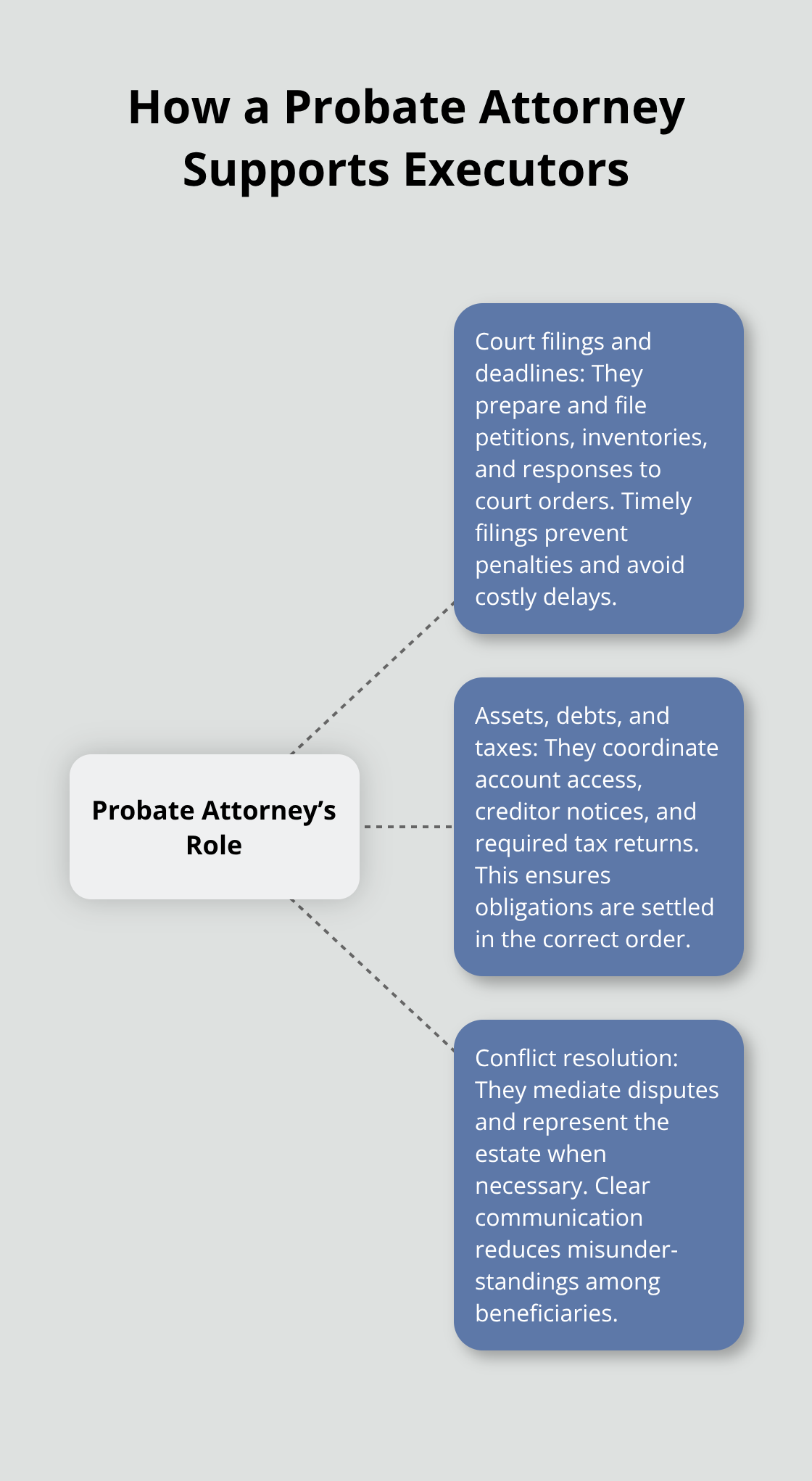
Courts impose hard deadlines throughout probate. California requires executors to file an inventory and appraisal of estate property within 90 days of appointment, according to California Probate Code Section 2610. Missing this deadline triggers court penalties and delays that extend the entire process. A probate attorney files documents on time, responds to court orders, and handles any motions filed against the estate. Without this oversight, small administrative mistakes balloon into costly court appearances.
Managing Assets and Debts
Managing assets and debts requires careful coordination. An executor must identify all bank accounts, investment accounts, real estate, and personal property-then determine what debts and taxes are owed. The IRS requires federal estate tax returns when an estate exceeds $13.61 million in 2024, but California has no separate state estate tax. However, income taxes still apply to the estate’s earnings during administration.
A probate attorney notifies creditors properly within four months of appointment and pays legitimate claims before beneficiaries receive distributions. This protects the executor from personal liability if a creditor surfaces later. The attorney also coordinates with financial institutions, tax authorities, and other parties to settle all obligations before final distributions occur.
Handling Disputes and Beneficiary Communications
Disputes between beneficiaries happen more often than executors expect. One beneficiary may challenge the will’s validity, question whether the executor acts in good faith, or dispute how assets should be valued. These conflicts require legal intervention to prevent the estate from getting stuck in litigation.
A probate attorney communicates with all parties, mediates disagreements, and represents the estate in court if necessary. The attorney explains to beneficiaries what information they’re entitled to receive and what timeline they should expect for distributions. This transparency reduces misunderstandings and prevents family relationships from deteriorating further during an already difficult period. When conflicts escalate, having legal representation protects both the executor and the estate’s interests.
These three areas form the foundation of probate administration, but many executors make critical mistakes that compound these challenges significantly.
Executor Mistakes That Drain the Estate
Skipping a Thorough Asset Inventory
Executors frequently skip a thorough asset inventory and start distributing assets before completing a full accounting. This creates serious problems. When a creditor or tax authority surfaces later, the executor has already given away funds needed to pay legitimate claims. California law requires executors to file an inventory and appraisal within 90 days, but this is the minimum-not a thorough investigation.
A complete inventory means checking safe deposit boxes, reviewing bank statements from the past year, searching for investment accounts, and identifying all real estate holdings. Pull credit reports and check with the National Association of Unclaimed Property to find forgotten accounts. Many executors miss accounts because they only look at obvious places and overlook statements arriving at old addresses or digital-only accounts the family didn’t know existed.
Missing Tax Deadlines and Penalties
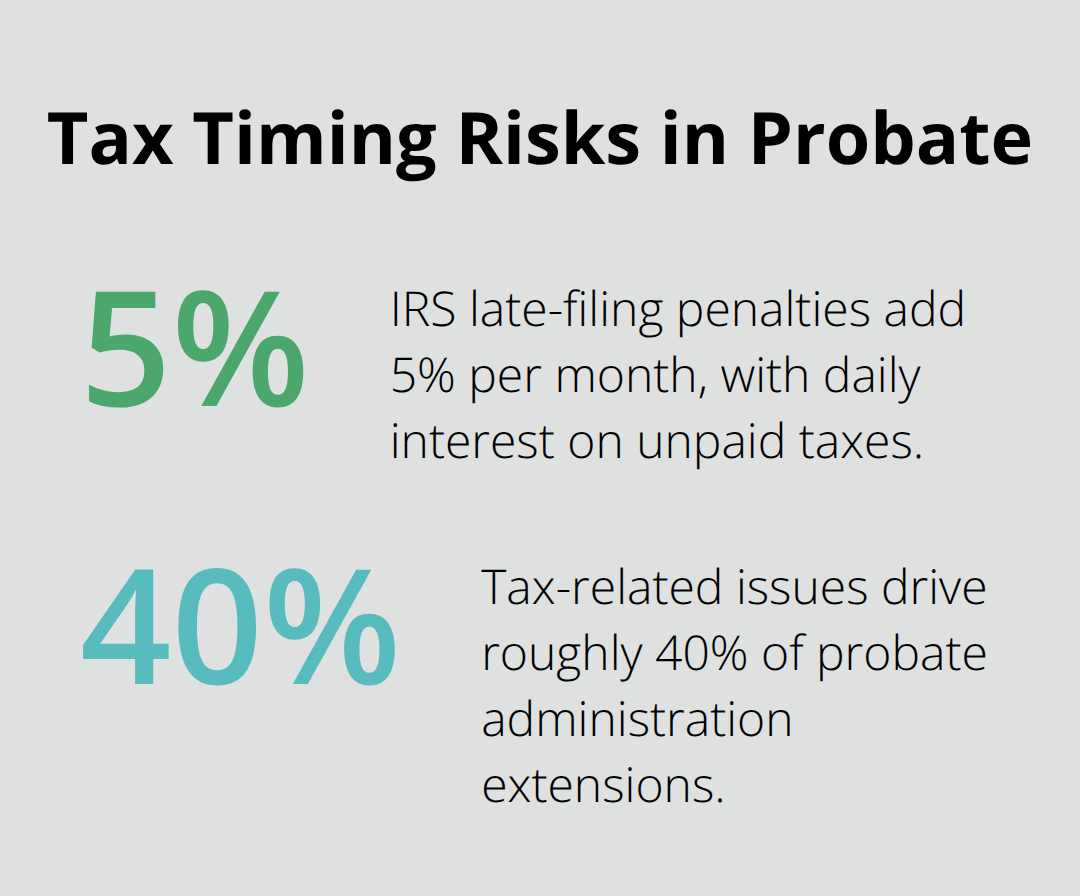
Missing tax deadlines triggers penalties and interest that the estate pays from its assets. Federal estate income tax returns are due nine months after death for estates exceeding the filing threshold, and California income tax returns are due six months after death. Missing these deadlines costs money immediately-the IRS charges penalties of 5% per month for late filing, and interest accrues daily on unpaid taxes.
A 2022 American Bar Association report found that tax-related delays account for roughly 40% of probate administration extensions beyond the typical 12-month timeframe. These delays compound quickly. Each month of delay multiplies the financial damage to the estate and extends the entire probate process.
Distributing Assets Too Early
Distributing assets to beneficiaries before settling all debts and taxes creates the costliest mistake an executor can make. Executors feel pressure from beneficiaries wanting their inheritance, so they distribute funds before the estate’s full obligations are clear. When creditors or tax authorities make claims afterward, the executor becomes personally liable for the shortfall.
California law holds executors responsible for improper distributions, meaning the executor must repay the estate from personal funds. Proper administration requires completing the full accounting, filing all tax returns, paying all creditors with proper notice periods (typically four months), and only then distributing what remains to beneficiaries. This sequence cannot be rushed without creating serious legal and financial consequences.
These three mistakes share one common thread: they all stem from incomplete information or premature action. Understanding what the probate process actually demands from you-and what support you need-determines whether your administration stays on track or spirals into costly delays and personal liability.
Choosing a Probate Attorney Without Overpaying
Understanding Fee Structures
The cost of probate attorney services varies dramatically depending on how the attorney charges and what experience they bring to your situation. Executors often waste thousands of dollars by selecting attorneys based on hourly rates alone, without understanding what they actually pay for. Hourly rates range from $150 to $400 per hour depending on the attorney’s experience and location, but a low hourly rate means nothing if the attorney takes twice as long to complete the work.
Flat fees for straightforward probate administration typically run $3,000 to $8,000 in California, while complex estates with disputes or significant assets cost substantially more. Some attorneys charge a percentage of the estate value, usually 2% to 5%, which creates a dangerous incentive to extend administration and inflate costs. Ask potential attorneys exactly how they bill, what their fee includes, and what additional costs might arise. Request a written estimate before hiring anyone.
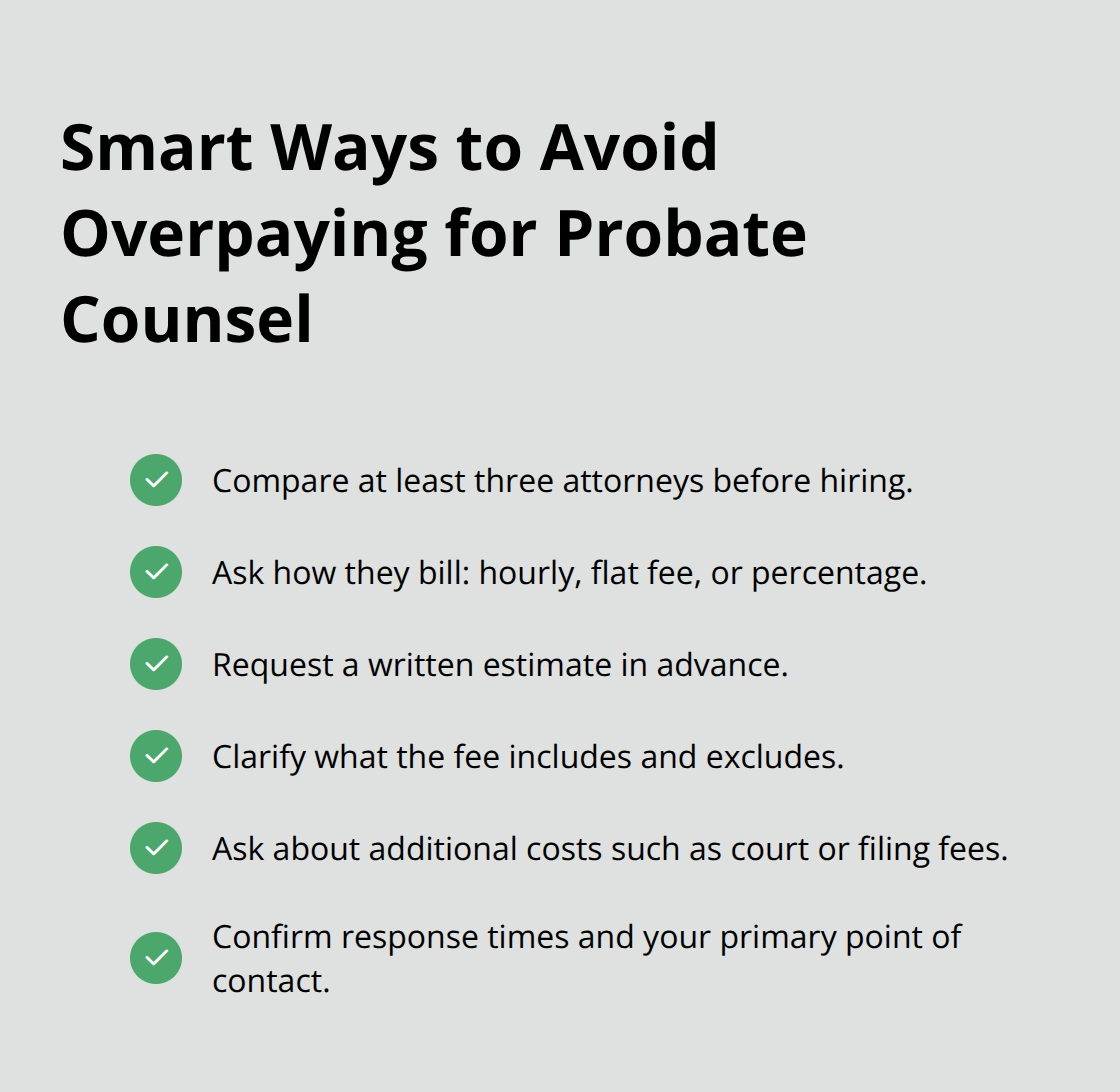
The National Association of Estate Planners and Councils reports that executors who compare three or more attorneys before hiring save an average of 15% on legal fees while receiving better service. Don’t accept vague answers about pricing. An attorney unwilling to explain their fee structure clearly is not worth hiring, regardless of their reputation.
Matching Experience to Your Estate
Experience with estates similar in size and complexity to yours matters far more than general probate knowledge. An attorney experienced with $500,000 estates may struggle with a $5 million estate involving multiple properties and business interests, creating delays and unnecessary expenses. Ask how many estates the attorney has administered that match your estate’s approximate value and complexity level.
Ask specifically about their experience with contested matters if your situation involves family disputes or will challenges. Ask about their experience with any specific assets your estate contains, such as family businesses, rental properties, or significant investment portfolios. An attorney with relevant experience completes administration faster because they’ve handled similar situations before and know exactly which documents are needed and which pitfalls to avoid. They also understand which tax strategies reduce the estate’s tax burden and which procedural shortcuts are available in your county.
Evaluating Availability and Communication
Communication style determines whether you feel supported or frustrated throughout the process. Some executors need frequent updates and detailed explanations, while others prefer minimal contact and trust the attorney to handle matters. Discuss your preferred communication frequency upfront.
Ask whether the attorney or a paralegal will be your primary contact for routine questions. Find out how quickly they respond to emails and phone calls, and whether they charge for brief consultations or administrative questions. An attorney who makes themselves genuinely available prevents small problems from becoming emergencies that cost extra time and money. Law Offices of Roshni T. Desai offers free consultations with flexible home or office visits, making it easy to discuss your situation without initial expense or scheduling constraints.
Final Thoughts
Serving as an executor demands attention to detail, strict adherence to deadlines, and clear understanding of your legal obligations. The probate attorney client questions we hear most often reveal a pattern: executors underestimate the complexity of administration and overestimate their ability to handle it alone. One mistake-distributing assets prematurely, missing a tax filing date, or failing to identify all creditors-creates personal liability that follows you long after the estate closes.
A probate attorney manages court requirements and deadlines so you avoid penalties and delays. They coordinate asset management and debt settlement in the correct sequence, protecting you from personal liability. They handle disputes and beneficiary communications with the legal authority needed to resolve conflicts fairly, and they communicate clearly while remaining genuinely available to prevent small problems from escalating into emergencies.
We at Law Offices of Roshni T. Desai understand the weight of executor responsibilities and provide personalized guidance tailored to your specific situation. Contact Law Offices of Roshni T. Desai to discuss your estate administration needs without initial expense or scheduling constraints.