



Best Trust Administration Attorney: What to Look For
Finding the best trust administration attorney makes the difference between a smooth settlement and years of complications. At Law Offices of Roshni T. Desai, we’ve handled hundreds of trust cases across Southern California, and we know what separates capable attorneys from those who create problems.
This guide shows you exactly what to look for-and what red flags to avoid.
What Makes a Trust Administration Attorney Effective
Understanding Complex Trust Documents
A trust administration attorney needs more than a law degree and a license to practice. The attorney handling your trust must understand California Probate Code inside and out, particularly sections 13000-13200, which govern trust administration timelines and beneficiary rights. When you interview potential attorneys, ask them directly about their experience with irrevocable versus revocable trusts, charitable remainder trusts, and special needs trusts. Their answers will show whether they’ve actually worked with complex trust documents or just handled basic cases. An attorney who hesitates or gives vague responses hasn’t done enough trust work.
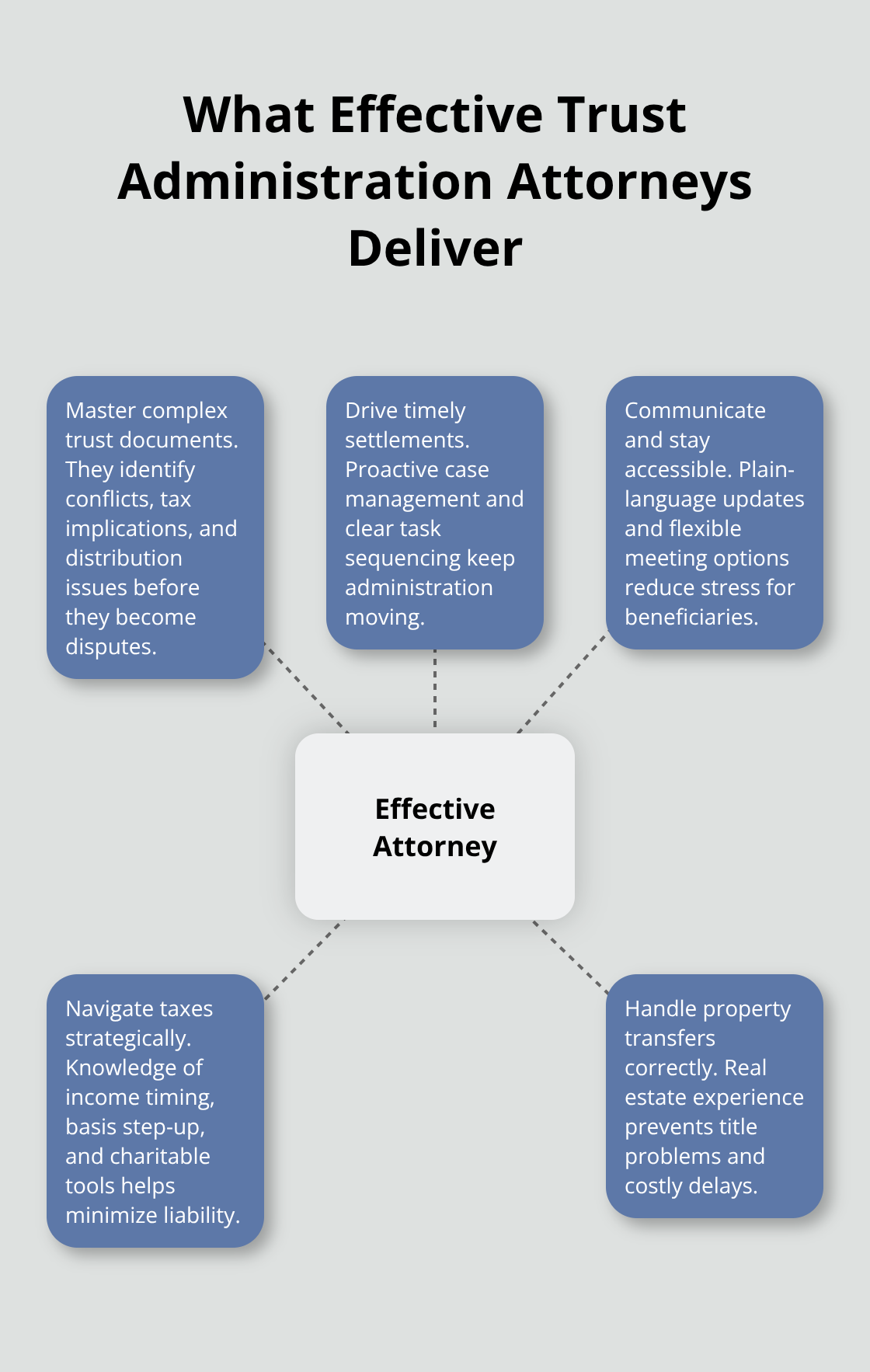
The ability to read a trust document and immediately spot potential conflicts between beneficiaries, tax implications, or property transfer issues separates competent trust attorneys from mediocre ones.
Speed and Efficiency in Settlement
Settlement speed matters more than most people realize. The American Bar Association reports that trust administration typically takes 12-36 months, but this timeline depends heavily on your attorney’s efficiency and knowledge. If an attorney has handled 50 trust cases in 10 years, that’s slower than one who’s handled 200 cases in the same timeframe. Ask for specific examples of how quickly they’ve settled trusts and what factors caused delays in more complex cases. An attorney who can point to concrete timelines and explain their process demonstrates real competence in moving trusts through administration efficiently.
Communication and Accessibility
Communication and accessibility are equally non-negotiable. A trust attorney who takes three weeks to return phone calls or schedules meetings only during business hours creates unnecessary stress when beneficiaries are grieving and decisions need to happen quickly. The attorney you choose should be reachable, responsive, and willing to explain what’s happening with your trust in plain language rather than legal jargon. Flexible meeting options (including home or office visits) matter because trust administration often involves time-sensitive issues that can’t wait for standard office hours. Your attorney’s responsiveness directly affects how quickly you move through the administration process and resolve beneficiary concerns.
Trust Administration Problems That Derail Settlements
Beneficiary Disputes Escalate Without Proper Resolution
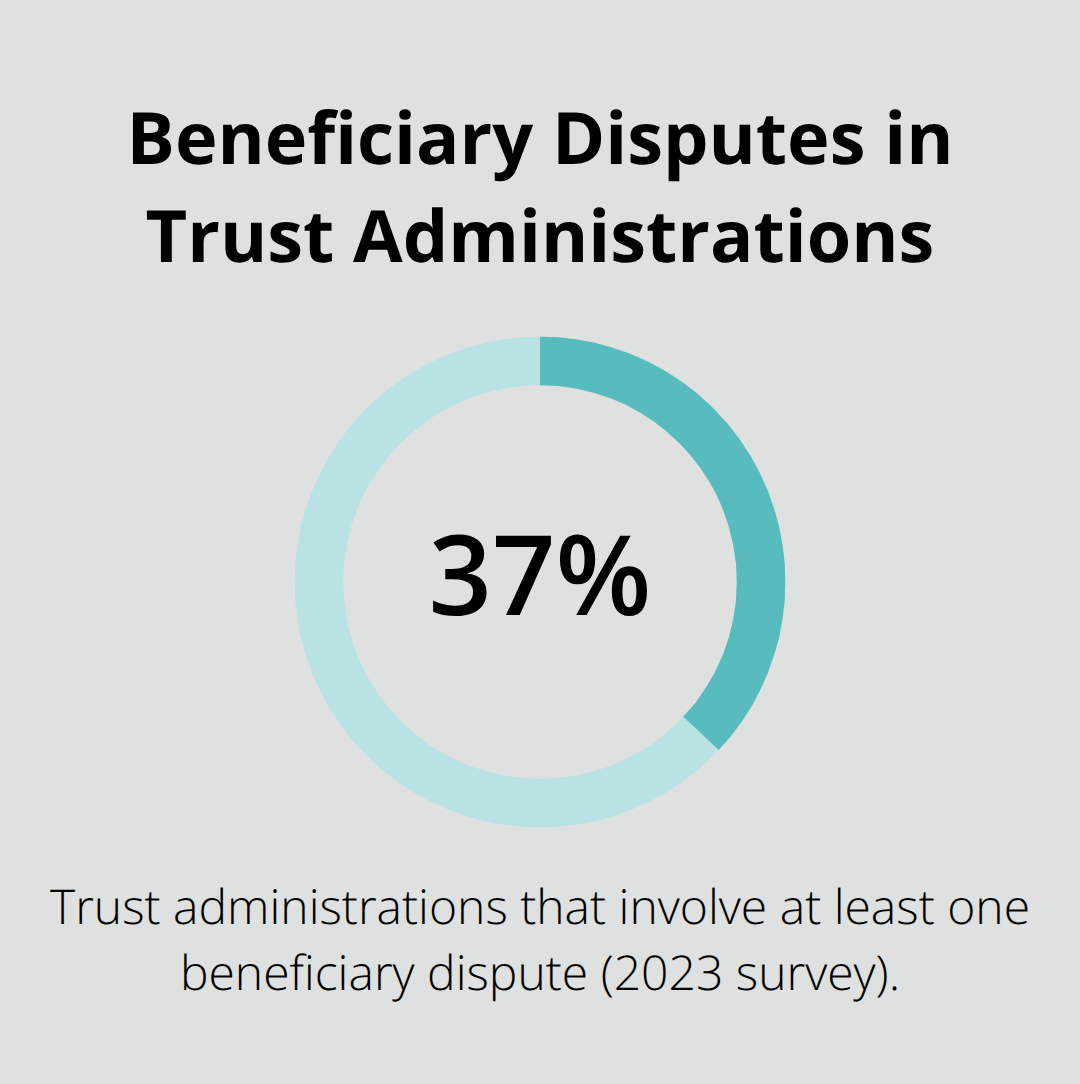
Beneficiary disputes rank as the most common problem we see in trust administration, and they escalate quickly when an attorney lacks conflict resolution skills. A 2023 survey by the American Academy of Estate Planners and Counselors found that 37% of trust administrations involve at least one beneficiary dispute, yet many attorneys respond by threatening litigation instead of exploring structured resolution paths.
The strongest approach combines transparent communication about trust terms, documentation of every decision made, and willingness to facilitate mediation before court involvement becomes necessary.
When beneficiaries understand the trustee’s reasoning and see written explanations of how funds are distributed according to the trust document, disputes often dissolve. An attorney who avoids clear explanations or resists mediation signals they prioritize billable hours over your family’s peace.
Tax Complications Create Substantial Liability
Tax complications create the second major obstacle, particularly in Southern California where property values push many estates into federal and state tax exposure. The federal estate tax exemption sits at $13.61 million per person in 2024, but California’s state estate tax threshold is significantly lower at $1 million, meaning trusts crossing this state threshold face substantial tax liability if structured incorrectly.
An attorney handling trust administration must understand income tax planning during the settlement period, capital gains step-up strategies for inherited real estate, and charitable giving options that reduce taxable estates. Without this knowledge, your trust pays far more in taxes than necessary.
Property Transfer Issues Plague Southern California Settlements
Property transfer issues compound these challenges, especially when trusts hold real estate across multiple counties or properties with complex title histories. Southern California’s real estate market creates additional complications because property values shift constantly, affecting both tax calculations and fair distribution among beneficiaries.
An attorney without real estate transaction experience often mishandles property transfers, creating title issues that surface years later when a beneficiary tries to sell. These mistakes cost thousands in corrections and delay distributions that beneficiaries desperately need. The combination of attorney licensing and real estate professional credentials (like those held at Law Offices of Roshni T. Desai) means trust property transfers happen correctly the first time, avoiding costly corrections and delays that plague settlements handled by attorneys without this dual expertise.
Warning Signs of a Poor Trust Administration Attorney
Vague Fee Structures Hide True Costs
Vague fee structures hide the true cost of trust administration, and many attorneys exploit this deliberately. When an attorney quotes an hourly rate without explaining how many hours a trust typically requires, or refuses to provide a written fee agreement before you hire them, that’s a major warning sign. The State Bar of California requires attorneys to provide written fee agreements, yet some still dodge this requirement by claiming every trust is unique and costs can’t be estimated. A competent attorney can tell you whether they charge hourly rates, flat fees, or a percentage of the estate, and they can provide examples of what similar trusts cost based on their past cases. If an attorney becomes evasive when you ask about total costs or mentions surprise fees after the engagement begins, their lack of transparency signals they prioritize extracting maximum payment over serving your interests.
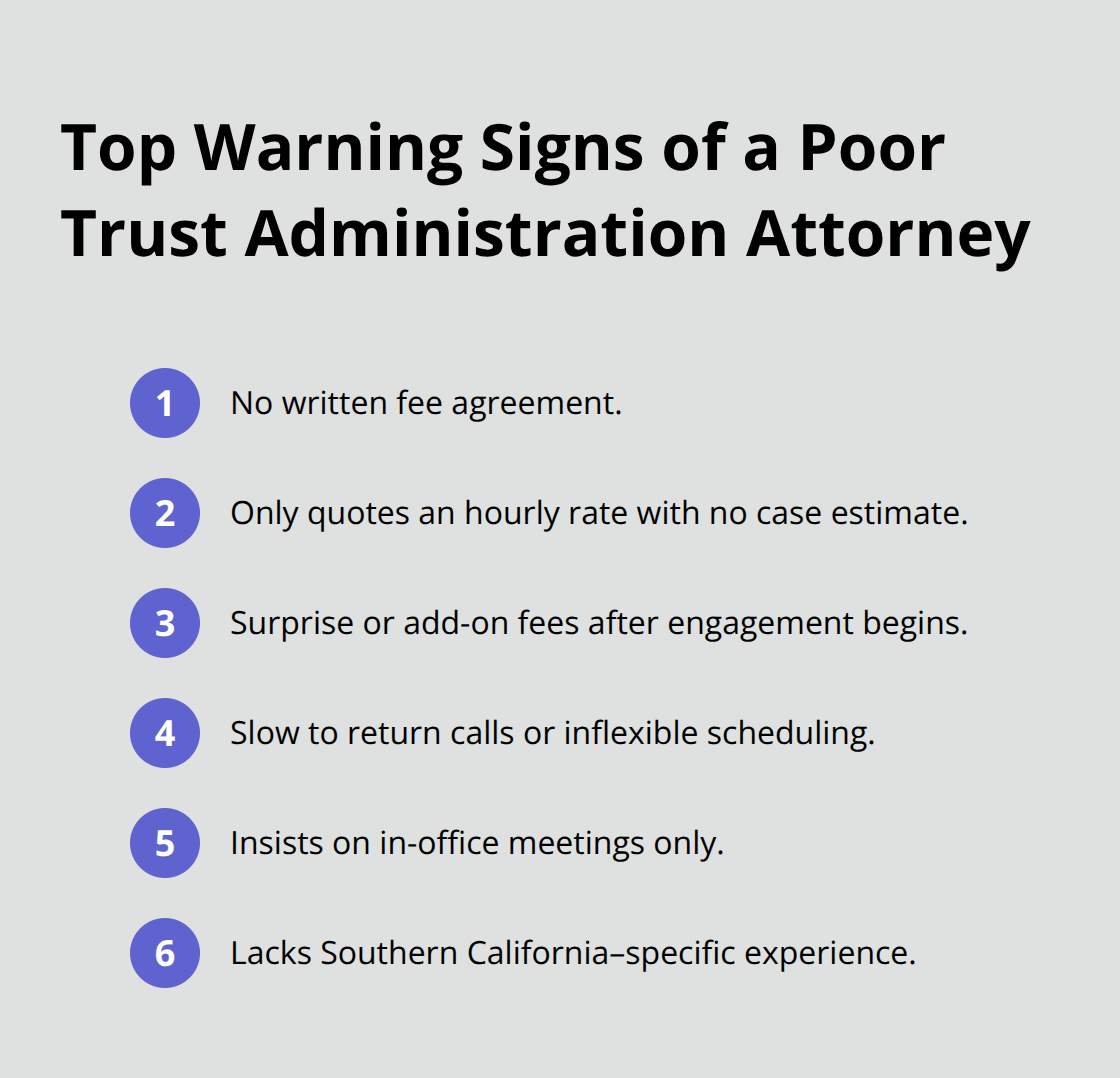
Walk away immediately from any attorney who won’t commit to a transparent fee structure in writing before you sign anything.
Poor Responsiveness Signals Neglect
Responsiveness separates trustworthy attorneys from those who treat clients as inconveniences. An attorney who takes a week to return phone calls, schedules consultations only during standard business hours, or insists meetings happen only at their office doesn’t understand trust administration reality. Beneficiaries need answers quickly, and questions arise outside normal business hours. Many clients work full-time jobs that conflict with traditional office schedules. When you call a prospective attorney’s office, pay attention to how quickly someone returns your call and whether they accommodate your schedule. An attorney who prioritizes accessibility demonstrates they understand the urgency trust administration demands.
Lack of Local Southern California Knowledge
An attorney with deep Southern California trust experience demonstrates familiarity with local probate courts, county recording requirements, and how property transfers work across different jurisdictions. If they can’t name specific California Probate Code sections relevant to your situation or seem uncertain about how Southern California property values affect tax calculations, they lack the localized knowledge your trust requires. Ask them directly about their experience handling trusts with real estate in your specific county, and request references from recent clients who had similar situations to yours. An attorney unfamiliar with local nuances creates delays and costly mistakes that could have been prevented through proper regional knowledge.
Final Thoughts
After reviewing what separates capable trust attorneys from those who create problems, you need a firm that demonstrates all these qualities without compromise. We at Law Offices of Roshni T. Desai have spent over 25 years handling trust and probate administration across Southern California, managing hundreds of cases that required exactly the skills outlined in this guide. Our dual licensure as both an attorney and real estate professional directly addresses the property transfer complications that derail so many settlements.
When your trust holds real estate, we handle the transaction side without outsourcing to separate professionals, eliminating communication gaps and reducing costs that typically inflate when multiple firms coordinate on the same property. This combination means your trust property transfers correctly the first time, avoiding the title issues and delays that plague settlements handled by attorneys without real estate credentials. Responsiveness and accessibility aren’t afterthoughts for us-we offer free consultations and flexible meeting options including home or office visits, recognizing that trust administration doesn’t follow standard business hours.
Finding the best trust administration attorney means finding someone who combines deep experience with transparent communication and genuine accessibility. We at Law Offices of Roshni T. Desai provide personalized, compassionate service across all aspects of trust administration, from initial consultation through final distribution. Contact us at Law Offices of Roshni T. Desai to discuss your trust and see how our approach differs from attorneys who treat trust administration as just another billable engagement.