




SoCal Trust Administration Overview: What To Expect
Trust administration in Southern California involves managing assets, distributing funds to beneficiaries, and handling complex paperwork. Many trustees feel overwhelmed by the process because they’re unsure about timelines, costs, and legal requirements.
We at Law Offices of Roshni T. Desai help trustees navigate these responsibilities. This SoCal trust administration overview covers what you need to know to avoid costly mistakes.
What Trust Administration Actually Requires
Managing and Protecting Trust Assets
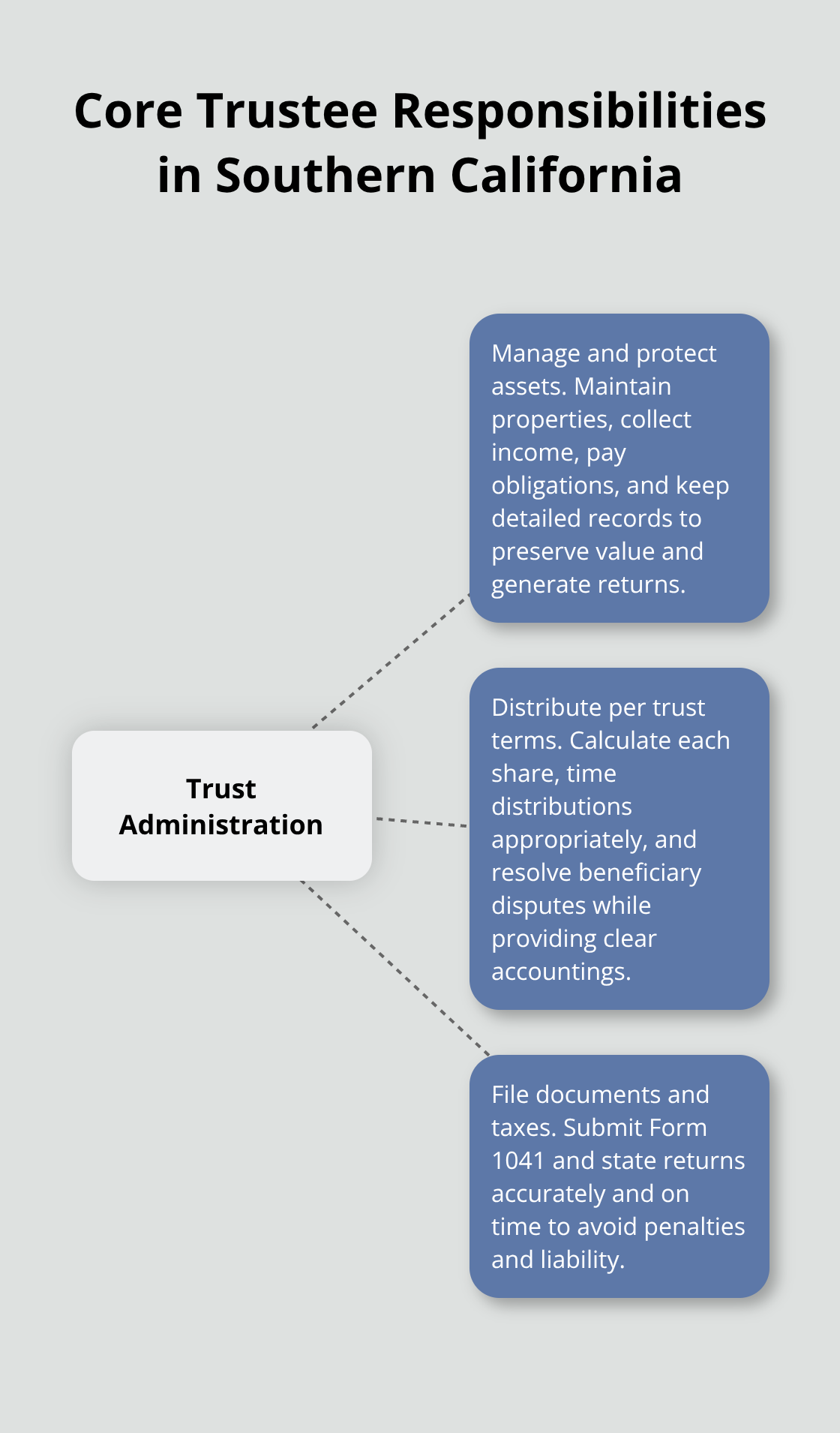
Trust administration in Southern California demands three interconnected responsibilities that trustees must handle simultaneously. First, you manage and protect all trust assets-real estate, investment accounts, bank deposits, and personal property-which means maintaining properties, collecting rental income, paying mortgages, and keeping detailed records of every transaction. This isn’t passive oversight; you actively control how these assets perform and generate returns.
The practical reality is that trustees often underestimate how time-consuming asset management becomes. If the trust holds rental properties, you communicate with tenants, coordinate maintenance, and enforce leases-not hiring someone else to do it, but actively overseeing those decisions. If the trust contains business interests, you decide whether to sell, continue operating, or transfer the business to specific beneficiaries (each choice carries different tax implications).
Distributing Assets According to Trust Terms
Second, you must distribute assets to beneficiaries according to the trust document’s terms. This isn’t simply writing checks but involves calculating each beneficiary’s share, determining when distributions occur, and handling disputes if beneficiaries disagree with the allocation. The distribution phase creates friction because beneficiaries frequently have conflicting expectations about timing and amounts.
California law requires you to provide beneficiaries with a detailed accounting showing every asset, every expense paid from trust funds, and every distribution made-and you must do this within a specific timeframe or face potential legal challenges. Beneficiaries can contest your decisions if they believe you violated the trust terms or acted improperly.
Filing Required Documents and Tax Returns
Third, you file numerous documents with California courts and the IRS, including the trust’s final income tax return (Form 1041), state tax returns, and potentially a probate petition if the trust administration requires court involvement. The paperwork itself demands precision: missing a single deadline for tax filings results in penalties, and incorrectly calculating a beneficiary’s share opens you to liability claims.
Start by creating a comprehensive asset inventory within the first 30 days, identifying all accounts and properties. Delays in this initial step cascade through the entire administration process and extend timelines significantly. This foundation determines how smoothly the remaining phases proceed.
Timeline and Costs of Trust Administration in Southern California
How Long Trust Administration Takes
Trust administration in Southern California typically spans 9 to 18 months, though complex estates frequently extend beyond two years. The American College of Trust and Estate Counsel reports that simple trusts with minimal assets and few beneficiaries close within 6 to 9 months, while estates involving real property, business interests, or multiple beneficiaries regularly exceed 18 months. Asset liquidation timelines and beneficiary coordination drive most delays-not paperwork filing deadlines, which remain relatively fixed. If the trust holds a family business or commercial real estate requiring sale, you wait for market conditions and buyer negotiations rather than legal processes. California’s Probate Code requires you to provide beneficiaries with an accounting within a reasonable time, typically interpreted as 12 months, but this deadline begins after you complete the initial asset inventory and settle outstanding debts. Beneficiaries often delay signing required documents or dispute allocations, adding months to an already lengthy process.
What You’ll Actually Spend
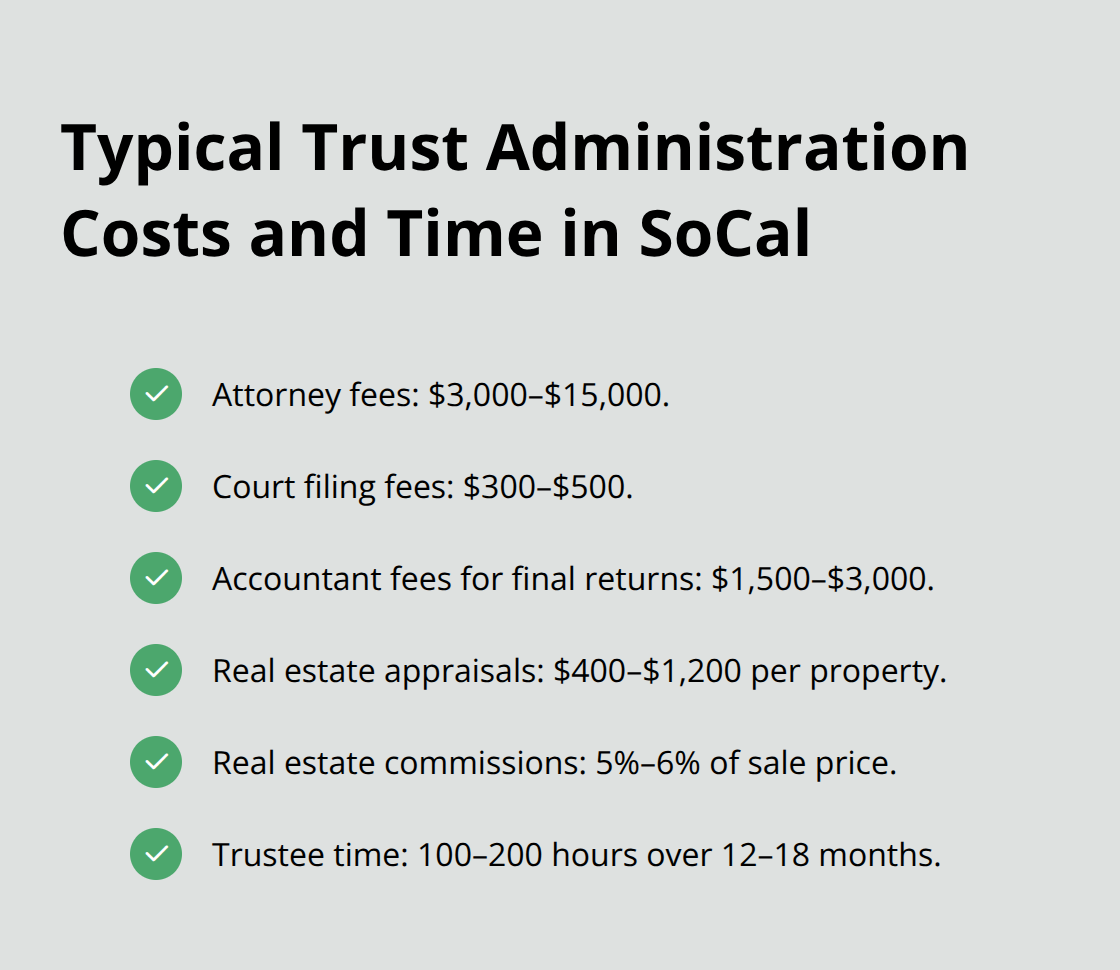
Costs vary dramatically based on trust complexity, ranging from $3,000 to $15,000 in professional fees when working with an attorney, plus additional expenses paid directly from trust assets. Court filing fees in Southern California run $300 to $500 for basic trust administration documents, while accountant fees for preparing final tax returns typically cost $1,500 to $3,000 depending on income complexity. Real estate appraisals cost $400 to $1,200 per property, and property sales consume 5 to 6 percent of proceeds in real estate commissions. Most trustees overlook the hidden cost of their own time: administering a moderate trust requires 100 to 200 hours spread across 12 to 18 months.
Reducing Your Administrative Burden
Delegating specific tasks typically costs less than the mistakes you’ll make handling unfamiliar responsibilities. Hiring an accountant to prepare tax returns or an appraiser to value properties (rather than attempting these yourself) protects you from costly errors and accelerates the entire process. You can also streamline administration by organizing all trust documents and asset records immediately, which prevents delays when you need to locate account numbers, property deeds, or beneficiary contact information. Taking these steps upfront reduces friction with beneficiaries and keeps the timeline on track.
Understanding these timelines and expenses prepares you for the practical realities ahead. The mistakes trustees make during administration often stem from rushing through these phases or misunderstanding their obligations-issues we’ll address next.
Common Mistakes That Derail Trust Administration
Trustees in Southern California stumble on three predictable problems that extend timelines, increase costs, and trigger beneficiary disputes. Understanding these mistakes helps you avoid them before they damage your administration process.
Inadequate Beneficiary Notification
The first mistake involves failing to notify beneficiaries properly. California Probate Code Section 16061.5 requires trustees to notify beneficiaries of their right to request an accounting within 60 days of becoming trustee, yet many trustees send vague emails or generic letters that lack specific account balances, asset descriptions, or distribution timelines. Beneficiaries then demand additional information, question your decisions, and sometimes hire attorneys to investigate whether you properly managed assets.
The correct approach demands sending a formal notification letter listing each asset with its current value, explaining when distributions will occur, and providing clear contact information for questions. Include a deadline for beneficiaries to request an accounting (typically within 30 days) rather than leaving this open-ended. Document that you sent these notifications and keep copies for your records. Detailed communication prevents disputes before they start.
Poor Asset Management Decisions
The second mistake involves asset mismanagement through poor decision-making or neglect. Trustees frequently fail to collect income owed to the trust (rental payments, business distributions, investment returns) within 30 days of appointment, allowing months of lost revenue. Others maintain trust assets in checking accounts earning near-zero interest rather than placing funds in money market accounts or short-term CDs, costing beneficiaries hundreds or thousands in foregone income.
Some trustees make unauthorized investments or sell trust assets without understanding tax consequences, triggering capital gains taxes that reduce distributions to beneficiaries. The practical fix requires creating a written asset management plan within the first 60 days that documents how you’ll maintain properties, collect income, and manage investments. If the trust holds real estate, schedule maintenance immediately and collect rent payments on time. If the trust contains investment accounts, review the current allocation and move cash to interest-bearing accounts.
Missing Critical Filing Deadlines
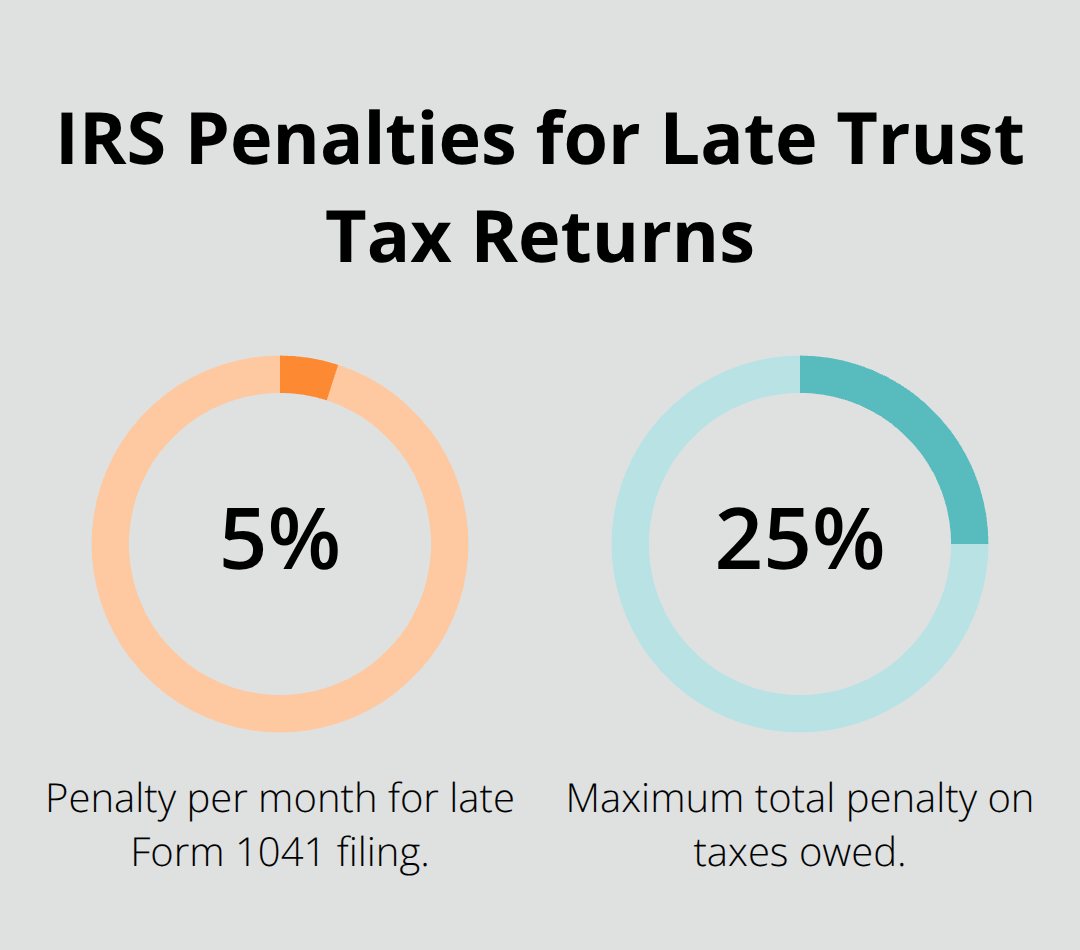
The third mistake involves missing filing deadlines that create penalties and legal exposure. California trusts require final income tax returns (Form 1041) filed within nine months of your appointment, and missing this deadline triggers IRS penalties of 5 percent per month up to 25 percent of taxes owed. Many trustees also miss the deadline for providing beneficiaries with a final accounting, which California courts interpret as within 12 months of completing the initial asset inventory.
When beneficiaries don’t receive timely accountings, they can petition the court to remove you as trustee and surcharge you personally for any losses. Create a written timeline on your first day as trustee marking all critical dates: the 60-day beneficiary notification deadline, the nine-month tax return deadline, the 12-month accounting deadline, and any distribution dates specified in the trust document. Set calendar reminders 30 days before each deadline. If tax preparation or accounting feels outside your capabilities, hire a CPA immediately rather than attempting this yourself and missing deadlines through confusion.
Final Thoughts
Trust administration in Southern California demands attention to detail, strict adherence to deadlines, and careful asset management. The mistakes outlined in this SoCal trust administration overview-inadequate beneficiary notification, poor asset decisions, and missed filing deadlines-derail countless administrations and create unnecessary conflict. Success depends on understanding your obligations upfront and taking action immediately after appointment.
Most trustees lack experience with tax filings, property valuations, and California’s specific probate requirements. Attempting to handle these responsibilities alone frequently costs more in penalties and errors than hiring professionals would have cost initially. The nine-month tax deadline, the 12-month accounting requirement, and ongoing asset management obligations create a compressed timeline that leaves little room for mistakes (and professional guidance protects both you and your beneficiaries).
We at Law Offices of Roshni T. Desai provide personalized trust and probate administration services across Southern California. Ms. Desai’s dual licensure as an attorney and real estate professional streamlines estate-related property sales and transactions, reducing costs and delays. Contact Law Offices of Roshni T. Desai to schedule a free consultation and discuss your specific situation with flexible home or office visits available.