




SoCal Trust Administration Guide: Wind Down Estates with Confidence
Trust administration in Southern California involves managing assets, paying obligations, and distributing what remains to beneficiaries. It’s detail-heavy work with strict deadlines that trip up many people handling estates alone.
We at Law Offices of Roshni T. Desai help families navigate this process smoothly. This SoCal trust administration guide walks you through what happens, common pitfalls to avoid, and how professional support makes the difference.
The Three Phases of Winding Down a Trust
Phase One: Identify and Inventory All Assets
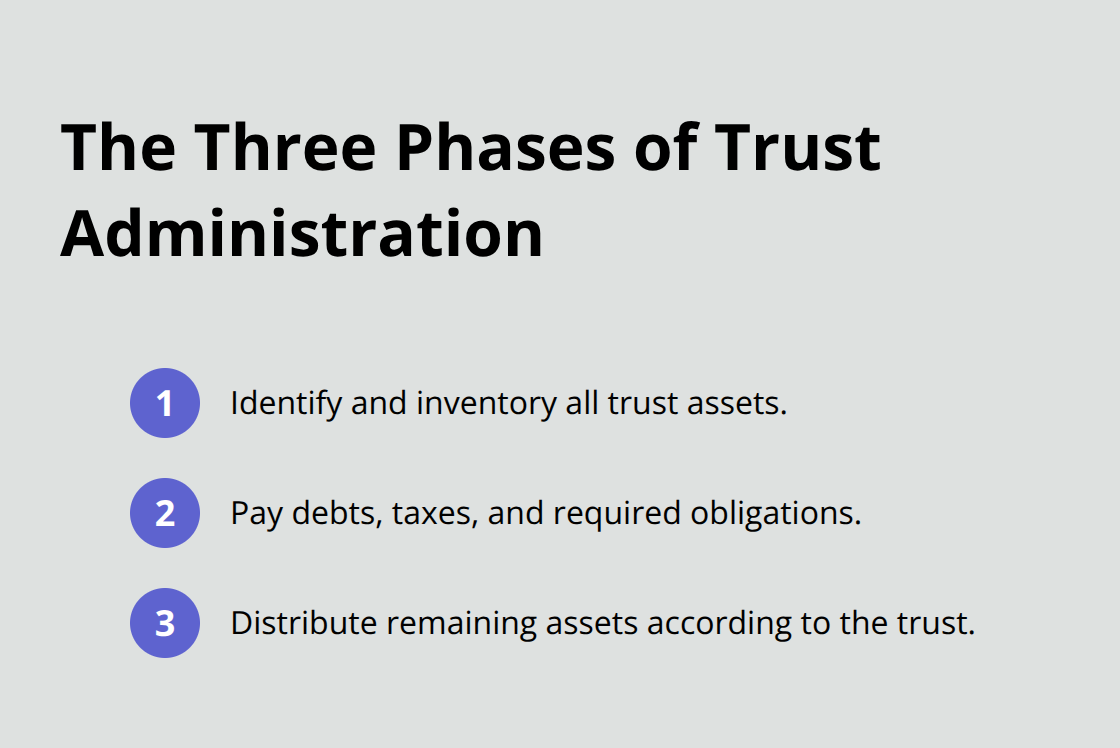
Trust administration breaks into three distinct phases, and understanding each one prevents costly mistakes. The first phase requires you to identify every asset the trust holds-bank accounts, investment portfolios, real estate, vehicles, and personal property. Families often uncover assets they didn’t know existed during this inventory stage, sometimes finding forgotten retirement accounts or insurance policies worth thousands. You must document this inventory thoroughly, as you’ll need it to satisfy tax authorities and beneficiaries later.
Phase Two: Pay All Debts, Taxes, and Obligations
The second phase requires you to pay what the estate owes: final medical bills, funeral costs, outstanding debts, and most importantly, state and federal taxes. California doesn’t have an estate tax, but federal estate taxes apply to estates exceeding $13.61 million in 2024, according to the IRS. Additionally, the trust may owe income taxes on earnings generated during administration, which you must file by April 15 if the trust had income exceeding $600 annually. Property taxes on real estate held in trust must continue being paid on time-missing payments can trigger penalties and jeopardize the property itself.
Phase Three: Distribute Remaining Assets to Beneficiaries
The third phase distributes what remains to beneficiaries according to the trust document’s instructions. Each phase carries specific deadlines and legal requirements that vary depending on whether the trust is revocable or irrevocable and whether probate is involved. If the trust holds real estate in Southern California, you’ll navigate property transfer documentation and possibly capital gains considerations. Ms. Desai’s dual licensure as an attorney and real estate professional streamlines estate-related property sales and transactions, which reduces costs and eliminates coordination problems between separate professionals.
Critical Deadlines You Cannot Miss
Many families miss critical filing deadlines simply because no one explained the timeline clearly. California requires certain probate notices within specific windows, and federal tax returns for the trust itself must be filed within nine months of the grantor’s death if probate is involved. Starting with a detailed asset inventory, then systematically addressing all obligations before distributing funds, keeps the process organized and protects you from personal liability if beneficiaries later challenge your work. The mistakes that derail trust administration often stem from overlooking these deadlines or mishandling the sequence of payments and distributions.
Where Trust Administration Goes Wrong
Failing to Notify Beneficiaries Promptly
Beneficiaries who never hear from you until months after the grantor’s death create immediate conflict and legal exposure. California law doesn’t specify exact notification timelines for trusts, but failure to communicate promptly signals mismanagement and invites litigation. Many families delay notifying beneficiaries because they feel overwhelmed by the workload or unsure what to say, but silence breeds suspicion and transforms a straightforward administration into a contested one. You must notify all beneficiaries within 60 days of becoming trustee and provide them with copies of the trust document and your preliminary accounting. A written notification letter explaining the timeline, your role, and when distributions will occur prevents assumptions and establishes transparency from the start.
Mishandling Trust Funds and Assets
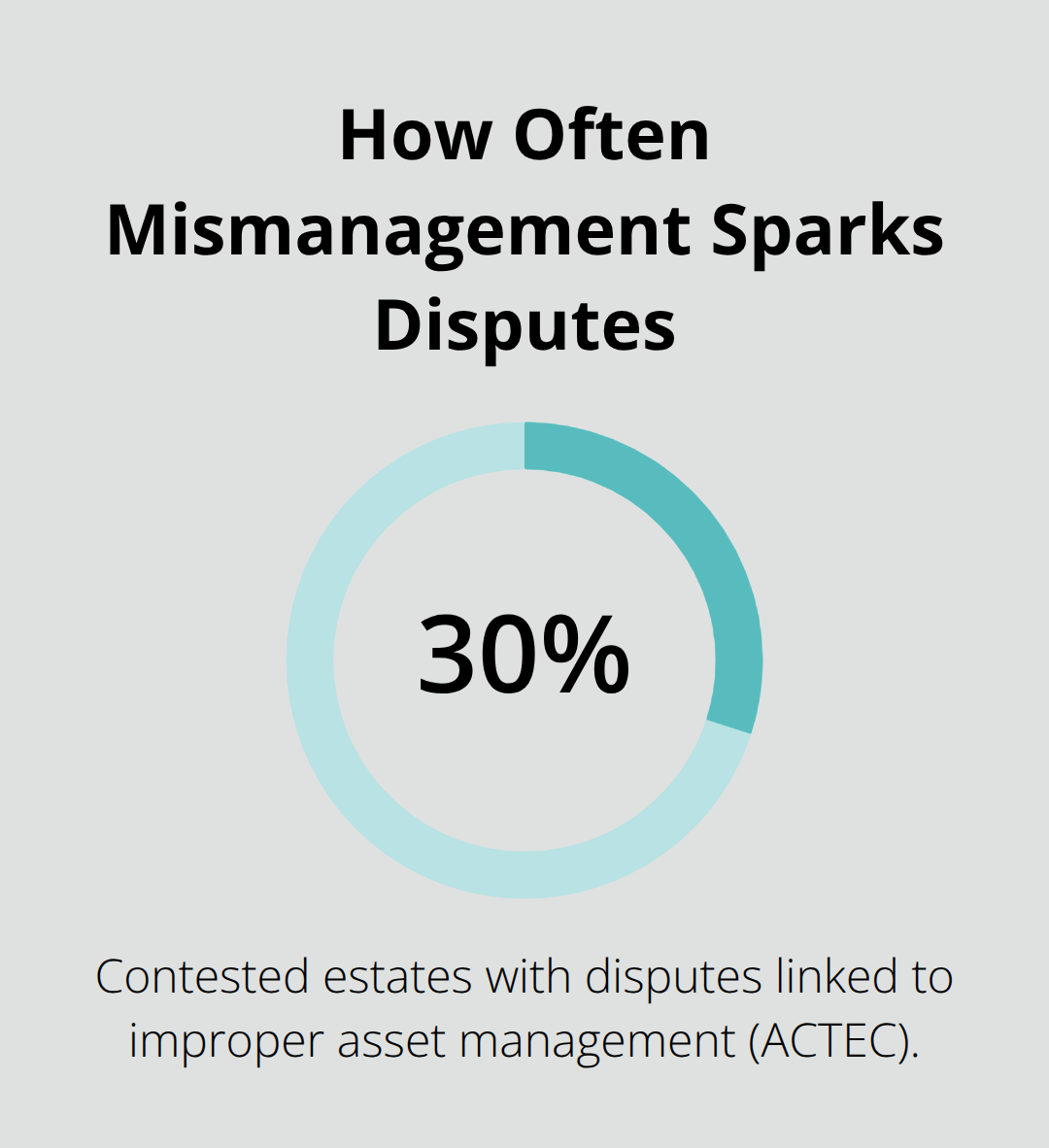
Mishandling trust funds represents the second major pitfall that destroys administrations. Trustees sometimes commingle trust assets with personal accounts, fail to maintain separate trust bank accounts, or make unauthorized distributions before paying taxes and debts. The American College of Trust and Estate Counsel reports that improper asset management during trust administration leads to disputes in approximately 30 percent of contested estates. You cannot withdraw funds for personal use, pay bills that aren’t trust obligations, or invest trust money in risky ventures without explicit authorization in the trust document.
Maintain detailed records of every transaction, keep separate accounting from day one, and resist the urge to “borrow” from the trust even temporarily. When you commingle funds or fail to account for distributions, beneficiaries can sue you personally for breach of fiduciary duty, and you lose all protection the trust might have otherwise provided.
Missing Tax Deadlines and Filing Requirements
Tax deadlines destroy more administrations than any other single factor. Federal Form 1041 for the trust itself must be filed within nine months of the grantor’s death if probate is involved, and California requires income tax returns on any trust income exceeding $600 annually. Property held in the trust generates potential capital gains tax when sold, which you must calculate and report separately from income tax. Many trustees miss these deadlines simply because they didn’t know they existed, resulting in penalties ranging from five to 25 percent of the unpaid tax amount plus interest. Create a master deadline calendar on your first day as trustee, listing every filing requirement and payment obligation with dates 30 days before each deadline. This single document prevents the cascade of missed deadlines that transforms a manageable administration into a legal and financial nightmare.
These three pitfalls-poor communication, asset mismanagement, and tax oversights-account for the majority of trust administration failures in Southern California. Understanding what goes wrong positions you to avoid these traps, but navigating the actual process requires knowing exactly what steps to take and when to take them.
How We Help You Navigate Trust Administration
Understanding Your Complete Trust Administration Needs
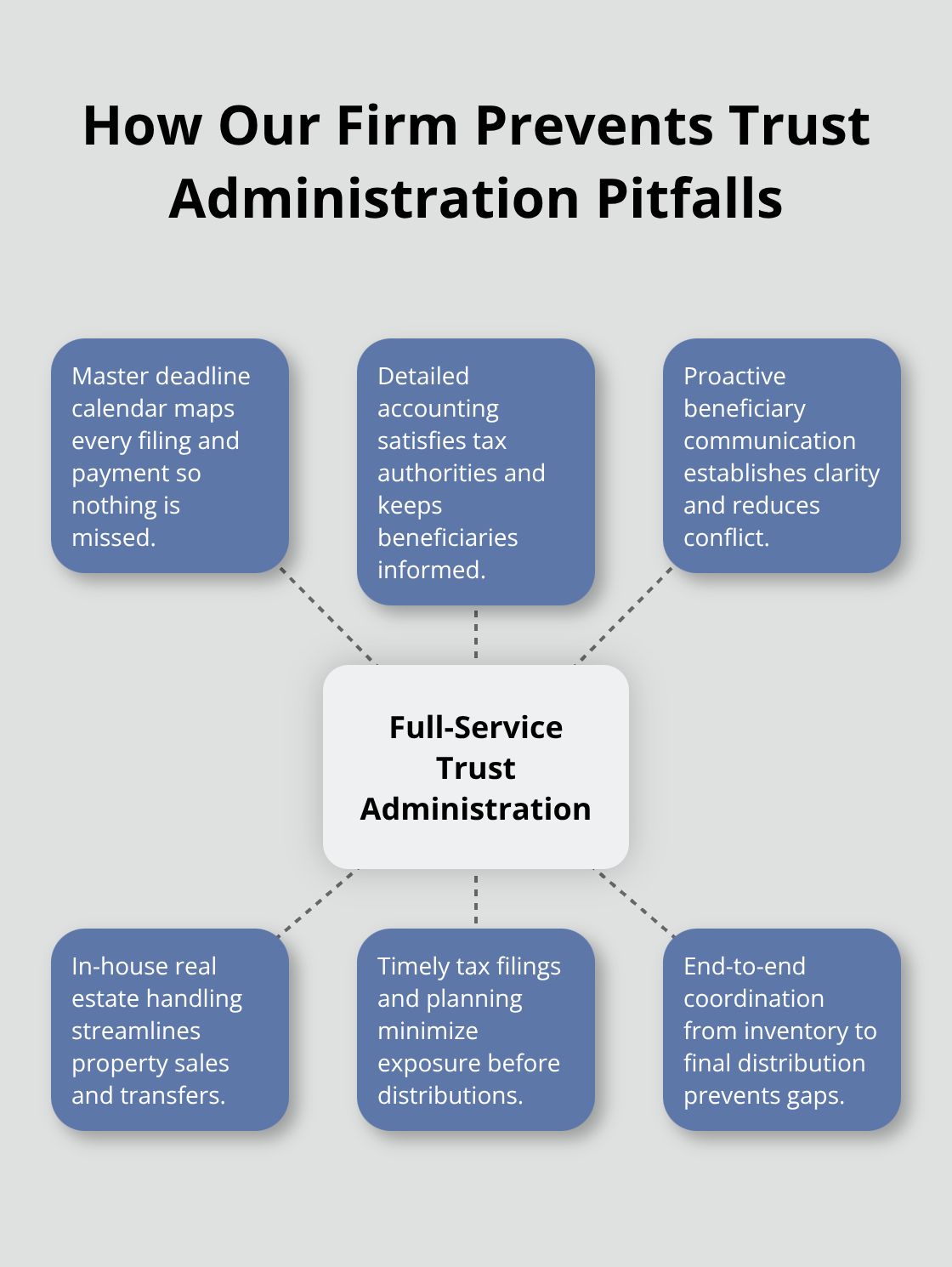
Trust administration in Southern California demands someone who understands both the legal requirements and the practical realities of managing assets, paying obligations, and distributing funds. We at Law Offices of Roshni T. Desai work with families to eliminate the guesswork that creates the three major pitfalls you just learned about. Rather than leaving you to navigate deadlines alone or coordinate between separate professionals, we handle the entire process from asset inventory through final distribution, preventing nothing from slipping through the cracks.
Creating Systems That Prevent Costly Mistakes
Our approach starts with creating a master deadline calendar on day one, mapping out every filing requirement specific to your trust and California’s probate code. We maintain detailed accounting records that satisfy both tax authorities and beneficiaries, preventing the asset mismanagement disputes that arise in roughly 30 percent of contested estates according to the American College of Trust and Estate Counsel. We communicate with beneficiaries from the start, sending formal notification within 60 days of the grantor’s death along with copies of the trust document and preliminary accounting. This transparency transforms potential conflict into cooperation.
Handling Property Transactions and Tax Obligations
Our dual background in law and real estate creates a significant advantage when your trust holds Southern California property. Rather than juggling separate attorneys and real estate agents who don’t communicate, we handle property transactions directly, calculate capital gains tax implications accurately, and complete transfers without the coordination delays that typically extend timelines by months. We file all required tax returns on time, manage the nine-month federal deadline for Form 1041, track California income tax requirements, and structure distributions to minimize tax exposure before funds reach beneficiaries.
Getting Started With Professional Support
We at Law Offices of Roshni T. Desai offer free consultations to discuss your specific situation, with flexible scheduling at your home or office so you don’t navigate additional stress.
Final Thoughts
Trust administration in Southern California demands attention to detail and strict adherence to deadlines. Missing a single filing date or failing to notify beneficiaries promptly transforms a straightforward process into a contested nightmare that costs thousands in legal fees and damages family relationships. One missed deadline creates pressure that leads to rushed decisions, which then trigger beneficiary disputes and potential personal liability for the trustee.
Professional support eliminates this cascade of problems. When you work with someone who understands both the legal requirements and the practical realities of managing assets in California, the entire process becomes manageable. You receive a master deadline calendar from day one, detailed accounting that satisfies tax authorities and beneficiaries, and transparent communication that prevents conflict before it starts.
We at Law Offices of Roshni T. Desai guide families through trust administration, handling everything from asset inventory through final distribution. Contact us for a free consultation to discuss your specific situation, and we’ll walk you through exactly what comes next in your SoCal trust administration guide. We offer flexible scheduling at your home or office so you can focus on supporting your family during a difficult time.