



Probate Attorney Services: How to Find Reliable Support
Probate can feel overwhelming when you’re managing a loved one’s estate while grieving. The right probate attorney services make a real difference in reducing stress and avoiding costly mistakes.
We at Law Offices of Roshni T. Desai know that finding reliable support matters. This guide walks you through what to look for and how to move forward with confidence.
What to Look for in a Probate Attorney
Track Record in Your Local Courts
A probate attorney’s track record with your local courts matters far more than general legal credentials. Courts in different counties operate differently, have different judges, and follow different procedural expectations. An attorney who regularly handles probate cases in your specific county understands these nuances and navigates them efficiently. Ask potential attorneys how many probate cases they’ve handled in your county over the past three years and request references from recent clients. This isn’t about finding someone with decades of experience-it’s about finding someone who knows your local system inside and out.
Understanding Fee Structures
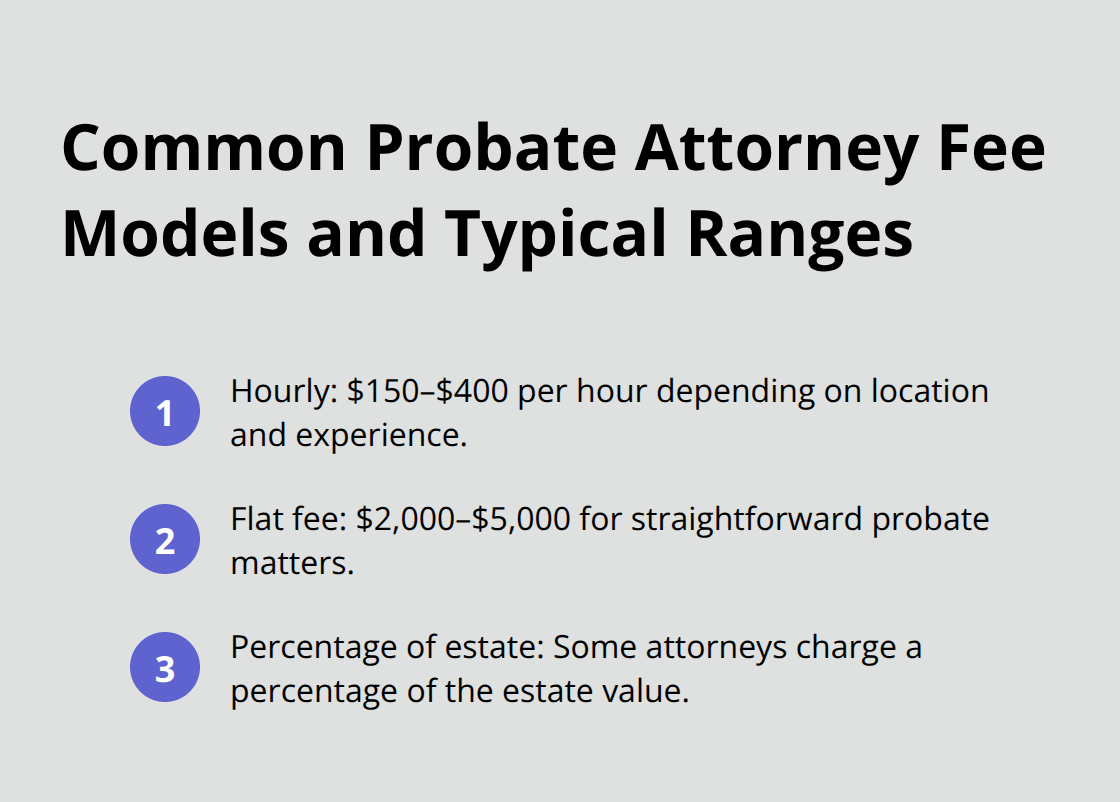
Probate attorneys typically charge either hourly rates, flat fees, or a percentage of the estate value. Hourly rates range from $150 to $400 depending on location and experience, while flat fees for straightforward probates typically run between $2,000 and $5,000. An attorney who clearly explains their fee structure upfront and provides a written engagement letter signals they operate transparently. Red flags include vague pricing, attorneys who won’t discuss costs until the first meeting, or those who charge based only on estate value without explaining what services that covers.
Ask specifically what their fees include and what costs might arise separately (such as court filing fees or costs for asset appraisals). A trustworthy attorney breaks down exactly which tasks they cover and which might incur additional charges.
Response Times and Availability
Probate cases generate constant questions about timelines, tax implications, or beneficiary concerns. An attorney who responds to emails within two business days and schedules regular check-ins prevents small issues from becoming major problems. During your initial consultation, ask how they handle client communication and what their typical response time is. Some attorneys offer free consultations with flexible scheduling, which lets you assess their communication style before committing. The probate process typically takes 9 to 18 months, so you need someone genuinely accessible throughout that period, not just at the beginning and end.
These qualities form the foundation of a strong attorney-client relationship. Once you’ve identified candidates who meet these standards, the next step involves understanding the common mistakes that derail probate cases and how to avoid them.
Common Probate Mistakes and How to Avoid Them
Missing Filing Deadlines Stalls Cases
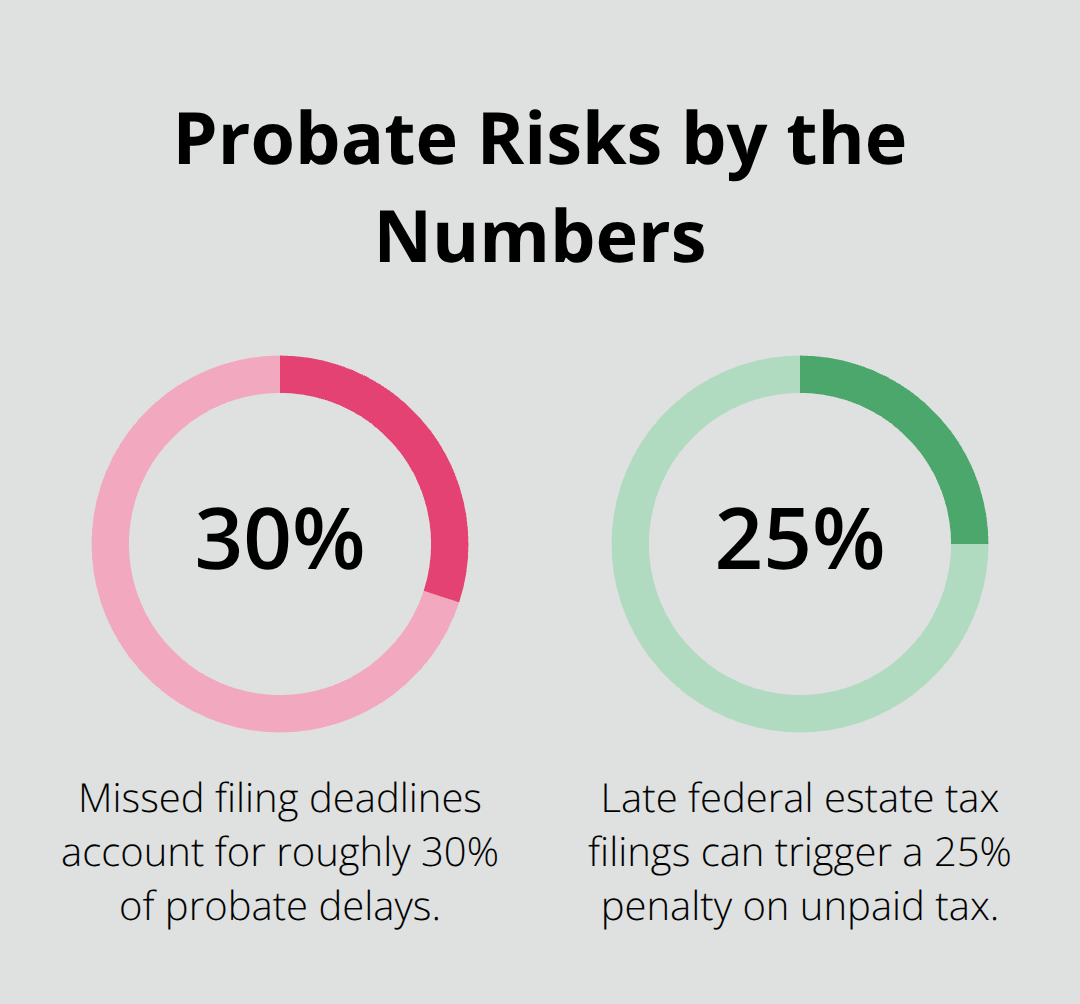
Missing filing deadlines stands as the single most reason probate cases stall or face court sanctions. California probate courts require initial documents within specific timeframes-the petition for probate must file within four months of the death, and inventory and appraisal documents within three months of the petition filing. The Judicial Council of California reports that missed deadlines account for roughly 30% of probate delays. Each missed deadline extends the timeline by months and can trigger court orders requiring corrective filings, additional attorney work, and higher costs. A probate attorney who maintains a systematic filing calendar prevents these costly mistakes.
Incomplete Asset Documentation Creates Disputes
Failing to properly document and value estate assets creates problems that compound throughout the probate process. Many families estimate asset values rather than obtaining formal appraisals, which leads to disputes with the IRS or beneficiaries later. California requires a formal inventory and appraisal for most probate estates, and undervaluing assets can result in tax penalties and interest charges that significantly reduce what beneficiaries ultimately receive. Real estate typically requires a professional appraisal, and businesses or investment accounts need formal valuation reports. The cost of a professional appraisal-typically $300 to $1,500 depending on the property-seems large upfront but prevents far costlier problems. An attorney who insists on complete and accurate documentation at the outset protects the estate from disputes and ensures beneficiaries receive what they’re entitled to get.
Tax Obligations Carry Steep Penalties
Estate taxes and income taxes represent the probate mistakes that hurt hardest financially. Federal estate tax returns must file within nine months of death, and California doesn’t impose a state estate tax but does require income tax returns for the estate itself. Missing the federal deadline triggers penalties of 25% of the unpaid tax amount, according to IRS regulations. The estate itself generates income during probate-from rental properties, investment accounts, or business interests-and that income requires separate tax filings.
Some estates qualify for an extension to file, but claiming that extension requires filing a form before the original deadline passes. An attorney coordinates with a tax professional to identify all tax obligations and file everything on schedule, preventing penalties that reduce the estate’s value.
Understanding these common pitfalls helps you recognize what a capable attorney should handle. The next section shows how a probate attorney actually streamlines the entire process and keeps these problems from occurring in the first place.
How a Probate Attorney Handles the Heavy Lifting
Managing Court Filings and Administrative Tasks
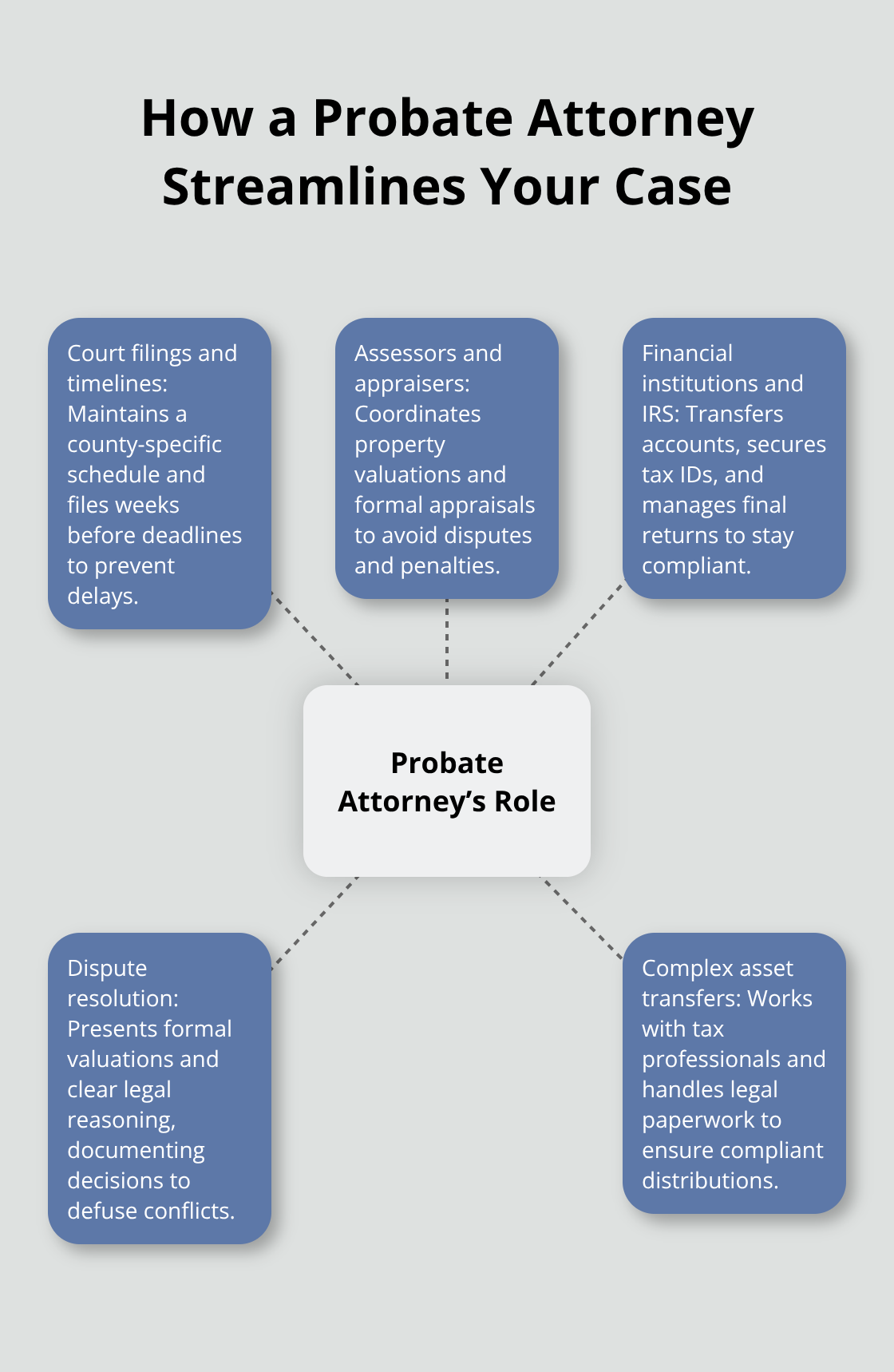
A probate attorney transforms what feels like an endless stack of paperwork into a managed workflow. Families who try to handle probate alone spend an average of 40 to 60 hours on administrative tasks alone, according to the American Bar Association. An attorney systematically manages court filings by maintaining a detailed timeline specific to your county’s requirements, submitting documents weeks before deadlines rather than days before. This approach prevents the costly delays that plague self-managed estates.
Beyond filing, an attorney coordinates with the county assessor’s office for property valuations, communicates with financial institutions to transfer accounts, and manages correspondence with the IRS regarding tax identification numbers and final returns. These tasks sound simple individually but require precise sequencing-you cannot distribute assets to beneficiaries before the court approves the final accounting, and you cannot file the final accounting before all creditor claims expire. An attorney knows this sequence cold and executes it efficiently, reducing the typical 9 to 18 month timeline whenever possible.
Resolving Disputes Between Beneficiaries
Beneficiary disputes escalate quickly without professional intervention. When multiple beneficiaries disagree about how assets should be valued or distributed, an untrained approach rapidly turns into family conflict or even litigation that costs $5,000 to $50,000 or more in legal fees. An attorney presents formal valuations from qualified appraisers, explains the legal reasoning behind distribution decisions, and documents everything in writing so disputes cannot fester.
Handling Complex Asset Valuations and Distributions
Complex assets like family businesses, rental properties with mortgages, or investment portfolios with tax implications demand more than basic accounting. A probate attorney coordinates with tax professionals and appraisers to establish accurate values, handles the paperwork required to transfer these assets legally, and ensures distributions comply with tax law. This coordination prevents beneficiaries from receiving property they cannot afford to maintain or that triggers unexpected tax bills.
Final Thoughts
Selecting the right probate attorney comes down to three core qualities: someone who knows your local courts inside and out, someone who communicates transparently about fees and timelines, and someone genuinely available when you need answers. Professional probate attorney services save money far more often than they cost, since families who handle probate alone face missed deadlines that extend timelines by months, incomplete asset documentation that triggers IRS disputes, and tax penalties reaching 25% of unpaid amounts. A capable probate attorney prevents these expensive mistakes through systematic filing calendars, coordination with appraisers and tax professionals, and management of the complex sequencing that probate demands.
Finding the right attorney starts with identifying candidates who have handled multiple cases in your specific county, then asking direct questions about their fee structure and response times during initial consultations. The cost of professional probate attorney services typically ranges from $2,000 to $5,000 for straightforward estates, which pales against the penalties and delays that self-managed cases encounter. Request references from recent clients and ask specifically how they handle communication throughout the 9 to 18 month probate timeline.
We at Law Offices of Roshni T. Desai offer free consultations with flexible scheduling to help you assess whether we’re the right fit for your situation. Contact us through Law Offices of Roshni T. Desai to discuss your probate needs and learn how we can support your family through this process.