




Living Trust Asset Planning: Organize Your Estate with Confidence
Most people put off estate planning because they think it’s complicated. A living trust asset planning strategy changes that-it gives you control over your assets while you’re alive and ensures they transfer smoothly to your loved ones without probate.
We at Law Offices of Roshni T. Desai have helped countless clients organize their estates with confidence. This guide walks you through the essentials, from understanding how trusts work to avoiding costly mistakes.
What a Living Trust Actually Does
A living trust is a legal container you create while you’re alive that holds your property and directs how it passes to your beneficiaries after you die. Unlike a will, which only takes effect after your death and goes through probate court, a living trust operates immediately and keeps your affairs private. You serve as the trustee during your lifetime, meaning you maintain full control over every asset inside the trust. This is the key difference that makes living trusts so practical: you don’t lose access to your money or property. You can buy, sell, or modify assets whenever you want. The trust simply provides instructions for what happens next.
When you pass away, a successor trustee you’ve named takes over and distributes assets according to your wishes, typically within weeks rather than the months or years probate can take. California courts process roughly 60,000 probate cases annually, and the average probate takes 18 to 24 months to complete. A funded living trust bypasses this entirely.
The Revocable vs. Irrevocable Choice Matters
Most people should use a revocable living trust because you can change, amend, or even cancel it at any time during your life. This flexibility is why revocable trusts dominate estate planning for middle-class families. You can adjust beneficiaries, add property, remove assets, or update instructions without legal complications.
An irrevocable trust, by contrast, cannot be modified once established. You’d use an irrevocable trust only for specific tax strategies or asset protection situations, and frankly, most households don’t need one. The tradeoff isn’t worth it unless you have substantial wealth or face creditor concerns. Irrevocable trusts do provide liability protection and potential tax advantages, but they demand professional guidance and come with permanent consequences.
How Your Assets Actually Move Into and Out of a Trust
Getting property into your trust requires deliberate action, and this is where most people stumble. Simply naming the trust in your documents isn’t enough. For real estate, you must record a new deed transferring the property into the trust’s name at your county recorder’s office. For bank and investment accounts, you contact each financial institution and request a beneficiary designation change or retitling. For vehicles, you update the title at the Department of Motor Vehicles.
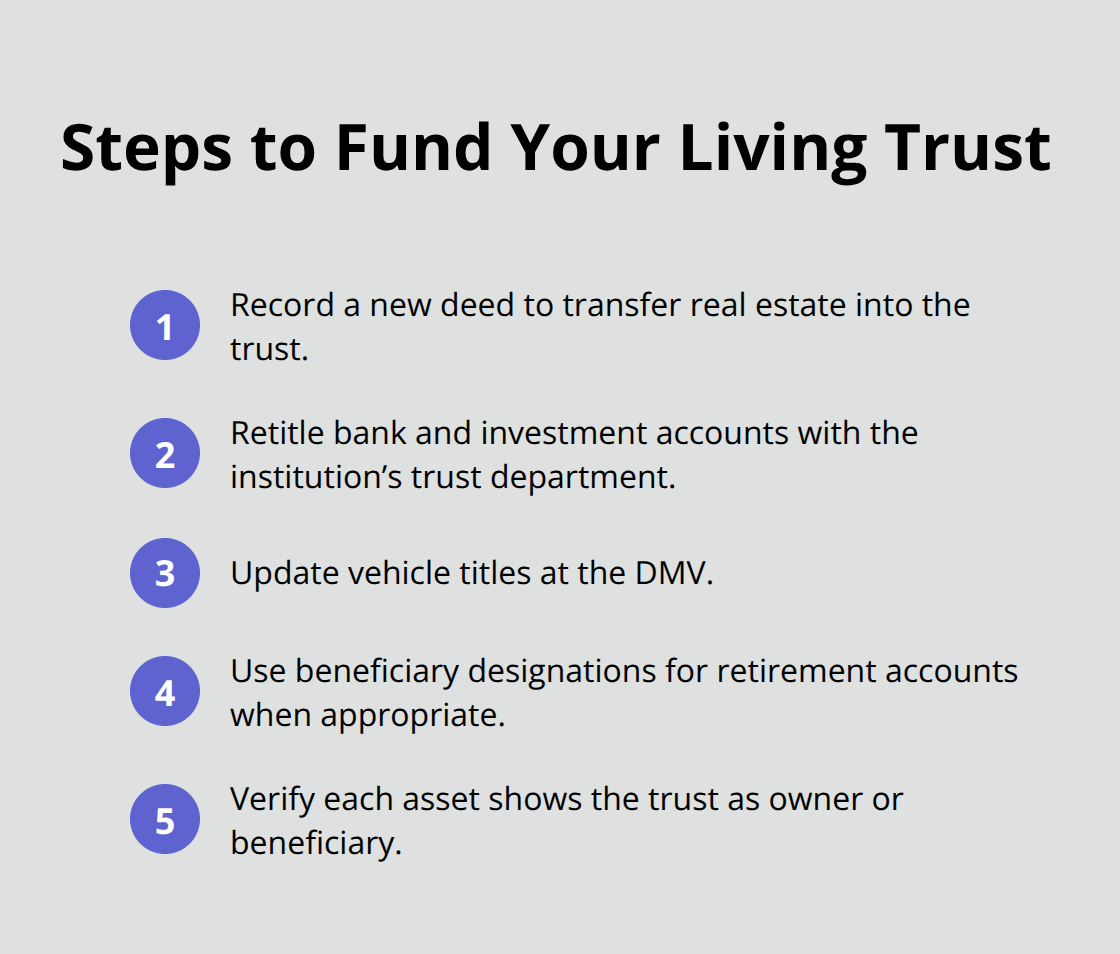
For retirement accounts like IRAs and 401ks, most financial advisors recommend keeping these outside the trust and using designated beneficiaries instead (since moving them into a trust can trigger unwanted tax consequences). When assets aren’t properly retitled, they remain in your individual name and won’t transfer through the trust-they’ll go through probate anyway, defeating the entire purpose.
When you pass away, your successor trustee distributes assets to beneficiaries directly from the trust without court involvement, which is why proper funding during your lifetime makes all the difference. This process of organizing and transferring your assets correctly sets the stage for avoiding the costly mistakes that derail many estate plans.
Common Mistakes People Make When Setting Up Living Trusts
The gap between creating a living trust and actually using it correctly destroys more estate plans than any other factor. You can have the best trust document drafted by an attorney, but if you don’t fund it properly, it becomes nothing more than an expensive piece of paper sitting in a drawer.
Failing to Fund the Trust Properly
Failing to retitle assets into the trust ranks as the most common mistake we see, and it happens because people assume the trust document itself handles the transfer. It doesn’t. A deed for real estate must be recorded at your county recorder’s office with the trust listed as the new owner. Bank accounts need new beneficiary designation forms completed and submitted to each financial institution. Investment accounts require the same treatment. Brokerage firms won’t automatically move your stocks or bonds into the trust just because you created one.
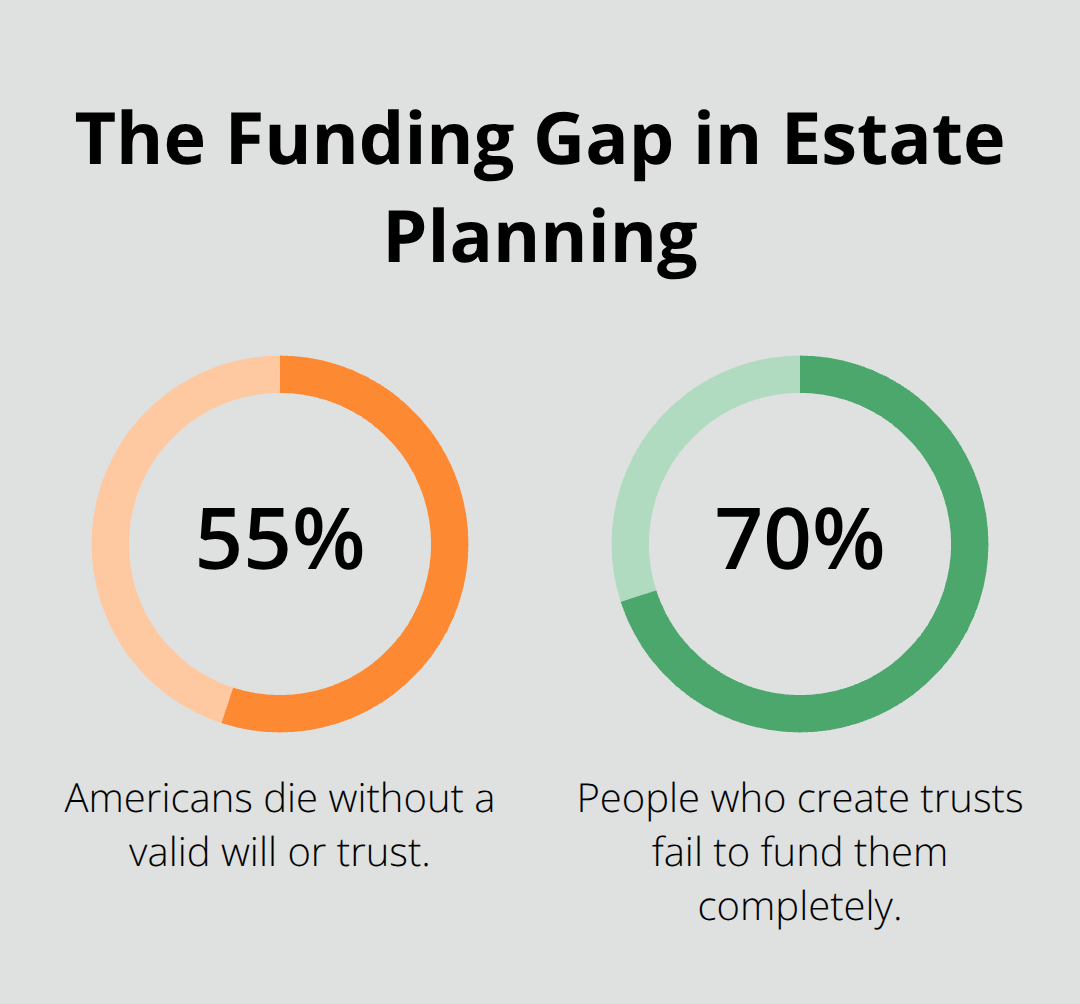
The IRS reports that approximately 55 percent of Americans die without a valid will or trust, but among those who do create trusts, roughly 70 percent fail to fund them completely. This leaves assets to pass through probate anyway, costing families thousands in unnecessary court fees and delays. Proper funding during your lifetime makes all the difference between a functioning estate plan and a costly legal process.
Neglecting to Update the Trust After Major Life Changes
People create a living trust at one point in their life and then never touch it again, which creates serious problems. If you get married, have children, acquire significant property, or experience a major shift in your financial situation, your trust needs to reflect those changes. A trust created before your marriage won’t automatically include your spouse as a beneficiary or account for community property laws in California.
If you had children after establishing your trust and named only your first child as a beneficiary, the other children receive nothing unless you amend the trust. Some people think a will can supplement a trust, but provisions in a will won’t override trust language, so outdated trust instructions stay in effect. Changes are made through amendments (for small adjustments) or full restatements (for significant overhauls), both of which are straightforward and cost far less than dealing with family disputes or probate court battles later. We recommend reviewing your trust every three to five years or immediately after major life events.
Choosing the Wrong Trustee or Successor Trustee
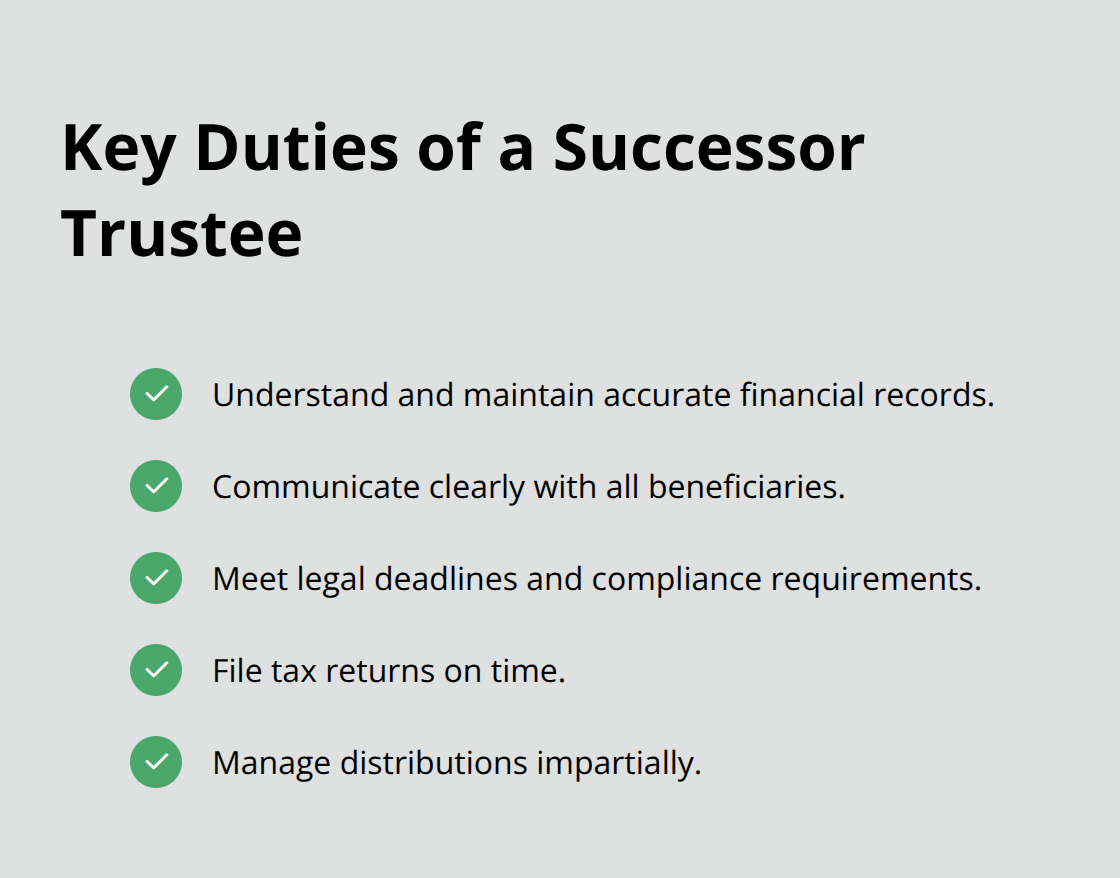
Choosing the wrong person to serve as successor trustee after you pass away creates chaos that can last for years. Many people name their oldest child out of tradition, not competence. A successor trustee must understand financial records, communicate clearly with beneficiaries, meet strict legal deadlines, file tax returns, and manage distributions without playing favorites.
If your chosen trustee lacks financial literacy or has a contentious relationship with other beneficiaries, disputes multiply quickly. Some families end up in litigation over trustee actions that could have been prevented with a more suitable choice. A professional trustee like a bank trust department costs money but removes family conflict entirely. Other families choose a trusted friend or a combination approach where one beneficiary serves alongside a professional co-trustee to balance cost with oversight.
Your trust document should also include clear successor trustee provisions so if your first choice becomes unable or unwilling to serve, a backup is already in place and doesn’t require court intervention. Thinking about who actually has the skills and temperament for the job-not just who you trust emotionally-determines whether your estate plan runs smoothly or falls apart. With these common pitfalls identified, the next step involves organizing your assets in a way that makes funding your trust straightforward and manageable.
How to Organize Your Assets for a Living Trust
List Every Asset You Own
Start by listing every asset you own, not just the obvious ones. Real estate properties, bank accounts, investment portfolios, vehicles, and life insurance policies all need to be accounted for. Many people forget about digital assets like cryptocurrency holdings, online business accounts, domain names, and email accounts with monetary value. The American Academy of Estate Planners found that 60 percent of people fail to document digital assets entirely, leaving families scrambling to locate passwords and account information after death.
Create a master spreadsheet with asset name, current value, account number, location of documents, and current ownership structure. Include the financial institution’s contact information and store any login credentials securely in a password manager like 1Password or Bitwarden, not in a document next to the asset list itself. This single document becomes your roadmap for funding the trust.
Understand How Ownership Structure Affects Your Trust
Ownership structure determines how each asset transfers into your trust. Real property held in your individual name requires a new deed recorded at your county recorder’s office. Bank accounts and investment accounts need retitling through the financial institution’s trust department. Vehicles registered in your name must be transferred at the Department of Motor Vehicles, which typically costs between 15 and 50 dollars depending on your state.
Life insurance policies can be owned by the trust or kept in your individual name with the trust named as beneficiary-a decision that depends on your overall tax situation. Each asset type follows different rules, so understanding these distinctions prevents costly mistakes during the funding process.
Gather Documentation Before Meeting With an Attorney
Collect all original deeds, titles, account statements, and beneficiary designation forms before meeting with an attorney. Having this documentation ready accelerates the trust funding process and reduces legal fees. Most people spend 10 to 15 hours organizing their assets thoroughly, which is far less time than families spend resolving disputes caused by improperly funded trusts.
We at Law Offices of Roshni T. Desai guide you through the specific steps for retitling each asset into your trust’s name. Our dual licensure as an attorney and real estate professional streamlines estate-related property transactions to reduce costs and delays.
Final Thoughts
A living trust asset planning strategy removes the guesswork from estate management and gives you control during your lifetime while your assets transfer without probate delays. Your family avoids months of court proceedings and unnecessary expenses, and you gain peace of mind knowing exactly what happens to your property and who manages it after you’re gone. Start by gathering your asset documentation, listing everything you own including digital accounts, and understanding how each piece of property needs to be retitled into the trust’s name.
Review your trust every three to five years or whenever major life changes occur, and choose a successor trustee based on actual capability rather than family tradition. The single action that transforms your estate plan from a document into a functioning system is funding your trust completely by retitling assets into the trust’s name. We at Law Offices of Roshni T. Desai have guided Southern California families through this process, and our dual licensure as an attorney and real estate professional means we handle both the legal trust documents and any property transactions involved in your estate plan.
Schedule a free consultation with Law Offices of Roshni T. Desai to discuss your situation without pressure or complicated logistics. We’ll walk you through exactly what you need to do, answer your questions, and create a plan tailored to your family’s needs and California’s specific laws.