




Revocable Trust Planning: Build Flexibility Into Your Estate
Most people think a will is enough to handle their estate. But revocable trust planning offers something wills simply cannot: control over your assets during your lifetime and complete privacy after you’re gone.
We at Law Offices of Roshni T. Desai see families avoid costly mistakes by setting up trusts properly from the start. This guide shows you exactly how to build flexibility into your estate plan.
How Revocable Trusts Give You Control That Wills Cannot
Active Control During Your Lifetime
A revocable trust fundamentally changes how your assets move through your lifetime and after your death. Unlike a will, which only takes effect after you die, a revocable trust becomes active the moment you create it. This means you control your assets immediately while alive, and your successor trustee steps in seamlessly if you become incapacitated or pass away.
You retain the ability to modify, amend, or even dissolve the trust entirely at any point. If you name yourself as trustee during your lifetime, you manage your property exactly as you would without a trust-but the legal title sits in the trust’s name rather than your personal name. This arrangement gives you complete control without adding complexity to your daily financial management.
Avoiding Probate’s Time and Cost
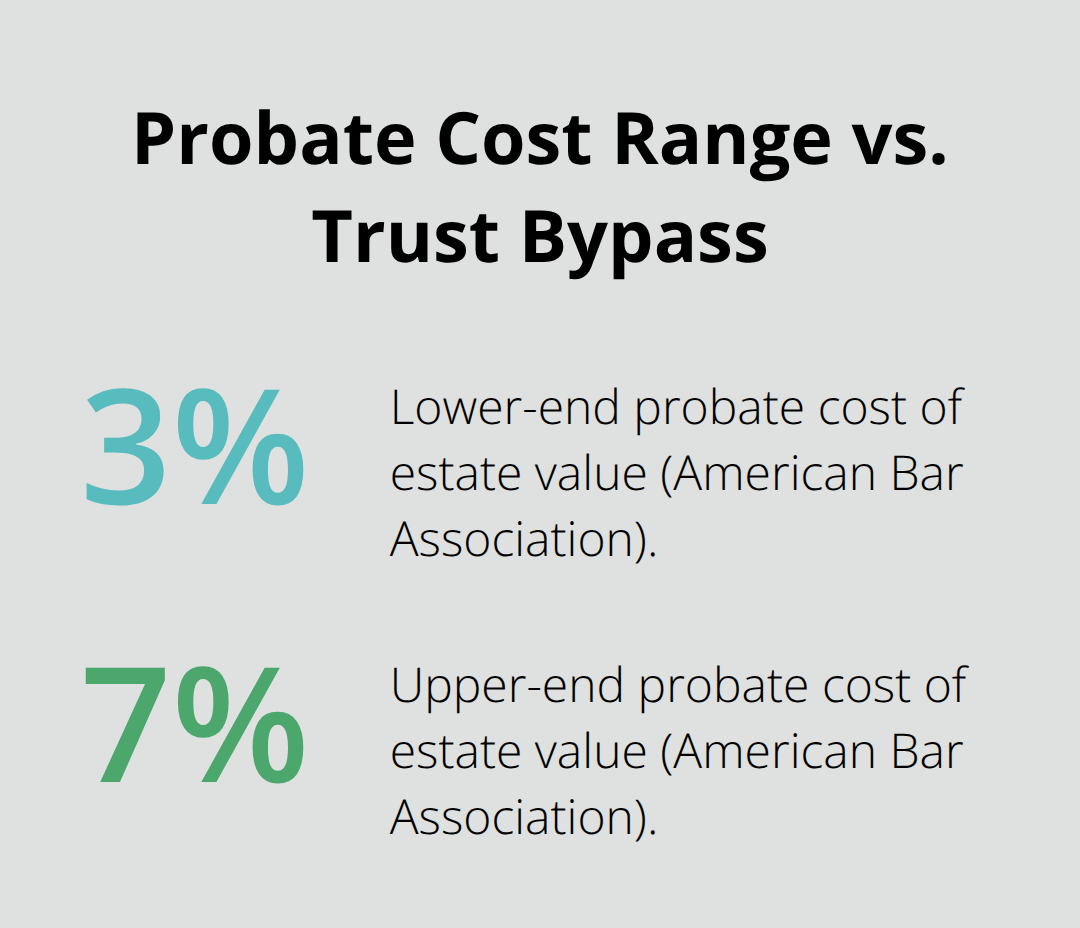
With a will, your estate goes through probate-a public court process that typically takes six months to two years and costs between 3% and 7% of your estate’s value according to the American Bar Association. Your revocable trust bypasses this entirely. The probate process requires filing documents in court, notifying creditors and beneficiaries, and waiting for judicial approval before assets transfer to heirs.
Your trust-based estate plan transfers assets directly to beneficiaries outside the public court system. This direct transfer eliminates court involvement, reduces administrative costs, and accelerates the distribution timeline significantly. Families with substantial assets or multiple properties see the most dramatic savings from this probate avoidance.
Complete Privacy for Your Financial Details
Probate records become public documents that anyone can access; your trust remains entirely confidential. When you become unable to manage your affairs, your successor trustee takes over without court involvement. When you die, that same successor trustee distributes your assets according to your instructions, again without probate delays.
Families protecting privacy around asset distribution, business interests, or the amount left to specific beneficiaries find this confidentiality invaluable. Additionally, a revocable trust allows you to provide detailed instructions for managing your assets if you become incapacitated-something a will cannot address. This incapacity planning feature (often overlooked in basic wills) protects your interests during your lifetime, not just after death.
Planning for Incapacity and Succession
When you become unable to manage your affairs, your successor trustee takes over without court involvement or delays. This seamless transition prevents the need for a conservatorship or guardianship proceeding, which would require court approval and ongoing judicial oversight. Your successor trustee follows your written instructions and manages assets for your benefit until you recover or pass away.
The structure you establish now determines how smoothly this transition occurs. We at Law Offices of Roshni T. Desai help clients structure these trusts to match their specific situations, whether you need straightforward asset transfer or complex management during incapacity. The next section covers the practical steps to fund and manage your trust properly.
Setting Up and Maintaining Your Revocable Trust
Fund Your Trust With Actual Assets
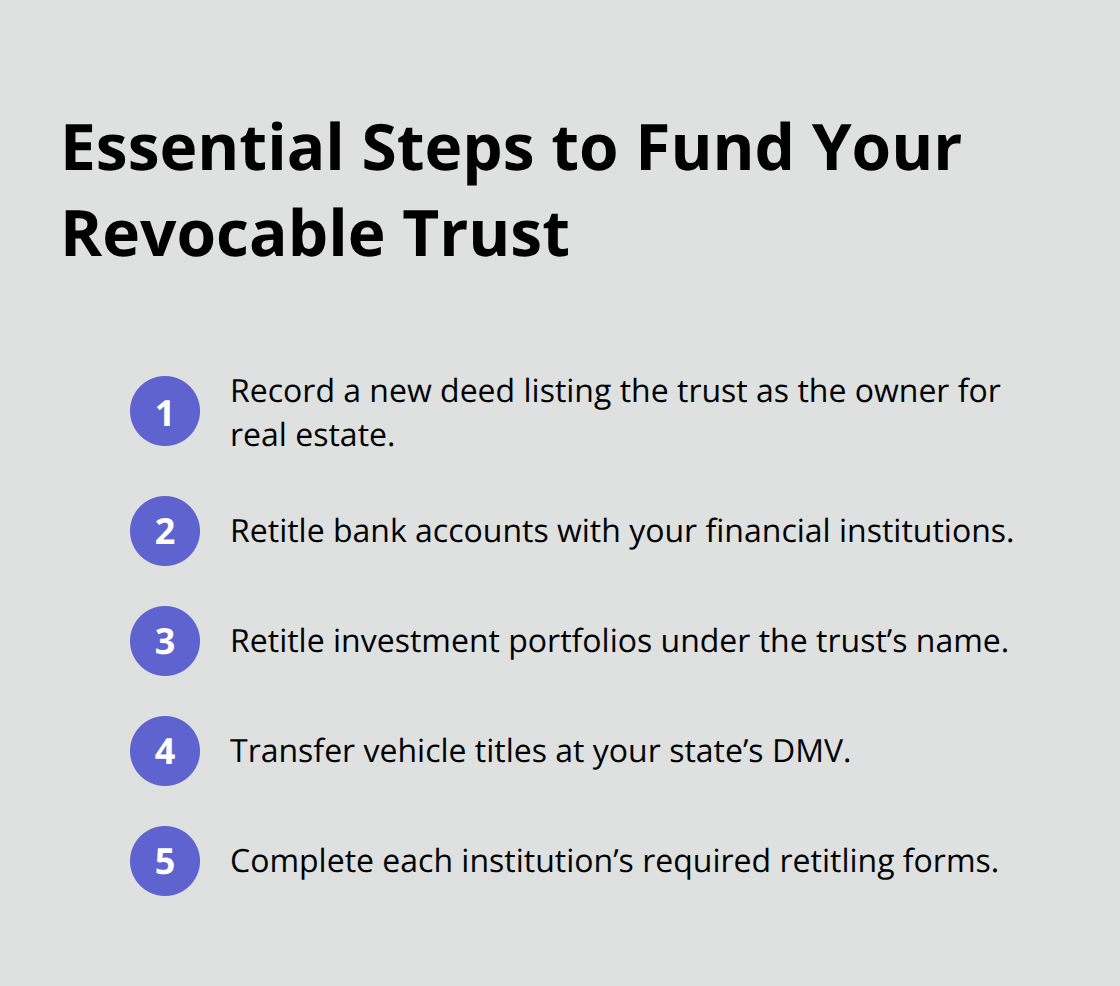
Creating a revocable trust means nothing without actually funding it-and that’s where most people stumble. A trust sits empty until you transfer your assets into it, which requires specific legal steps for different property types. Real estate transfers demand a new deed showing the trust as the owner; bank accounts and investment portfolios need retitling through your financial institutions; and vehicles require title transfers at your state’s DMV.
Many people create the trust document but leave assets in their personal names, which defeats the entire purpose and sends those assets straight into probate anyway. This mistake wastes thousands in court costs and delays that proper funding would have prevented entirely.
Select a Successor Trustee With Care
The successor trustee you name carries enormous responsibility, so this decision deserves far more thought than most people give it. This person manages your assets if you become incapacitated and distributes them after you die, meaning they need both financial competence and trustworthiness-ideally someone organized enough to handle paperwork and communicate clearly with beneficiaries.
Professional trustees like banks or trust companies charge annual fees typically ranging from 0.5% to 2% of assets under management, while family members cost nothing financially but may lack the skills or emotional distance to make difficult decisions fairly. Some families split the role between a family member who knows their wishes and a professional co-trustee who handles administration, which reduces costs while adding accountability.
Your successor trustee should also understand your family dynamics and any special circumstances, such as a beneficiary with substance abuse issues or special needs requiring careful asset management.
Keep Your Trust Current as Life Unfolds
Update your trust whenever major life changes occur-marriage, divorce, the birth of children, significant asset acquisition, or relocation to another state-because outdated instructions create confusion and potential legal challenges. Tax laws and family situations shift constantly, so stale provisions can undermine your original goals and leave your family exposed to unnecessary complications.
Review your trust every three to five years even without major changes. This regular review catches gaps in your funding strategy and ensures your trustee selection still makes sense for your current circumstances. As your assets grow or your family structure changes, the mistakes people make with revocable trusts become increasingly costly to fix.
Where People Sabotage Their Revocable Trusts
Leaving Your Trust Empty of Assets
The gap between creating a revocable trust and actually making it work destroys more estate plans than any other factor. Clients spend thousands on trust documents, then leave those documents sitting useless because the assets never move into the trust’s name. A trust with no assets inside it functions exactly like having no trust at all-your estate still enters probate, your family still waits months for distributions, and your privacy evaporates into public court records.
After your attorney drafts the trust, you must physically transfer ownership of your assets. Real estate needs a new deed recorded at your county recorder’s office showing the trust as owner. Bank accounts require you to visit financial institutions with the trust document and complete their retitling forms. Investment accounts, retirement accounts that allow it, and vehicle titles all demand separate steps. Many people assume the attorney handles this automatically-they don’t. You drive this process, and delays measured in weeks or months mean your trust remains unfunded when you need it most.
Ignoring Beneficiary Changes After Life Events
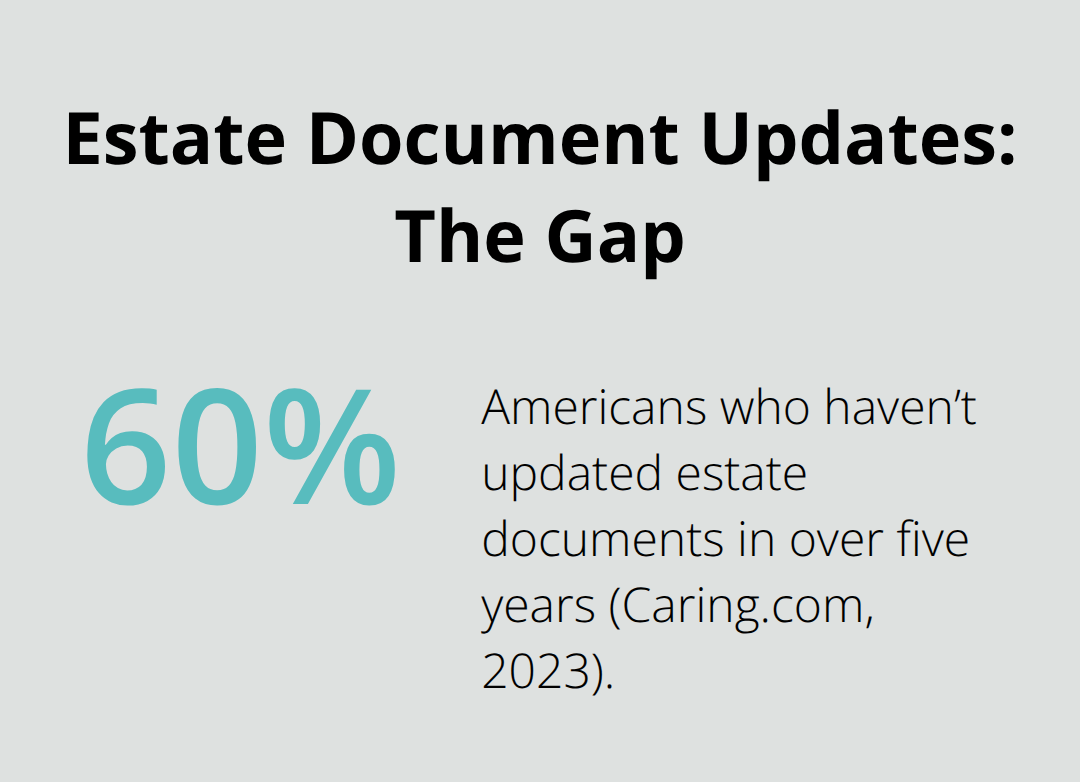
Life moves faster than most people update their legal documents. You marry, have children, watch kids graduate and start families of their own, experience divorce, or develop strained relationships with family members you once named as beneficiaries. Your revocable trust sits unchanged while your actual wishes have shifted completely. A 2023 survey by Caring.com found that 60% of Americans haven’t updated their estate documents in over five years, and many never update them at all after the initial creation.
This creates situations where a former spouse still controls your assets as successor trustee, or a child you’ve become estranged from receives an inheritance you no longer want them to have. You must review your trust document within a year of any major life event-marriage, divorce, births, deaths, significant inheritance, or substantial asset acquisition. Write these dates on your calendar. Set phone reminders. Make updates part of your routine the same way you file taxes annually. We at Law Offices of Roshni T. Desai recommend scheduling a trust review every three to five years minimum, but life events should trigger immediate updates outside that schedule.
Selecting a Trustee Without Careful Consideration
Naming the wrong successor trustee creates far more damage than people anticipate because this person controls everything when you cannot or when you die. You might choose your oldest child because they’re the responsible one, only to discover years later that they lack patience for detailed paperwork or they resent managing money for younger siblings. A family member might refuse the role when the time comes, leaving your family without leadership during crisis.
Professional trustees at banks and trust companies charge between 0.5% and 2% annually according to the American College of Trust and Estate Counsel, which adds up dramatically on larger estates but provides neutrality and competence your family member might lack. The strongest approach combines both: appoint a family member who understands your values and wishes alongside a professional co-trustee who handles the administrative burden. This split reduces the financial cost while preventing one person from wielding unchecked power.
Your successor trustee also needs clear written instructions about your intentions beyond what the trust document itself contains-notes about why you structured distributions a certain way, guidance about managing difficult family dynamics, and specifics about any beneficiary with special circumstances. Without these instructions, your trustee makes judgment calls that might contradict your actual wishes.
Final Thoughts
A revocable trust gives you active control over your assets while you’re alive, complete privacy for your financial details, and a seamless transition if you become incapacitated. The probate process costs families between 3% and 7% of their estate’s value and takes six months to two years, while a properly funded trust bypasses these delays and expenses entirely. Revocable trust planning provides flexibility throughout your lifetime, not just after death.
The mistakes people make are preventable. Funding your trust requires actual work-transferring deeds, retitling accounts, and updating vehicle titles-but skipping these steps leaves your estate vulnerable to probate anyway. Updating your trust after major life events takes minimal effort compared to the confusion and legal challenges that outdated provisions create, and selecting the right successor trustee (whether a family member, a professional, or a combination of both) determines how smoothly your wishes get carried out when you need it most.
Revocable trust planning isn’t complicated, but it does require attention to detail and follow-through. Schedule a free consultation with us and discover how a revocable trust protects your family’s future.