




Living Trust Administration Guide: Steps to a Smooth Trusteeship
Becoming a trustee brings real responsibilities that many people underestimate. You’ll manage assets, handle taxes, communicate with beneficiaries, and navigate legal requirements that demand precision.
We at Law Offices of Roshni T. Desai created this living trust administration guide to walk you through each step. This guide covers what you need to know to avoid costly mistakes and fulfill your duties properly.
Understanding Your Role as Trustee
What a Trustee Actually Does
As a trustee, you hold a legal position that courts and beneficiaries take seriously. Your role isn’t advisory or ceremonial-it’s operational. You make decisions about trust property, manage money, file documents, and answer to beneficiaries who have legal rights to information about how you handle their inheritance. The law imposes what’s called a fiduciary duty on you, meaning you must act in the best interests of the beneficiaries, not yourself. This duty is strict. If you fail to manage trust assets properly, beneficiaries can sue you personally for damages.
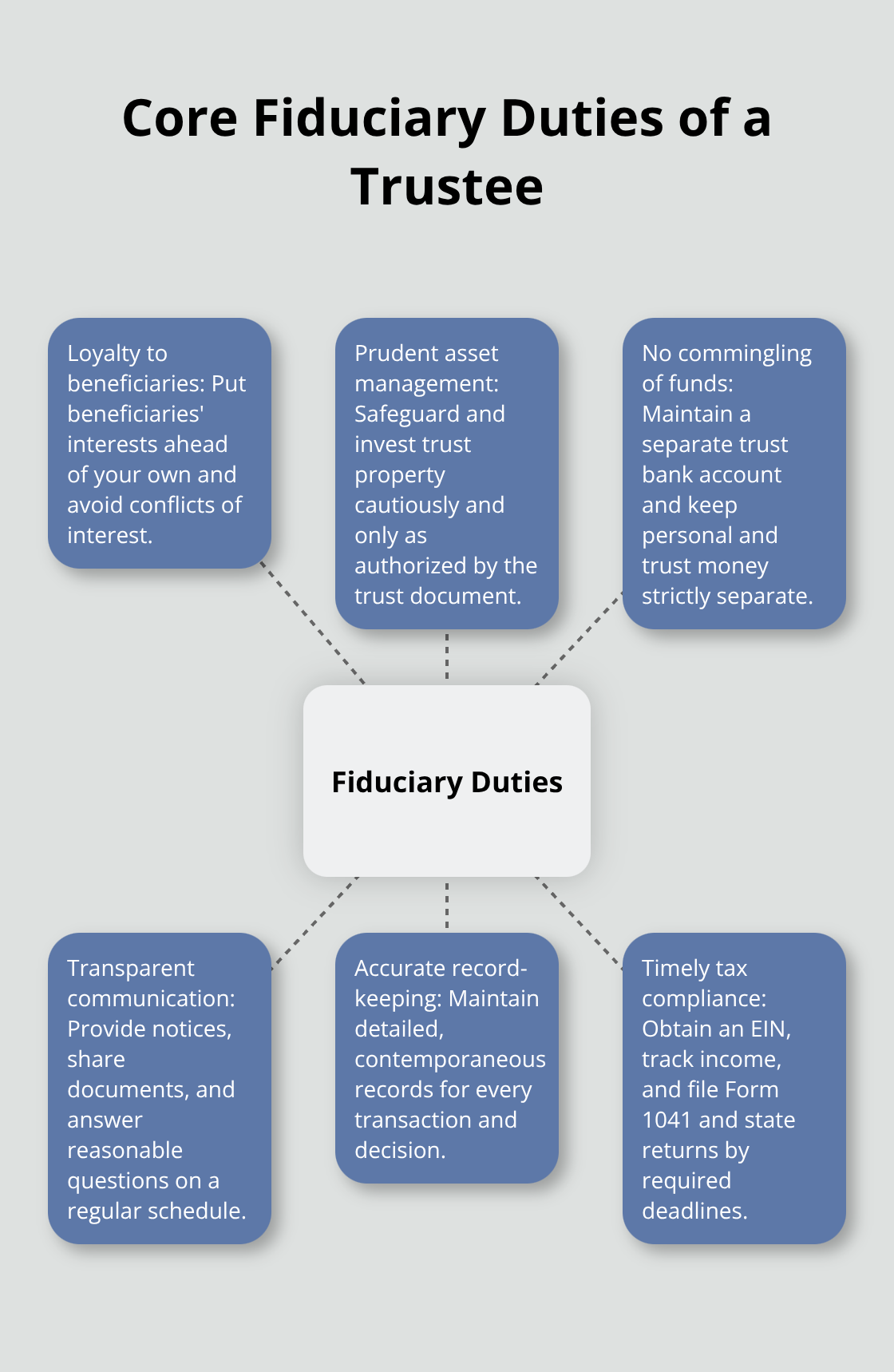
Courts in California hold trustees to a high standard. You cannot comingle trust money with your personal accounts, you cannot make risky investments without authority from the trust document, and you cannot ignore tax deadlines. The American College of Trust and Estate Counsel reports that trustee liability claims have increased significantly over the past decade, with disputes often arising from poor record-keeping and inadequate communication.
Start by reading the trust document thoroughly-multiple times if necessary. Understand what powers the trust grants you and what restrictions it places on you. Some trusts give trustees broad discretion to distribute assets; others require strict adherence to specific instructions. Know the difference.
Managing Trust Assets Properly
Managing trust assets requires you to inventory everything the trust owns, from real estate and bank accounts to vehicles and personal property. Get appraisals for valuable items, especially real property. This inventory becomes your baseline for tracking what you distribute and what remains. You must open a trust bank account separate from your personal finances-this is non-negotiable. The trust must have its own tax identification number, and the IRS requires trustees to file Form 1041 if the trust generates income above certain thresholds. California law also mandates that you provide beneficiaries with an accounting that shows what assets entered the trust, what expenses you paid, what distributions you made, and what remains. You must do this at least annually, or more frequently if the trust document requires it.
Communicating with Beneficiaries
Communication with beneficiaries isn’t optional either. California Probate Code Section 16061 requires trustees to inform beneficiaries about trust administration, provide copies of the trust document, and answer reasonable questions. Many trustee conflicts stem from silence. Beneficiaries who feel ignored become suspicious and litigious. Set expectations early-send a letter explaining your role, your timeline for completing administration, and how beneficiaries can reach you. Schedule regular updates, even if nothing dramatic has changed. This transparency prevents misunderstandings and demonstrates your commitment to fulfilling your duties properly. With these foundational responsibilities understood, the next step involves tackling the specific administrative tasks that keep trust administration moving forward.
Administrative Tasks During Trust Administration
Locate and Document Every Asset
The real work of trust administration starts once you officially step into the trustee role. Within the first 30 days, you must locate and document every asset the trust owns. Contact banks, investment firms, and insurance companies to request statements. For real estate, gather deeds and recent appraisals-property values matter for tax reporting and distribution accuracy.
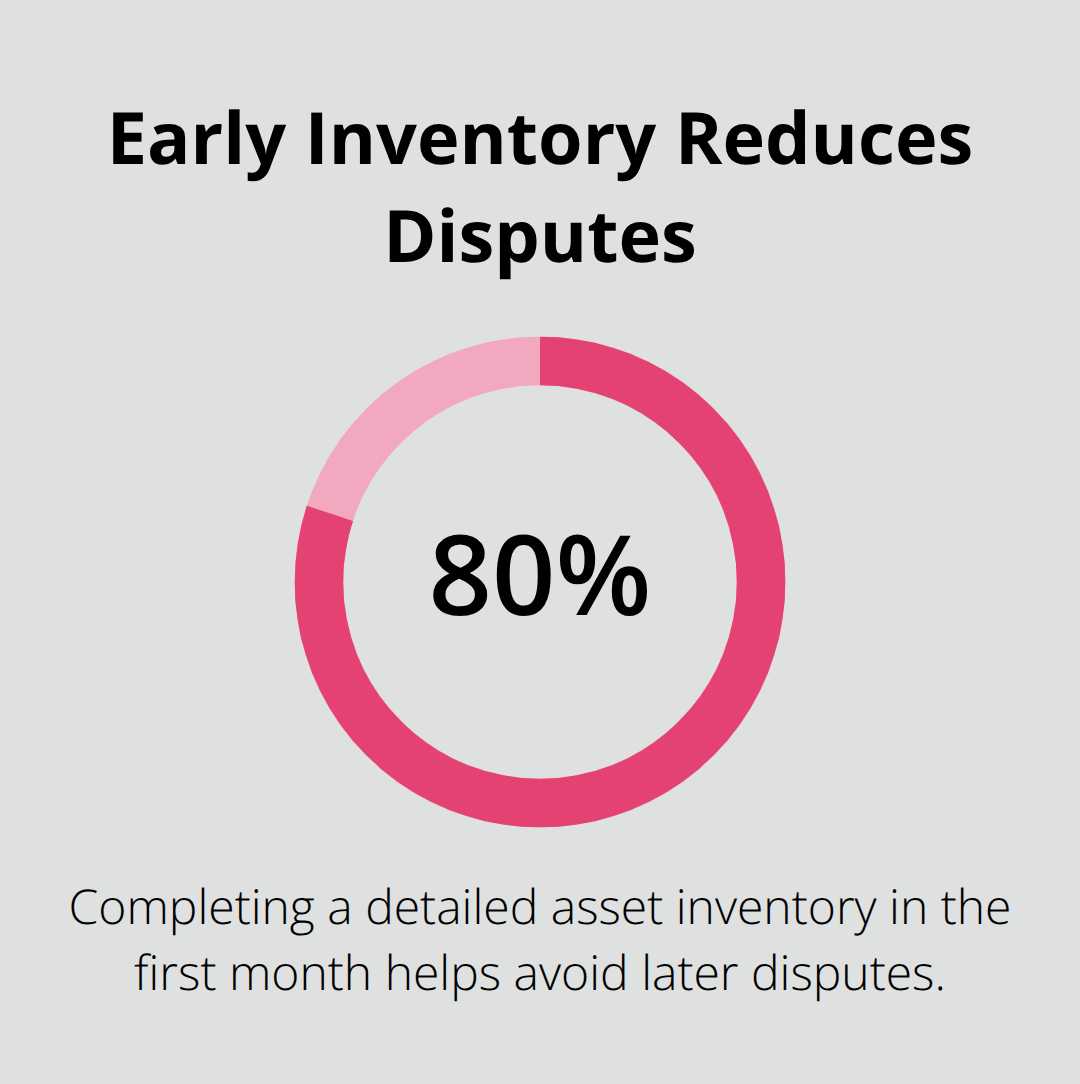
The National Association of Estate Planners and Councils reports that trustees who complete a detailed asset inventory within the first month avoid approximately 80 percent of later disputes with beneficiaries. Create a spreadsheet listing each asset, its current value, the date you obtained that valuation, and any account numbers or reference information.
This document becomes your administration bible.
Identify Debts and Obligations
Simultaneously, you must identify all debts and obligations the trust owes. Request a copy of the decedent’s credit report, review mortgage documents, check for outstanding property taxes, and identify any loans against trust property. California requires trustees to notify creditors within a specific timeframe-generally, creditors have four months from the date of death to file claims against the estate.
Pay legitimate debts from trust funds before distributing anything to beneficiaries. This protects both the trust and the beneficiaries from future liability claims.
Handle Tax Obligations
Federal income tax returns for the trust itself are due if the trust generates income above $600 annually, and state returns may be required depending on California’s current thresholds. The IRS Form 1041 must be filed annually until the trust is fully distributed. Many trustees miss the fact that trusts can owe income taxes on interest, dividends, and rental income-even if beneficiaries receive no distributions that year. Set aside funds for these tax obligations before you touch anything else.
Distribute Assets According to Instructions
Once debts and taxes are handled, you can distribute remaining assets according to the trust document’s instructions. Some trusts specify exact distributions-for example, $50,000 to one beneficiary and the remainder to another. Others give you discretion to distribute based on beneficiaries’ needs. Whatever the trust says, follow it precisely.
Document every distribution with written confirmation to each beneficiary, including what they received, when they received it, and what value you assigned to it. Keep copies of these confirmations in your trustee records. The entire process typically takes six months to two years depending on asset complexity and whether disputes arise. Trustees who manage and organize their administrative workflow with meticulous records and communicate openly with beneficiaries throughout complete administration with minimal conflict. As you work through these administrative tasks, you’ll encounter situations where your decisions directly impact beneficiaries’ outcomes-which is why understanding common pitfalls becomes your next priority.
Common Mistakes Trustees Make
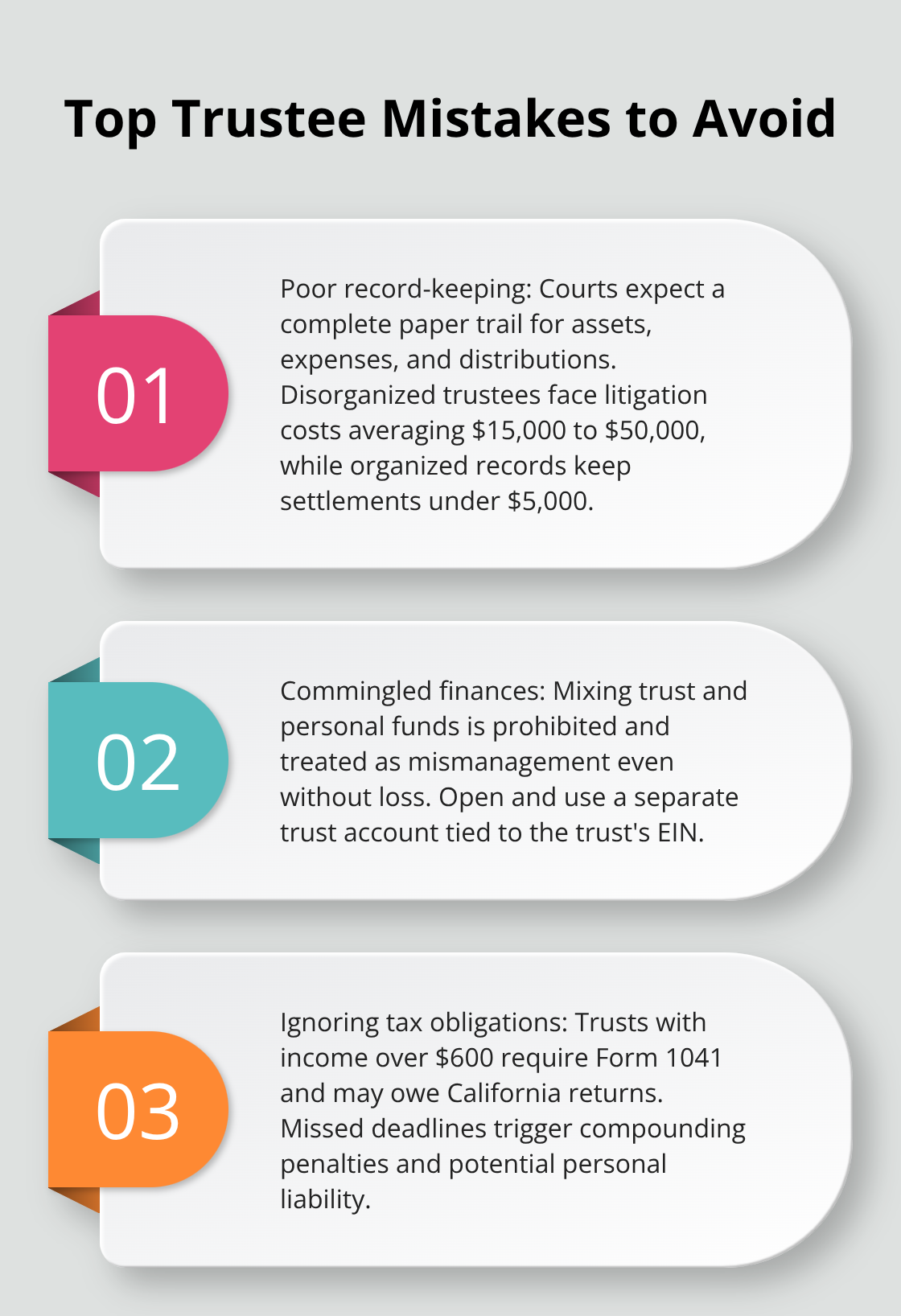
Trustees often believe that good intentions protect them from liability. This assumption costs thousands in unnecessary legal fees and damages. The three most damaging mistakes stem from poor record-keeping, commingled finances, and missed tax deadlines-each one independently fixable, yet trustees continue making them because they underestimate how seriously courts and beneficiaries treat these failures.
Failing to Keep Detailed Records
Poor record-keeping stands as the leading cause of trustee disputes. Courts require documentation that shows every transaction, every decision, and every dollar movement. If you cannot produce a clear paper trail, courts assume the worst. The American College of Trust and Estate Counsel found that trustees without detailed records face litigation costs averaging $15,000 to $50,000, while organized trustees with comprehensive documentation settle disputes for under $5,000 when conflicts arise at all.
Your records must include bank statements, investment account statements, receipts for expenses paid, copies of distributions made, and correspondence with beneficiaries. Create a dedicated folder-digital or physical-for each year of administration. Date every document. A spreadsheet tracking all transactions with columns for date, description, amount, and supporting document reference takes three hours to set up and prevents catastrophic problems later.
Mixing Personal and Trust Finances
Commingling trust money with personal accounts ranks as the second critical mistake. California law explicitly prohibits this practice, and courts treat violations as evidence of mismanagement even if no money actually disappeared. If you deposit trust funds into your personal checking account, you have created a legal problem that no amount of explanation can fix.
The trustee bank account costs nothing to open and takes 15 minutes. Contact your bank and specify that the account is for trust administration-this designation matters for legal protection. Keep this account separate throughout the entire administration period. Never pay personal expenses from it. Never deposit personal income into it. The IRS assigns the trust its own tax identification number (EIN), and the trust bank account operates under that number, not yours.
Ignoring Tax Obligations and Deadlines
Tax obligations destroy more trustee administrations than any other single factor. Federal Form 1041 filings are mandatory if the trust receives income exceeding $600 annually. California imposes additional state income tax filing requirements. Missing these deadlines triggers penalties that compound monthly, and the IRS can hold you personally liable for unpaid trust taxes.
Many trustees assume beneficiaries handle their own taxes on distributions, then discover too late that the trustee files Form 1041 reporting all trust income regardless of distributions. Set aside funds for taxes before you distribute anything. Calculate estimated tax liability in month two of administration and set that money aside immediately. If the trust owns rental property, investment accounts, or business interests generating income, hire a CPA familiar with trust tax returns-this costs $800 to $2,500 depending on complexity but prevents penalties that run $5,000 to $25,000. Document your tax planning decisions in writing.
Final Thoughts
Trust administration demands precision, consistency, and honest communication from start to finish. The mistakes trustees make are preventable-detailed records, separate bank accounts, and timely tax filings protect you legally and demonstrate respect for your beneficiaries’ interests. When the trust owns real estate in multiple states, when beneficiaries disagree about distributions, when tax obligations become complex, or when you feel uncertain about a decision, you should seek professional guidance.
Hiring a CPA for tax matters costs far less than paying penalties and legal fees later, and an attorney can review your administration plan and answer specific questions about California probate law. We at Law Offices of Roshni T. Desai work with trustees throughout Southern California who need support navigating trust administration. Ms. Desai’s dual background as an attorney and real estate professional means we can streamline property-related transactions that often complicate trust administration.
If you’re managing a trust and need clarity on your responsibilities or want to discuss specific challenges, contact Law Offices of Roshni T. Desai for a free consultation. We offer flexible home or office visits to fit your schedule, and this living trust administration guide serves as your foundation for understanding what comes next. Your role as trustee is temporary but significant, and completing it properly honors the trust creator’s wishes while protecting beneficiaries who depend on your management.