




Estate Administration Timeline: From Probate to Final Distribution
When a loved one passes away, their estate must go through probate-a legal process that can feel overwhelming without clear guidance. The estate administration timeline varies significantly depending on your situation, but most California estates take between nine months and two years to fully settle.
At Law Offices of Roshni T. Desai, we help families navigate each phase of this process so nothing falls through the cracks. Understanding what happens at each stage helps you prepare for what’s ahead.
How Long Does Probate Actually Take in California
Probate in California involves far more than just reading a will. The court must validate the will, inventory all assets, notify creditors, settle debts and taxes, and finally distribute what remains to beneficiaries. Each step has legal deadlines and requirements that add time to the process. California law mandates a four-month minimum creditor claim period alone, meaning even the fastest estates cannot close before this window expires. The State Bar of California reports that most estates take between nine months and two years, though this varies dramatically based on asset complexity, family disputes, and whether the estate qualifies for simplified procedures like succession without administration for smaller estates under $166,250 in gross value.
What Actually Slows Down Your Timeline
Incomplete or missing documentation ranks as the primary cause of delays we see repeatedly. If the will cannot be located, if asset titles lack clarity, or if the deceased left no records of financial accounts, the administrator must conduct extensive searches and potentially hire investigators. Beneficiary disputes create another major bottleneck-when family members disagree over interpretation of the will or challenge its validity, courts may require litigation that extends timelines by months or years.
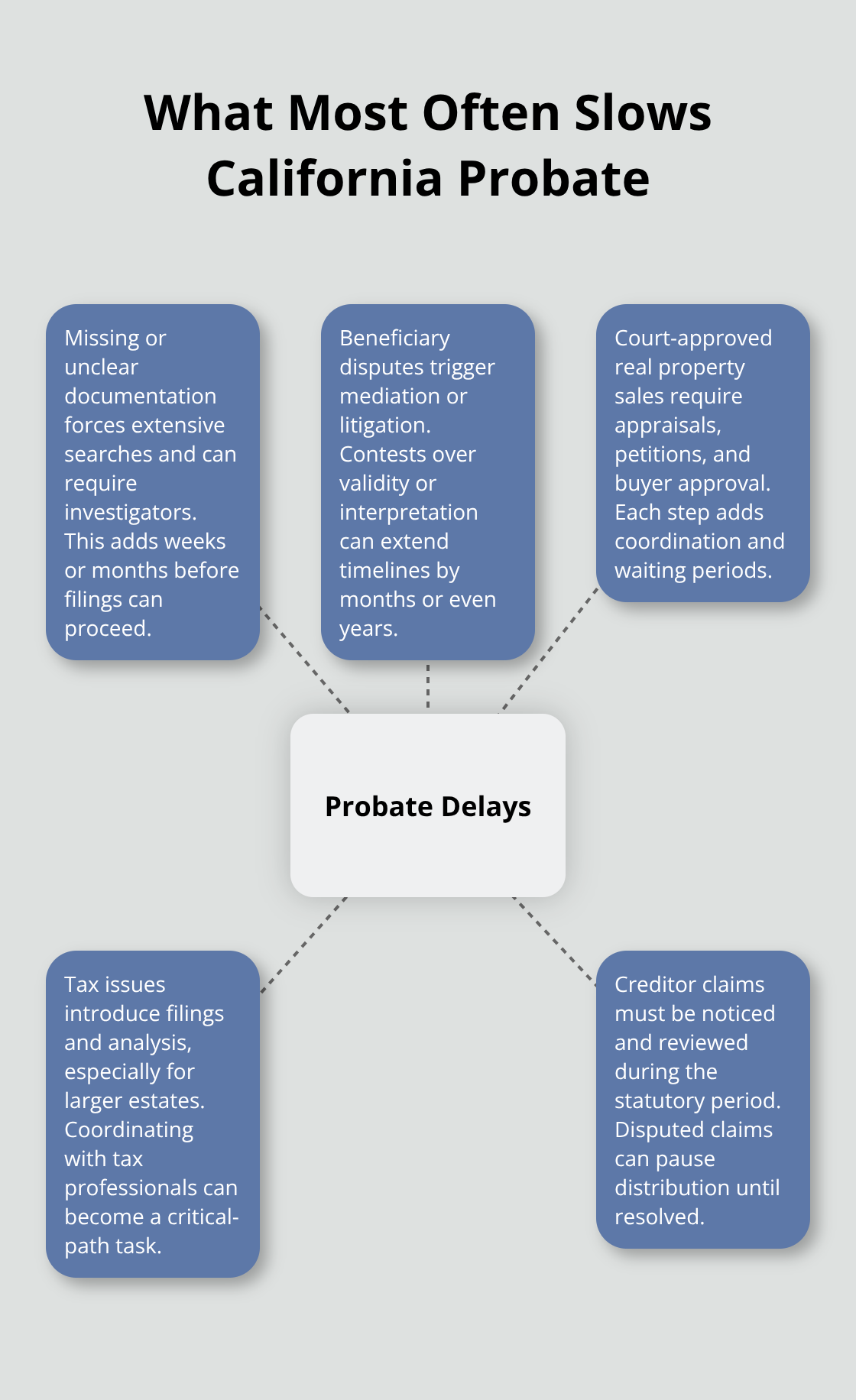
Property sales within the estate also complicate matters significantly, as California probate courts must approve any real estate sales, requiring appraisals, court petitions, and buyer approval processes. Tax issues present another layer of complexity; federal estate taxes apply to estates exceeding $13.61 million in 2024, and California’s state income tax on inherited property can trigger additional filing requirements and delays. Creditor claims, including medical bills and mortgage debts, must be addressed during the creditor notification period, and disputed claims can halt distribution indefinitely.
Reducing Your Timeline With Proper Planning
The fastest path through probate involves having organized financial records before death occurs. Create a detailed inventory of all accounts, property titles, insurance policies, and digital assets with account numbers and locations clearly documented. Name a professional fiduciary or trusted individual as executor beforehand to prevent court-appointed delays. For significant estates, consider revocable living trusts during the planning stage, as trust administration typically avoids probate court entirely and completes in three to six months rather than the standard nine to twenty-four month probate timeline. Keep beneficiary designations current on retirement accounts and insurance policies to remove those assets from probate entirely. If your estate includes real property, having clear title and minimal liens reduces appraisal and sale complications substantially.
How Professional Guidance Streamlines the Process
Working with an attorney who understands California probate law helps you avoid the missteps that extend timelines. An experienced probate professional identifies which assets require court approval and which can transfer outside probate, organizes documentation in the correct sequence, and communicates with creditors and beneficiaries on your behalf. This coordination prevents missed deadlines and reduces the back-and-forth that typically adds months to administration. At Law Offices of Roshni T. Desai, our dual licensure as both attorney and real estate professional streamlines estate-related property sales and transactions to reduce costs, delays, and communication hassles. The right guidance transforms a confusing process into a manageable one, allowing your family to move forward with confidence.
What Happens During Each Phase of Estate Administration
Will Validation and Court Appointment
The probate process unfolds in distinct phases, each with specific court requirements and deadlines that directly impact your timeline. The executor files the petition to probate the will with the California probate court to begin the first phase. The court validates the will’s authenticity through a process that typically takes four to eight weeks, assuming no one contests the document. During this validation period, the court appoints the executor officially and grants them letters testamentary (legal authority to act on behalf of the estate). This initial phase sounds straightforward, but incomplete filing documents or missing signatures can push validation back by weeks. The executor must provide the original will, a certified death certificate, and a completed petition form with specific information about the estate’s value and beneficiaries. California probate courts process thousands of filings monthly, so accuracy matters enormously-a single missing detail can mean rescheduling your hearing and losing weeks of progress.
Inventory, Appraisal, and Asset Documentation
Once the court validates the will, the inventory and appraisal phase begins immediately. California law requires the executor to file an inventory of all estate assets within ninety days of appointment, with values as of the date of death. This phase demands precision because undervaluing assets can trigger IRS scrutiny, while overvaluing them may inflate estate taxes unnecessarily. A licensed appraiser must evaluate real property, a process costing between $300 and $1,000 depending on property complexity and location. The executor must gather all financial statements, tax returns, and debt documentation during this phase to prepare for creditor review.
Creditor Notification and Claims Period
Simultaneously with inventory work, the executor must publish a notice of administration in a local newspaper and send formal notice to all known creditors. This action triggers a four-month creditor claim period mandated by California law. This creditor window cannot be shortened regardless of circumstances-it’s a statutory minimum that applies to every estate. During these four months, creditors submit claims for unpaid debts, medical bills, and other obligations.
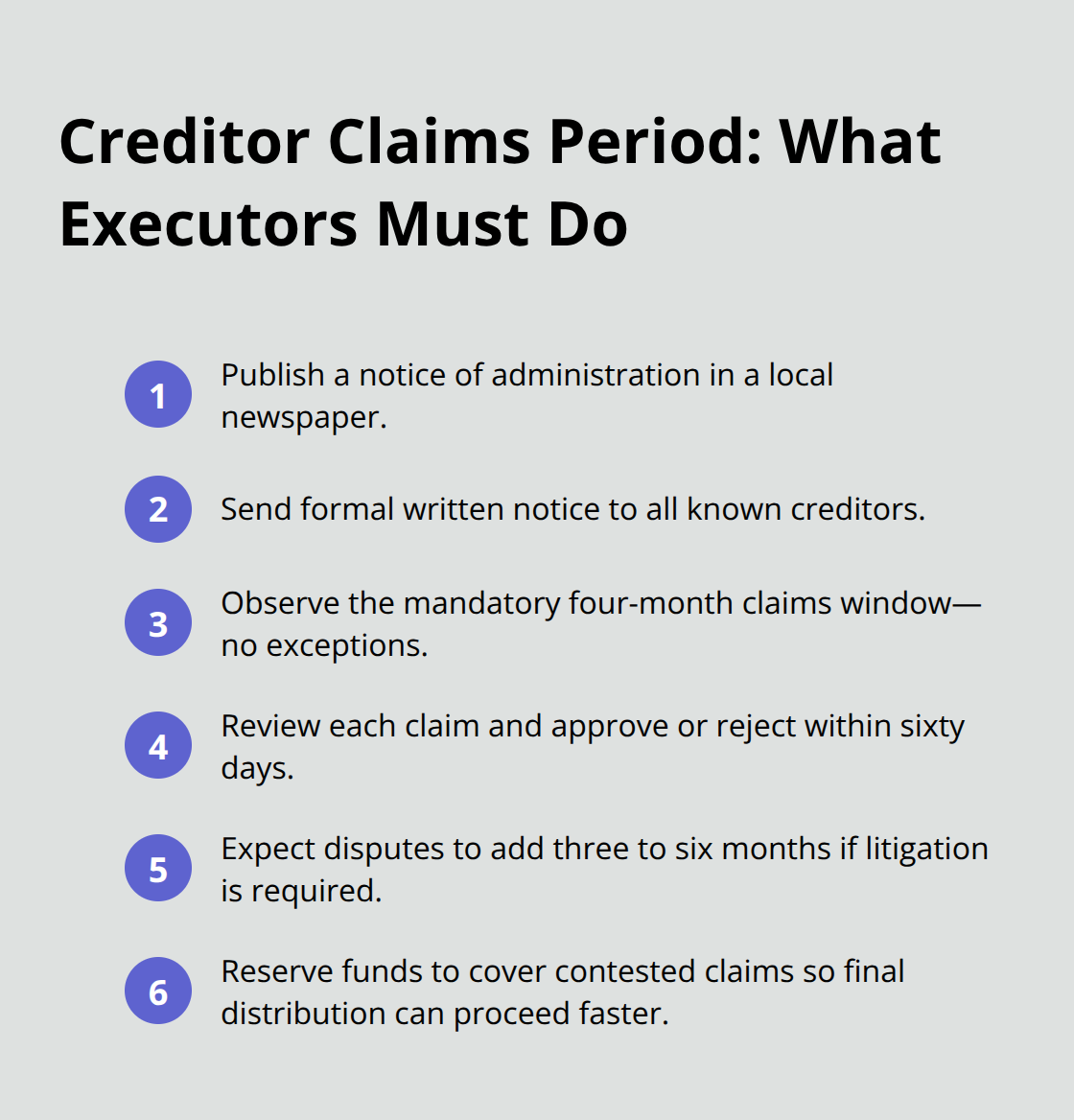
The executor must review each claim, verify legitimacy, and either approve payment or formally reject it. Disputed claims can extend this phase significantly, occasionally adding three to six months if litigation becomes necessary.
The complexity of creditor claims and asset valuations sets the stage for the final distribution phase, where beneficiaries receive their inheritance and the estate closes. Understanding how these early phases affect your timeline helps you prepare for what comes next in the administration process.
What Actually Causes Estate Administration to Fail
Missing Deadlines and Incomplete Documentation
Estate administration fails most often when executors treat it as a passive process. Executors frequently assume the court will remind them of deadlines or that missing a filing won’t matter significantly. This assumption costs families thousands of dollars and adds months to administration timelines. Missing the four-month creditor claim publication deadline, failing to file the inventory within ninety days, or submitting incomplete court documents forces the court to reject your filing entirely, requiring you to refile and restart the clock.
California probate courts maintain strict filing requirements: the petition must include the decedent’s full legal name, exact date of death, property descriptions with assessor parcel numbers, and beneficiary information with complete addresses. A single missing detail triggers automatic rejection. Estates have been delayed by six months because an executor listed a property address incorrectly.
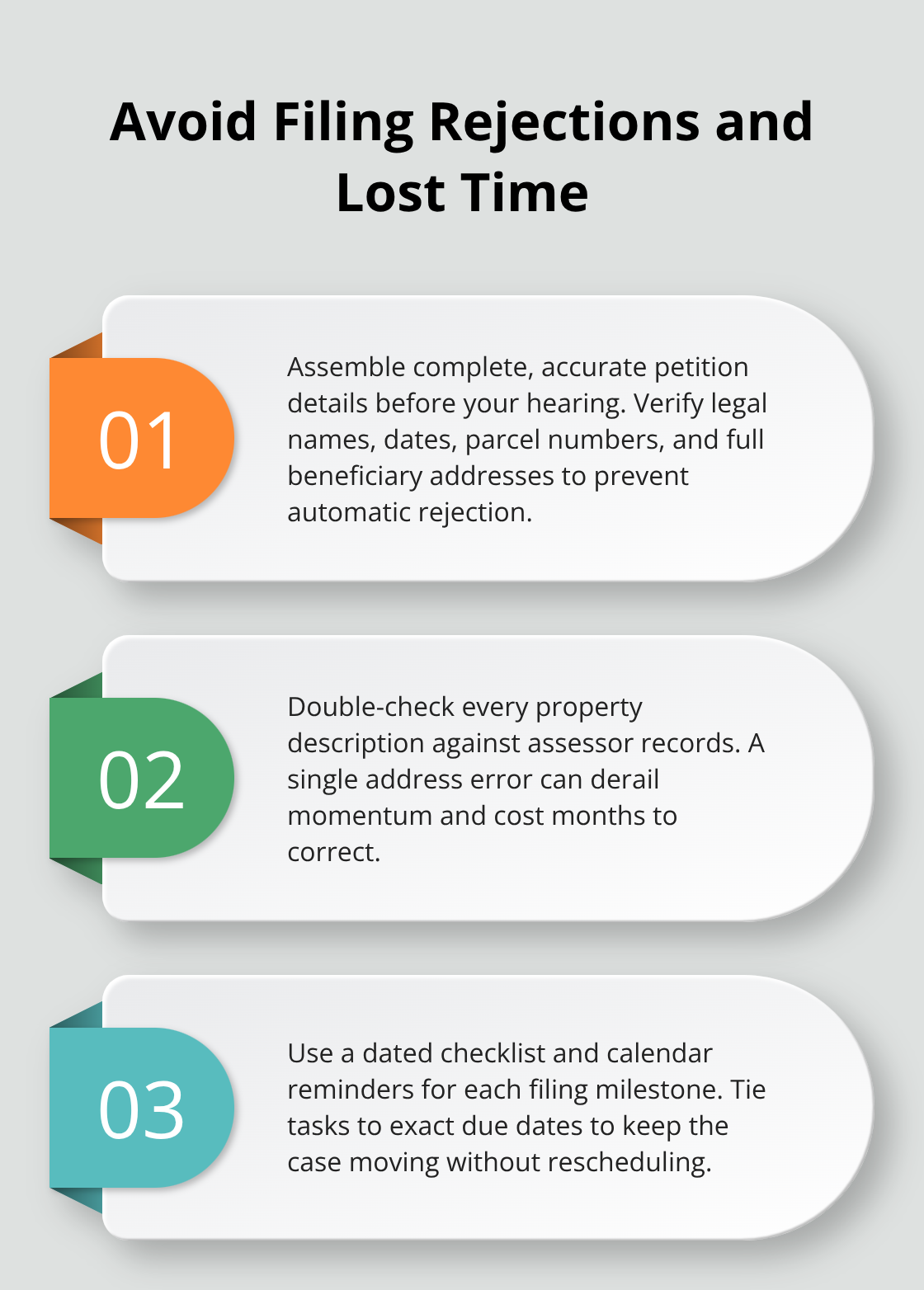
The solution is maintaining a physical checklist of every deadline tied to specific calendar dates, not vague timeframes. Create a spreadsheet with the ninety-day inventory deadline, the four-month creditor period end date, and the date for filing the final account. Set phone reminders thirty days before each deadline.
Probate asset management fails most often because estates lack accurate documentation from day one. If you cannot locate account statements, property deeds, or insurance policies, the court requires formal searches and affidavits stating you made reasonable efforts to find documents. This process adds four to eight weeks minimum. Before death occurs, request that the deceased create a simple document listing every financial account, property address, insurance policy, and digital asset with account numbers and contact information. Store this in a safe deposit box or with the executor. This single document eliminates months of detective work.
Beneficiary Disputes and Creditor Claims
Beneficiary disputes and creditor claims create delays that executors cannot control through organization alone, yet proper handling still matters enormously. When two or more beneficiaries disagree about will interpretation, the executor cannot distribute assets until the dispute resolves through mediation or court decision. This litigation extends timelines by six months to two years depending on complexity.
Creditor claims present a different problem: a single disputed claim can halt final distribution indefinitely if the executor and creditor cannot agree on legitimacy or amount. The executor has sixty days to approve or reject each claim in writing, but if the creditor disputes rejection, the matter goes to court. Set aside funds conservatively during the creditor period to cover disputed claims rather than arguing over every debt. This approach allows distribution to proceed faster once the claim period expires.
Real Property Sales and Tax Complications
Real property sales within estates introduce appraisal delays, court approval requirements, and market timing issues that extend timelines substantially. California probate courts must approve any real estate sale through a formal petition process requiring the property to be appraised and the sale price to meet court standards of fairness. This approval process alone takes six to twelve weeks. If the property does not sell quickly after court approval, the executor must refile if the sale period expires.
Tax complications compound these delays significantly. Federal estate tax returns must be filed within nine months of death for estates exceeding the $13.61 million threshold in 2024, and California income tax on inherited property triggers additional filing requirements. Estates that include appreciated assets like real property or investment accounts face capital gains tax issues that require coordination with a CPA or tax professional. Engage a probate attorney and tax professional simultaneously rather than sequentially. Parallel work on tax issues while handling court filings prevents the common pattern of completing court work only to discover tax complications that require reopening the estate.
Final Thoughts
Estate administration timelines in California span nine months to two years, but preparation and professional coordination determine where your situation falls within that range. Organized financial records, clear asset documentation, and proactive executor planning move estates through probate faster than those requiring extensive searches or dispute resolution. The difference between a streamlined process and a prolonged one often reflects decisions made before probate starts.
Professional guidance transforms the estate administration timeline from a source of family stress into a manageable sequence of steps. An attorney familiar with California probate law identifies which assets avoid court entirely, coordinates with creditors and beneficiaries on your behalf, and catches documentation errors before they trigger rejections and delays. We at Law Offices of Roshni T. Desai provide personalized guidance on wills, trusts, powers of attorney, and probate administration across Southern California, with free consultations available at your home or office.
Creating a detailed inventory of all accounts, properties, and assets with clear documentation prevents months of detective work later. Naming a professional fiduciary or trusted executor in advance eliminates court appointment delays. Contact us to discuss your specific situation and learn how professional support can reduce delays and costs for your family.