



Court Filings for Probate: A Practical Guide to Legal Documents
Probate court filings can feel overwhelming when you’re managing an estate. The forms, deadlines, and legal requirements demand precision-one mistake can delay the entire process.
We at Law Offices of Roshni T. Desai help families navigate these documents with clarity and confidence. This guide walks you through the essential filings, timelines, and pitfalls to avoid.
The Three Documents That Control Your Probate Case
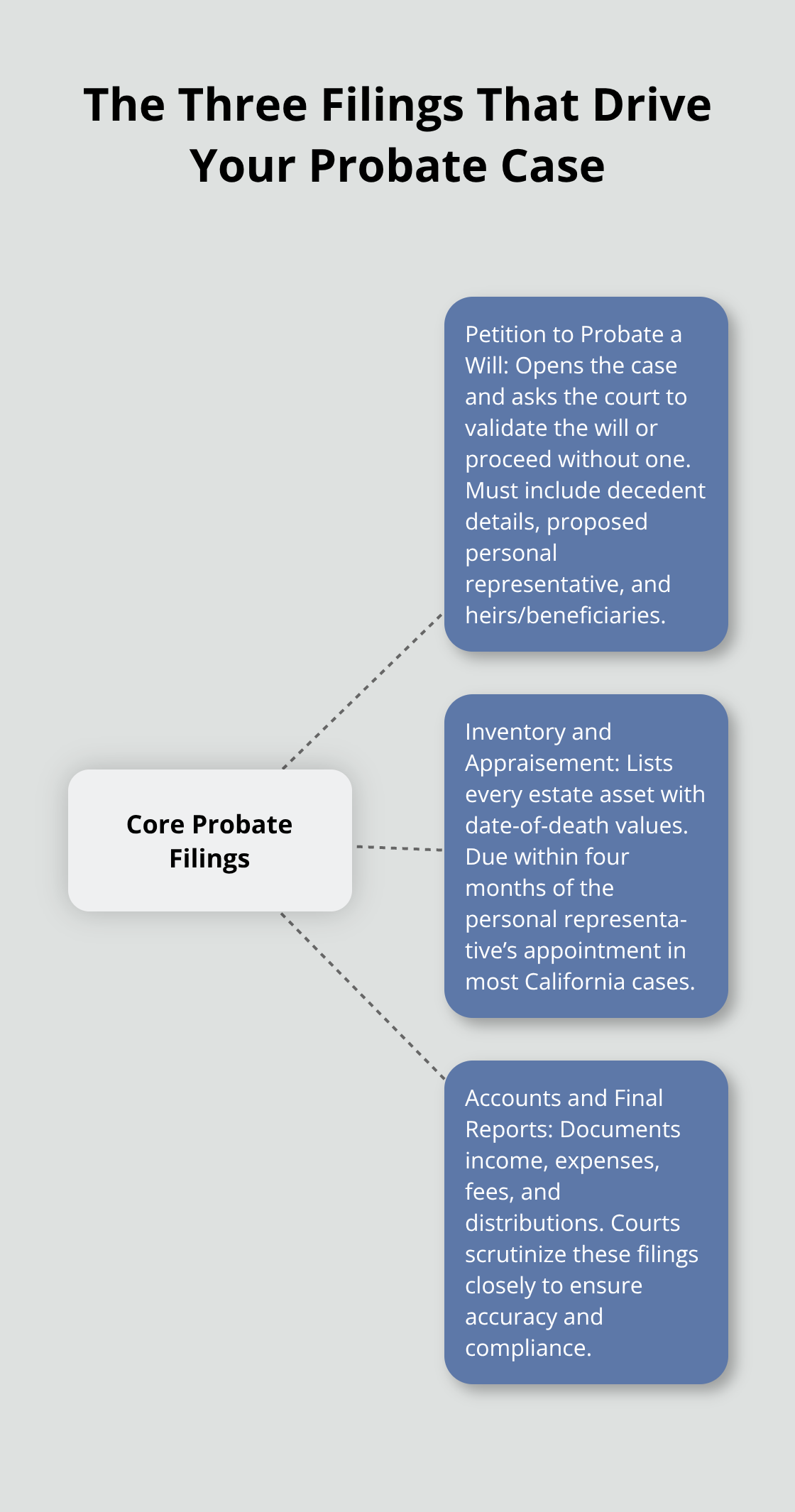
The Petition to Probate a Will
The petition to probate a will stands as your first filing with the court. This document tells the judge that you want to open a probate case and either validate an existing will or proceed without one if no will exists. In California, this petition must include the decedent’s name, date of death, proposed personal representative, and a list of heirs or beneficiaries. Courts typically require this filing within 30 days of death, though the deadline varies by county.
Incomplete petitions get rejected, sending your timeline backward by weeks. The form itself seems straightforward, but missing even one required signature or notarization from the proposed personal representative will cause the court to deny it outright. Families underestimate the notarization requirement or submit unsigned documents, creating unnecessary delays.
The Inventory and Appraisement Forms
The inventory and appraisement forms demand accuracy from the start. You must list every asset the estate owns-real property, bank accounts, vehicles, jewelry, artwork-with estimated fair market values as of the death date. California law requires filing this document within four months of the personal representative’s appointment in most cases.
Many families skip professional appraisals on items like homes or valuable collections, then face pushback from the court or beneficiaries later when values seem understated. Hiring a qualified appraiser for significant assets costs $300 to $800 but prevents disputes that could extend administration by months. This upfront investment protects the estate from prolonged litigation.
The Accounts and Final Reports
The accounts and final reports document every transaction during probate, showing what money came in, what was spent, and where remaining funds go. Courts scrutinize these reports closely. The California Probate Code requires detailed accounting of income, distributions to beneficiaries, and all fees paid to professionals (attorneys, accountants, appraisers).
Filing incomplete or poorly organized accounts invites the court to require amended filings, further delaying case closure. Getting these three documents right from the beginning protects your timeline and prevents costly revisions later. The next section covers the filing deadlines and notification requirements that govern when you must submit these documents to the court.
Understanding Probate Filing Deadlines and Notifications
The Initial Filing Window
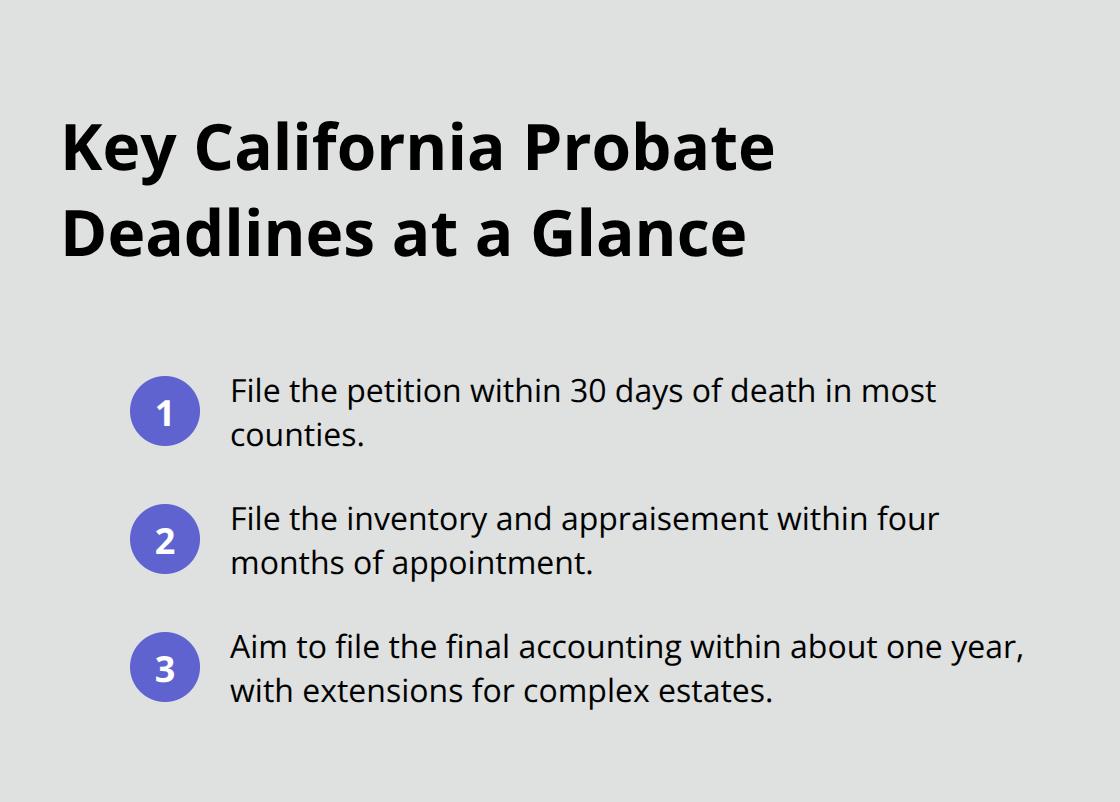
The clock starts ticking the moment someone passes away, and California’s probate system enforces strict timelines that leave little room for delay. The petition to probate the will must be filed within 30 days of death in most counties, though some courts allow 60 days. Missing this deadline doesn’t invalidate your case, but it signals to the court that administration is stalled, and judges take notice. Within four months of the personal representative’s appointment, you must file the inventory and appraisement showing all estate assets and their values as of the death date.
Courts treat this deadline seriously because beneficiaries and creditors rely on this document to understand what the estate contains.
Timing for Final Accountings
The final accounting and report come much later, typically within one year of appointment, but the exact timing depends on how complex the estate is and whether beneficiaries agree on distributions without court involvement. Probate cases that involve disputed assets, real property sales, or tax complications often require extensions beyond the one-year mark. Courts grant these extensions regularly, but each request adds weeks to the overall timeline. Planning ahead for potential delays prevents last-minute scrambling and keeps beneficiaries informed about realistic completion dates.
Notification Requirements That Courts Demand
Notification requirements run parallel to filing deadlines and create their own administrative burden. California law requires you to notify all heirs, beneficiaries named in the will, and known creditors within specific timeframes-typically within 15 days of the petition filing for heirs and beneficiaries, and through published notice for unknown creditors. Failure to notify a beneficiary properly can result in the court rejecting your final accounting or, worse, reopening the case years later when someone discovers they were excluded. Maintain a detailed notification log documenting exactly when and how you notified each person, including proof of service. Many families send informal emails or phone calls, which courts do not accept as valid notice. Certified mail with return receipts, or service through a professional process server, costs $50 to $200 per person but provides the documentation courts demand.
Ongoing Filings Throughout Administration
Throughout the administration period, ongoing filings include periodic accountings if the case takes longer than one year, creditor claim responses due within four months of notice publication, and any court motions needed to resolve disputes over distributions or asset sales. Each filing carries its own deadline, and missing even one forces you to request court extensions, which delays the entire probate process and extends administration timelines by months. Tracking these multiple deadlines simultaneously becomes complex, especially when managing an estate while grieving. The next section covers the mistakes families make most often when preparing these documents for court submission.
Common Mistakes to Avoid When Filing Probate Documents
Incomplete Forms and Missing Information
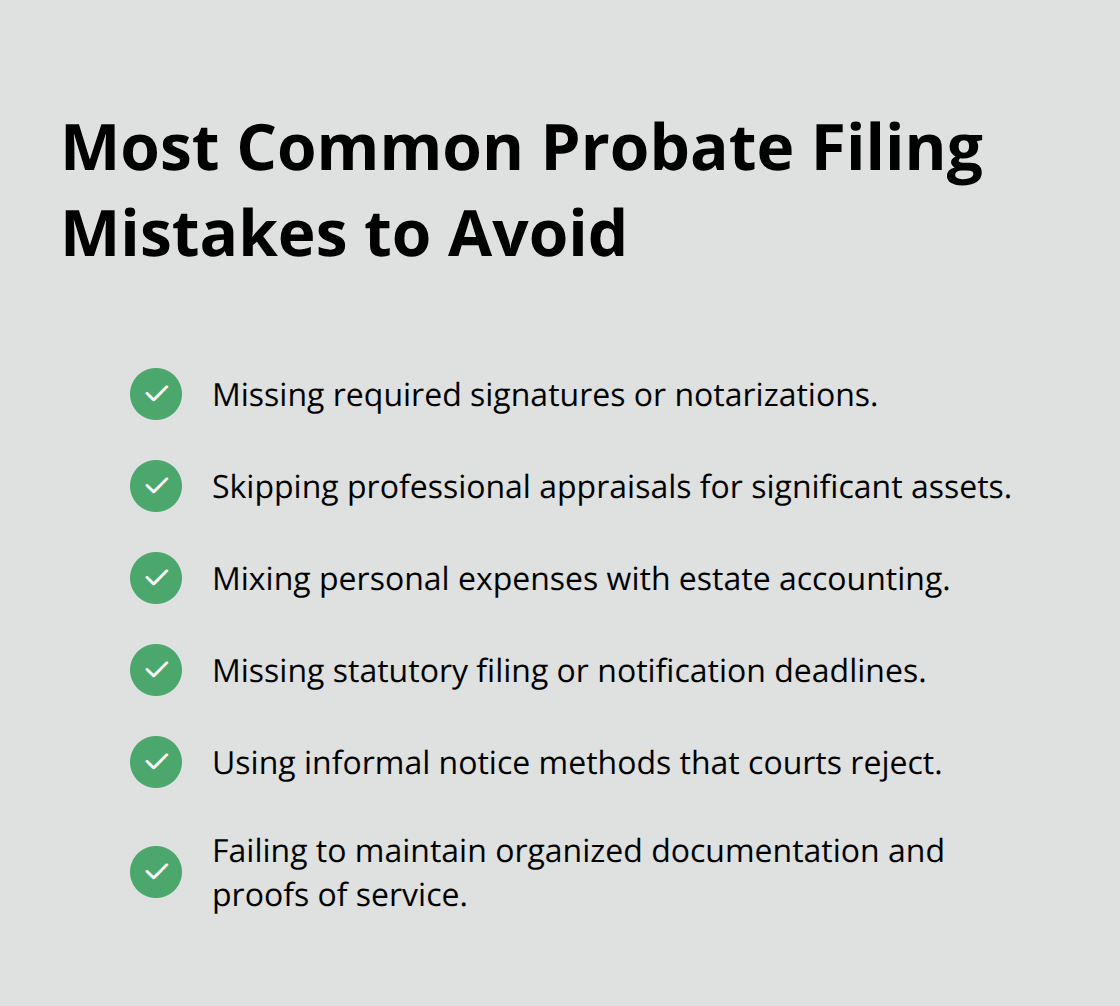
Probate documents demand absolute precision, and even small errors create serious problems. Courts reject incomplete petitions regularly-a missing signature from the personal representative, a forgotten notarization, or blank fields on the inventory form all trigger rejections that push your timeline back by weeks. The California court system processes thousands of probate cases annually, and staff reviewers catch errors immediately. One family submitted a petition missing the decedent’s Social Security number and date of death on the inventory form; the court rejected both documents, forcing a resubmission that delayed their case by 31 days.
Asset Valuations That Courts Question
Asset valuations present another common trap. Families frequently undervalue real property or skip appraisals on jewelry, artwork, or business interests to save money upfront. This backfires when the court questions the valuations or beneficiaries dispute the figures, sometimes triggering demands for formal appraisals that cost $500 to $1,200 and extend administration timelines significantly. Hiring a qualified appraiser for significant assets upfront prevents disputes that could extend administration by months.
Inaccurate Accountings and Documentation
Inaccurate accountings create the most costly mistakes. Courts scrutinize every transaction listed in final reports, and incomplete documentation of attorney fees, professional appraiser charges, or distributions to beneficiaries invites court orders for amended filings. One estate administration revealed that the personal representative had not tracked professional fees separately from personal expenses, forcing a complete reconstruction of the accounting that took six additional weeks to complete.
Missing Statutory Deadlines
Statutory deadlines in California probate are non-negotiable, and missing them signals mismanagement to the court. The 30-day petition filing window after death is firm in most counties-delays beyond 60 days raise red flags with judges. The four-month inventory deadline arrives quickly, and families often underestimate how long asset identification and valuation actually takes, especially when estates include multiple properties or complex financial accounts. Notification deadlines create their own pressure; California law requires service on all heirs and beneficiaries within 15 days of petition filing, and improper notification methods invalidate your work entirely. Email or informal phone calls do not satisfy court requirements-certified mail with return receipts costs $8 to $15 per person but provides the proof courts demand.
Tracking Multiple Deadlines Simultaneously
Missing creditor claim deadlines can reopen cases years later when unpaid creditors surface. Tracking multiple filing deadlines simultaneously while managing grief and estate responsibilities overwhelms most families. Create a written deadline calendar immediately after the personal representative’s appointment, listing every filing due date, notification requirement, and court deadline in a single document. This prevents the scattered approach that causes missed deadlines and court rejections. The Law Offices of Roshni T. Desai can help you organize these timelines and prepare documents that courts accept on the first submission.
Final Thoughts
Court filings for probate demand accuracy and timing that most families underestimate during their time of loss. The petition to probate a will, inventory and appraisement forms, and final accounts control whether your case moves forward smoothly or stalls in court rejections and delays. Missing a single deadline, skipping required notarizations, or undervaluing assets creates problems that extend administration by months and drain the estate’s resources through additional professional fees.
The mistakes covered in this guide-incomplete forms, missing signatures, inaccurate valuations, and missed deadlines-happen repeatedly because probate administration occurs during grief and emotional strain. Families juggle multiple court filings while managing their loss, and California’s probate system leaves little room for error. Creating a written deadline calendar immediately after appointment protects you from scattered approaches that cause rejections, while hiring qualified appraisers upfront for significant assets prevents disputes that reopen cases later.
Contact us for a free consultation to review your specific situation and timeline. We offer flexible home or office visits across Southern California, making it simple to discuss your probate case without added stress. Visit Law Offices of Roshni T. Desai to schedule your consultation and take control of your probate administration today.