




Probate Real Estate Sale: Optimizing Property Transactions in Probate Administration
Selling property through probate involves court oversight, multiple decision-makers, and strict timelines that slow down transactions compared to standard real estate sales. Estate representatives often face confusion about which steps belong to the legal process and which fall under real estate management.
We at Law Offices of Roshni T. Desai have seen how poor coordination between attorneys and real estate professionals creates unnecessary delays and expense. This guide shows you how to structure a probate real estate sale for speed and efficiency.
Why Probate Sales Move at a Different Pace
Court Supervision Extends Timelines Significantly
Probate real estate sales operate under court supervision, which fundamentally changes how transactions work. A standard home sale takes 30 to 45 days from offer to close in California. A probate sale typically takes four to eight months, sometimes longer. The difference stems from court involvement at multiple stages.
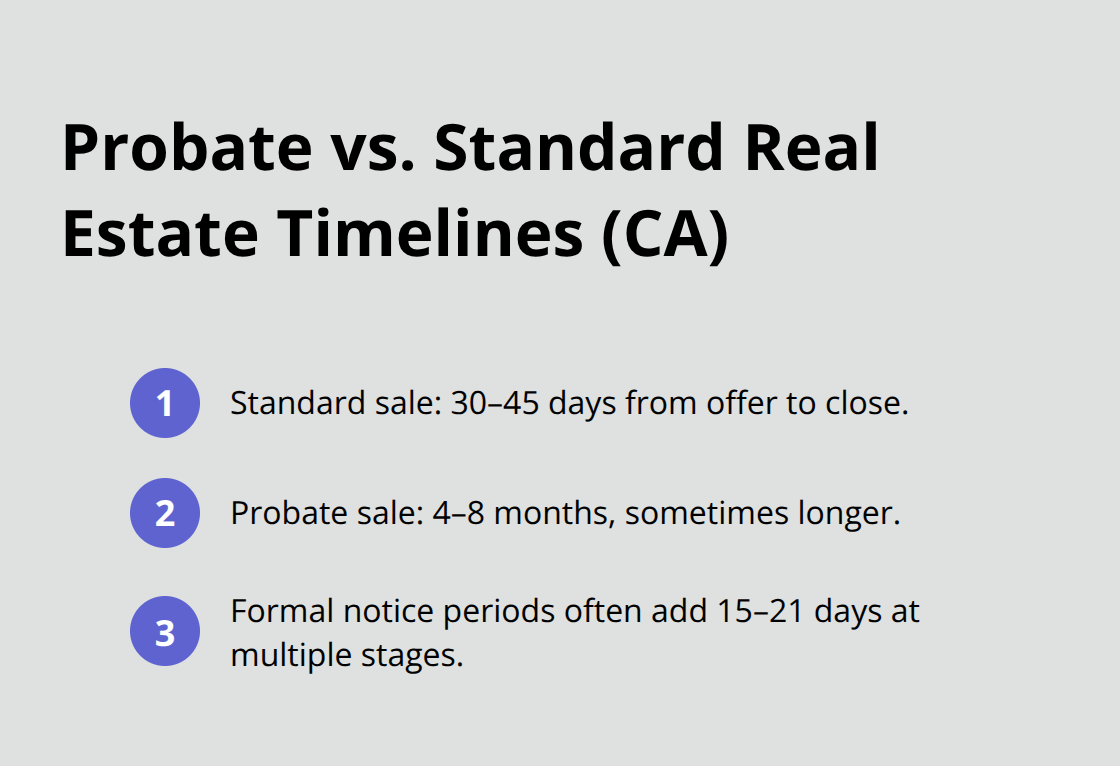
The estate files a petition to sell, the court approves the sale price, and the buyer waits for court confirmation before the sale closes. Each step requires formal notice periods, often 15 to 21 days, which stack on top of each other.
The property must receive a professional appraisal before listing, not after receiving an offer like in standard sales. This appraisal becomes the court’s baseline for determining whether the final sale price is reasonable. If your offer falls below 90 percent of the appraised value in some counties, the buyer faces additional court hearings and potentially an auction process. These procedural requirements protect heirs and creditors, but they create delays that real estate professionals unfamiliar with probate often underestimate or ignore entirely.
Multiple Decision-Makers Compound Delays
Multiple decision-makers compound these delays significantly. A standard sale involves the owner and their agent. A probate sale involves the executor or administrator, the estate attorney, the real estate agent, potential heirs who may object to the sale, creditors with claims against the estate, and the probate court itself. When these parties operate independently without clear communication, sales stall. Real estate agents who’ve never handled probate sales often miss critical legal deadlines or submit documentation that doesn’t meet court standards, forcing restarts.
Inventory and Appraisal Requirements Add Complexity
The inventory and appraisal requirement adds another layer of complexity. Before any sale occurs, the estate files a detailed inventory of all assets with the court, and the property receives a formal appraisal from a court-approved appraiser. These steps take four to six weeks minimum. Standard sales skip this entirely. The appraiser’s opinion directly impacts what price the court will accept, making the selection of the right appraiser genuinely important. An appraiser unfamiliar with the local market or the property’s condition produces an artificially low valuation that constrains your negotiating position for months.
These structural obstacles explain why probate sales demand a different approach than standard transactions. The coordination between legal requirements and real estate strategy determines whether your sale moves forward efficiently or stalls at critical junctures.
Strategies to Streamline Probate Property Sales
Select Real Estate Professionals with Probate Experience
Speeding up a probate real estate sale requires abandoning the standard real estate playbook entirely. The professionals you hire must understand that probate sales operate under different constraints, and they need to coordinate their work around court deadlines rather than market conditions. Real estate agents who’ve never handled probate transactions often treat these sales like standard listings, missing critical legal milestones and creating bottlenecks that add months to the timeline.
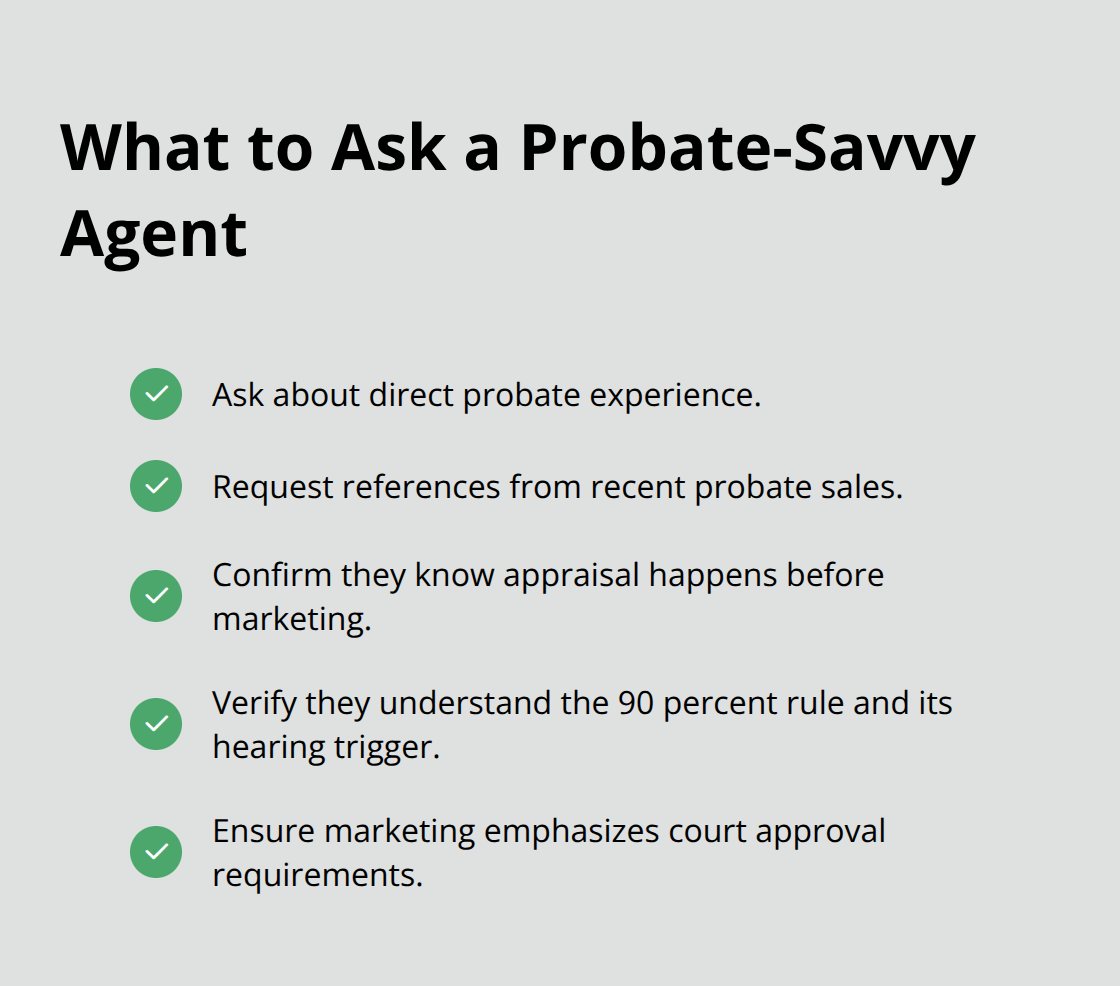
When selecting your real estate agent, ask directly about their probate experience and request references from recent probate sales they’ve closed. An agent familiar with California probate code knows that the appraisal happens before marketing, understands the 90 percent rule that triggers additional court hearings, and recognizes that your marketing strategy must emphasize court approval rather than just buyer interest. This knowledge gap between probate-savvy and standard real estate professionals creates measurable delays.
Price the Property Competitively from the Start
Pricing becomes equally critical from day one because underpricing in probate sales carries permanent consequences. Unlike standard sales where you can adjust price after market feedback, probate sales use the appraisal value as the baseline for court approval. If your initial appraiser values the property at $400,000 and you later receive an offer for $425,000, the court may still reject it as unreasonable because it falls outside the accepted range in some jurisdictions.
Request multiple appraisals before listing if you suspect the first valuation is low, as this costs $500 to $700 per appraisal but prevents months of delays fighting an artificially depressed value. Price competitively from the start by analyzing comparable sales in the neighborhood and ensuring your appraiser considers recent market activity, not outdated comparable properties.
Prepare Documentation and Disclosures in Advance
Documentation preparation separates efficient probate sales from stalled transactions. Before your property hits the market, compile the inventory documents, appraisal reports, title reports, and any required probate court orders into a single organized file that your real estate agent can access immediately. Standard sales require a property disclosure statement; probate sales require this plus court-approved inventory documentation and often additional disclosures about the property’s condition or any known defects.
Real estate agents unfamiliar with probate requirements frequently submit incomplete documentation packages to buyers, triggering renegotiations and delays. Prepare a written timeline showing all remaining court approval dates, inspection periods, and contingency deadlines so every party understands the non-negotiable milestones. This simple document prevents miscommunication between your attorney, agent, and potential buyers. California probate code requires specific notice periods and approval timelines that cannot be compressed, but organizing your documentation in advance allows you to meet each deadline without scrambling for missing paperwork.
The coordination between legal requirements and real estate strategy determines whether your sale moves forward efficiently or stalls at critical junctures. When these elements work in isolation, friction builds between professionals who speak different languages-one focused on court compliance, the other on market conditions. Working with a knowledgeable attorney bridges this gap and prevents the costly miscommunication that typically derails probate transactions.
How an Attorney with Real Estate Knowledge Reduces Costs and Friction
The Coordination Problem Between Legal and Real Estate Professionals
An attorney handling probate administration without real estate knowledge creates a fundamental problem: they cannot coordinate the legal process with the sale mechanics, leaving your real estate agent to navigate court requirements independently. This separation causes delays because probate attorneys focus on court filings and legal compliance while real estate professionals focus on market timing and buyer negotiations. These two processes operate on different timelines and require different expertise, but they must move in lockstep or the entire transaction stalls.
Why Dual Knowledge Matters in Practice
The practical advantage emerges immediately after court approval of the sale price. A standard real estate attorney cannot tell your agent whether the purchase agreement complies with probate code section 13100 requirements for confirmation hearings, or whether the contingency periods your buyer requests conflict with the court’s mandatory notice deadlines. Your real estate agent cannot determine whether accepting a lower offer now prevents the need for a court confirmation hearing later, potentially saving weeks of additional proceedings.
These decisions require someone who speaks both languages fluently. Without this integrated perspective, your probate attorney reviews documents after your agent negotiates them, often identifying compliance problems that force renegotiations. The buyer becomes frustrated, their lender gets impatient, and the sale falls apart despite meeting the court’s technical requirements.
How Integrated Legal and Real Estate Guidance Works
When your attorney understands real estate mechanics, they draft sales agreements that satisfy both court standards and market expectations, allowing the transaction to close on schedule without surprises at the final approval stage. This dual perspective eliminates the back-and-forth that typically adds two to four months to a sale timeline.
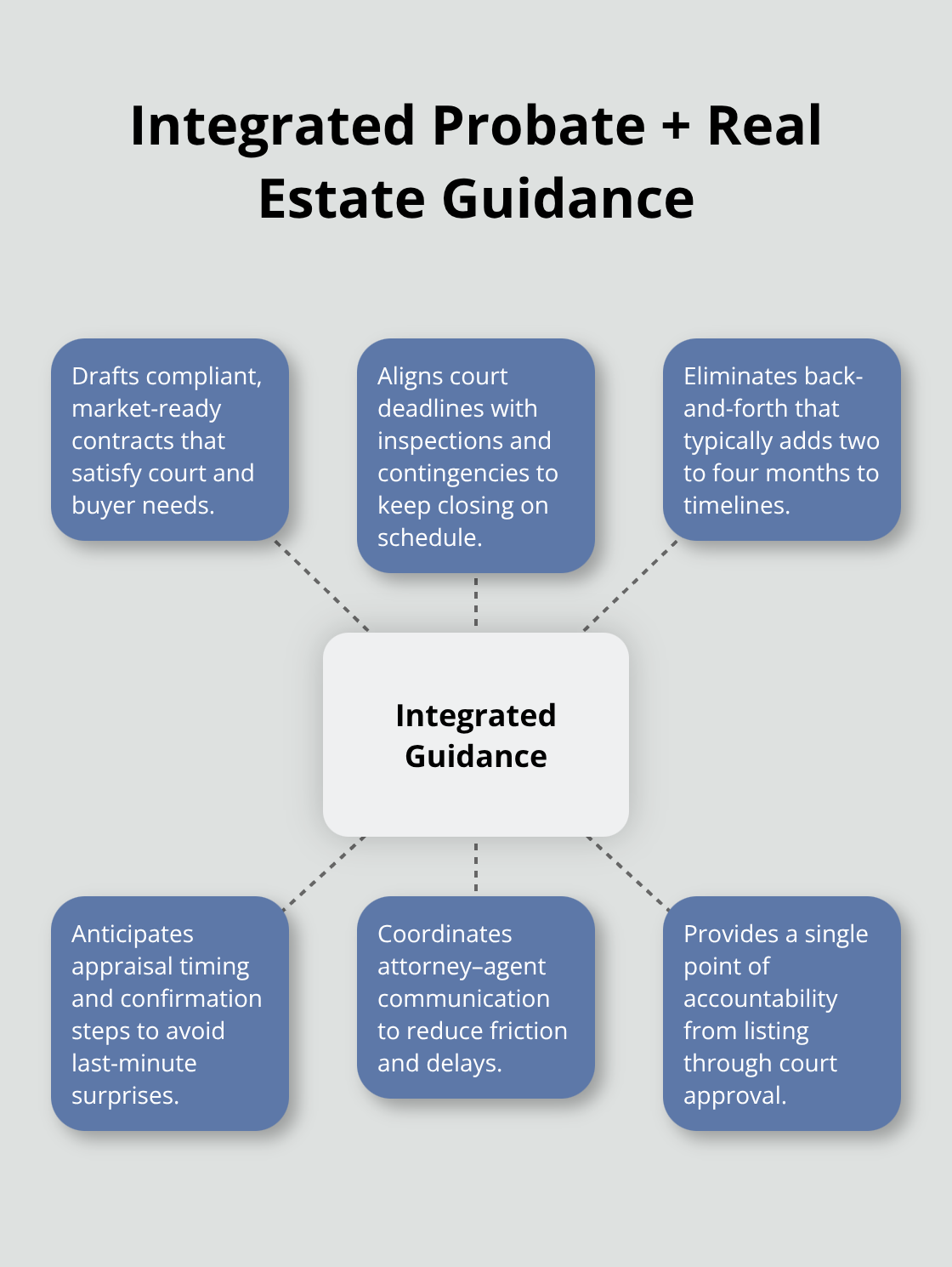
We at Law Offices of Roshni T. Desai maintain dual licensure as both an attorney and real estate professional specifically to eliminate this coordination gap. When one person understands both the probate code requirements and how those requirements affect contract terms, appraisal timing, and buyer contingencies, you avoid the miscommunication that typically derails probate transactions.
Final Thoughts
Probate real estate sales succeed when legal compliance and market strategy operate as one system rather than two separate processes fighting each other. The timeline delays, multiple decision-makers, and appraisal requirements that slow these transactions cannot be eliminated, but coordinated professionals manage them efficiently from the beginning. Your real estate agent needs someone who understands court deadlines, while your attorney needs someone who grasps how contract terms affect buyer confidence and closing timelines.
Select professionals who have handled probate transactions before, prepare your documentation in advance, and price the property competitively from day one-these three actions compress timelines significantly. The single most valuable decision you can make is working with an attorney who understands both probate code requirements and real estate mechanics (this dual knowledge eliminates the coordination gaps that create friction between your legal team and your real estate agent). This integrated perspective prevents the miscommunication that typically adds months and thousands of dollars to a probate real estate sale.
Estate representatives facing a probate property transaction should start by scheduling a consultation with someone who can assess your specific situation and timeline. We at Law Offices of Roshni T. Desai offer free consultations with flexible scheduling, and our dual licensure as both attorney and real estate professional means you receive integrated guidance from the start. Visit Law Offices of Roshni T. Desai to discuss your property sale and learn how coordinated legal and real estate strategy reduces delays and costs in your transaction.