




Ventura County Trust Planning: Building a Solid Framework
A trust is one of the most powerful tools for protecting your family’s wealth and avoiding years of probate court delays. Ventura County trust planning requires understanding local property laws and your specific financial situation.
We at Law Offices of Roshni T. Desai help families build trust frameworks that actually work. This guide walks you through the types of trusts available, common pitfalls to avoid, and the steps to get your plan in place.
Why Ventura County Requires Specialized Trust Planning
Real Estate Values Create Tax and Probate Complications
Ventura County’s real estate market operates under unique conditions that make generic trust planning dangerous. Properties here appreciate rapidly-median home prices in Ventura County reached $775,000 in 2024, according to Zillow data-which means your estate’s value likely exceeds what you initially planned for. This appreciation alone triggers higher estate taxes and more complex probate scenarios if you rely on a will instead of a trust. Southern California’s property ownership patterns also involve second homes, investment properties, and commercial real estate that span multiple counties, creating jurisdictional complications that standard estate plans completely miss. A trust structured without understanding Ventura County’s specific property laws leaves your family exposed to unnecessary court involvement and tax penalties that could have been prevented.
Probate Delays Cost Your Family Time and Money
Probate in California takes 9 to 12 months minimum, according to the State Bar of California, but families with multi-county properties often face 18 months or longer. During this entire period, your assets sit frozen while courts process paperwork, your family pays court fees averaging $2,000 to $5,000, and creditors can make claims against your estate. Worse, probate records become public-anyone can access details about your property, accounts, and beneficiaries.
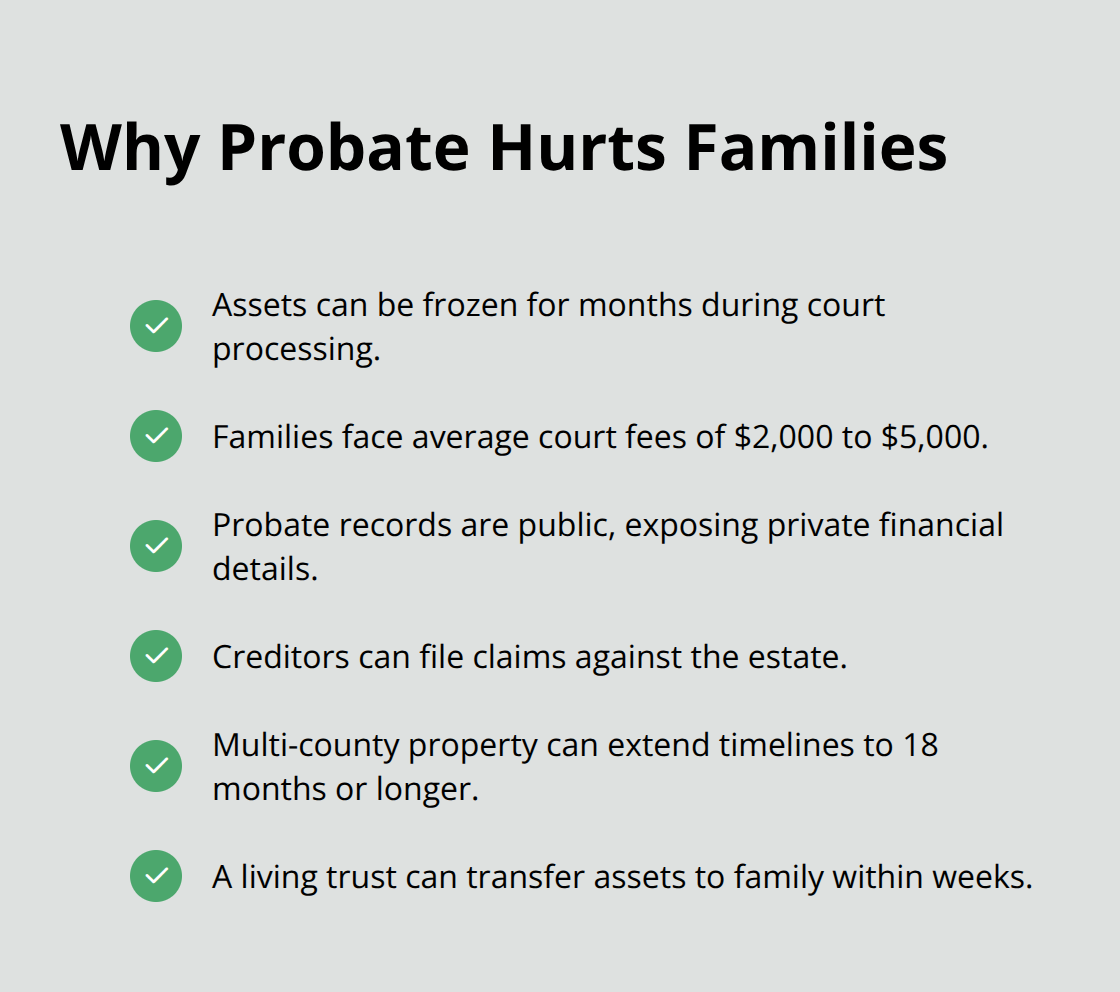
A properly funded living trust bypasses probate entirely, transferring your Ventura County real estate directly to your family within weeks.
California’s Property Laws Demand Local Knowledge
Your trust must account for California’s community property laws, the state’s gift tax implications, and Ventura County’s local recording requirements-details that matter intensely when your family’s financial security is at stake. We at Law Offices of Roshni T. Desai understand how Ventura County properties specifically interact with trust structures. Our dual background as both an attorney and real estate professional streamlines transactions and avoids the costly delays that plague families with standard estate plans.
Types of Trusts and When to Use Them
Living Trusts Give You Control During Your Lifetime
Living trusts dominate Ventura County planning because they give you control during your lifetime while avoiding probate after death. You manage your trust assets exactly as you would a regular bank account, transferring property titles into the trust’s name and naming yourself as trustee. When you pass away, a successor trustee you’ve chosen takes over immediately without court involvement, distributing assets to beneficiaries within weeks rather than months.
How Living Trusts Protect Your Ventura County Property
The median Ventura County home valued at $775,000 transfers directly to your family through a living trust, bypassing the $2,000 to $5,000 in probate court fees and the 9 to 12 month minimum delay that accompanies a will-only plan. Living trusts also remain private, keeping your family’s financial details out of public court records.
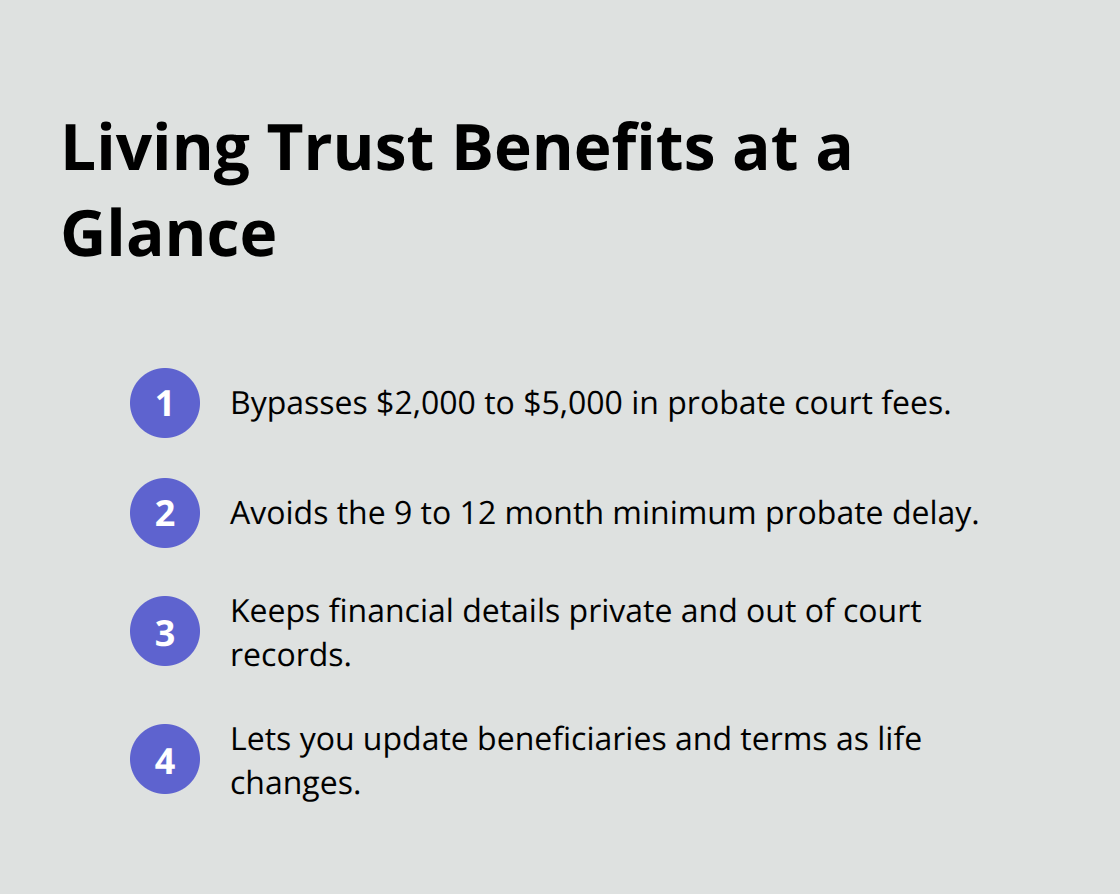
You can modify beneficiaries, add property, or change terms whenever your situation shifts without restarting the entire document.
Irrevocable Trusts Provide Asset Protection and Tax Savings
Irrevocable trusts serve a different purpose and demand careful consideration because once signed, you cannot change or revoke them. These trusts shield assets from creditors, reduce your taxable estate for federal estate tax purposes, and protect wealth from being counted against you in Medicaid planning situations. If you own significant investment property beyond your primary residence, an irrevocable trust placed correctly can save your family tens of thousands in estate taxes, especially important in high-value Ventura County properties. The tradeoff involves real loss of control-you transfer assets permanently into the trust, and a trustee manages them according to your instructions.
Special Needs Trusts Protect Vulnerable Family Members
Special needs trusts function as irrevocable structures designed specifically for family members with disabilities, supplementing government benefits without disqualifying them from SSI or Medicaid. These trusts require precise legal language to avoid triggering benefit penalties; incorrect wording can cost your disabled family member thousands annually in lost government support. We at Law Offices of Roshni T. Desai structure special needs trusts carefully to protect your vulnerable family member’s long-term security without reducing their public benefits. Understanding which trust type matches your family’s needs sets the foundation for avoiding costly mistakes that plague many Ventura County families.
Common Mistakes in Trust Planning and How to Avoid Them
Failing to Fund Your Trust Properly
The difference between a trust that works and one that fails often comes down to three execution errors that Ventura County families make repeatedly. The first mistake involves creating a trust document but never actually transferring your property into it-a problem so common that California probate courts still process thousands of estates annually that had trusts sitting unused. Your trust only protects assets that are titled in the trust’s name, meaning your $775,000 Ventura County home, investment accounts, and vehicles must have formal title transfers completed.
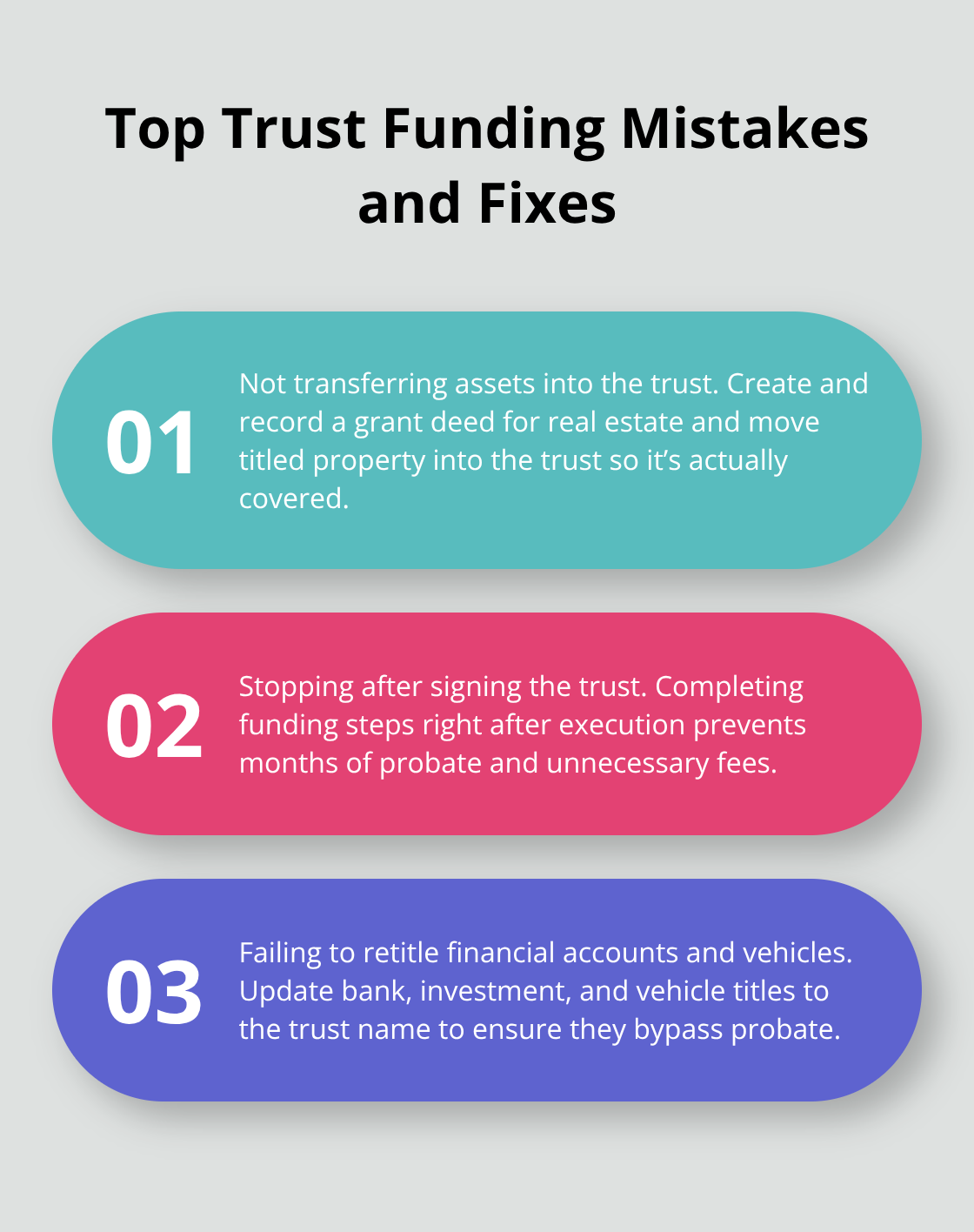
Many families hire an attorney, sign the trust, then stop halfway through the process, leaving their largest assets still subject to probate.
Families spend time and money on a trust structure, then their executor still spends 9 to 12 months in probate court because the actual property transfers never happened. The fix is straightforward: after your trust is signed, you must complete a grant deed transferring real property into the trust and retitle bank and investment accounts in the trust’s name. This takes a few hours of work but eliminates months of court delays and thousands in fees.
Neglecting to Update Trusts After Major Life Changes
The second critical error involves ignoring your trust after major life changes-marriage, divorce, significant property purchases, or the birth of children. Your trust becomes outdated the moment your circumstances shift, yet many Ventura County residents treat their estate plan as a one-time document. If you acquire investment property worth $500,000 but never add it to your trust, that property still goes through probate despite your planning efforts.
Similarly, if your chosen successor trustee moves out of state, dies, or becomes unable to serve, your trust names someone who cannot actually do the job. Life insurance beneficiaries and retirement accounts pass outside your trust entirely, meaning they bypass your trust’s instructions and go directly to whoever you named decades ago. Annual reviews catch these gaps before they create problems-you should review your trust every 2 to 3 years, especially after major purchases or family changes.
Choosing the Wrong Trustee or Successor Trustee
The third mistake involves selecting a trustee or successor trustee based on family relationships rather than actual capability. Your adult child may be your only son, but if he lacks organizational skills, financial knowledge, or the temperament to manage complex property matters, naming him as successor trustee creates stress during an already difficult time. Successor trustees manage your entire estate, settle claims against it, file tax returns, and distribute assets to beneficiaries-responsibilities that demand competence, not just blood relation.
Some Ventura County families name professional trustees like banks or trust companies specifically to avoid family conflict and ensure professional management, while others choose trusted family friends or financial advisors with demonstrated capability. The key is matching the person to the actual work required, not defaulting to the family member most in need of responsibility.
Final Thoughts
Your trust framework only works when it sits in place and stays current. The families we at Law Offices of Roshni T. Desai work with often wish they had started Ventura County trust planning sooner rather than later. Once you understand your property situation and match it to the right trust structure, the process becomes straightforward.
Schedule a free consultation to review your specific circumstances without traveling or paying upfront fees. During this conversation, we identify which trusts fit your situation, flag gaps in your current plan, and explain what happens next. Our background as both an attorney and real estate professional means we understand how your Ventura County properties interact with your overall estate strategy in ways that standard estate planning often misses.
Treat your plan as a living document after it’s in place rather than something filed away and forgotten. Major life changes like purchasing investment property, marriage, divorce, or significant family shifts demand a trust review, and even without major changes, reviewing your plan every 2 to 3 years catches outdated trustee selections and property that should have transferred into your trust. Contact Law Offices of Roshni T. Desai today to start your planning.