




Probate Filing Requirements 2026: A Clear Roadmap
Probate filing requirements in 2026 involve strict deadlines, specific documents, and mandatory notifications that many people overlook. Missing even one requirement can delay your estate administration or create legal complications.
We at Law Offices of Roshni T. Desai have created this roadmap to walk you through each filing requirement step by step. You’ll learn what documents you need, when to submit them, and how to avoid the mistakes that slow down probate.
Understanding Probate Filing Deadlines
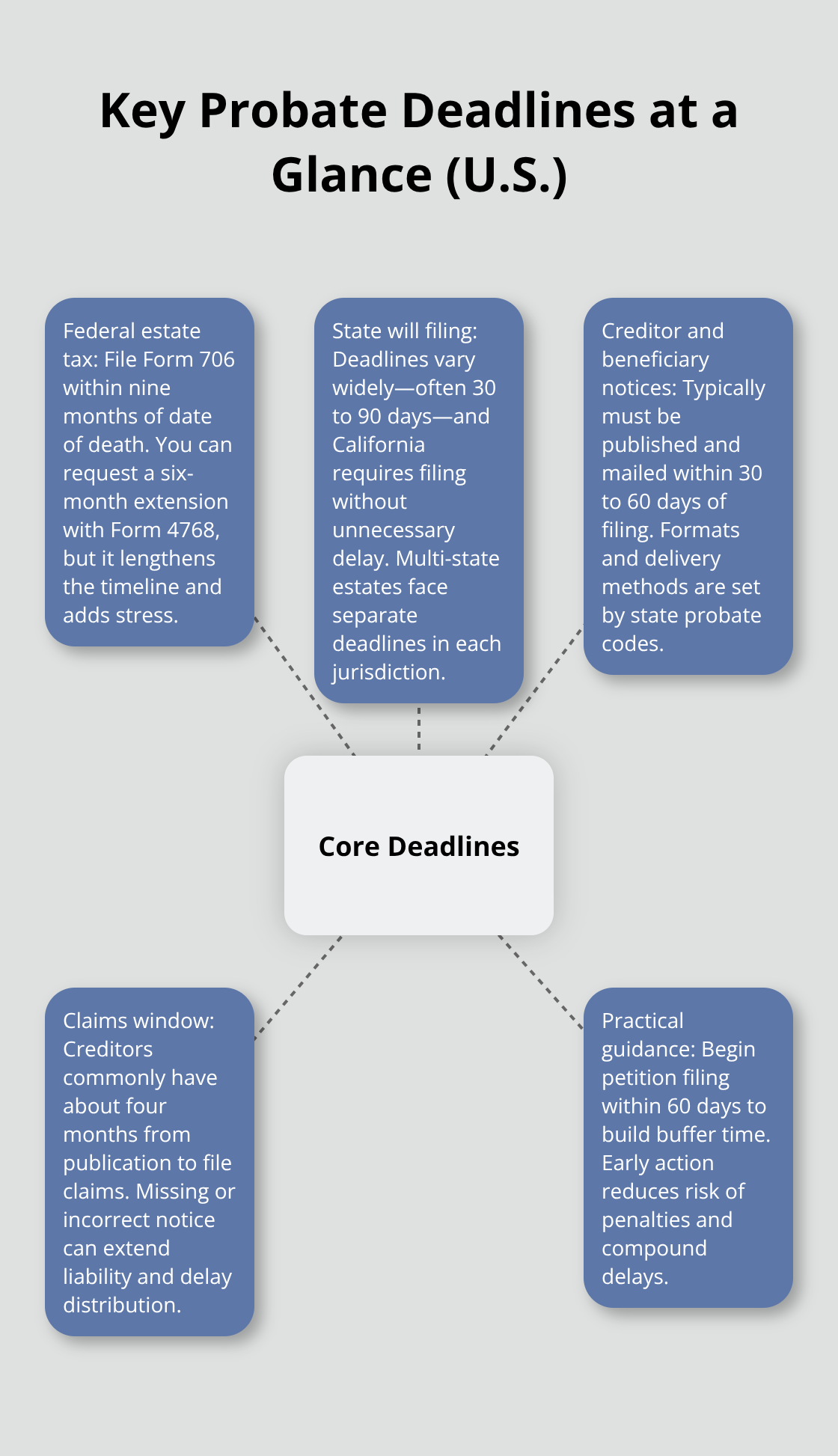
Federal estate tax returns must be filed within nine months of the date of death, according to the Internal Revenue Service. This deadline applies if the estate exceeds $13.61 million in 2024, though the threshold changes annually with inflation adjustments. Missing this deadline triggers penalties and interest that compound quickly, making it one of the most consequential filing dates in probate. Many executors focus on state-level requirements and overlook the federal deadline entirely, creating unnecessary tax complications. The IRS allows a six-month extension if you file Form 4768 before the original deadline, but relying on extensions adds stress and extends your probate timeline unnecessarily.
State deadlines vary dramatically and demand your attention now
Your state probate court sets its own filing deadlines, and these differ significantly from federal requirements. Some states demand that an executor file the will within 30 days of death, while others allow 60 to 90 days. California, for example, requires the original will and a petition to be filed with the court without unnecessary delay. If your estate includes property in multiple states, you face separate filing deadlines in each jurisdiction-a situation that demands immediate action and careful coordination. Waiting too long to file creates backlog in probate administration and frustrates beneficiaries who are waiting to receive their inheritances.
We at Law Offices of Roshni T. Desai recommend filing your petition within the first 60 days of death, even if your state allows longer. This approach prevents missed deadlines and keeps your probate moving forward consistently. Many executors underestimate how long document collection takes, so starting immediately protects you from deadline pressure.
Creditor and beneficiary notices require precision and timing
You must notify creditors and beneficiaries within specific windows set by your state’s probate code. Failure to provide proper notice exposes the estate to lawsuits and claims that could have been prevented. Most states require notice to be published in a local newspaper and mailed directly to known creditors within 30 to 60 days of filing. Beneficiaries must receive notice of probate within a similar timeframe, and some states require additional disclosures about their rights during administration.
The notice must include specific language about claim deadlines, typically four months from the date notice is published. Incorrect notice language or missed beneficiaries create liability for the executor and delay final distribution. Many probate errors stem from incomplete or late notices, making this task one of the most important steps you’ll take during administration. With these deadlines and notifications in place, you now need to gather the specific documents that courts and creditors will demand from you.
Key Documents Required for Probate Filing
Obtain certified death certificates immediately
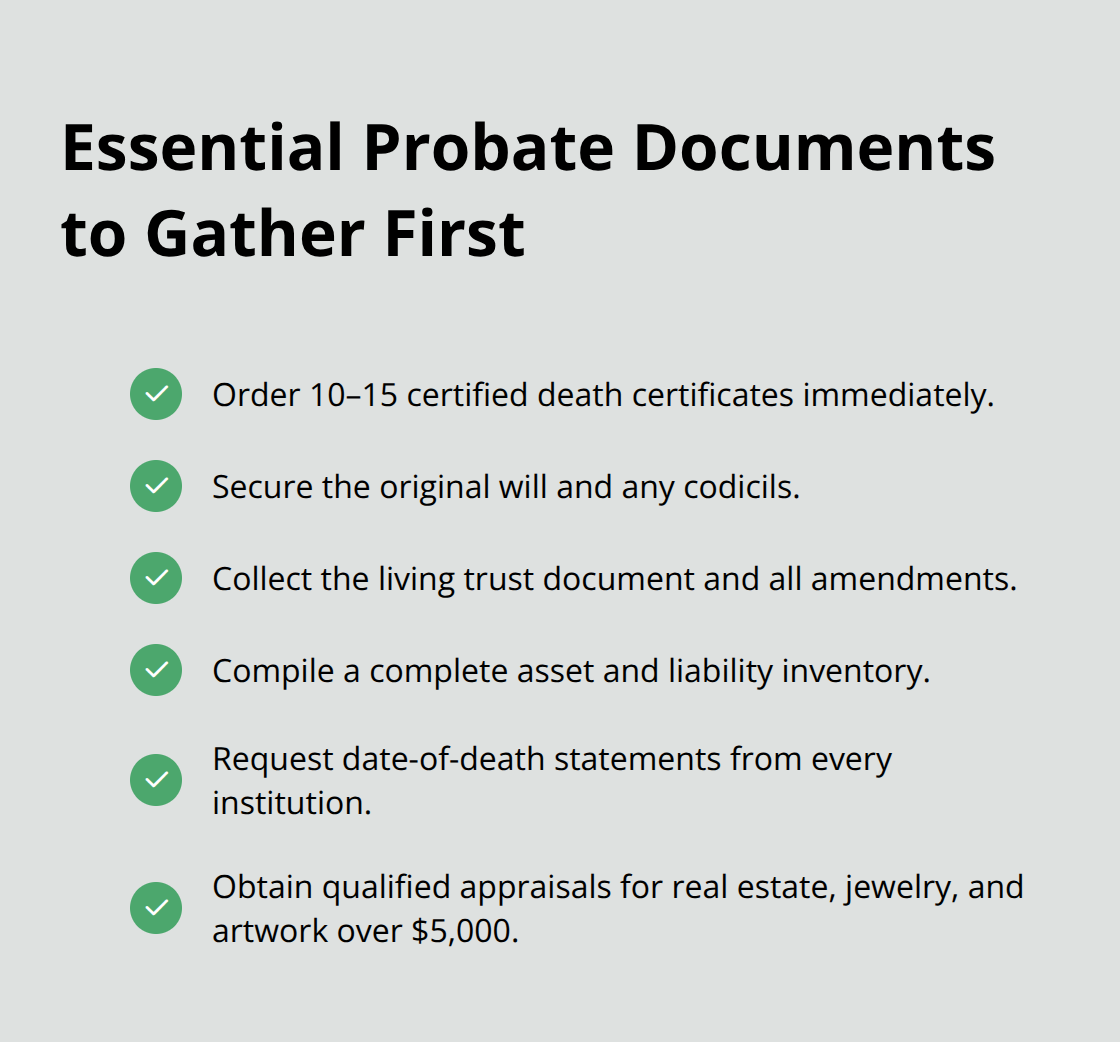
Courts will not accept photocopies of death certificates, so you must order certified copies from the county vital records office where death occurred. Order at least 10 to 15 certified copies right away-you’ll need separate copies for banks, insurance companies, the IRS, and the probate court itself. Most vital records offices charge $15 to $30 per certified copy, and ordering them immediately after death prevents bottlenecks later. The probate court requires the original will, plus certified copies if the will was previously filed or recorded in another county.
Locate the will and trust documents
If the decedent created a living trust, you need both the original trust document and any amendments. Trust assets typically bypass probate entirely if properly titled in the trust’s name, but you still must produce these documents to verify which assets belong in the trust and which require probate administration. Missing trust amendments creates confusion about the decedent’s actual intentions and can trigger disputes among beneficiaries. Locate these documents in the decedent’s safe deposit box, home office, or attorney’s files before you file your petition.
Compile a complete asset and liability inventory
The inventory of assets and liabilities forms the backbone of your probate filing and determines the scope of court oversight. You must list every asset the decedent owned at death-real estate, bank accounts, investment accounts, vehicles, business interests, and personal property-along with estimated values as of the date of death. Request account statements from the date of death from every financial institution, and obtain property appraisals for real estate, jewelry, or artwork if values exceed $5,000. The inventory must also include all debts: mortgages, credit cards, medical bills, and taxes owed.
Organize assets with detailed documentation
Many executors underestimate the time required to locate all accounts, especially retirement accounts and old insurance policies that may have been forgotten. Courts in states like California require detailed asset schedules with specific values, while other states accept estimated ranges for smaller estates. Create a spreadsheet with asset descriptions, account numbers, institutions, and values to keep everything organized and accessible for court filings and tax returns. Missing assets during probate creates problems when creditors surface later or beneficiaries dispute the final accounting.
With your documents assembled and your asset inventory complete, you now face the reality that many executors make preventable mistakes during the filing process itself.
Common Probate Filing Mistakes to Avoid
Missing state filing deadlines costs you time and credibility
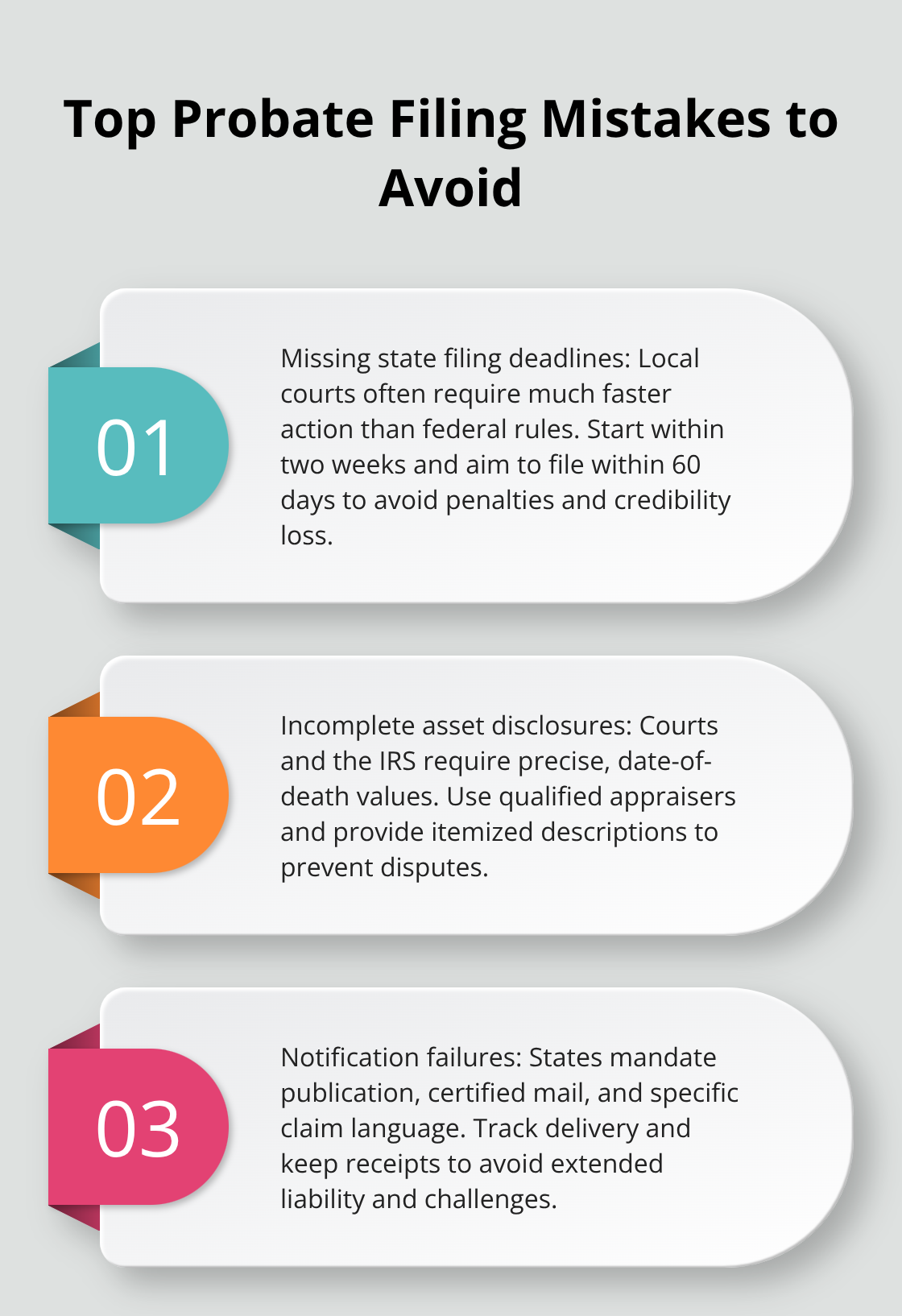
Executors frequently miss state filing deadlines because they confuse federal timelines with local court requirements. California requires will filing without unnecessary delay, yet many executors wait 90 days thinking they have ample time, only to discover their state demands action within 30 to 45 days of death. The probate court will not extend these deadlines out of sympathy. Courts in states like Texas and New York impose penalties when executors file late, including potential removal from their position and personal liability for damages caused by delays. Start your probate filing within two weeks of death, not two months. This aggressive timeline gives you buffer room if document collection takes longer than expected and protects you from accidental deadline violations.
Incomplete asset disclosures create disputes later
Courts scrutinize asset disclosures intensely because incomplete inventories create opportunities for beneficiaries to challenge the final accounting. If you list a bank account valued at $50,000 but the account actually held $75,000 at death, beneficiaries will notice the discrepancy and question whether you misrepresented assets intentionally or negligently. The IRS Form 706 federal estate tax return demands exact asset values as of the date of death, not estimates or rough figures. Appraisals for real estate, business interests, and collectibles must come from qualified appraisers, not from your own guesses about market value.
Courts reject probate accountings that contain vague descriptions like personal property valued at approximately $10,000 without itemization. Provide specific details: the 2015 Toyota Camry with VIN number, the jewelry collection consisting of 12 pieces appraised at $8,500, the artwork by named artists appraised individually. This level of detail prevents challenges and demonstrates that you handled the estate responsibly.
Notification failures expose you to extended liability
Notification failures create the most lasting damage because creditors and beneficiaries have legal rights to receive proper notice, and courts will not overlook violations. Many executors send informal emails or phone calls to beneficiaries thinking this satisfies notification requirements, then get shocked when the probate court rejects their administration because they failed to provide formal notice. State probate codes specify exactly how notice must be delivered, including publication in newspapers, certified mailing, and specific language about claim deadlines.
Some states require notice to include information about the executor’s compensation, the probate timeline, and beneficiaries’ right to petition the court. Failure to notify a known creditor within the statutory period means that creditor can file a claim against the estate even after the normal claims period expires, extending probate administration indefinitely. Beneficiaries who receive no notice have grounds to challenge the final distribution and potentially invalidate the entire probate proceeding.
Create a notification checklist that identifies every creditor, beneficiary, and party with legal interest in the estate, then document when and how each party received notice. Keep copies of certified mail receipts, newspaper publication notices, and written confirmations that each required party received their notification. This documentation protects you from future claims that notice was inadequate or untimely.
Final Thoughts
Probate filing requirements in 2026 demand attention to three core areas: meeting strict deadlines, assembling complete documentation, and executing proper notifications. Miss any one of these elements and your estate administration stalls, beneficiaries grow frustrated, and legal complications multiply. The federal nine-month estate tax deadline, your state’s will filing window, and creditor notification periods all operate independently, yet they intersect throughout your probate process.
Incomplete asset disclosures and notification failures create the longest-lasting damage because they expose you to claims that extend well beyond the normal probate timeline. File your petition within 60 days, order certified death certificates right away, compile your asset inventory with specific values and documentation, and create a notification checklist that tracks every required party. These concrete actions prevent the mistakes that delay probate and create liability for executors.
Probate administration involves more than following a checklist-tax law changes annually, state requirements vary significantly, and your specific situation may involve complications like multi-state property, business interests, or family disputes that demand professional guidance. Contact Law Offices of Roshni T. Desai for a free consultation to discuss your specific probate situation and protect your estate throughout administration.