



Probate Asset Management California: Aligning Assets Across the State
When someone passes away in California, their assets don’t automatically transfer to heirs. The probate process requires careful inventory, protection, and distribution of everything from real estate to digital accounts.
We at Law Offices of Roshni T. Desai help families navigate probate asset management in California by identifying what needs to be managed, securing it properly, and distributing it according to state law and the deceased’s wishes.
What Assets Must Be Inventoried in California Probate
When someone passes away in California, their assets don’t automatically transfer to heirs. The probate process requires identifying exactly what belongs to the estate, and California probate law distinguishes between probate assets and nonprobate assets. This distinction determines what requires court involvement.
Identifying Probate and Nonprobate Assets
Probate assets include property titled solely in the deceased’s name-real estate, vehicles, bank accounts, investment portfolios, and personal property like jewelry or artwork. Nonprobate assets bypass probate entirely. These include property held in joint tenancy, assets in a living trust, life insurance proceeds with named beneficiaries, and retirement accounts with designated beneficiaries.
Approximately 68% of Americans die without a will, according to the American Bar Association. This means many California families must navigate intestate succession rules while simultaneously tracking down scattered assets. The inventory process demands thoroughness because missed assets can delay distribution for months or create legal complications.

Gathering Financial Documentation
Start by gathering financial statements from the past year. Check property tax records through the county assessor’s office and contact banks and investment firms directly. These institutions often require direct requests from authorized representatives before releasing information about accounts.
Create a timeline of the deceased’s regular expenses by reviewing credit card statements and bank transactions from the past three to six months. This reveals subscription services, investment accounts, and memberships that might otherwise go unnoticed. For real property, conduct a comprehensive title search through the county recorder’s office and obtain property tax assessments.
Uncovering Digital and Hidden Assets
Digital asset discovery requires a different approach than traditional property searches. Many people maintain cryptocurrency wallets, online brokerage accounts, or digital payment systems like Venmo or Square Cash that leave minimal physical evidence. Contact the Social Security Administration to verify if the deceased had unclaimed benefits or accounts.
Check with state unclaimed property databases. California’s State Controller maintains records of abandoned bank accounts, uncashed checks, and forgotten investment accounts worth millions annually. Many families overlook digital assets-cryptocurrency holdings, PayPal accounts, email accounts containing financial information, and online photo storage with valuable memories.
Simplifying Smaller Estates
The California Probate Code Section 13050 allows simplified procedures for estates under $166,250, but only if all assets are properly documented first. This streamlined approach can significantly reduce administrative burden and costs for qualifying estates.
Document every discovery in a master spreadsheet organized by asset type, account numbers, and current values. This maintains clarity throughout probate administration and prevents assets from slipping through the cracks. With a complete inventory in hand, you’re ready to move forward with securing and protecting these assets during the probate process.
Securing Assets While Probate Moves Forward
Protecting Real Property Immediately
Once you’ve inventoried the estate, protection becomes urgent. Assets sit vulnerable during probate, which typically lasts 9 to 12 months in California but can stretch longer for complex estates. Real property needs immediate attention-vacant homes attract theft, vandalism, and property damage that can cost thousands to repair. Contact the county assessor immediately to update ownership records and notify the property insurer of the death. Many policies lapse or become invalid after death, leaving the estate exposed.
If the deceased owned rental properties, verify that tenancy agreements remain valid and rent continues flowing to the estate. For vehicles and valuables, secure them in locked storage or with trusted family members within days of death, not weeks.
Freezing Financial Accounts Against Fraud
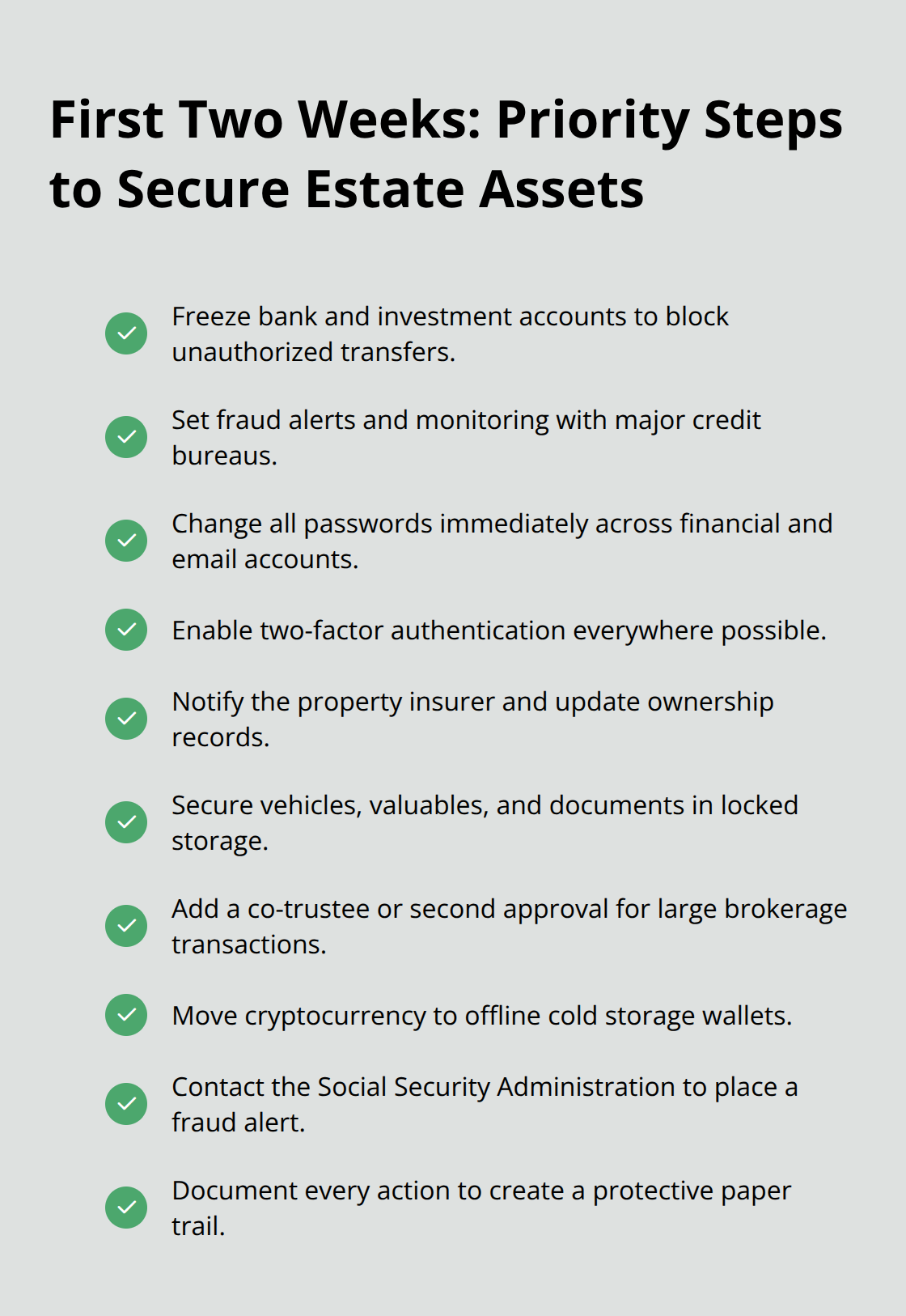
Investment accounts and bank holdings require swift action to prevent fraud and unauthorized transfers. Contact each financial institution directly and request account freezes or restrictions that require probate court authorization before any withdrawals occur. This is non-negotiable-scammers specifically target estates during probate because they know assets are in transition and oversight is fragmented.
The Federal Trade Commission reported that identity theft affects approximately 14.4 million Americans annually, and deceased individuals represent an easy target since they cannot dispute fraudulent charges. Set up account monitoring with credit bureaus to catch suspicious activity early. For investment portfolios, request that holdings remain frozen until the probate court issues letters testamentary, which grant authority to manage or liquidate assets. Some brokerages allow you to designate a co-trustee during probate, adding a second layer of approval for any transaction over a set amount.
Securing Digital Assets and Online Accounts
Digital accounts pose particular risks-email, PayPal, cryptocurrency wallets, and online banking platforms can be accessed remotely if passwords are compromised. Change all passwords immediately and enable two-factor authentication on every account. Contact the Social Security Administration to place a fraud alert on the deceased’s Social Security number, preventing scammers from opening accounts in their name.
For cryptocurrency holdings, transfer them to cold storage wallets that exist offline and are far more difficult to breach than exchange platforms. Document every protective action you take-account freezes, password changes, notifications to institutions-because probate courts require evidence that you’ve acted responsibly as an executor or administrator. This paper trail also protects you personally from liability if something goes wrong.
Acting Within the Critical Window
Families should take these protective steps within the first two weeks after death, before assets can be compromised. The speed of your response directly determines whether the estate remains intact or falls victim to fraud. With assets now secured, the focus shifts to managing investment portfolios and bank accounts throughout the probate timeline, ensuring they generate appropriate returns while remaining protected from market volatility and unauthorized access.
Distributing Assets According to California Probate Law
How Intestacy Laws Direct Asset Distribution
When someone dies without a will, California intestacy statutes dictate distribution with mathematical precision. The surviving spouse receives the entire estate if no children exist, but this changes dramatically with children present. With one child, the spouse gets one-half and the child receives one-half. With two or more children, the spouse receives one-third while children split two-thirds equally.
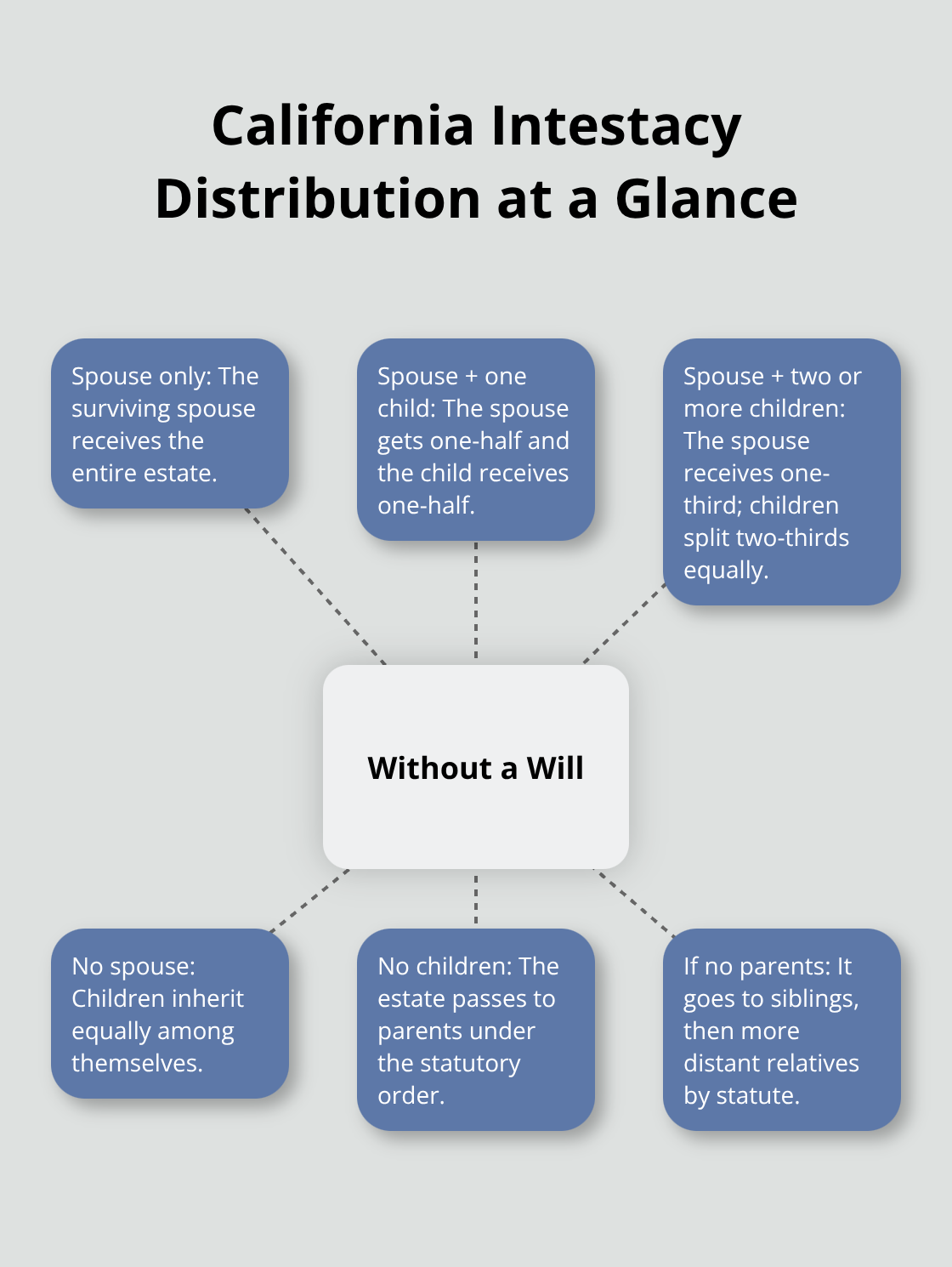
If no spouse exists, children inherit equally, and if no children survive, the estate moves to parents, then siblings, then more distant relatives in a fixed order established by California Probate Code Section 13050. This hierarchy exists for a reason-it reflects what most people would choose if they had planned ahead, but it also means families with no will often face distributions nobody wanted.
Intestacy laws create family conflict because the legal distribution contradicts the deceased’s actual wishes or overlooks stepchildren, unmarried partners, or non-blood family members who held meaningful relationships with the deceased. The statute cannot account for personal circumstances, emotional bonds, or financial needs that the deceased would have considered.
Executing Instructions from a Valid Will or Trust
When a valid will or trust exists, execution becomes more straightforward but still requires precision. The probate court verifies the document’s authenticity, confirms the testator had legal capacity when signing, and ensures no fraud occurred. This validation process takes 4 to 8 weeks on average in California courts. Once validated, the executor or trustee follows the instructions exactly as written-no discretion, no reinterpretation.
If the will specifies that one child receives the house while another receives investments, that’s what happens regardless of current market values or family circumstances. The court enforces the testator’s intent as documented, not what beneficiaries might prefer or what seems fair in hindsight.
Managing Tax Obligations and Final Debts
Tax obligations and final debts must be paid before any beneficiary receives assets. California law requires estates to pay all valid creditor claims, federal estate taxes if the estate exceeds $13.61 million in 2024, and state taxes where applicable. The executor must publish a notice of administration in a local newspaper, giving creditors four months to file claims-failure to follow this procedure can result in creditors pursuing beneficiaries personally after distribution.
Sometimes tax obligations require liquidating assets the deceased wanted preserved. A house designated for one heir might need partial sale to cover estate taxes, or investment portfolios might require liquidation to satisfy creditor claims. Tax planning during probate administration protects beneficiaries because improper handling of asset sales can trigger capital gains taxes that reduce inheritance amounts substantially. Selling appreciated assets at the wrong time or in the wrong order can cost beneficiaries tens of thousands of dollars in unnecessary tax liability.
Protecting Beneficiaries Through Proper Administration
The executor bears responsibility for handling all financial transactions correctly. This includes obtaining appraisals for real property and personal property, managing investment accounts during probate (which typically lasts 9 to 12 months), and filing final income tax returns for the deceased. Each step requires documentation and court approval in formal probate proceedings, though simplified procedures apply to smaller estates.
Improper administration exposes beneficiaries to tax audits, creditor claims, and personal liability for the executor’s mistakes. Professional guidance streamlines this process and protects everyone involved from costly errors.
Final Thoughts
Probate asset management in California requires attention across three distinct phases: identifying every asset the estate contains, protecting those assets from fraud and deterioration during probate administration, and distributing them according to state law and the deceased’s documented wishes. Families who rush through inventory often miss digital accounts or forgotten investment holdings that surface months later, complicating distributions and creating legal exposure. Those who fail to secure assets quickly watch real property deteriorate, bank accounts get compromised, or investment portfolios suffer from neglect.
The probate process in California typically spans 9 to 12 months, but this timeline expands significantly when assets remain unorganized, unprotected, or when tax obligations and creditor claims aren’t handled properly. Each delay costs money through court fees, professional services, and lost investment returns. Each mistake creates liability that can pursue beneficiaries long after the estate closes.
We at Law Offices of Roshni T. Desai handle probate asset management across Southern California by managing every step of this process with precision. Contact us for a free consultation to discuss your family’s specific situation. Visit Law Offices of Roshni T. Desai to get started today.