



California Trust Administration Attorney: Protecting Wealth With Experienced Counsel
Trust administration requires managing assets, handling taxes, and resolving disputes-tasks that demand precision and legal expertise. Many trustees and beneficiaries face unexpected complications when navigating California’s trust laws without professional guidance.
At Law Offices of Roshni T. Desai, we help families protect their wealth by providing experienced counsel throughout the administration process. A California trust administration attorney can identify risks early and guide you toward smoother resolution.
What Happens During Trust Administration
The Three Core Responsibilities
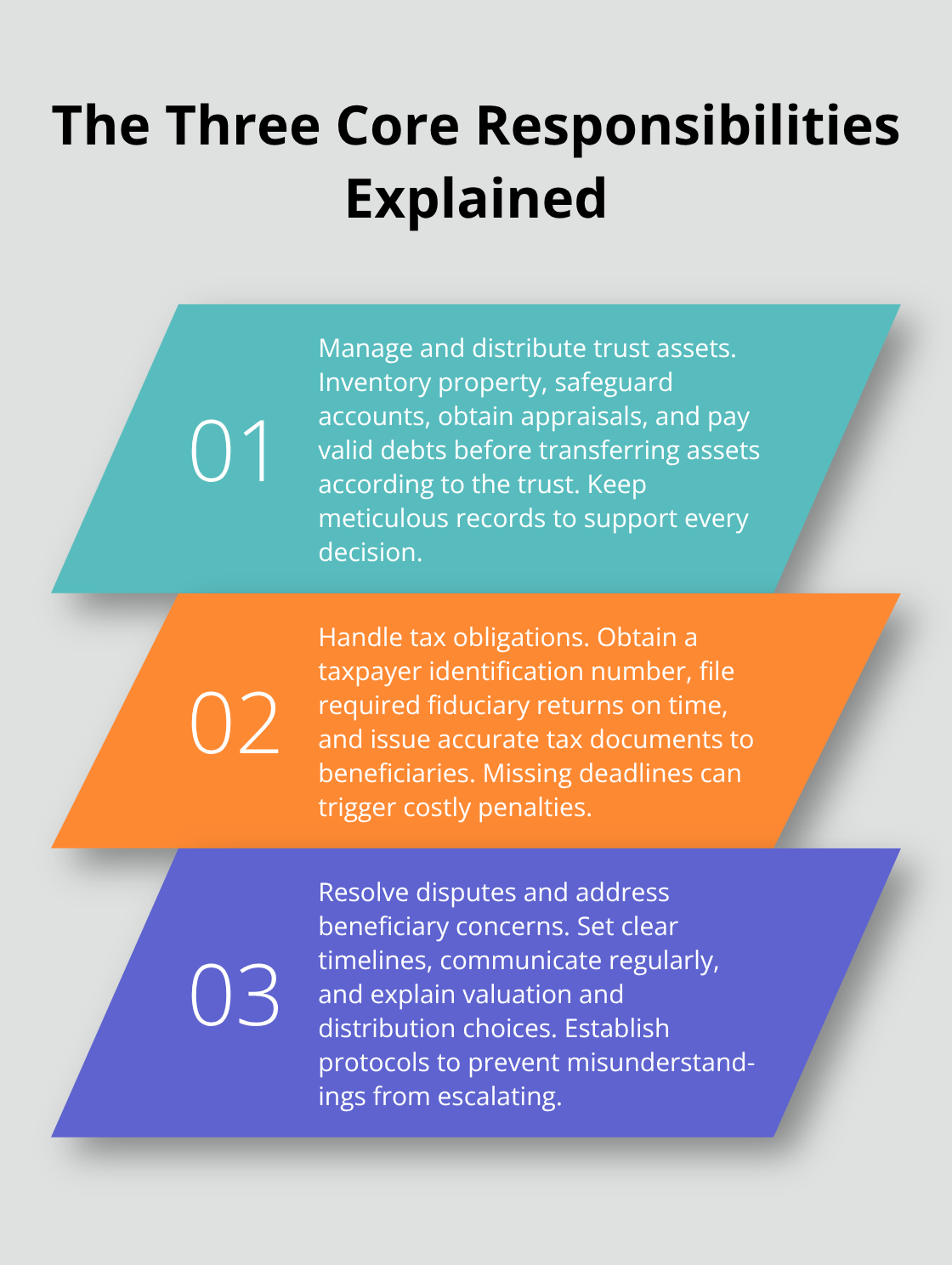
Trust administration involves three core responsibilities that demand attention to detail and knowledge of California law. Trustees must manage and distribute trust assets, handle tax obligations, and resolve disputes-each task carrying significant legal weight. A typical trust administration takes 12 to 24 months when handled correctly, though complex estates with multiple properties or beneficiary conflicts can extend beyond two years.
Managing and Distributing Trust Assets
The first task requires trustees to identify all property the trust owns, maintain accurate records, and transfer assets to beneficiaries according to the trust document. This process can take months or years depending on asset complexity. Trustees must locate and secure all accounts, obtain appraisals for real property and significant personal items, pay outstanding debts and claims against the estate, and maintain detailed records of every transaction.
If the trust owns real estate in California, you’ll need to handle title transfers, which involves recording new deeds with the county recorder’s office. This step protects beneficiaries by establishing clear legal ownership and preventing future disputes over property rights.
Handling Tax Obligations
The second responsibility involves filing the trust’s final income tax return, calculating and paying estate taxes if applicable, and providing beneficiaries with tax documents. California trusts that generate more than $600 in annual income must file a fiduciary income tax return with the IRS, and failing to file creates serious penalties.
You must obtain a taxpayer identification number for the trust, file appropriate returns by the deadline each year, and track which beneficiaries received distributions so you can issue accurate tax statements. The complexity increases significantly if the trust generated investment income during administration or if the estate exceeds California’s filing thresholds.
Addressing Beneficiary Concerns and Conflicts
The third core task involves resolving disputes and addressing beneficiary concerns, which means communicating clearly about timelines, responding to questions about distributions, and handling disagreements if they arise. Many trustees underestimate how much time these responsibilities require.
Addressing beneficiary issues means setting clear expectations early about the administration timeline, providing regular updates about progress, and being prepared to explain your decisions about asset distribution or expense deductions. When conflicts emerge, they often stem from beneficiaries not understanding why the process takes time or disagreeing with how you’ve valued assets. Establishing communication protocols upfront-such as quarterly updates or a designated point person for questions-prevents misunderstandings from becoming serious disputes.
These three responsibilities intersect constantly during administration, creating complexity that requires both legal knowledge and practical problem-solving skills. Understanding what each task entails helps trustees recognize where professional guidance becomes necessary.
Where Trust Administration Actually Falls Apart
Navigating Overlapping State and Federal Requirements
Trust administration in California demands navigating overlapping state and federal regulations that trustees must satisfy simultaneously. California’s Probate Code requires trustees to provide detailed accountings to beneficiaries, respond to written requests within 30 days, and maintain transparent communication about all trust activities. The IRS imposes its own timelines for fiduciary income tax returns and estate tax filings that operate independently of state deadlines. Missing a state deadline by even one day can trigger beneficiary lawsuits, while missing a federal deadline invokes penalties that reduce the estate’s value.
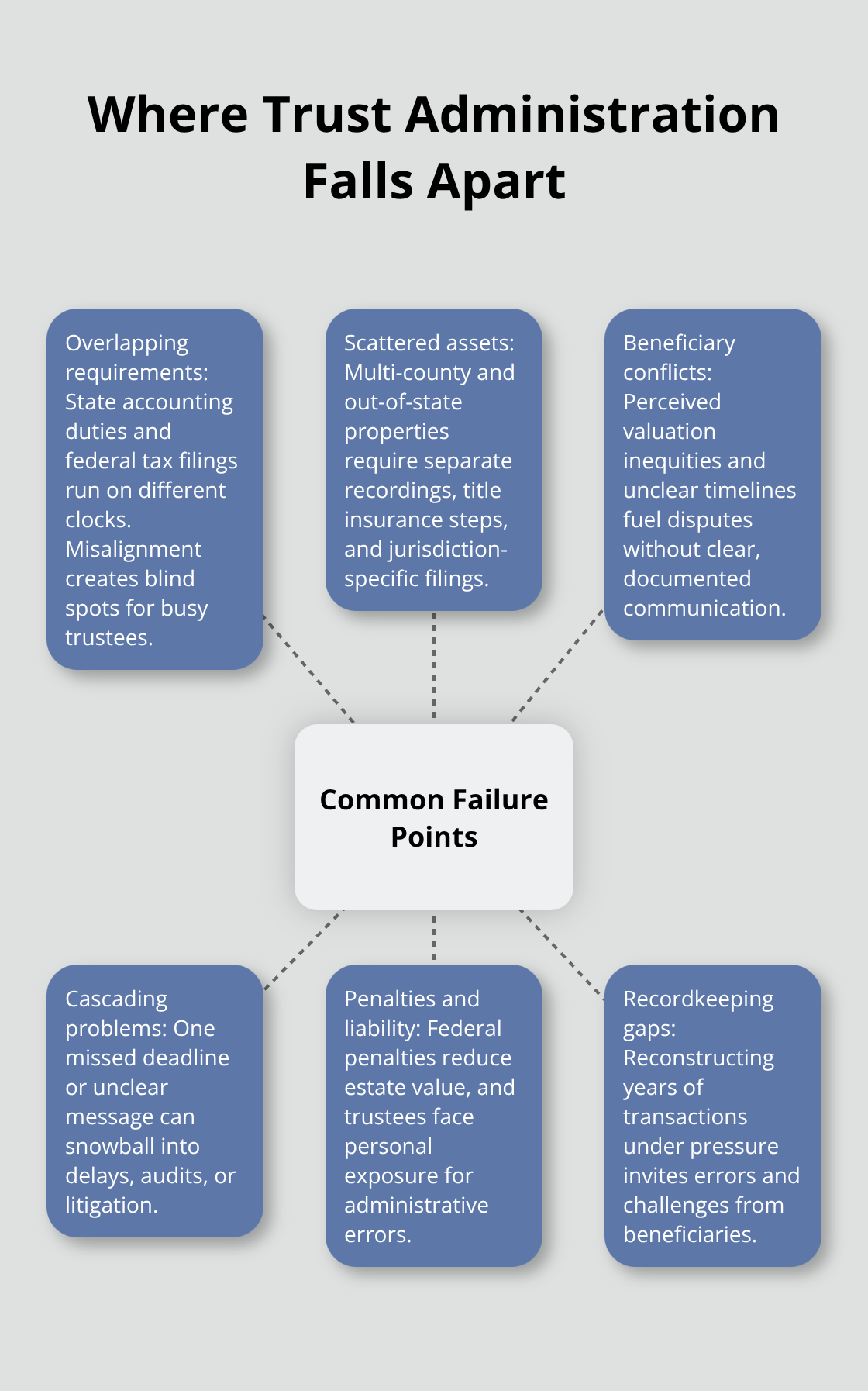
Many trustees discover too late that California’s accounting requirements exceed what the trust document specifies, forcing them to reconstruct years of records under pressure. The American Bar Association found that trust disputes involving California properties increase significantly when trustees lack legal guidance, with many cases stemming from preventable administrative errors rather than legitimate disagreements about the trust’s intent.
Managing Scattered Assets Across Multiple Locations
Properties complicate trust administration substantially because real estate held in trust requires coordination between California county recorders, title companies, and sometimes multiple lenders if the property carries debt. A trustee managing five properties across three counties faces five separate recording processes, five separate title insurance requirements, and potential conflicts between local county rules and state law.
When trust assets include out-of-state real estate, the complexity multiplies because each state’s recording system operates independently. Trustees must comply with each jurisdiction’s specific requirements for transferring property titles and maintaining records. This geographic fragmentation transforms what appears to be a straightforward asset transfer into a logistical challenge that demands attention to detail across multiple legal systems.
Mediating Between Competing Beneficiary Interests
Beneficiary conflicts emerge predictably once distributions begin. One beneficiary receives real property while another receives cash, creating immediate resentment about relative values. A beneficiary who expected a larger distribution based on family conversations discovers the trust document says otherwise, then questions whether the trustee is interpreting the document correctly.
These conflicts escalate quickly when beneficiaries communicate directly with each other rather than through the trustee, exchanging theories about what should happen and building coalitions against the trustee’s decisions. Beneficiary relationships can fracture permanently because the trustee failed to explain valuation methods or distribution timing clearly from the start. Preventing these breakdowns requires trustees to document every decision, provide written explanations for distributions, and address concerns before they harden into accusations of misconduct.
How Professional Guidance Prevents Cascading Problems
Trust administration challenges rarely appear in isolation-they compound each other, creating situations where a single mistake cascades into costly litigation or extended delays. A missed tax deadline combined with unclear beneficiary communication can transform a straightforward administration into a years-long dispute. Trustees who lack legal expertise often make decisions that seem reasonable at the time but create problems months later when beneficiaries question the reasoning or when tax authorities challenge the filings.
The complexity of managing these intersecting challenges suggests that professional guidance becomes necessary far earlier than most trustees realize. Understanding where administration typically breaks down helps trustees recognize when they need experienced counsel to navigate California’s specific requirements and protect the estate from preventable errors.
When You Need Legal Expertise in Trust Administration
Understanding California’s Dual Deadline System
California trust administration demands specific knowledge that goes beyond general estate planning. Trustees who attempt administration without legal counsel frequently encounter problems that cost thousands to fix later. The IRS imposes strict deadlines for fiduciary income tax returns, and missing even one deadline triggers penalties that compound monthly. California’s Probate Code adds separate requirements that don’t align with federal timelines, creating a two-track system where mistakes in one track damage your position in the other.
Courts have consistently ruled that trustees bear personal liability for administrative errors, meaning beneficiaries can sue you personally if you mishandle distributions or miss tax deadlines. A California trust administration attorney identifies which tasks require immediate action, which deadlines matter most, and how to sequence decisions so that early choices don’t create problems later.
The Real Cost of DIY Administration
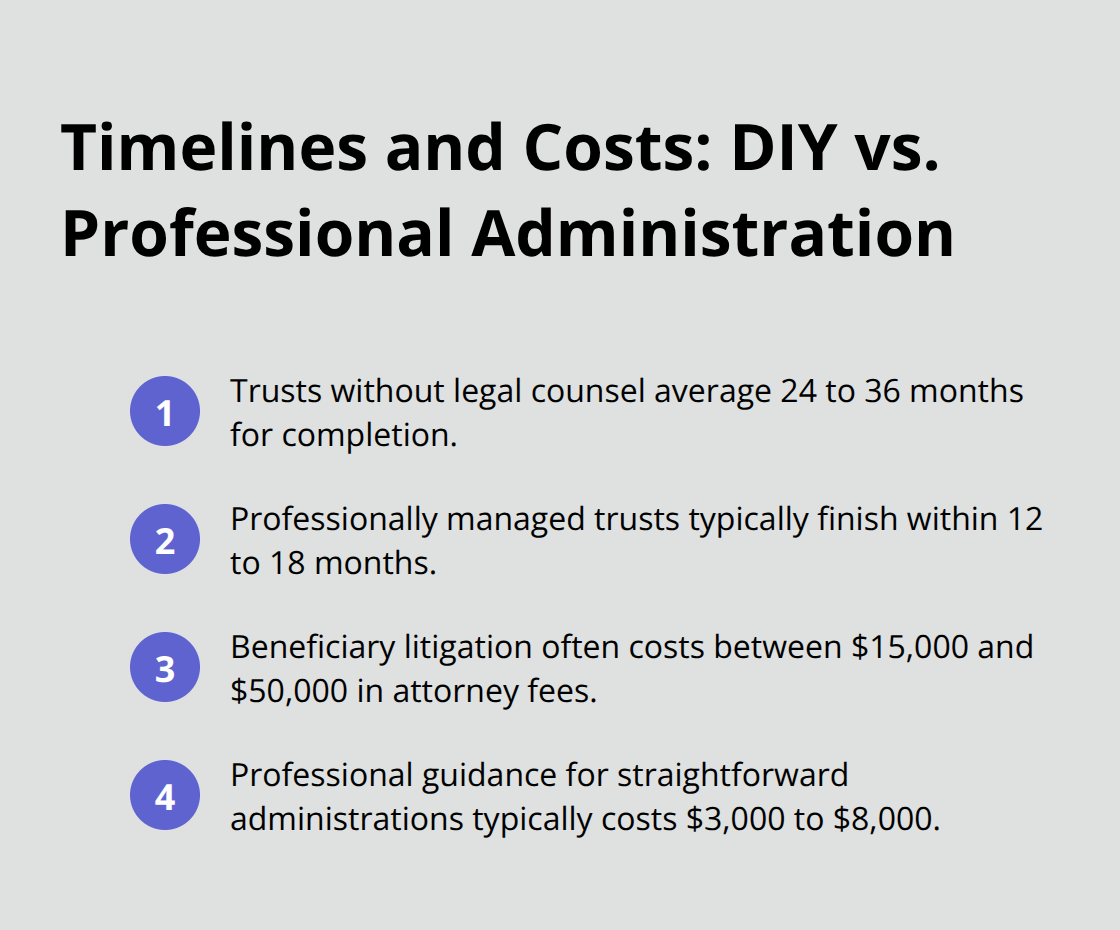
The practical difference between DIY administration and professional guidance shows up in administration timelines and litigation costs. Trusts handled without legal counsel average 24 to 36 months for completion, while professionally managed trusts with clear legal protocols typically finish within 12 to 18 months. Beneficiary disputes that escalate to litigation cost between $15,000 and $50,000 in attorney fees alone, according to data from the American College of Trust and Estate Counsel, and these disputes almost always stem from preventable communication breakdowns or administrative errors.
Real estate transfers require precise coordination with county recorders, title companies, and lenders, and a single error in deed language or recording procedures forces you to restart the entire process at that county. Trustees managing scattered properties across multiple California counties face exponentially higher risk of recording errors because each county maintains its own system.
Technical Requirements Across Multiple Jurisdictions
Property transfers demand attention to detail that most trustees underestimate. Each county recorder maintains separate filing systems, and deed language must satisfy that specific county’s requirements. A trustee managing five properties across three counties faces five separate recording processes, five separate title insurance requirements, and potential conflicts between local county rules and state law.
When trust assets include out-of-state real estate, the complexity multiplies because each state’s recording system operates independently. Trustees must comply with each jurisdiction’s specific requirements for transferring property titles and maintaining records. This geographic fragmentation transforms what appears to be a straightforward asset transfer into a logistical challenge that demands attention to detail across multiple legal systems.
Preventing Conflicts Through Clear Communication
Professional counsel handles technical requirements, issues written explanations for every distribution decision, and establishes beneficiary communication protocols that prevent conflicts from hardening into litigation. Beneficiary disputes emerge predictably once distributions begin-one beneficiary receives real property while another receives cash, creating immediate resentment about relative values. A beneficiary who expected a larger distribution based on family conversations discovers the trust document says otherwise, then questions whether the trustee is interpreting the document correctly.
These conflicts escalate quickly when beneficiaries communicate directly with each other rather than through the trustee, exchanging theories about what should happen and building coalitions against the trustee’s decisions. Preventing these breakdowns requires trustees to document every decision, provide written explanations for distributions, and address concerns before they harden into accusations of misconduct. The cost of professional guidance typically ranges from $3,000 to $8,000 for straightforward administrations, which represents a fraction of what litigation costs if beneficiaries challenge your decisions.
Final Thoughts
Trust administration in California demands precision across overlapping state and federal requirements, scattered assets, and competing beneficiary interests. The complexity extends far beyond simply transferring property and filing taxes-it requires understanding California’s specific legal framework, managing multiple jurisdictions, and preventing conflicts that can derail the entire process. Trustees who attempt administration without professional guidance typically spend 24 to 36 months completing tasks that should take 12 to 18 months, and they risk personal liability for errors that beneficiaries can challenge in court.
Professional guidance protects your wealth by identifying risks early, establishing clear communication protocols with beneficiaries, and handling technical requirements that most trustees underestimate. A California trust administration attorney coordinates property transfers across multiple counties, manages overlapping tax deadlines, and documents every decision so beneficiaries understand the reasoning behind distributions. This approach prevents the cascading problems that transform straightforward administrations into years-long disputes costing $15,000 to $50,000 in litigation fees.
The cost of professional counsel-typically $3,000 to $8,000 for straightforward administrations-represents a fraction of what litigation costs if beneficiaries challenge your decisions. We at Law Offices of Roshni T. Desai provide personalized trust and probate administration services across Southern California and can help you navigate these challenges with experienced guidance. Contact us for a free consultation to discuss your trust administration needs by visiting Law Offices of Roshni T. Desai.