




SoCal Probate Administration Process: Step By Step
Losing a loved one is difficult enough without navigating complex legal requirements. The SoCal probate administration process involves multiple steps, court filings, and strict deadlines that can overwhelm families during an already challenging time.
At Law Offices of Roshni T. Desai, we guide clients through each phase of probate so nothing falls through the cracks. This guide breaks down what happens from the moment of death through final asset distribution.
What Happens Immediately After Someone Passes Away
The hours and days following a death demand swift action across multiple fronts. California law requires you to file a death certificate with the court within 10 days-miss this deadline and the entire probate process stalls for months. Your first task is locating the will and related documents. Check the deceased person’s home, safe deposit boxes, attorney files, and financial institutions. Many people store originals with their bank or in a home safe, so contact anyone who might have access. Once you locate the will, obtain several certified copies since you’ll need them for multiple filings and financial institutions. Simultaneously, order multiple certified death certificates from the county recorder’s office where death occurred.
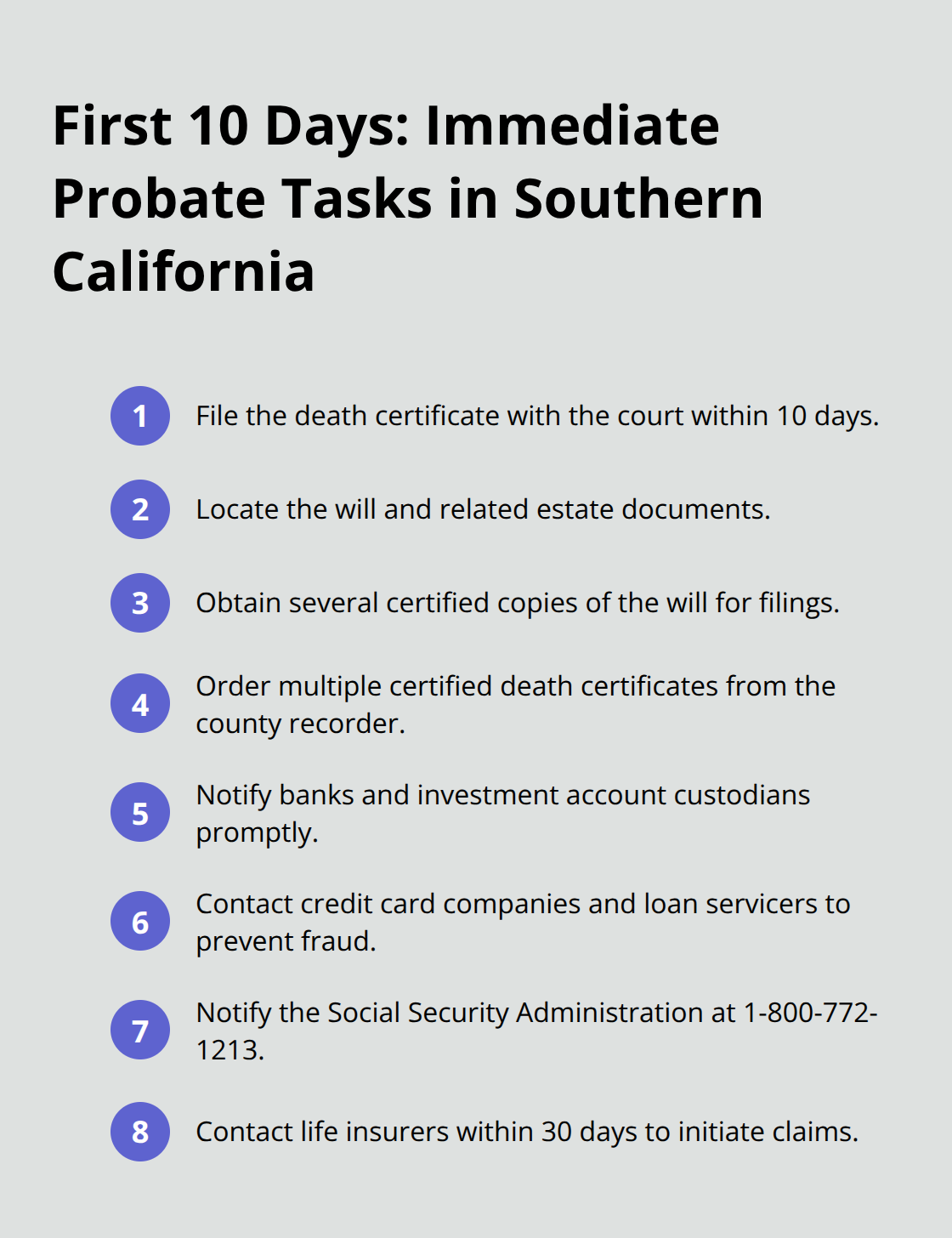
Order at least 10 copies because banks, insurance companies, and creditors each typically require originals. In California, death certificates cost around $20 per copy, and ordering extras now prevents expensive rush orders later.
Notifying Banks and Investment Accounts
Contact the deceased’s banks and investment accounts within the first week. Most institutions require a death certificate and proof of your authority to act (such as the will or court documents). Provide certified copies to each financial institution and document every contact you make, including dates, names, and reference numbers-the court will require proof of notification during the probate process.
Handling Credit Cards and Loan Servicers
Credit card companies and loan servicers must receive notification to prevent fraud and stop interest from accruing on some accounts. Call each creditor with the death certificate information and ask about the process for closing or transferring accounts. Document these conversations carefully since creditors will appear on the probate filing.
Notifying Government Agencies and Insurance Providers
The Social Security Administration must be notified-call 1-800-772-1213 or visit your local office. For life insurance policies, contact the insurer within 30 days to initiate claims (beneficiaries can often receive proceeds outside probate, which means faster access to funds). This step separates assets that pass directly to named beneficiaries from those that enter the probate estate.
With immediate notifications complete and documents secured, you’re ready to move forward with the formal court petition process.
The Court Petition and Probate Filing Process
After securing documents and notifying institutions, you file the formal petition with the probate court. In Southern California, this petition is the official request asking the court to open probate and appoint an executor or administrator. The petition must include the deceased’s legal name, date of death, county of residence, names and addresses of all heirs and beneficiaries, a description of estate assets, and whether a will exists.
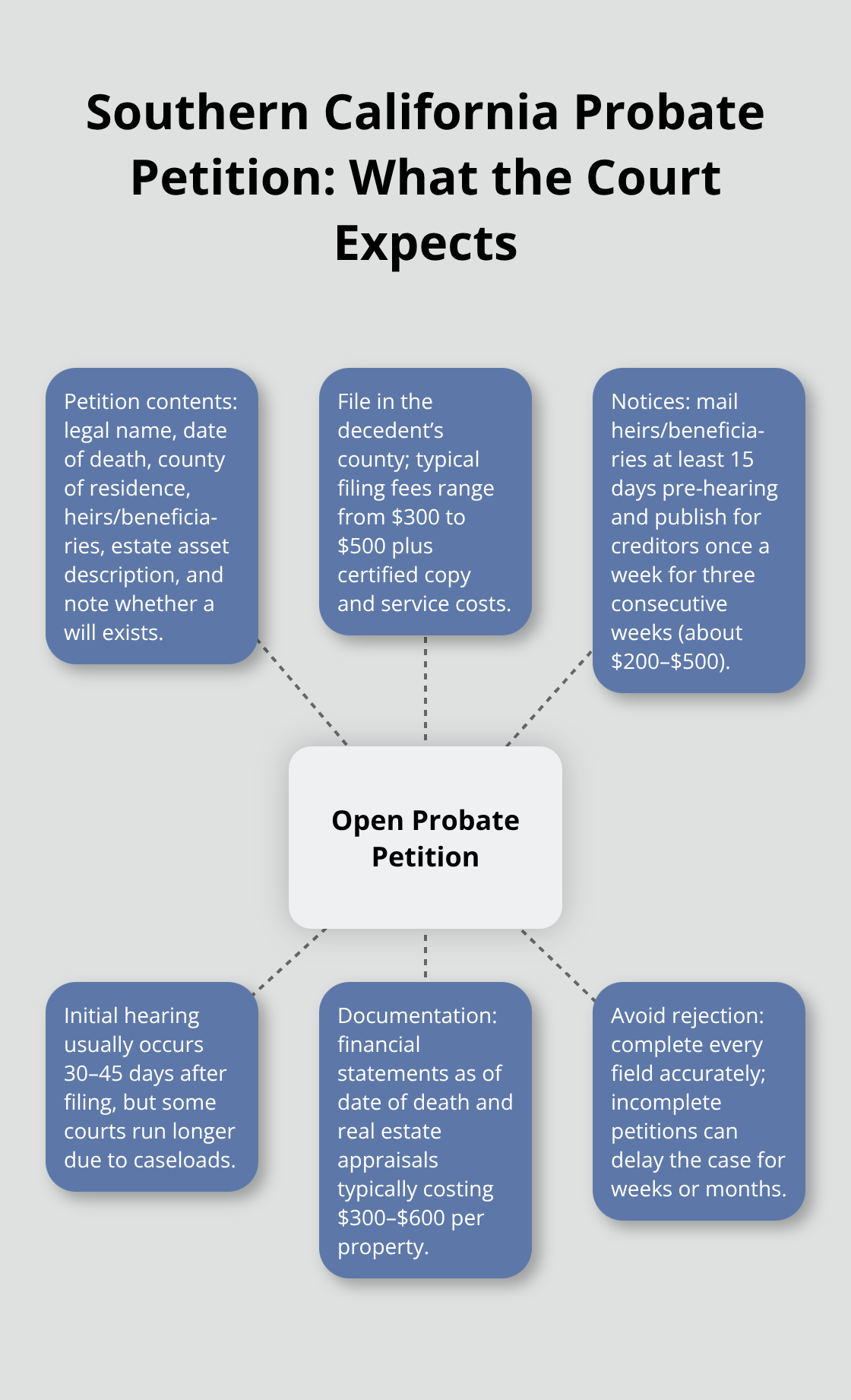
California requires you to file the petition in the county where the deceased lived at death. The filing fee varies by county but typically ranges from $300 to $500, plus additional costs for certified copies and service of process. Incomplete petitions face rejection from courts, which delays the entire process by weeks or months. You’ll need to gather financial statements showing all known assets and debts, obtain property valuations for real estate, and list all creditors you’ve identified.
Gathering Required Financial Information
Courts demand specifics about bank account balances, investment values, vehicle titles, and outstanding mortgages or loans. Many people underestimate how detailed this inventory must be-the court needs exact figures, not estimates. Contact each financial institution and request statements as of the date of death. Property appraisals for real estate typically cost $300 to $600 per property, and you’ll need these valuations before filing. Collect loan documents, mortgage statements, and credit card statements to establish the full scope of debts the estate owes.
Publication and Court Notice Requirements
California probate law requires you to notify heirs and beneficiaries through formal service, and creditors through newspaper publication. For heirs and beneficiaries, you must serve a copy of the petition by mail at least 15 days before the hearing. For creditors, California requires publication in a newspaper of general circulation in the county where probate is filed, typically once a week for three consecutive weeks. This publication costs between $200 and $500 depending on the newspaper and your county.
The publication period exists specifically to give creditors time to file claims against the estate. Miss this requirement and creditors can challenge the probate later. After publication ends, you must file proof of publication with the court before your hearing.
Preparing for Your Initial Court Hearing
Your court hearing typically occurs 30 to 45 days after filing, though some Southern California courts have longer wait times due to caseload volume. Many executors overlook filing proof of publication, causing judges to continue hearings until proof arrives. Attend the hearing prepared with original documents, including the will, death certificate, and proof that all notices were properly served and published. The judge will review your petition, verify that all procedural requirements were met, and formally appoint you as executor or administrator-this appointment grants you legal authority to manage estate assets and pay debts.
Once the court appoints you, your focus shifts to the practical work of managing what the estate owns and what it owes.
Managing Assets and Paying Debts During Probate
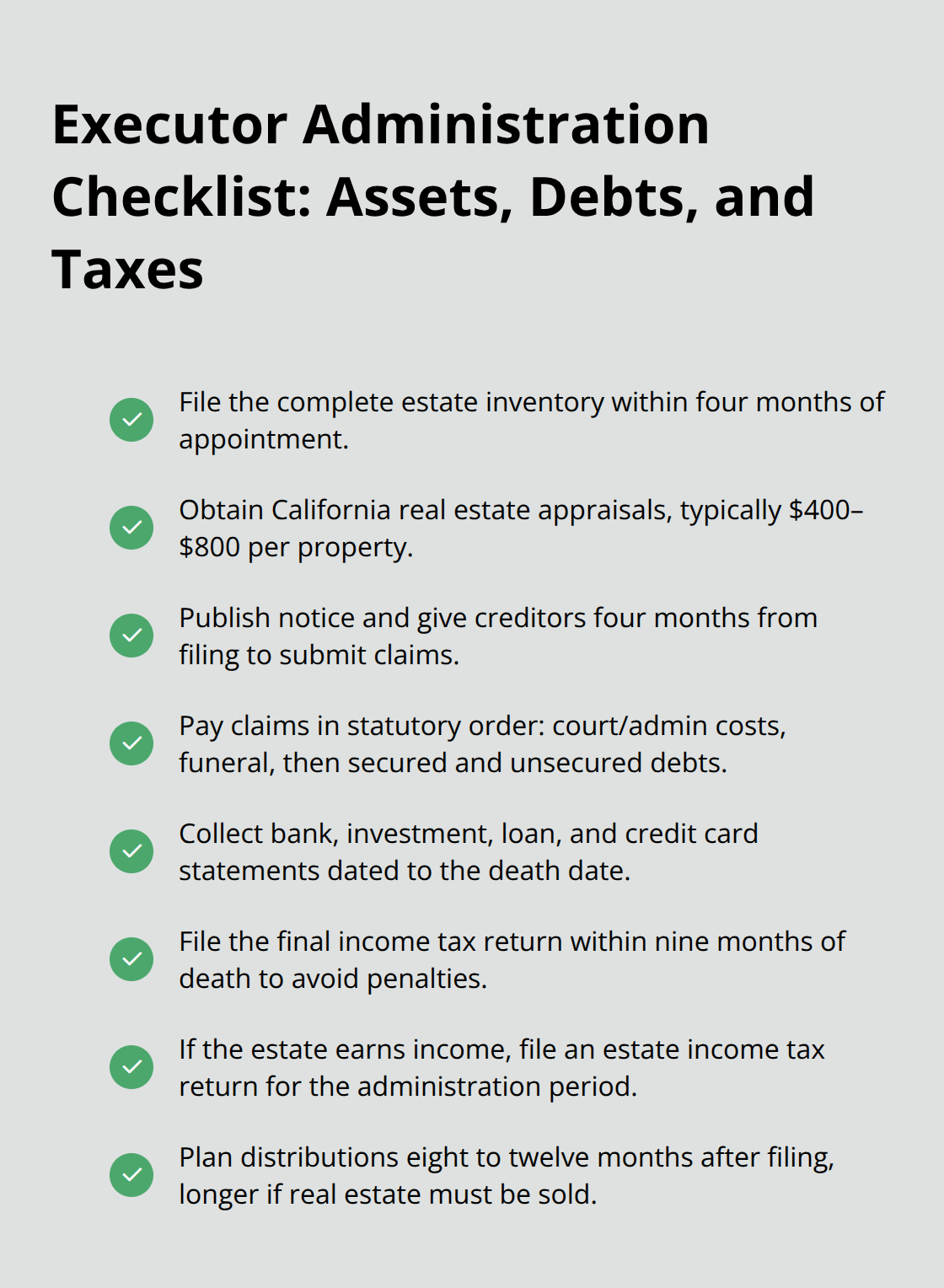
With court appointment in hand, you now control the estate legally but face the reality of what that means operationally. Your first obligation is creating a complete inventory of everything the deceased owned, which the court requires within four months of your appointment.
Inventory and Appraise Estate Property
Start by gathering bank statements, investment account statements, property deeds, vehicle titles, and insurance policies. Many executors rely on memory or incomplete documents, then discover hidden accounts months later when it’s too late to amend filings. Contact every financial institution the deceased used and request statements dated to the death date.
For real estate, you’ll need professional appraisals from licensed appraisers in California, which typically cost $400 to $800 per property depending on complexity and location. These appraisals establish the property’s fair market value as of the date of death-this valuation matters because it determines capital gains taxes for beneficiaries who inherit the property. Undervaluing property creates tax problems and court complications later, so don’t skip this step thinking you can estimate value.
Identify and Pay Outstanding Debts
Simultaneously, you must identify and pay all legitimate debts the estate owes. California law gives creditors four months from the probate filing date to submit claims, and you must publish notice to creditors in a newspaper as required earlier. Pay valid creditor claims in the order California law specifies: court costs and administration expenses first, then funeral expenses, then debts like mortgages, medical bills, and credit cards.
Federal and state income taxes are due, and the estate may owe a final return for the year of death plus an estate income tax return if the estate earned income during administration. The IRS allows nine months from the date of death to file the final return, though you should file earlier to avoid penalties. California imposes an inheritance tax only in rare circumstances, but the state does tax income earned by the estate during probate.
Distribute Remaining Assets to Beneficiaries
After you pay all legitimate debts and taxes, distribute the remaining assets to beneficiaries according to the will or California intestacy law if no will exists. This distribution phase typically occurs eight to twelve months after the initial court filing, though complex estates or real estate sales can extend the timeline significantly. Mistakes in calculations and timing result in personal liability for the executor, which is why many executors work with professionals who understand these unforgiving requirements.
Final Thoughts
Southern California probate typically takes nine to twelve months from filing to final distribution, though complex estates with real estate sales or family disputes extend beyond eighteen months. The timeline depends heavily on court caseload in your specific county, how quickly you gather financial information, and whether creditors file claims. Most delays stem from incomplete initial filings or missing documentation rather than court backlogs, which means careful preparation upfront saves months of waiting.
The SoCal probate administration process demands attention to detail that most people underestimate. Missing a single deadline, miscalculating an asset value, or failing to properly notify a creditor creates liability that falls directly on the executor. Many families attempt to handle probate alone and discover halfway through that they’ve made errors requiring expensive court corrections.
We at Law Offices of Roshni T. Desai recommend seeking professional guidance if the estate includes real property, significant investments, multiple beneficiaries, or outstanding debts. Ms. Desai’s dual licensure as both an attorney and real estate professional streamlines property-related transactions that often complicate probate, reducing costs and delays. Contact us for a free consultation with flexible home or office visits across Southern California so you can discuss your specific situation without financial pressure.