




Trust Administration Process: From Setup to Distribution
A trust administration process involves managing assets, distributing funds to beneficiaries, and handling legal obligations after a trust is created. Many people underestimate how complex this work becomes, especially when multiple beneficiaries or substantial assets are involved.
We at Law Offices of Roshni T. Desai help families navigate each stage of trust administration with clarity and confidence. This guide walks you through the essential steps, common obstacles, and practical solutions.
What a Trustee Actually Does Day-to-Day
The Critical First 30 Days
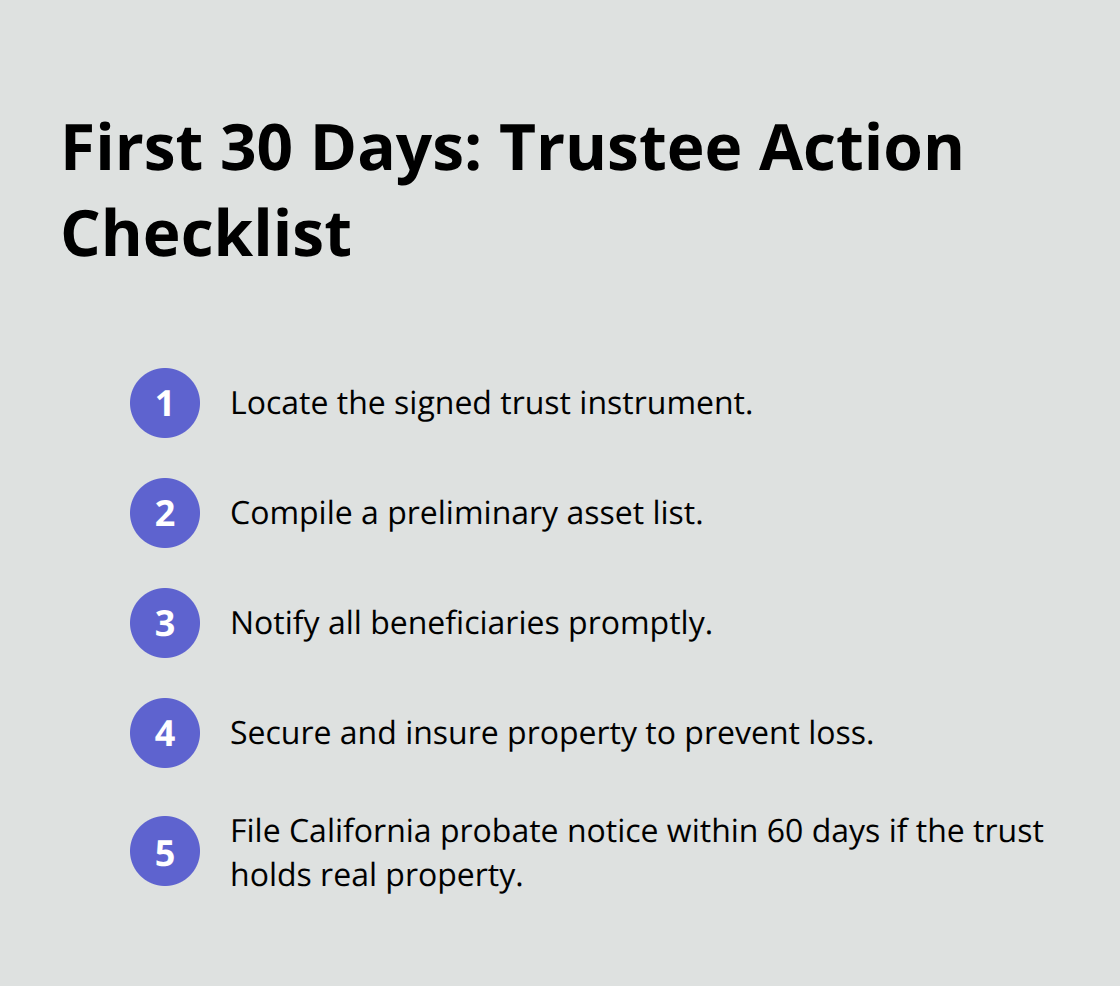
Trust administration starts the moment a trustee takes office, and the first 30 days matter more than most people realize. The trustee’s initial tasks include locating the trust document, identifying all assets, notifying beneficiaries within a reasonable timeframe, and securing property from damage or loss. Many trustees wait weeks to act, which creates legal exposure and beneficiary friction. A trustee must file a notice with the probate court in California within 60 days of accepting the position if the trust contains real property, according to California Probate Code Section 13100.
Ongoing Trustee Responsibilities
Beyond these opening moves, trustees manage ongoing responsibilities like maintaining detailed financial records, paying trust debts and taxes, handling investment decisions for trust assets, and eventually distributing remaining property to beneficiaries. The timeline typically spans 12 to 24 months for a straightforward trust, though complex estates with multiple properties or business interests can take three to five years. State law requires trustees to act with impartiality between current beneficiaries and those who receive distributions later, which creates real tension when some beneficiaries want income distributions while others prefer the trustee to reinvest earnings for long-term growth.
Understanding Fiduciary Duty
The trustee’s fiduciary duty is absolute and non-negotiable. This means the trustee cannot prioritize one beneficiary’s interests over another’s, cannot commingle trust assets with personal funds, and must disclose all material information to beneficiaries upon request. California law holds trustees personally liable for breaches of these duties, which means a trustee’s personal assets can be at risk if a beneficiary sues for mismanagement.
Tax Filings and Record-Keeping
Trustees must file tax returns on behalf of the trust, pay income taxes owed, and provide beneficiaries with their share of taxable income by January 31 each year using IRS Form K-1. Many trustees underestimate the accounting and record-keeping burden-maintaining separate bank accounts, tracking every transaction, and documenting investment performance becomes essential if disputes arise later. Trustees without accounting background should consider hiring a professional trustee or working with an accountant to handle these technical requirements, which protects both the trust and the trustee from costly errors.
The complexity of these responsibilities-particularly tax obligations and asset management-often reveals why beneficiaries face disputes and why professional guidance becomes necessary as administration progresses.
How to Manage Trust Assets and Distributions
Building an Accurate Asset Inventory
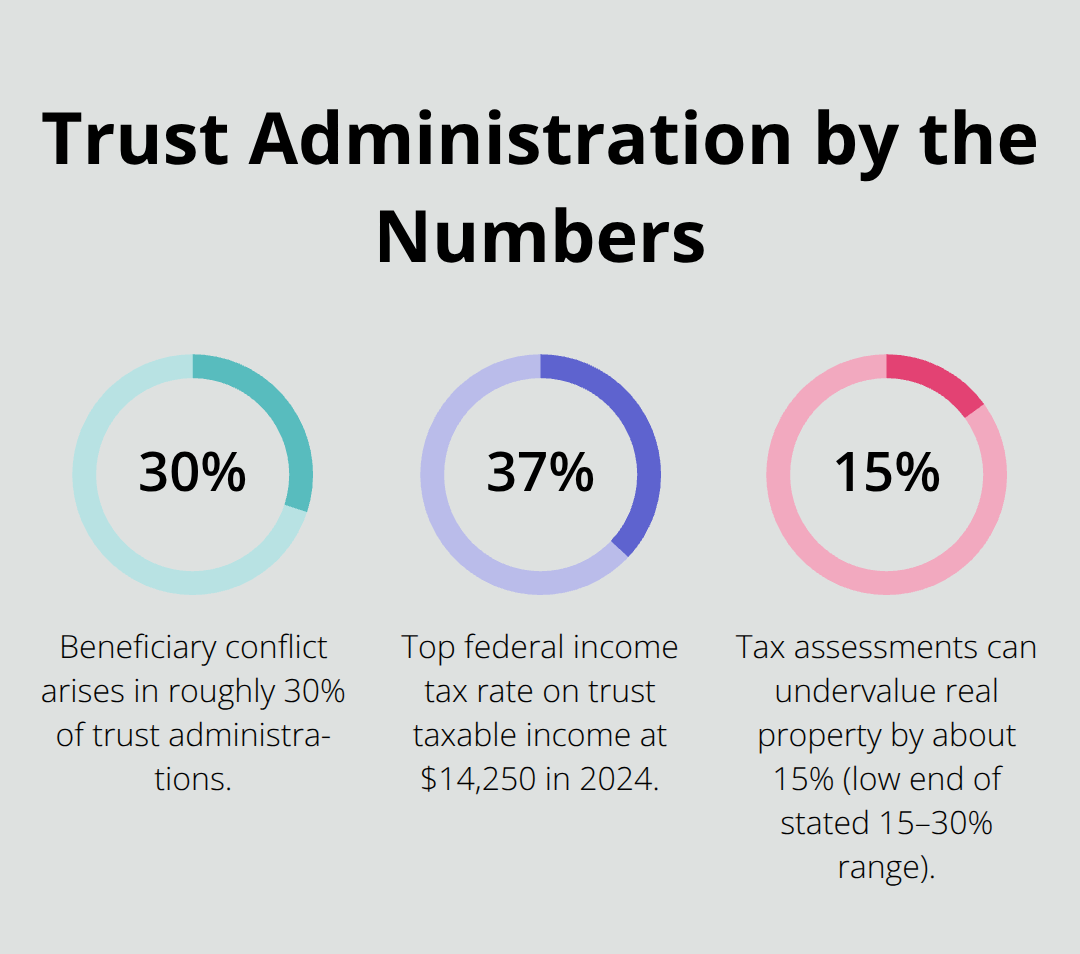
Create an accurate inventory of trust property within the first 90 days-this step sets the foundation for everything that follows. Trustees often make the mistake of relying on outdated account statements or incomplete records from the trust creator, which leads to missed assets or incorrect valuations months later. Start by obtaining certified copies of bank statements, investment account statements, property deeds, and insurance policies from the date the trust became irrevocable or the date of death if the trust was funded through a will. For real property, order a professional appraisal rather than relying on tax assessments, which typically undervalue assets by 15 to 30 percent according to the American Society of Appraisers.
Digital assets deserve attention too-many trustees overlook cryptocurrency holdings, online brokerage accounts, or domain names worth thousands. Once you identify everything, create a detailed inventory spreadsheet with asset descriptions, acquisition dates, cost basis, and current fair market values. This document becomes your legal protection if beneficiaries later challenge your management or if the IRS questions valuations on the estate tax return.
Balancing Investment Decisions Across Competing Interests
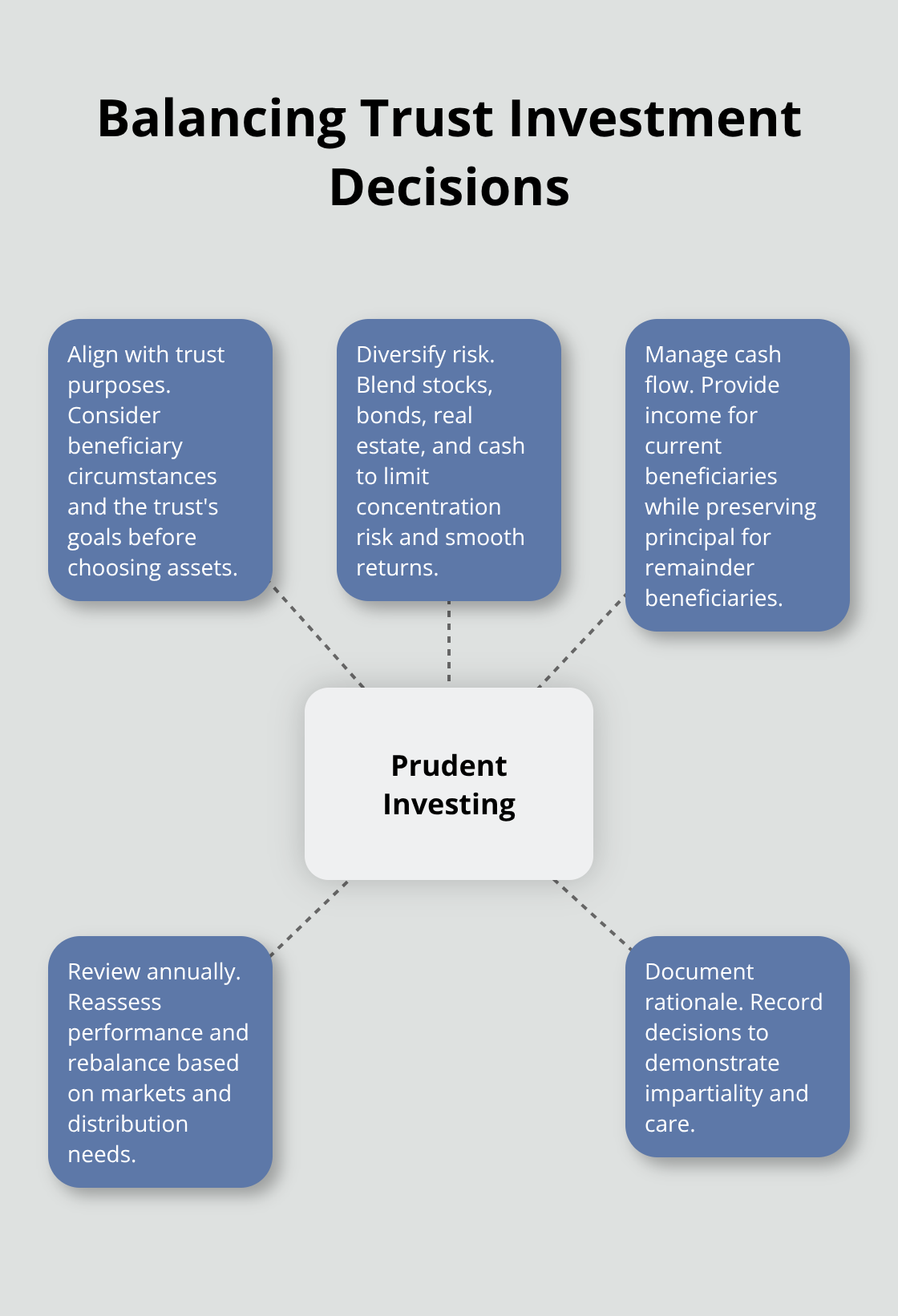
Asset management decisions within a trust require balancing competing interests that often cannot be satisfied simultaneously. A trustee managing a $500,000 trust with income beneficiaries receiving distributions and remainder beneficiaries waiting to inherit the principal faces constant tension-reinvesting earnings builds wealth for remainders but frustrates income beneficiaries who need cash flow. California Probate Code Section 16047 requires trustees to consider the beneficiaries’ circumstances, the purposes of the trust, and general economic conditions when making investment decisions, which means a blanket strategy does not work across all situations.
Many trustees default to overly conservative bond portfolios or money market accounts earning minimal returns, which erodes purchasing power and reduces distributions to income beneficiaries. Others chase higher returns through concentrated stock positions or alternative investments they do not understand, creating unnecessary risk. The practical approach involves diversifying across stocks, bonds, real estate, and cash based on the trust’s time horizon and distribution needs, then reviewing performance annually.
Managing Business Interests and Property Operations
If trust assets include a family business or rental property, document every management decision in writing and maintain clear separation between personal and trust operations. This documentation protects you if disputes arise and demonstrates that you acted with care and impartiality. Commingling trust funds with personal accounts creates legal liability and makes it nearly impossible to defend your actions later.
Navigating Tax Obligations and Distributions
Tax implications matter significantly-income generated inside the trust faces compressed tax rates that reach 37 percent federal income tax at just $14,250 of taxable income in 2024, according to IRS tax brackets. Distributing income to beneficiaries in lower tax brackets saves thousands annually, but requires precise calculation of distributable net income and careful timing of distributions before year-end. Beneficiaries receiving distributions must receive IRS Form K-1 by January 31 showing their share of trust income, capital gains, and deductions. Many trustees miss this deadline, creating compliance problems and frustrating beneficiaries who need the form to file their own returns.
The distribution process itself demands attention to state law requirements-some states mandate annual accountings showing all income and expenses, while others allow trustees to operate with minimal reporting until beneficiaries demand an accounting. California requires trustees to provide beneficiaries with a notice describing their rights within 60 days of becoming trustee, though many trustees send generic notices that fail to explain the beneficiary’s actual right to petition for judicial review or removal.
Creating a Written Distribution Plan
A trustee managing multiple beneficiaries with different needs should prepare a distribution plan in writing, explaining how income will be allocated and when principal distributions will occur. This plan prevents misunderstandings and demonstrates thoughtful stewardship to all parties involved. When beneficiaries understand the reasoning behind distribution decisions, disputes become less likely and the administration process moves forward more smoothly. The complexity of these decisions-particularly managing competing interests while satisfying tax obligations-often reveals why beneficiaries face disputes and why professional guidance becomes necessary as administration progresses.
Common Challenges in Trust Administration
Beneficiary Disputes and Communication Failures
Beneficiary conflict emerges in roughly 30 percent of trust administrations according to fiduciary litigation data, and most disputes trace back to poor communication or mismanagement rather than the trust document itself. When a trustee fails to provide timely accountings or makes investment decisions without explaining the reasoning, beneficiaries grow suspicious and litigation becomes inevitable. A trustee managing a $2 million trust with four beneficiaries must communicate proactively-sending quarterly account statements, explaining distribution decisions in writing, and responding promptly to beneficiary inquiries prevents resentment from building.
The mistake most trustees make is waiting for beneficiaries to complain instead of volunteering information regularly.
California law requires trustees to provide a detailed accounting upon request, but many trustees interpret this narrowly and only provide summaries that leave beneficiaries confused about where their money went. If a beneficiary feels excluded or mistreated, they can petition the court to remove the trustee and surcharge them personally for losses, which means the trustee’s personal assets become exposed to liability.
Illiquid Assets and Distribution Complications
Illiquid assets like family businesses, rental properties, or art collections create practical headaches because they cannot be quickly converted to cash for distributions. A trustee holding a commercial building worth $1.5 million cannot easily distribute it to multiple beneficiaries without selling, which triggers capital gains taxes potentially exceeding $300,000 depending on the property’s appreciation. The trustee must decide whether to sell the asset, hold it and distribute income to beneficiaries, or partition it among beneficiaries in proportional shares-each option carries different tax consequences and requires written documentation of the reasoning.
Tax Complexity and Filing Requirements
Tax complexity multiplies when trust income exceeds distribution needs, because compressed tax brackets force the trustee to either distribute income to beneficiaries in lower brackets or pay federal rates reaching 37 percent on retained earnings. A trustee must file IRS Form 1041 annually reporting all trust income and distributions, then ensure each beneficiary receives Form K-1 by January 31 showing their proportional share of income, capital gains, and deductions. Missing this deadline creates penalties and frustrates beneficiaries unable to file their own returns.
These interconnected challenges-from beneficiary relations to asset management to tax obligations-demand careful attention and strategic planning throughout the administration process.
Final Thoughts
Trust administration demands attention to detail, strategic planning, and consistent communication from start to finish. The process spans months or years and involves managing assets, satisfying tax obligations, and balancing competing interests among beneficiaries. Trustees who act decisively in the first 30 days, maintain transparent communication, and document every decision protect themselves from liability while keeping beneficiaries satisfied.
Professional guidance matters because the trust administration process involves interconnected legal, tax, and financial decisions that most people lack the background to handle alone. A trustee managing a $1 million trust with multiple beneficiaries faces compressed tax brackets, complex distribution decisions, and potential personal liability if something goes wrong. Hiring an accountant to handle tax filings costs $2,000 to $5,000 annually but prevents costly errors, while working with an attorney to structure distributions and document decisions protects the trustee from surcharge claims and beneficiary disputes.
We at Law Offices of Roshni T. Desai help families navigate trust administration with practical solutions tailored to your specific situation. Contact us at lortd.com to schedule your free consultation and move forward with confidence.