




Riverside Trust Administration: Streamlining Real Estate and Heirs
When a trust creator passes away, their family faces a complex process that determines how assets get distributed and managed. Riverside trust administration involves specific legal steps, real estate transfers, and trustee responsibilities that often confuse heirs.
We at Law Offices of Roshni T. Desai help families navigate these challenges smoothly. This guide walks you through what happens after a trust creator dies, how property transfers work, and what to do when disputes arise.
Understanding Trust Administration in Riverside County
What Happens After a Trust Creator Dies
When a trust creator passes away in Riverside County, the trustee named in the trust document has 30 days to notify all beneficiaries of the trust’s existence. California Probate Code Section 16061.5 mandates this notification, and failing to comply exposes the trustee to legal liability. The trustee must also locate and inventory all trust assets, which often includes real estate, bank accounts, investments, and personal property. This inventory phase typically takes four to eight weeks, depending on how organized the deceased person’s records were. Many families underestimate how time-consuming this step becomes when property titles are unclear, accounts are spread across multiple institutions, or the deceased person left minimal documentation. The trustee bears the fiduciary duty to act in the best interest of beneficiaries, meaning they cannot prioritize their own interests or delay the process without valid reason. California law holds trustees accountable for negligence, so rushing through asset identification without thoroughness creates problems later when hidden assets surface or beneficiaries discover missing items.
Trustee Responsibilities During Administration
The trustee’s role extends far beyond simply handing over money to heirs. They must pay the deceased person’s final debts, file a final income tax return, and determine whether the trust owes estate taxes. California allows trustees to claim compensation for their work, though the amount varies based on the complexity and size of the trust. The trustee also manages real estate during the administration period, which might involve maintaining properties, paying property taxes, insuring buildings, and eventually coordinating sales if the trust directs it. Many trustees make the mistake of acting without professional guidance, but trust administration in Riverside involves specific state laws and local requirements that shift between situations.
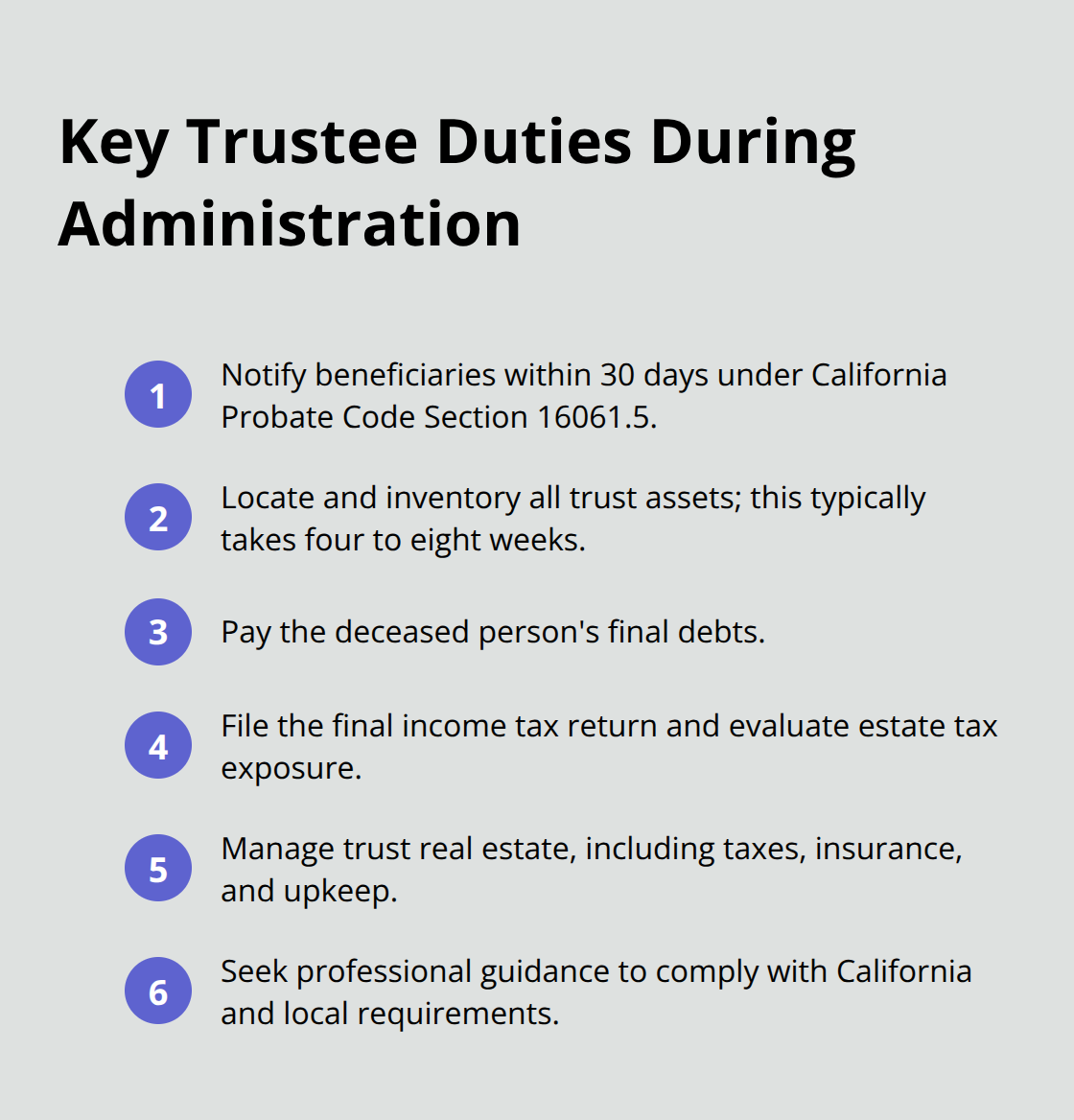
If the trust owns commercial property or multiple residential units, the trustee needs to understand tenant rights, lease obligations, and liability exposure. These property-specific duties require careful attention to detail and knowledge of California regulations.
Timeline Expectations for Settlement
Trust administration in California typically concludes within 12 to 18 months if no disputes emerge and assets are straightforward. However, Riverside County cases involving real estate often extend beyond this timeframe because property transfers require title searches, lender payoff confirmations, and sometimes property inspections or repairs. The trustee must also wait for the final tax year to close before distributing remaining assets to beneficiaries, which means if the trust creator dies in March, the trustee cannot finalize distributions until after the following April 15th. If the trust owns property with a mortgage, the trustee needs to handle loan assumptions or payoffs-a process that can add two to four months depending on the lender’s responsiveness. Disputes between beneficiaries over asset valuations or distribution fairness can extend the timeline significantly, with some contested administrations stretching to three years or longer. Starting the process with clear documentation and professional guidance prevents most delays that families encounter.
Managing Real Estate During Administration
Real estate complicates trust administration more than any other asset type. The trustee must maintain the property, pay property taxes on time, and keep insurance current throughout the administration period. If tenants occupy the property, the trustee must honor existing leases and handle maintenance requests promptly. Property valuations matter significantly because beneficiaries often dispute whether the trustee sold real estate at fair market value or whether the property was appraised correctly for tax purposes. The trustee’s decisions about property management directly affect how quickly the trust can close and how much value remains for heirs. Professional guidance on real estate matters helps trustees avoid costly mistakes and accelerates the administration timeline.
Managing Real Estate Within a Trust
How Property Titles Transfer During Administration
When a trust creator owns real estate in Riverside County, the property title must transfer to the trustee’s name during administration. This transfer happens through a process called retitling, where the trustee files an affidavit with the county recorder’s office to prove they have authority over the trust assets. Unlike probate, which requires court approval for property transfers, trust administration allows the trustee to move forward without judge oversight, saving months of delays. California Probate Code Section 13050 permits this streamlined approach, and Riverside County processes these filings relatively quickly-typically within two to four weeks once submitted correctly.
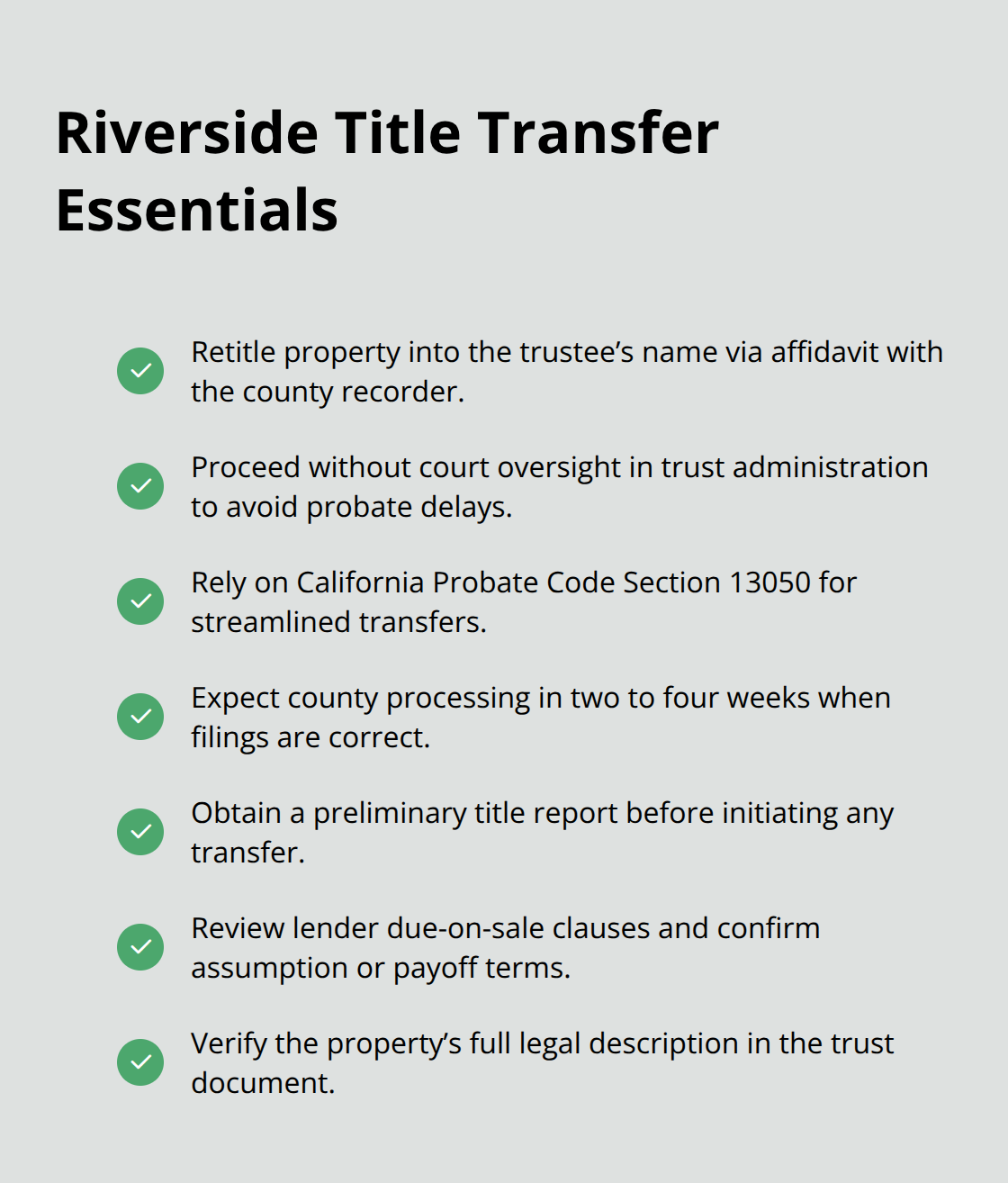
The trustee must obtain a preliminary title report before attempting any transfer. This report reveals liens, mortgages, easements, or other encumbrances that complicate the sale or transfer process. If the deceased person financed the property, the trustee must contact the lender to understand whether the loan has a due-on-sale clause that triggers full repayment when ownership changes. Some lenders allow loan assumptions to heirs, while others demand immediate payoff. Addressing this early prevents the trustee from discovering problems after marketing the property or promising it to a beneficiary.
The trustee should also verify that the original trust document clearly identifies the real estate by legal description, not just street address. Vague property descriptions create title issues that slow down transfers and increase costs.
Selling Trust-Owned Property Without Probate Delays
Selling trust property moves faster than probate sales because the trustee does not need court approval for pricing or buyer selection. In Riverside County, trust property typically sells within 60 to 90 days if priced competitively and marketed properly. The trustee can accept the first reasonable offer without waiting for probate court hearings or obtaining judge permission.
However, this speed advantage disappears when the trustee hires the wrong real estate professional or fails to coordinate with tax advisors before closing. Capital gains taxes apply to trust property sales, and the trustee must understand whether the property receives a stepped-up basis at the trust creator’s death-a tax rule that often eliminates capital gains taxes entirely if the property has not appreciated since the death. Missing this opportunity costs heirs thousands of dollars. The trustee should work with a CPA or tax attorney to calculate the stepped-up basis before listing the property.
If the trust property has tenant occupancy, the trustee must honor lease terms and cannot rush tenants out to sell faster. Violating tenant rights exposes the trustee to liability and delays the sale through legal disputes.
Coordinating with Real Estate Professionals to Reduce Costs
The trustee must coordinate legal, tax, and real estate guidance to avoid costly mistakes during property sales. When these professionals work in silos, communication breaks down and delays multiply. A trustee who hires a real estate agent without consulting a tax professional may miss stepped-up basis opportunities. A trustee who works only with an attorney may overlook market timing or property condition issues that affect sale price.
Ms. Desai’s dual licensure as an attorney and real estate professional streamlines estate-related property sales and transactions to reduce costs, delays, and communication problems that typically arise when trustees juggle separate attorneys, tax professionals, and real estate agents. This integrated approach helps trustees move forward with confidence and clarity.
The trustee’s decisions about property management and sale strategy directly affect how quickly the trust can close and how much value remains for heirs. Coordinating these decisions early prevents disputes between beneficiaries over asset valuations or distribution fairness-issues that can extend the timeline significantly and create lasting family conflict.
Common Issues Heirs Face During Trust Administration
Disputes Over Asset Distribution
Heirs frequently encounter conflicts over how assets should be divided, and these disputes rarely stem from malice. Instead, they emerge from unclear communication, unrealistic expectations, and gaps in beneficiary understanding about trustee authority. The trustee holds legal power to make decisions that beneficiaries dislike, but beneficiaries retain the right to challenge those decisions if the trustee acts outside their authority or violates fiduciary duties. California Probate Code Section 16000 grants trustees broad discretion in administration, yet this same broad discretion creates friction when beneficiaries disagree with property valuations, sale prices, or distribution timing.
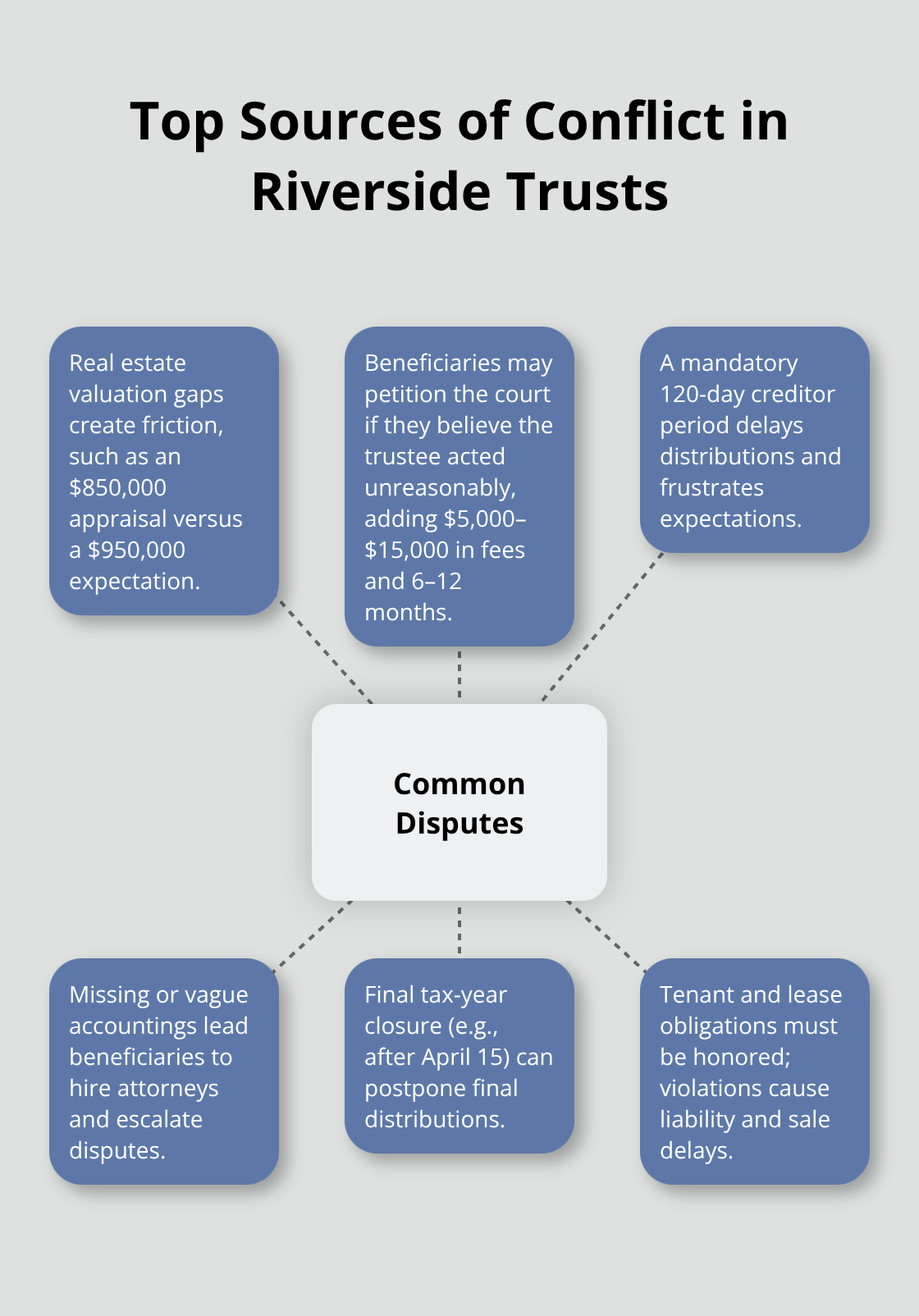
Asset disputes often center on real estate valuation, which generates the most friction in Riverside County trust administrations involving property. The trustee hires an appraiser who values the family home at $850,000, but a beneficiary believes it should sell for $950,000-creating a $100,000 gap that fuels resentment and accusations of undervaluation. The trustee controls the sale process and can proceed with their appraiser’s opinion, but beneficiaries can petition the court to challenge the valuation if they believe the trustee acted unreasonably. This legal avenue exists, but invoking it costs $5,000 to $15,000 in attorney fees and extends administration by six to twelve months.
Delayed Access to Inheritance
Frustrated heirs expect money within weeks of death but discover the trustee cannot distribute assets until final tax returns are filed, mortgages are paid, and creditor claims expire. California law requires the trustee to wait 120 days before distributing estate assets to allow creditors time to file claims-a requirement that extends the timeline regardless of how quickly the trustee works. Many heirs do not understand this statutory waiting period and blame the trustee for unnecessary delays. The trustee’s failure to communicate this requirement in writing transforms normal administration delays into conflict and resentment.
Confusion About Trustee Duties and Transparency
Transparency breakdowns occur when the trustee fails to provide accountings showing where money went, what debts were paid, or why the property sold below asking price. The trustee has a legal obligation to provide detailed accountings to beneficiaries, but many trustees skip this step or provide incomplete documentation that raises more questions than it answers. Beneficiaries who receive vague responses about trustee decisions often hire their own attorney to investigate, which triggers formal disputes and dramatically increases costs for the entire administration.
When beneficiaries feel kept in the dark, they assume the trustee is hiding something or acting selfishly-assumptions that damage family relationships and trigger costly legal disputes. Trustees who provide written accountings at least annually and explain major decisions in plain language prevent most conflicts before they escalate into litigation. This practice of clear communication costs nothing but saves thousands in legal fees and preserves family relationships that might otherwise fracture under the stress of administration.
Final Thoughts
Riverside trust administration requires coordination across legal, tax, and real estate matters that most families mishandle without professional support. The trustee’s decisions about property transfers, asset valuations, and distribution timing affect whether heirs receive their inheritance smoothly or face years of conflict and delay. Professional guidance prevents the costly mistakes that transform straightforward administrations into family disputes.
We at Law Offices of Roshni T. Desai streamline this process through Ms. Desai’s dual licensure as an attorney and real estate professional. This combination eliminates the communication gaps that typically arise when trustees work with separate attorneys, tax professionals, and real estate agents. Instead of managing multiple professionals with conflicting priorities, you work with one integrated team that understands both the legal requirements and the property market realities in Riverside County (reducing costs, accelerating timelines, and preventing the disputes that drain family resources and relationships).
The firm brings over 25 years of experience handling wills, living and irrevocable trusts, powers of attorney, trust and probate administration, elder law, and small business succession across Southern California. We offer free consultations with flexible home or office visits, so you can discuss your situation without pressure or upfront costs. Contact us at lortd.com to schedule your free consultation and take the first step toward a smoother trust administration process.