




Executors Probate Timeline SoCal: A Clear Schedule for Duties
Probate in Southern California moves through a predictable sequence of steps, but most executors don’t know what to expect. The executors probate timeline in SoCal typically spans 9 to 18 months, though complications can extend it further.
At Law Offices of Roshni T. Desai, we’ve guided hundreds of families through this process. This guide breaks down each phase so you understand exactly what happens and when.
The First Months: What Happens Immediately After Death
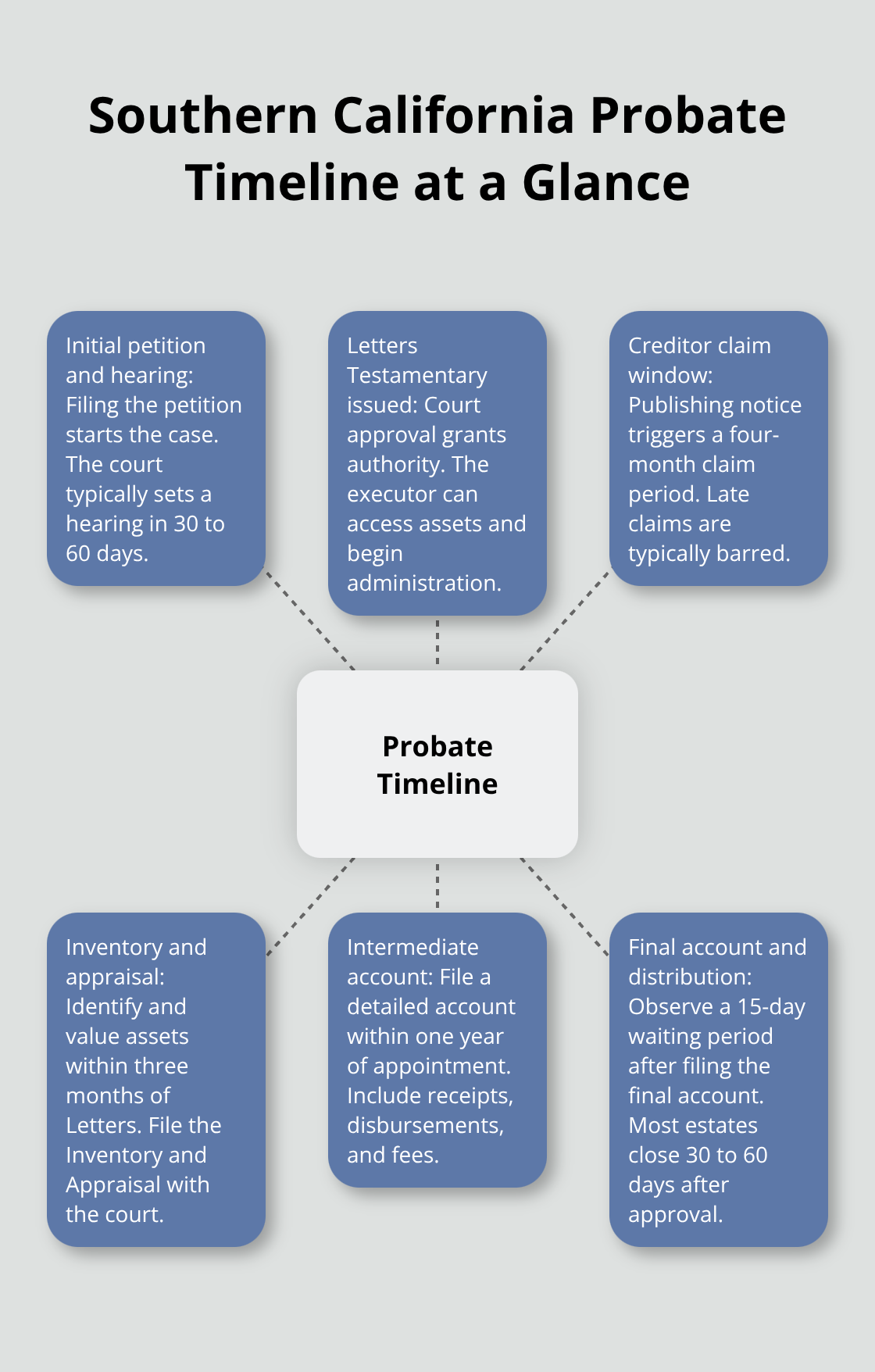
The probate process in Southern California begins when the executor files the petition with the court, typically within weeks of the death. California Probate Code Section 8100 requires this petition filing, which officially starts the timeline for the entire process. The court reviews the petition and supporting documents, including the will and death certificate, then schedules a hearing within 30 to 60 days. During this initial filing phase, the executor must also obtain an order allowing them to act as executor and collect the deceased person’s assets. The court issues Letters Testamentary, which proves to banks, brokers, and other institutions that the executor holds legal authority to access accounts and property. Without this document, financial institutions won’t release funds or information, so obtaining it quickly matters significantly for keeping the timeline on track.
Creditor notification creates a strict deadline
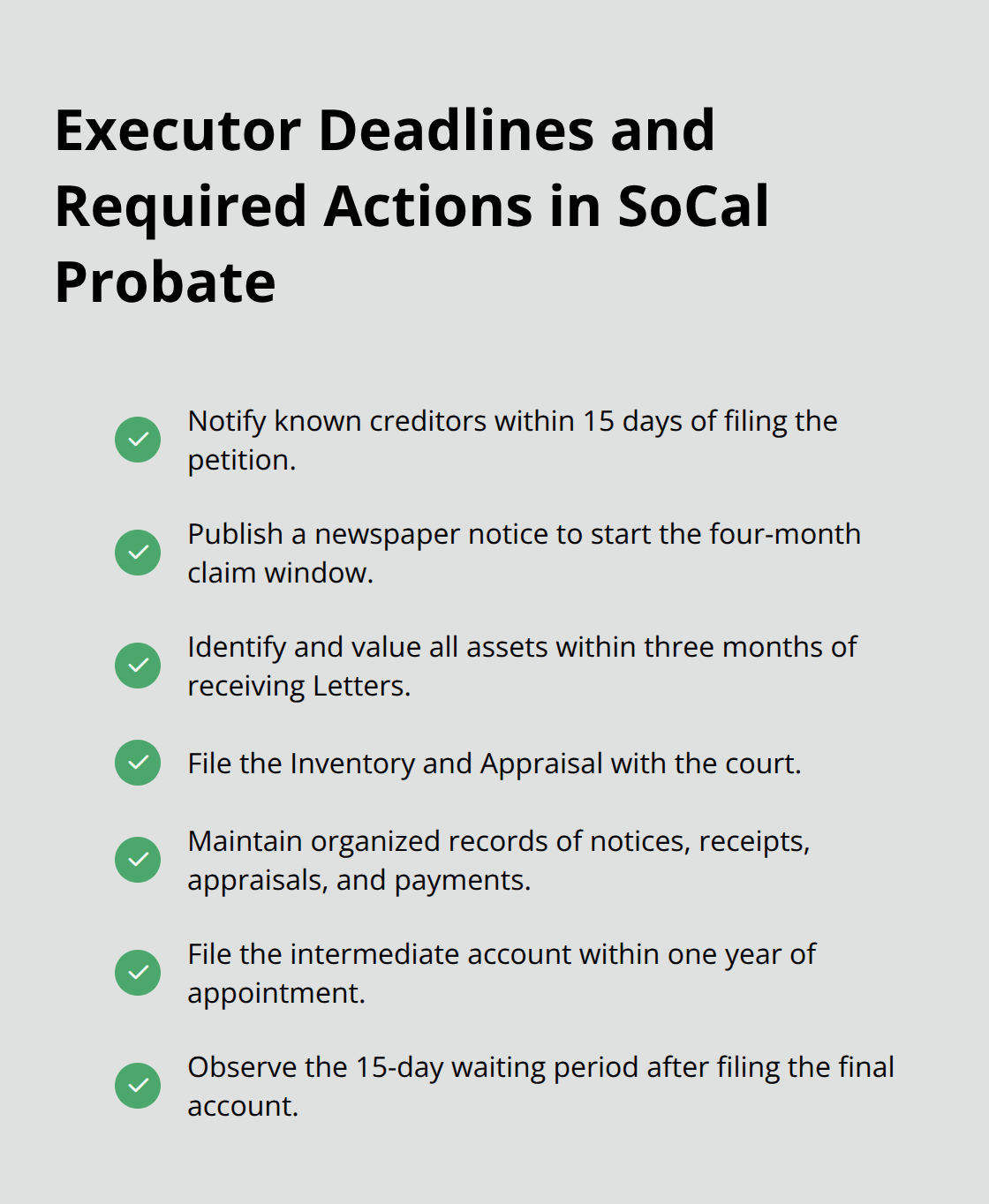
California law requires executors to notify all known creditors within 15 days of filing the petition. This notification period is strict, and failure to meet it can create liability issues. Additionally, executors must publish a notice in a local newspaper, which triggers a four-month creditor claim period from the date of publication. This four-month window is non-negotiable in California and represents one of the longest fixed deadlines in probate. Any creditor who fails to file a claim during this period typically loses the right to collect from the estate. Executors should keep detailed records of all creditor notifications and publications, as courts will require proof of compliance. Some executors underestimate this phase, but proper creditor notification prevents disputes later and protects the estate from unexpected claims that emerge months into the process.
Asset identification and appraisal requirements demand attention
Within three months of receiving Letters Testamentary, executors must identify and value all estate assets. California requires a detailed inventory and appraisal of property, which the court uses to calculate estate taxes and distribution amounts. Real property typically requires a professional appraisal, especially if it involves the family home or commercial real estate. Personal property like vehicles, jewelry, and collectibles also needs valuation, though items under certain thresholds sometimes skip formal appraisals. The executor must file an Inventory and Appraisal form with the court, listing every asset and its estimated value as of the date of death. This document becomes public record, so executors should understand that probate filings aren’t private. For estates with significant real estate holdings (particularly in hot California markets where appraisal demand runs high), this phase can take longer than expected because appraisers often face scheduling delays.
The court hearing sets the stage for what comes next
Once the court reviews the initial petition and supporting documents, the judge schedules a hearing to approve the executor’s appointment. This hearing typically occurs 30 to 60 days after you apply and represents the first formal court appearance in the probate process. The judge examines the will’s validity, confirms the executor’s qualifications, and issues the Letters Testamentary that unlock access to estate assets. At this point, the executor transitions from preparation into active asset management and creditor notification. The timeline accelerates significantly after this hearing because the executor now has legal authority to act on behalf of the estate.
Key Milestones and Deadlines Executors Must Meet
The intermediate account filing marks the midpoint
After the judge approves your appointment as executor, the probate process enters its middle phase, where administrative work accelerates significantly. This intermediate period typically runs from months three through twelve and involves satisfying creditors, managing estate assets, and preparing detailed accounting reports for the court. The four-month creditor claim deadline established during the initial filing phase expires during this window, which means most creditor disputes surface and resolve here. Once creditors file claims or the deadline passes, you’ll know exactly what debts the estate owes.
California courts require executors to file an intermediate account showing all receipts and disbursements within one year of appointment, according to California Probate Code Section 11200. This account must list every dollar that entered and left the estate, including asset sales, creditor payments, and executor fees. The documentation burden proves substantial at this stage; you’ll need bank statements, receipts, appraisals, and proof of payments organized by category.
Objection periods create windows for disputes
If beneficiaries or interested parties object to the account within the 30-day objection period, the court schedules a hearing to address their concerns. Many executors underestimate how objections can derail timelines, particularly when beneficiaries question asset valuations or fee amounts. The court resolves these disputes before you can move forward with distribution, so addressing objections promptly matters for keeping the process on track.
Final distribution requires careful sequencing
The final steps move quickly once obstacles clear. You’ll prepare a final account showing all remaining estate activity and request permission to distribute assets to beneficiaries. California law requires a minimum 15-day waiting period after you file this final account, giving beneficiaries time to object. Most estates close within 30 to 60 days after the court approves the final account, though real estate sales sometimes extend this timeline if properties haven’t sold yet.
The judge signs an order authorizing distribution, and you transfer assets to beneficiaries according to the will or trust terms. Some executors face delays because they wait too long to list properties for sale or fail to price them competitively in Southern California’s market. The entire timeline from approval to closure typically spans 9 to 18 months, though estates with substantial real property holdings or family disputes often exceed this range.
Real estate complications demand early attention
Property sales represent one of the most common bottlenecks in the final distribution phase. If the estate holds real property (particularly in competitive Southern California markets), you should coordinate with real estate professionals early to avoid last-minute delays. Ms. Desai’s dual licensure as an attorney and real estate professional streamlines estate-related property sales and transactions to reduce costs and communication challenges. Identifying and addressing property-related obstacles during the intermediate phase prevents timeline extensions during final distribution.
Common Delays That Slow Down Probate in SoCal
Will contests halt the entire process
Family conflicts over the will’s validity represent the single biggest timeline killer in Southern California probate cases. Will contests don’t just slow down things-they halt the entire process while the court determines whether the document is legitimate. A beneficiary who questions the will’s validity can file a formal objection, which triggers a separate legal proceeding that runs parallel to probate administration.
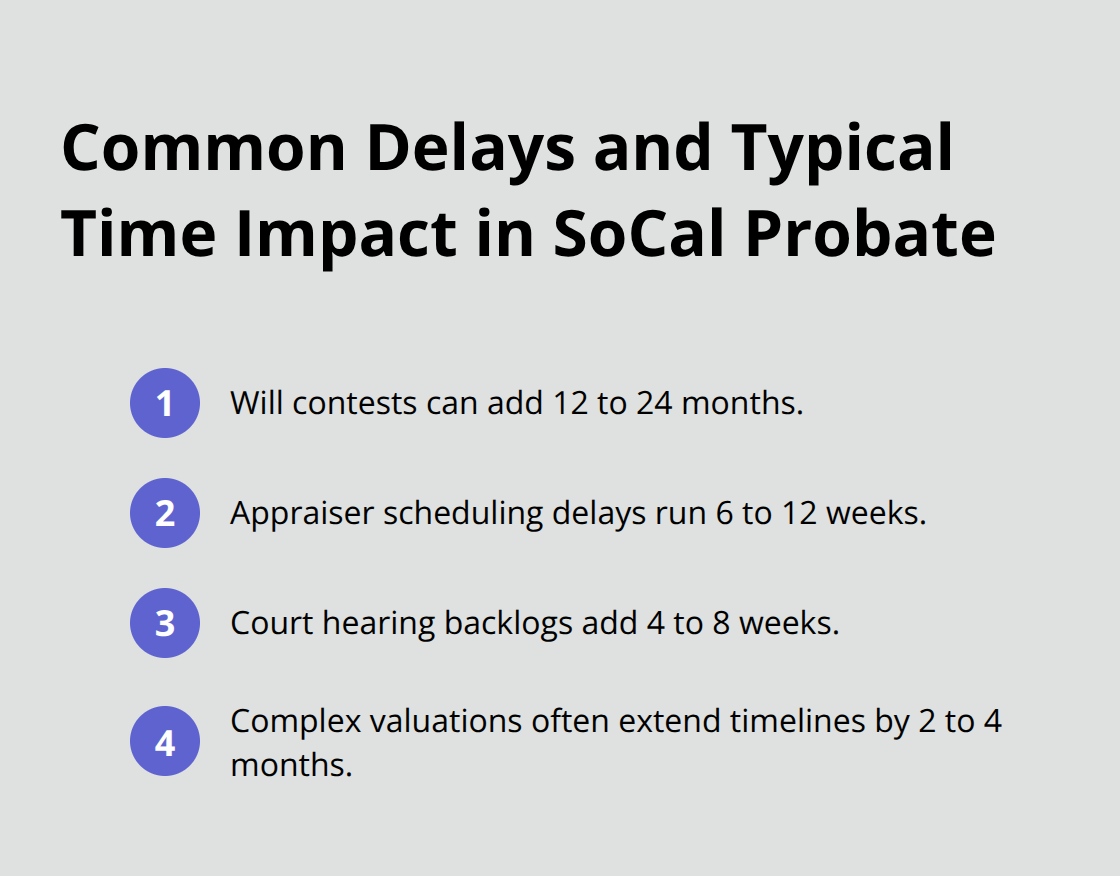
During this time, asset distribution stops completely, and the executor cannot move forward with their duties. California courts take will contests seriously, and the litigation phase alone can add 12 to 24 months to the overall timeline. These disputes arise most often when a deceased person’s final will differs dramatically from earlier versions or when cognitive decline occurred before signing. The cost of defending against a will contest typically ranges from $10,000 to $50,000 depending on complexity, and those expenses come directly from estate assets, reducing what beneficiaries ultimately receive.
Asset valuations create substantial bottlenecks
Asset valuations create another substantial bottleneck, particularly when estates include real property, closely held business interests, or significant collectible holdings. California requires professional appraisals for most estate assets, but appraisers in Southern California currently face 6 to 12-week scheduling delays due to market demand.
For real estate, the valuation challenge intensifies because properties must be appraised as of the date of death, which sometimes requires historical market analysis rather than current comparable sales. Tax complications compound this problem-the IRS requires accurate asset valuations for estate tax calculations, and undervalued assets can trigger audits years after probate closes. Complex estates with multiple properties across different counties need separate appraisals for each parcel, multiplying both the time and cost involved. This phase routinely extends probate timelines by 2 to 4 months.
Court backlog and administrative delays extend timelines
Orange County and Los Angeles County probate courts currently experience 4 to 8-week delays in scheduling hearings beyond the standard 30 to 60-day initial appearance window. When objections arise or disputes require judicial intervention, executors may wait additional months for hearing availability. Administrative bottlenecks at the courthouse compound these delays, particularly when courts request additional documentation or clarification on filings. These scheduling constraints affect nearly every probate case that encounters complications, making them a predictable source of timeline extensions throughout Southern California.
Final Thoughts
Understanding the executor’s probate timeline in SoCal matters because delays directly impact your family’s financial security and emotional recovery. A nine to eighteen month process sounds manageable until unexpected complications surface-will contests, appraisal bottlenecks, or court scheduling delays that extend everything by months. Families who grasp the timeline upfront make better decisions about asset management, creditor negotiations, and distribution planning.
Professional guidance reduces the uncertainty that derails most executors. When you work with someone who understands Southern California probate courts, creditor notification requirements, and asset valuation complexities, you avoid the costly mistakes that extend timelines. We at Law Offices of Roshni T. Desai have guided hundreds of families through this process, and our dual licensure as both attorney and real estate professional streamlines estate-related property sales and transactions to reduce costs and communication delays.
If you’ve recently been appointed executor, contact us for a free consultation to map out your specific timeline and identify potential bottlenecks before they become problems. If probate is already underway and you’re facing delays or disputes, professional guidance can help you navigate objections and court procedures more efficiently. Visit Law Offices of Roshni T. Desai to schedule your consultation with flexible home or office visit options available across Southern California.