




Revocable Trust Administration Overview: Key Concepts
A revocable trust administration overview requires understanding how these legal structures work during your lifetime and after you pass away. At Law Offices of Roshni T. Desai, we help clients navigate the complexities of trust management and administration.
This guide covers the essential concepts you need to know, from how trusts function to what happens when you’re no longer here to manage them.
How Revocable Trusts Work and Why They Matter
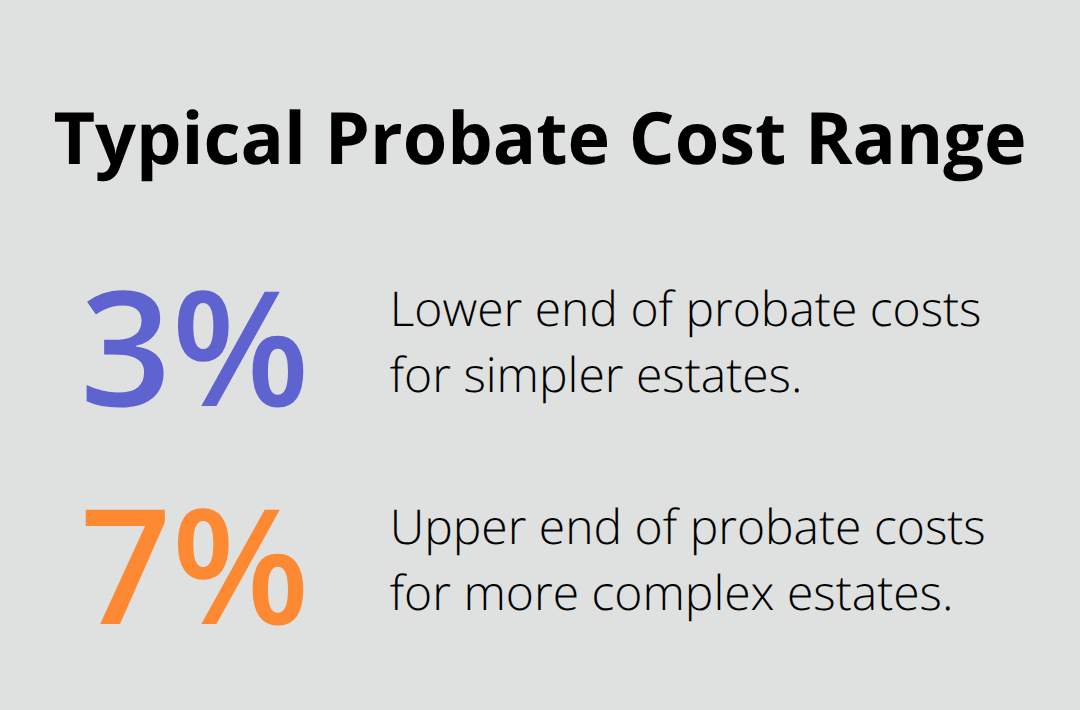
A revocable trust is a legal arrangement where you transfer ownership of your assets into a trust during your lifetime, maintaining complete control over those assets and the ability to change or dissolve the trust at any time. The primary advantage is that your assets avoid probate when you pass away, which typically costs between 3% and 7% of your estate’s value according to the American College of Trust and Estate Counsel. This means a $500,000 estate could save $15,000 to $35,000 in probate costs alone.
Beyond cost savings, revocable trusts offer privacy since they don’t go through public court proceedings like wills do. You remain the trustee during your lifetime, making all decisions about your property and investments. When you die, a successor trustee you’ve named takes over and distributes assets according to your instructions, often within weeks rather than the months or years probate requires.
The Structural Difference Between Trusts and Wills
Wills only take effect after you die and must go through probate court, where a judge validates the document and oversees asset distribution. This public process means anyone can access information about your estate, your beneficiaries, and the value of your assets. Revocable trusts operate during your lifetime and after your death without court involvement, keeping your financial affairs confidential. If you own real property in multiple states, a will requires separate probate proceedings in each state, while a revocable trust avoids this entirely. Trusts serve most clients with significant assets or property holdings because of these practical advantages. Wills still serve a purpose as backup documents, but they shouldn’t be your primary estate planning tool if you want to minimize costs and delays.
Understanding Your Role and Responsibilities
Three roles define how a revocable trust operates: you as the grantor (the person creating the trust), the trustee (who manages the assets), and the beneficiaries (who eventually receive the assets). During your lifetime, you typically serve as both grantor and trustee, giving you full authority over all trust property and investments. Your beneficiaries might include family members, charities, or other individuals, though they have no control or access to trust assets while you’re alive.
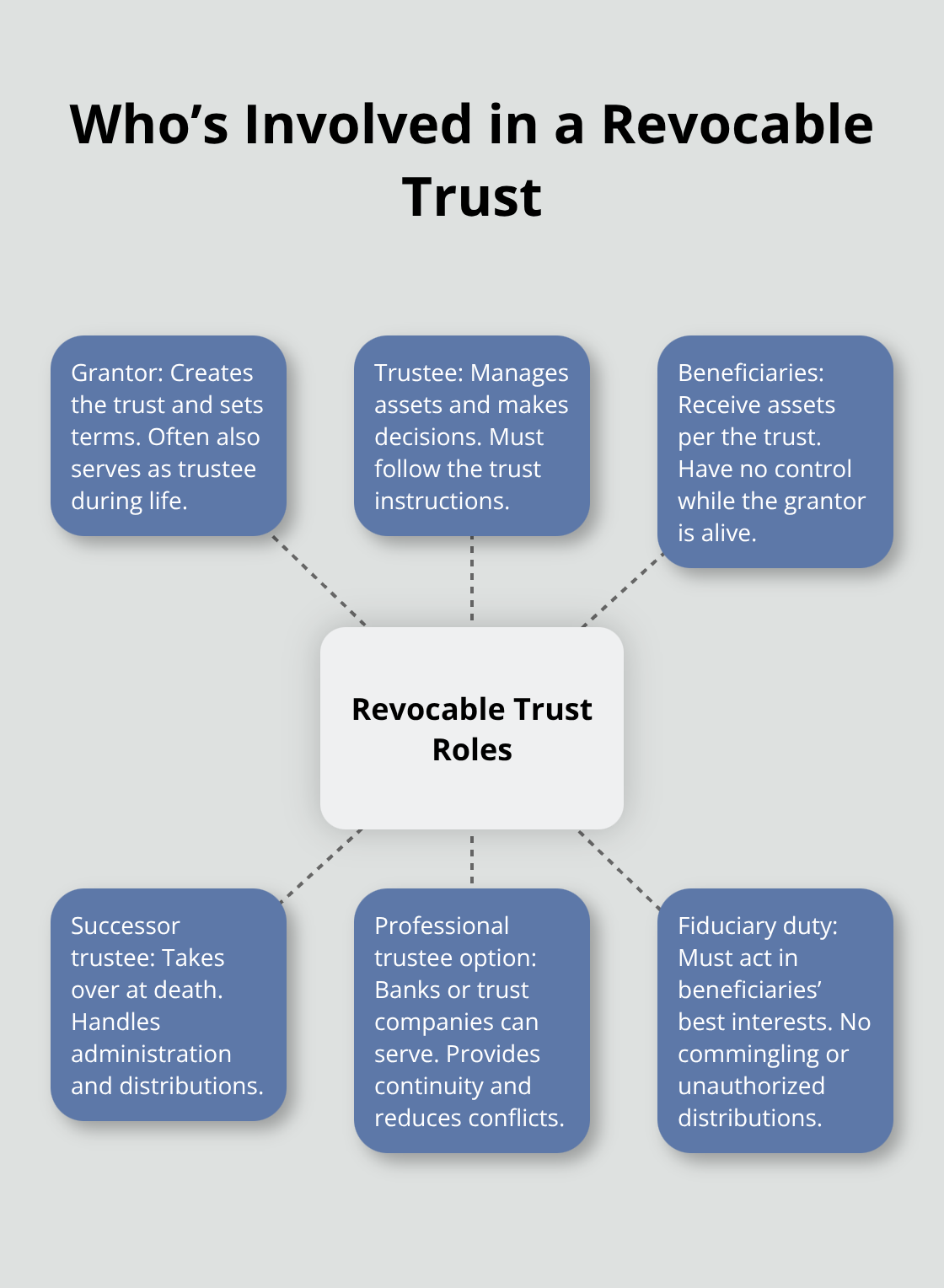
When naming a successor trustee, choose someone you trust completely because they’ll have significant responsibilities after your death. Many people name adult children, but professional trustees like banks or trust companies offer continuity and eliminate family conflict over financial decisions. The successor trustee’s job involves identifying all trust assets, paying outstanding debts and taxes, and distributing remaining property according to your instructions within a reasonable timeframe.
Once you understand these foundational concepts, the next step involves learning how to actively manage your trust during your lifetime and what happens when trust administration transitions to your successor trustee.
Managing Your Trust During Your Lifetime
Maintaining Control and Funding Your Trust
As the grantor and trustee during your lifetime, you maintain complete control over trust assets and can make changes whenever circumstances shift. This flexibility stands as one of revocable trusts’ greatest strengths, but it requires active management to avoid costly mistakes. You must fund the trust properly by transferring property titles, investment accounts, and other assets into the trust’s name. Many people create trusts but fail to complete this step, leaving assets outside the trust and subject to probate anyway.
Work with a professional to retitle real estate deeds, update beneficiary designations on bank accounts and investment portfolios, and transfer business interests if applicable. The process takes time but prevents probate complications later. You can add or remove assets throughout your lifetime without court approval, and you can amend the trust terms if your wishes change regarding beneficiaries, distributions, or successor trustees.
Understanding State-Specific Amendment Rules
Some states allow amendments through simple written documents, while others require formal procedures. Understanding your state’s rules matters significantly because improper amendments can create disputes among beneficiaries or trigger unintended tax consequences. A professional can guide you through the correct process for your jurisdiction and help you document changes clearly.
Handling Tax Obligations and Record-Keeping
Tax obligations during your lifetime are straightforward because the trust remains transparent to the IRS. You report all trust income on your personal tax return using your Social Security number, not a separate trust tax ID. The trust itself pays no income taxes while you’re alive since you’re the grantor and trustee.
However, you must track basis and capital gains for investments held in the trust because beneficiaries will eventually owe taxes on appreciation when they receive assets. Keep detailed records of purchase prices, improvement costs, and any sales within the trust. This documentation prevents confusion and protects against audit risk when your successor trustee takes over.
Minimal Reporting Requirements During Your Lifetime
Annual reporting requirements are minimal during your lifetime-no separate trust tax returns or filings with state agencies are necessary. This simplicity changes dramatically after your death, which is why establishing clear documentation now prevents your successor trustee from facing significant complications later. Organized records and a well-structured trust administration system make the transition seamless for whoever takes over.
What happens after you pass away determines whether your beneficiaries receive their inheritance quickly or face months of delays and expenses.
What Happens When the Grantor Dies
The Successor Trustee’s Initial Responsibilities
Your successor trustee’s first action after your death is to locate the trust document and understand its terms, then notify all beneficiaries of their inheritance rights within a reasonable timeframe, typically 30 to 60 days depending on your state’s laws. The successor trustee must gather documentation proving your death, such as certified death certificates, and begin identifying all trust assets including real estate, bank accounts, investment portfolios, and personal property. This inventory process takes weeks or months depending on asset complexity.
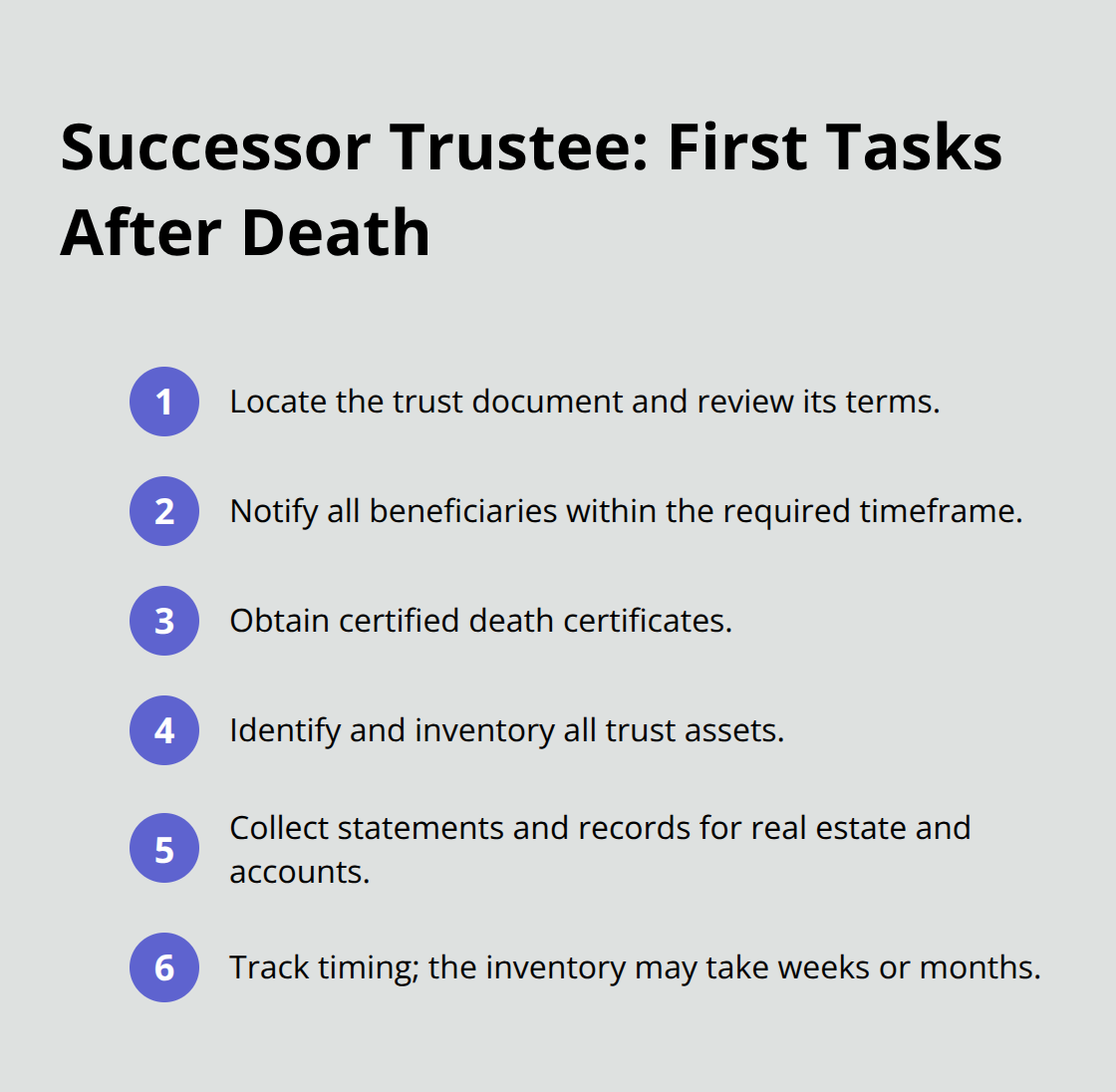
Your successor trustee has a legal duty called fiduciary responsibility, meaning they must act in beneficiaries’ best interests and follow your instructions precisely. They cannot make unauthorized distributions, comingle trust funds with personal accounts, or delay distributions without valid reasons.
Obtaining Tax Identification for the Trust
One critical step many successor trustees overlook is obtaining an Employer Identification Number from the IRS for the trust itself, which becomes necessary once your death occurs because the trust now requires its own tax identification separate from your personal number. This EIN applies even if the successor trustee plans to distribute assets within a few months. The process takes only a few days through the IRS, but failing to complete it creates complications when filing tax returns and opening trust bank accounts.
Paying Debts and Final Expenses
Your successor trustee must notify creditors of your death according to state law, typically through published notices in local newspapers or direct notification if creditors are known. Creditors generally have three to six months to file claims against your estate. Medical bills, funeral costs (which average between $7,000 and $12,000 according to the National Funeral Directors Association), outstanding mortgages, and property taxes all come from trust assets before beneficiaries receive anything.
Your successor trustee must also file your final income tax return and potentially an estate tax return if your estate exceeds federal thresholds. For 2026, estates over $14.1 million face federal estate taxes according to current IRS guidelines. State inheritance taxes complicate matters further in certain states, though some states like California have no state estate tax.
Distributing Assets to Beneficiaries
After all debts, taxes, and expenses are paid, the successor trustee distributes remaining assets according to your trust instructions. Some trusts require immediate distribution, while others establish ongoing trusts for minor beneficiaries or provide staggered distributions over time. The entire administration typically takes six months to a year depending on asset complexity and whether disputes arise among beneficiaries. Professional guidance during this phase helps successor trustees avoid costly mistakes and complete distributions efficiently.
Final Thoughts
Revocable trust administration overview shows that a properly funded and maintained trust saves your family thousands in probate costs, protects your privacy, and accelerates asset distribution when you pass away. Creating a trust document alone accomplishes nothing without transferring assets into it, updating beneficiary designations, and maintaining organized records throughout your life. Common mistakes derail even well-intentioned planning-many people create trusts but fail to fund them, leaving assets outside the trust structure and subject to probate anyway.
Your successor trustee faces complex responsibilities including obtaining tax identification numbers, notifying creditors, filing final tax returns, and managing distributions according to your specific instructions. Mistakes during this phase can trigger family disputes, missed tax deadlines, or improper distributions that create liability for the trustee. Attempting revocable trust administration without professional guidance often leads to preventable errors that cost your family time and money.
We at Law Offices of Roshni T. Desai provide personalized guidance through every stage, from initial trust creation and funding through successor trustee administration after your death. Contact Law Offices of Roshni T. Desai to schedule a free consultation and discuss your specific situation with someone who understands your needs.