




Probate Real Estate Coordination: Syncing Listings, Closings, and Titles
Probate real estate coordination is where most families lose money and time. When attorneys and real estate agents don’t communicate, listings stall, titles get stuck, and closing dates slip away.
We at Law Offices of Roshni T. Desai have seen families waste thousands in holding costs because their legal and real estate teams weren’t on the same page. This guide shows you how to fix that.
Why Probate Real Estate Coordination Breaks Down
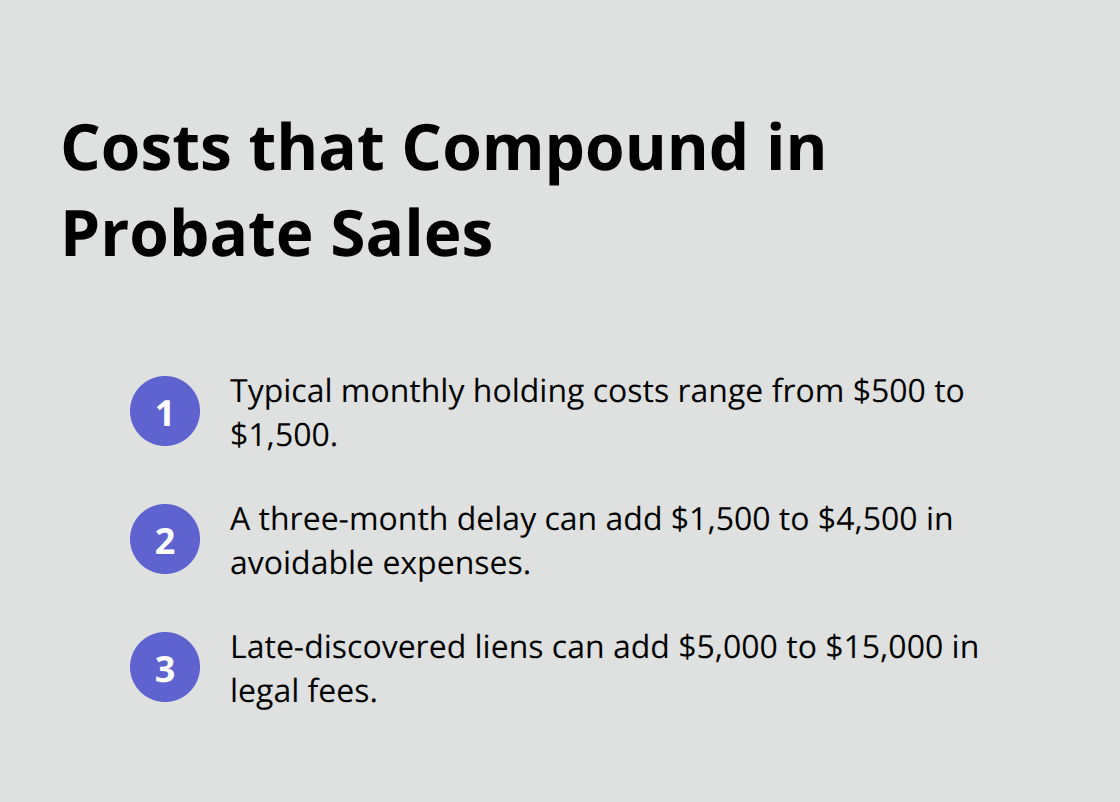
Probate real estate transactions fail when legal and real estate professionals work in separate silos. A typical probate sale involves court approval timelines, title clearance processes, and marketing schedules that must align perfectly. When they don’t, families bleed money through extended holding costs. Property taxes, insurance, utilities, and maintenance on a probate home can easily reach $500 to $1,500 monthly depending on location and condition. A three-month delay in closing means $1,500 to $4,500 in unnecessary expenses.
The Real Cost of Poor Communication
Attorneys and real estate agents often operate without shared timelines or communication channels. An attorney might miss that a real estate agent listed the property before obtaining court approval, creating legal exposure. Conversely, a real estate agent might schedule a closing before the attorney completes title work, leaving buyers frustrated and deals at risk of collapse. These miscommunications don’t just delay sales-they undermine buyer confidence. Buyers in probate transactions are already cautious; failed closing dates signal instability and kill deals. Additionally, title defects discovered late in the process require expensive legal interventions. A lien discovered two weeks before closing can add $5,000 to $15,000 in legal fees to resolve and may force rescheduling the entire transaction.
Why Separate Teams Create Information Gaps
When families hire independent attorneys and real estate agents, neither professional has full visibility into the other’s work. The attorney focuses on probate court requirements and doesn’t track market conditions or buyer feedback. The real estate agent markets aggressively without understanding when the court will actually authorize the sale. This creates a fundamental mismatch. Properties sit listed but unsellable because court approval hasn’t been granted. Buyers submit offers that can’t be accepted until legal requirements are satisfied. Closing dates get set without confirming title work will finish on time. Each delay compounds frustration and extends the probate timeline, which means higher administrative costs, increased family conflict, and diminished estate value.
How Dual Expertise Eliminates Coordination Problems
Ms. Desai’s dual licensure as an attorney and real estate professional at Law Offices of Roshni T. Desai streamlines estate-related property sales and transactions to reduce costs, delays, and communication hassles. When one professional handles both legal and real estate responsibilities, information flows seamlessly. Court deadlines align with marketing timelines. Title work coordinates with closing schedules from the start. Buyers receive consistent communication and confidence that the transaction will close on schedule. This integrated approach combining probate law knowledge with real estate market experience eliminates the gaps that plague families working with separate teams. The result: faster sales, lower holding costs, and estates that retain more value for beneficiaries.
Where Probate Sales Fall Apart
Listing Properties Before Court Approval Creates Legal Exposure
Probate real estate failures happen in predictable ways, and the most dangerous mistake occurs when a property lists before the court grants permission. Many families and their real estate agents move fast to generate buyer interest, but probate court requires formal authorization before a property can legally be marketed and sold. When a property hits the market prematurely, the listing creates legal liability. Buyers submit offers on a property the estate cannot yet sell, wasting everyone’s time and damaging credibility. Courts view unauthorized listings as violations of their authority, and judges impose sanctions or delay the entire probate process further. The attorney handling the estate may face ethical complaints for failing to supervise the transaction properly.
Title Transfer Delays Block Closings and Frustrate Buyers
Title work stalls represent the second major failure point in probate sales. Even when a property lists correctly and buyers submit strong offers, closings collapse when title issues surface late. A title company discovers liens, unpaid property taxes, or other encumbrances weeks into escrow, forcing the attorney to resolve problems that should have been identified months earlier. Each week of delay costs families $115 to $350 in daily holding expenses according to typical property management data. Buyers lose patience waiting for title clearance, especially in competitive markets where they can purchase properties without probate complications. Some buyers simply walk away, forcing the estate to relist and restart the entire marketing cycle.
Separate Teams Create Information Gaps That Derail Transactions
The third failure stems from separate legal and real estate teams operating without shared systems. An attorney communicates through email and court filings while the real estate agent updates listings, schedules showings, and negotiates offers through MLS systems and phone calls. Neither professional sees the other’s work in real time. The attorney doesn’t know that showings happen or that a strong offer arrived yesterday. The real estate agent doesn’t know that the court hearing is delayed by two weeks, making the current closing date impossible. This information vacuum means decisions get made on incomplete facts-offers get accepted before legal requirements are satisfied, and closing dates get scheduled without confirming title work will finish.
How Integrated Legal and Real Estate Coordination Solves These Problems
Buyers receive conflicting information about when they can actually close, and the estate loses momentum. A single professional who handles both legal and real estate responsibilities eliminates these coordination gaps entirely. One person owns the entire timeline, from court approval through closing, and communicates consistently with all parties. This integrated approach (combining probate law knowledge with real estate market experience) prevents the miscommunications that plague families working with separate teams. When legal deadlines align with marketing timelines and title work coordinates with closing schedules from the start, transactions move forward predictably. The next section shows exactly how to structure this coordination to keep your probate sale on track.
How to Build a Probate Sale Timeline That Actually Works
The foundation of a successful probate real estate transaction is a master timeline that synchronizes court approval dates, title clearance work, and market activity into one coherent schedule. Most families fail because they treat these three elements as separate processes happening in parallel, when they actually need to happen in a specific sequence with built-in buffers.
Start with Your Court Hearing Date and Work Backward
Identify your court hearing date for sale approval, then work backward to establish realistic deadlines. If your court hearing is scheduled for January 15th, you need title work completed by January 1st to catch any liens or defects before the judge reviews the sale petition. This gives you two weeks to resolve problems without delaying court approval. Marketing should begin no earlier than 30 days before your court hearing, which gives you time to generate buyer interest while staying legally compliant.
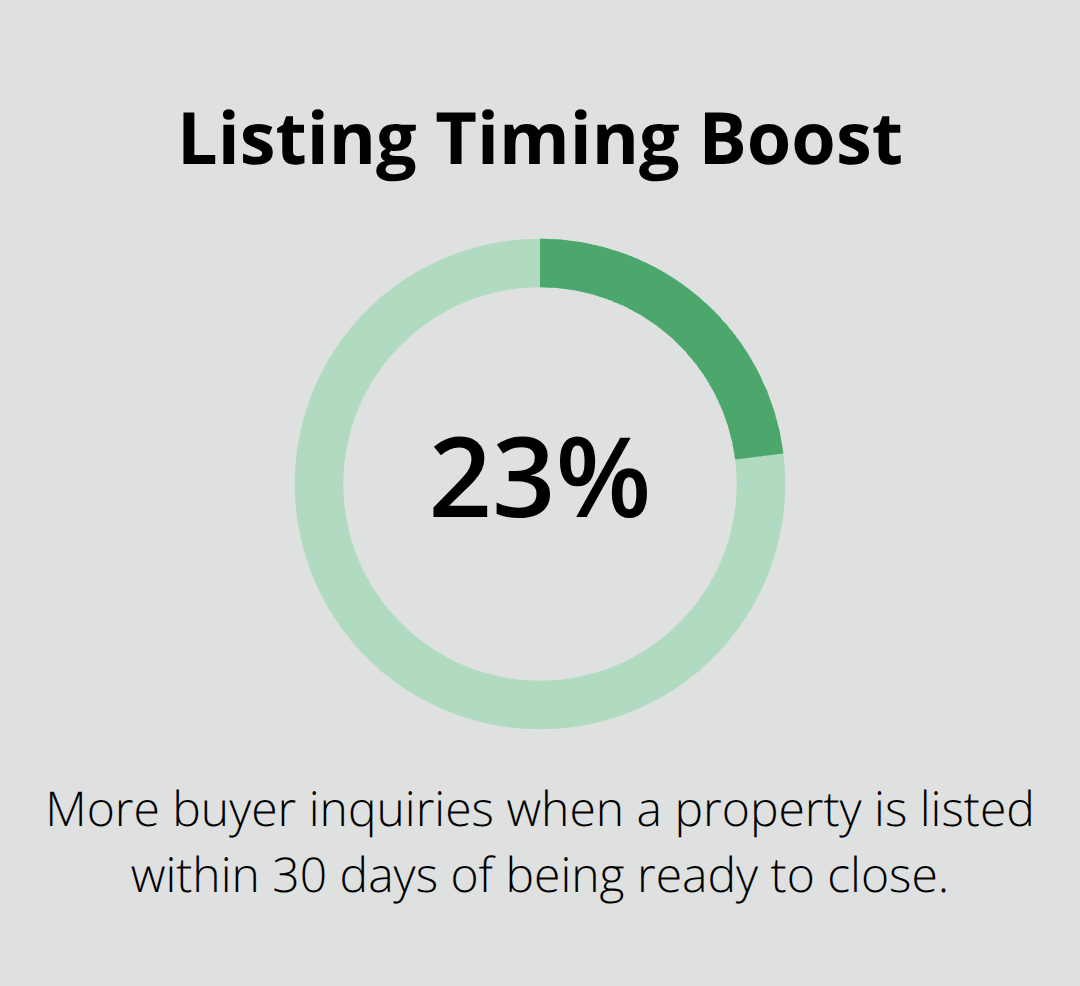
A real estate professional working alongside your probate attorney can create this timeline on day one, identifying which tasks must happen sequentially and which can happen simultaneously. Preliminary title work can proceed while court petitions are drafted, but active listing cannot occur until court approval arrives. According to the National Association of REALTORS, properties listed within 30 days of when they’re ready to close receive 23 percent more buyer inquiries than properties that sit listed for extended periods without clear closing timelines. This matters tremendously in probate sales, where buyer confidence depends on knowing the transaction will actually close on a predictable date.
Conduct Full Title Clearance Before Offers Arrive
Title problems discovered during escrow destroy more probate sales than any other single factor. The solution is conducting full title work during the pre-listing phase, not after buyers submit offers. Order a preliminary title report immediately, not weeks into marketing. This report costs between $300 and $800 and reveals liens, property tax delinquencies, easements, and other encumbrances that could derail a closing.
A probate attorney reviews this report with the title company and begins resolving issues before the property ever lists. If the estate owes back property taxes, the attorney handles payment or arranges payoff from sale proceeds. If a lien exists, the attorney negotiates release or determines whether it survives the sale. This pre-closing work typically takes 6 to 10 weeks depending on complexity. Once the property lists, title work is essentially complete, and closing can happen within 30 to 45 days of an accepted offer instead of the typical 60 to 90 days when title problems surface mid-transaction. Buyers move faster when they know title is clear, and closing delays drop dramatically.
Establish One Communication Hub for All Parties
Separate email threads between attorneys and agents guarantee information loss. Instead, establish a single shared system where court deadlines, title updates, offer activity, and closing schedules all appear in one place. Some probate professionals use shared spreadsheets or project management tools like Asana or Monday.com, where the attorney posts court dates, the title company updates clearance status, and the real estate agent adds listing activity and offer details.
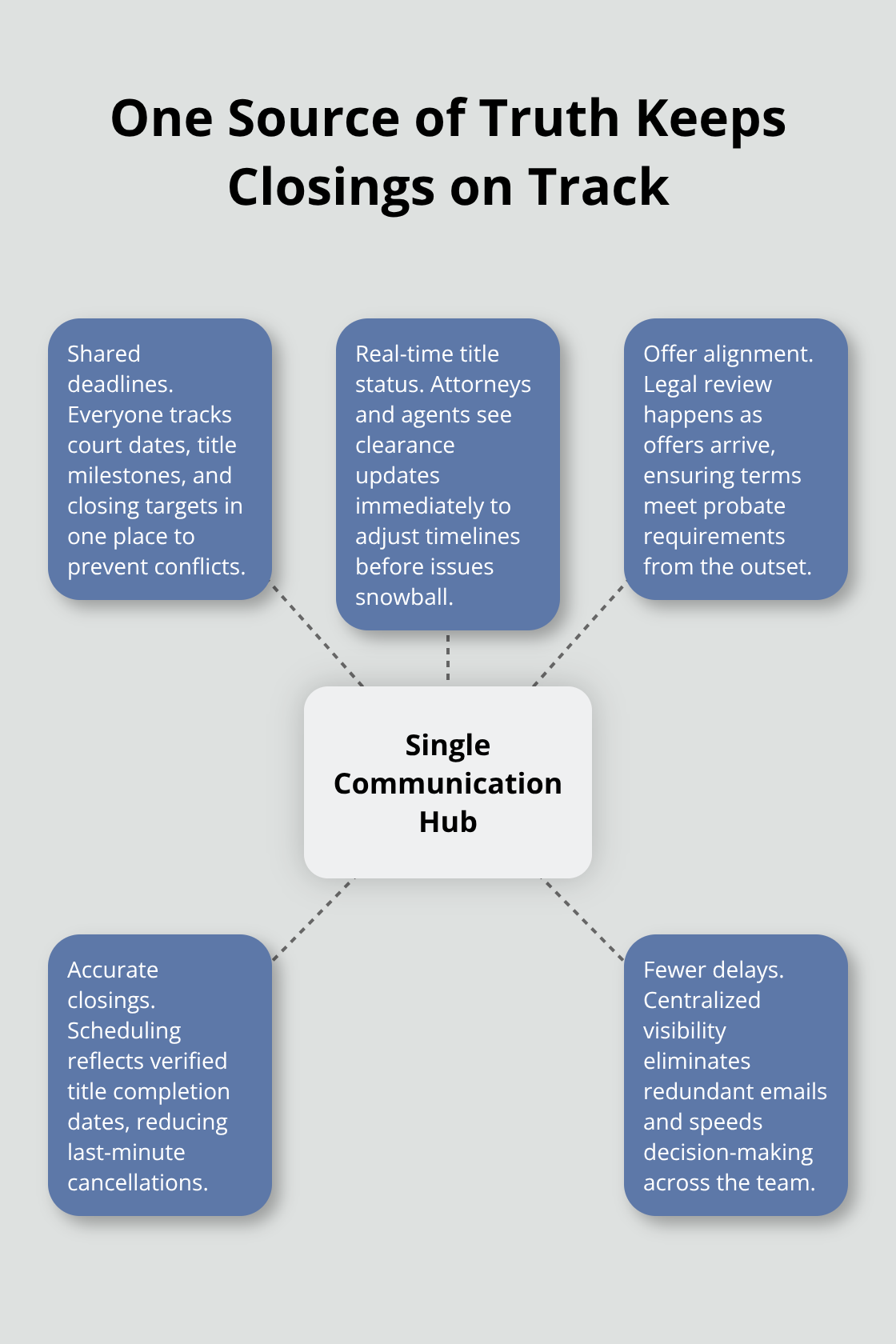
Everyone logs in to the same system daily and sees the current status without sending redundant emails. This structure prevents the scenario where a closing gets scheduled for February 10th without confirming that title work won’t finish until February 15th. When offer negotiations happen, the attorney sees them immediately and can assess whether the terms align with probate court requirements. When title work completes, the real estate agent knows instantly and can confirm the closing date with the buyer. This real-time visibility keeps probate sales moving predictably and eliminates the delays that cost families thousands in holding expenses.
Final Thoughts
Probate real estate coordination transforms what typically becomes a months-long financial drain into a manageable process. Families who align their legal and real estate strategies from day one spend less money, close faster, and retain more estate value for beneficiaries. Holding costs alone can exceed $4,500 for a three-month delay, and title problems discovered late add another $5,000 to $15,000 in legal fees-these are real numbers that families actually lose when their attorney and real estate agent operate independently.
The solution isn’t hiring more professionals. It’s working with someone who understands both the legal requirements of probate court and the realities of real estate markets. When one person manages court deadlines, title clearance, and marketing timelines simultaneously, information flows without gaps, buyers receive consistent communication, and closing dates hold. Properties sell faster because everyone operates from the same master timeline instead of competing schedules.
We at Law Offices of Roshni T. Desai combine probate law knowledge with real estate market experience to streamline sales and reduce costs for families across Southern California. If you’re managing a probate property sale or facing the complexity of estate administration, contact us for a free consultation. We offer flexible home or office visits to discuss your situation and show you how coordinated probate real estate coordination eliminates the delays and expenses that plague families working with separate teams.