




California Small Business Succession: Planning for Continuity and Value
Most California small business owners build something valuable but never create a plan to pass it on. We at Law Offices of Roshni T. Desai see this pattern repeatedly-business owners avoid succession planning because it feels overwhelming, uncertain, or emotionally difficult.
The truth is that waiting costs money. Without a clear strategy, your business could lose significant value, your family might face unexpected tax bills, and years of work could slip away.
Why Business Owners Avoid Planning for the Future
The Emotional Weight of Ownership
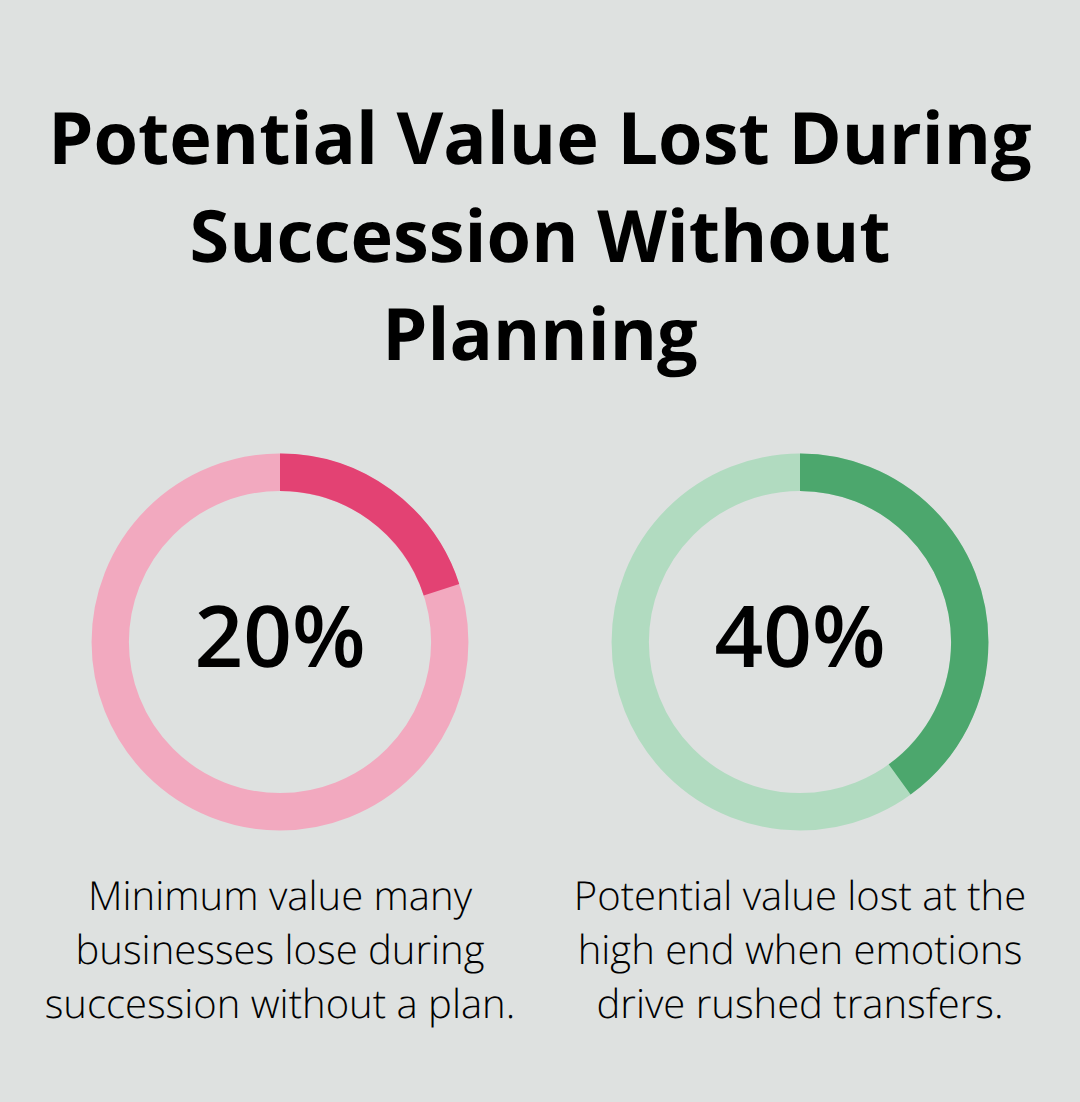
Most California small business owners struggle with succession planning for reasons that go far deeper than procrastination. The hesitation stems from three distinct barriers: the emotional weight of letting go, confusion about timing, and a genuine lack of understanding about tax consequences. Business owners often describe their companies as extensions of themselves, which makes the idea of handing over control feel like a personal loss rather than a strategic decision. This emotional resistance is real and powerful, but it also drives businesses to lose 20 to 40 percent of their value during succession, according to research from the Family Firm Institute.
Timing Creates Missed Opportunities
The uncertainty about when to start planning compounds this problem significantly. Many owners believe succession planning is something to tackle in their final years, when the reality is that effective planning typically requires five to ten years of preparation. Starting too late eliminates options and forces rushed decisions that create tax problems and family conflict. Owners who wait until their sixties or seventies find themselves trapped by circumstances rather than guided by strategy.
Tax Consequences Create Hidden Damage
The third barrier-lack of awareness about tax consequences-creates genuine financial damage that could have been prevented. California small business owners face federal capital gains taxes, state income taxes, and potentially estate taxes depending on their business structure and assets. Without proper planning, a business valued at $2 million could trigger $600,000 to $800,000 in taxes when transferred to heirs, drastically reducing what actually passes down.
Many owners simply don’t know that different business structures (S-corporations, LLCs, and sole proprietorships) have completely different tax implications during succession. Some don’t realize that a well-structured plan can defer taxes, reduce rates, or eliminate them entirely through legitimate strategies. The cost of ignoring these tax realities far exceeds the cost of professional planning, yet owners often skip the planning phase to avoid short-term expenses. This false economy creates the exact financial disaster that succession planning prevents.
These three obstacles block the path forward, but understanding them opens the door to building a real strategy. The next section reveals what a solid succession plan actually contains.
Key Elements of a Solid Succession Plan
Start With Your Tax Structure, Not Your Successor
A solid succession plan requires three moving parts working together: identifying who will take over, structuring the transfer to minimize taxes, and documenting everything so your vision survives your involvement. Most California small business owners fail because they treat these as separate tasks instead of interconnected decisions. The person you choose as successor directly affects your tax structure.
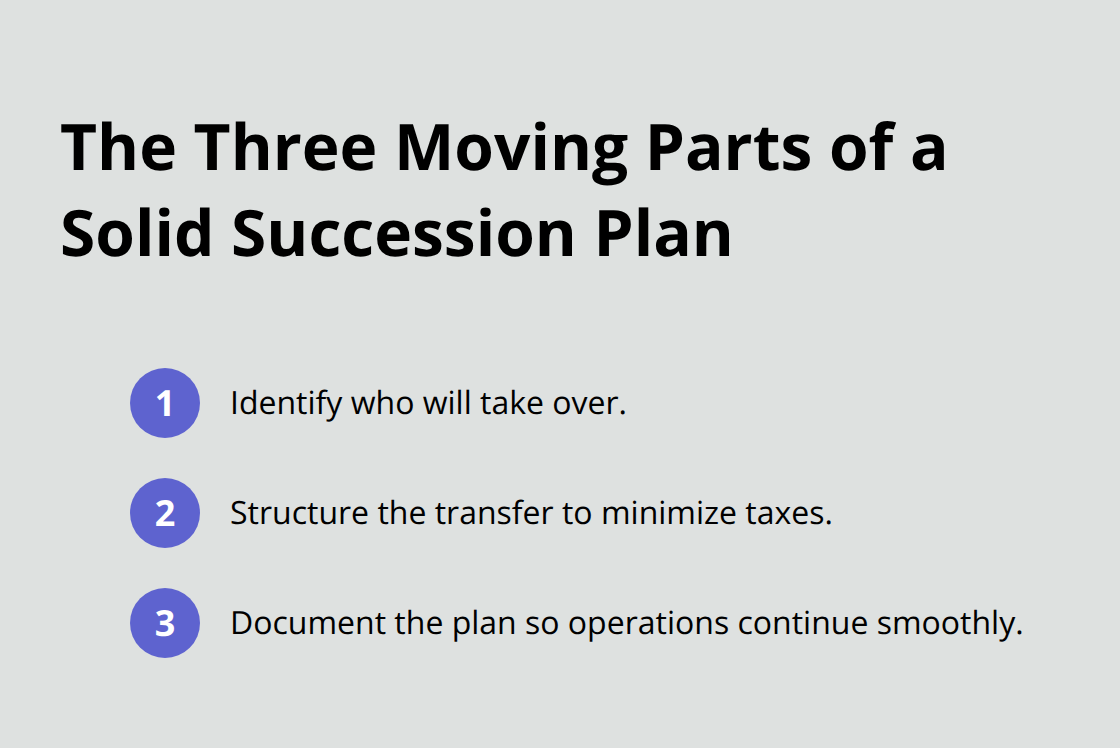
Your tax structure determines which documents you need. Your documents protect the successor’s ability to operate without chaos.
Starting with successor identification sounds logical, but it’s often the wrong place to start. Your business structure and tax situation must come first, then you identify who can actually handle what you’re transferring. An S-corporation owner faces completely different succession math than an LLC owner, and an owner with significant real estate holdings cannot use the same strategy as someone with only inventory and equipment. Once you understand your tax exposure, you can identify a successor who has the financial capacity and operational skills to handle both the business and the tax obligations. This might be a family member, a key employee, or an outside buyer-but the choice depends on your tax reality, not sentiment.
Document Ownership Transitions With Specifics
Documenting ownership transitions requires specifics that most owners skip. A buy-sell agreement between you and a key employee must specify the purchase price formula, payment terms, and what happens if the successor dies or becomes disabled before the full transfer completes. California courts will not enforce vague intentions, and family members often challenge transfers they view as unfair. The IRS scrutinizes succession transfers closely, and documentation proves your transaction followed legitimate valuation methods. A business valued at $1.5 million using the income approach will face IRS challenges if you transfer it for $800,000 without written justification.
Structure Asset Distribution for Tax Efficiency
Asset distribution decisions matter more than most owners realize. Transferring the real estate separately from the operating business creates different tax outcomes. Keeping certain assets in a trust while transferring the business to a successor creates flexibility that outright transfers eliminate. California’s community property rules add another layer-if you’re married, your spouse has rights in the business that must be addressed in your succession documents, not discovered after your death.
The difference between a structured transfer and an informal handoff can easily equal hundreds of thousands of dollars in unnecessary taxes, legal fees, and family conflict. These three elements work together to protect what you’ve built. The next section reveals the mistakes that undermine even well-intentioned succession efforts.
Common Succession Mistakes California Business Owners Make
Outdated Documents Undermine Your Strategy
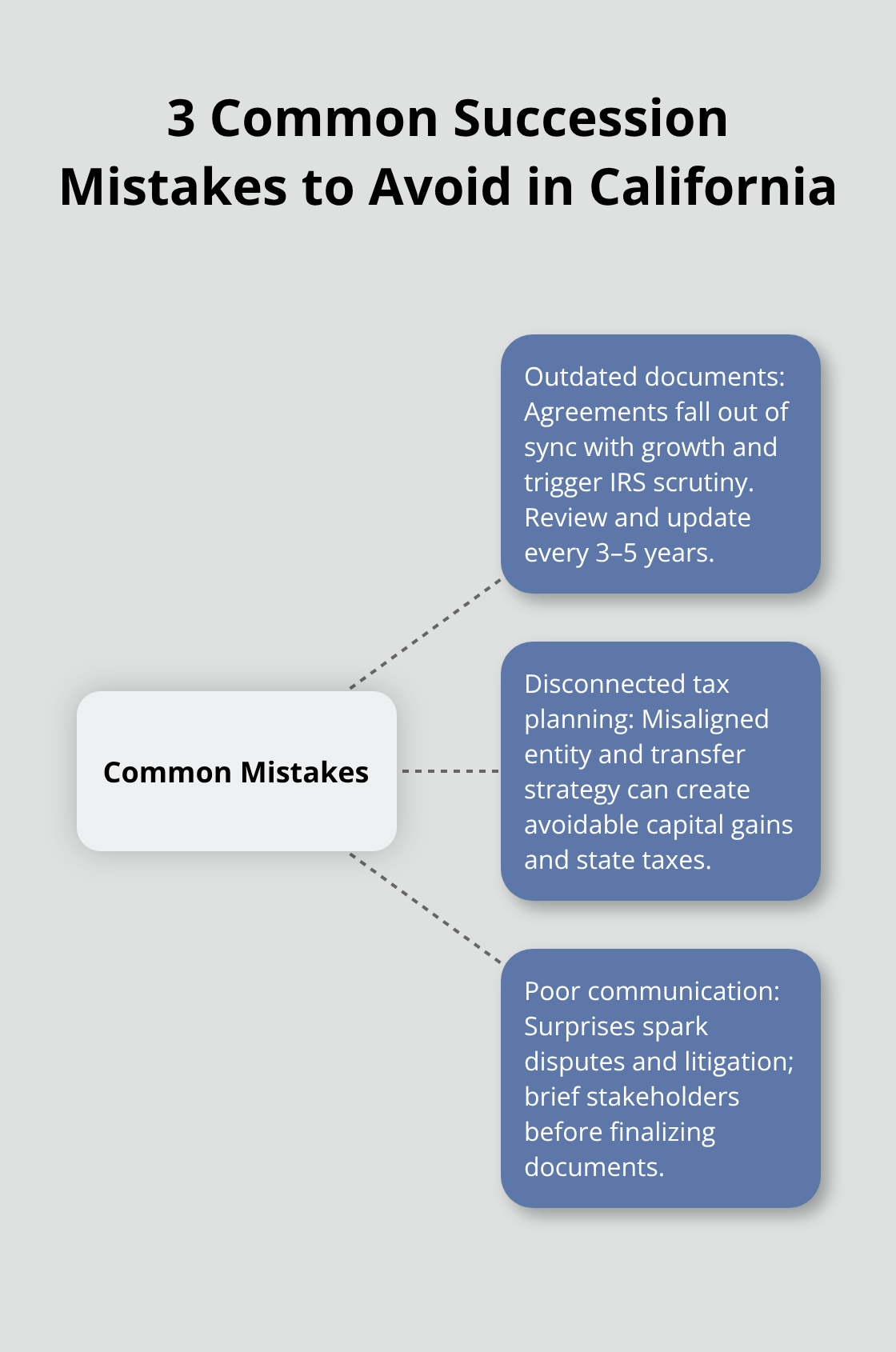
Most California small business owners make succession mistakes that cost them dearly, and these errors follow predictable patterns. The first mistake treats legal documents as a one-time task rather than an ongoing process. Owners who created a buy-sell agreement ten years ago often never update it as their business grows, their family situation changes, or their tax bracket shifts. An outdated agreement might specify a purchase price formula based on 2015 revenue when your business now generates triple that income. The IRS challenges these transfers because the documented price no longer reflects fair market value. California courts have ruled that outdated documents create ambiguity that benefits neither the business owner nor the successor. Update your succession documents every three to five years, or immediately after major business events like acquiring new assets, adding partners, or experiencing significant revenue changes. A document that made sense when your business was worth $500,000 becomes a liability when it’s worth $2 million.
Tax Planning and Succession Strategy Must Work Together
The second critical failure compartmentalizes tax planning from succession strategy instead of building them together from the start. California small business owners often assume federal capital gains taxes will apply equally regardless of their business structure, but that assumption costs them substantially. An S-corporation owner can use different tax deferral strategies than an LLC owner, and neither strategy works for a sole proprietor. According to the Small Business Administration, approximately 60 percent of small business succession transfers involve family members, yet many of these transfers trigger unnecessary capital gains taxes because the owner never coordinated the business structure with the succession plan. A $3 million business transfer can generate $600,000 to $900,000 in combined federal and California state taxes if structured poorly, or potentially far less with proper planning.
Communication Prevents Costly Family Disputes
The third mistake compounds both previous errors: owners fail to communicate their succession plans with family members or co-owners until the plan is already locked in. This silence creates shock, resentment, and legal challenges from people who feel excluded or treated unfairly. A co-owner might discover their buyout price was set without their input, or a family member learns they’re inheriting debt obligations tied to the business rather than clean assets. Transparent communication before finalizing documents prevents costly disputes that can tie up a business in litigation for years and drain the value you worked to build.
Final Thoughts
Avoiding succession planning doesn’t protect your business-it destroys value. A California small business worth $2 million can lose $400,000 to $800,000 in unnecessary taxes, legal fees, and operational disruption when transferred without a strategy. The owners who delay planning don’t save money; they guarantee their families will pay more to clean up the mess later.
Your business might fail during the transition because no one understands your vendor relationships or client management systems. Family members could fight over assets, triggering litigation that consumes years and resources. A key employee might leave because they don’t know if they have a future in the company (these aren’t theoretical risks-they happen repeatedly to California small business owners who treated succession planning as optional).
Contact Law Offices of Roshni T. Desai to schedule a consultation about your California small business succession plan. Bring your current business documents and discuss your goals for the business and your family’s financial security. A clear succession plan takes time to build, but the alternative-leaving your legacy to chance-costs far more.