




Trust Administration for Beneficiaries: Securing Your Beneficiaries’ Interests
Being a beneficiary means you have rights-and responsibilities to understand them. Trust administration for beneficiaries often raises questions about how assets are managed, when you’ll receive distributions, and what protections exist if something goes wrong.
At Law Offices of Roshni T. Desai, we’ve seen beneficiaries caught off guard by unclear communication, delayed payments, and disputes they didn’t anticipate. This guide walks you through what to expect and how to actively protect your interests throughout the trust administration process.
What Trustees Actually Do With Your Trust Assets
Trust administration isn’t abstract-it involves concrete actions that directly affect when and how you receive money. A trustee‘s primary job is to inventory all trust assets, pay outstanding debts and taxes, and then distribute remaining funds according to the trust document. This process typically takes six months to two years, though California law doesn’t impose a hard deadline. The trustee must maintain detailed records of every transaction, from selling property to paying estate taxes.
Demanding Transparency From Your Trustee
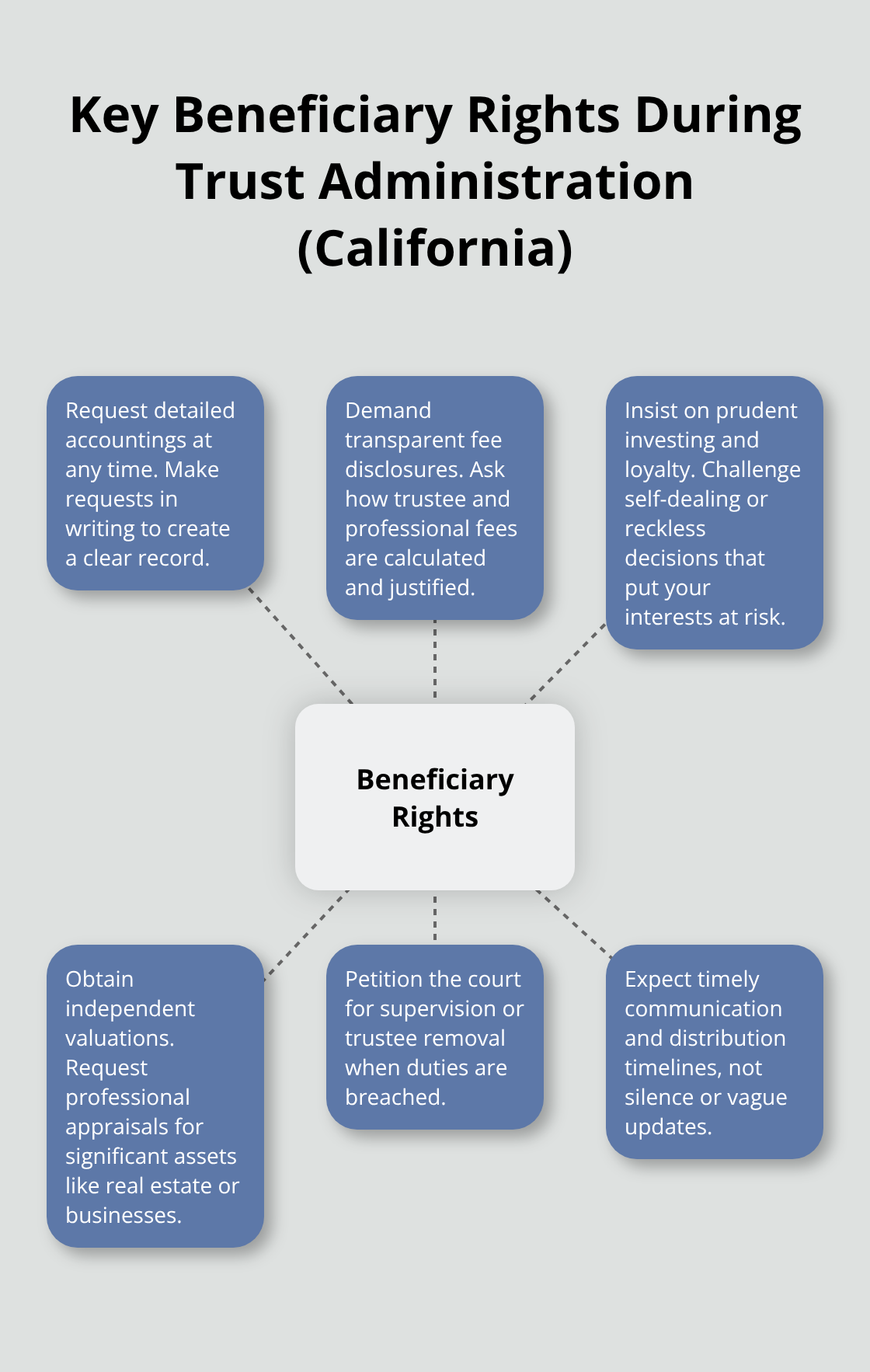
If your trustee moves slowly or keeps you in the dark, you have the right to demand an accounting-a formal financial statement showing exactly where your money went. Many beneficiaries don’t realize they can request this accounting multiple times during administration, not just at the end. The American College of Trust and Estate Counsel notes that transparency disputes rank among the top reasons beneficiaries pursue legal action against trustees. Don’t wait passively for information; ask for it in writing. A written request creates a paper trail and forces your trustee to respond formally.
Understanding Your Trustee’s Legal Obligations
California law holds trustees to a fiduciary standard, meaning they must act in your best interest, not their own. This means they cannot pocket excessive fees, invest recklessly, or delay distributions without legitimate reason. If a trustee is also a beneficiary, this creates a conflict of interest that demands extra scrutiny. You should ask your trustee upfront about their fee structure-California allows reasonable compensation, but “reasonable” varies widely. Some trustees charge flat fees, others take percentages of assets, and corporate trustees may charge both (flat fees plus asset-based fees). Get this in writing before administration begins.
Taking Action Against Trustee Violations
If you suspect your trustee is breaching their duties-perhaps by refusing to provide accountings or making questionable investment decisions-you can petition the court. This isn’t an empty threat; California courts take fiduciary violations seriously and can remove trustees or force them to repay misused funds. If your trustee ignores your written requests or provides vague answers, document everything and consider consulting an attorney. When beneficiaries insisted on detailed accountings, problems surfaced that might otherwise have remained hidden-unauthorized sales, commingled trust funds with personal accounts, and other serious issues.
Moving Forward With Confidence
Regular communication prevents misunderstandings and catches problems early when they’re easier to fix. Your trustee must communicate with you about major decisions, not hide behind silence. California Probate Code Section 16061 requires trustees to provide beneficiaries with certain information upon request, including an inventory of estate assets and a final accounting before distribution. Understanding these rights positions you to recognize when something feels off-and that’s when knowing your next steps becomes essential.
Common Issues Beneficiaries Face During Trust Administration
Delays That Stretch Far Beyond Reasonable Timelines
Delays in distributions happen more often than beneficiaries expect, and they rarely stem from simple paperwork backlog. Many delays occur because trustees move slowly on asset sales, wait unnecessarily long to file tax returns, or hold funds pending resolution of minor disputes. California law allows trustees six months to a year for standard administration, but many drag past two years without legitimate cause.
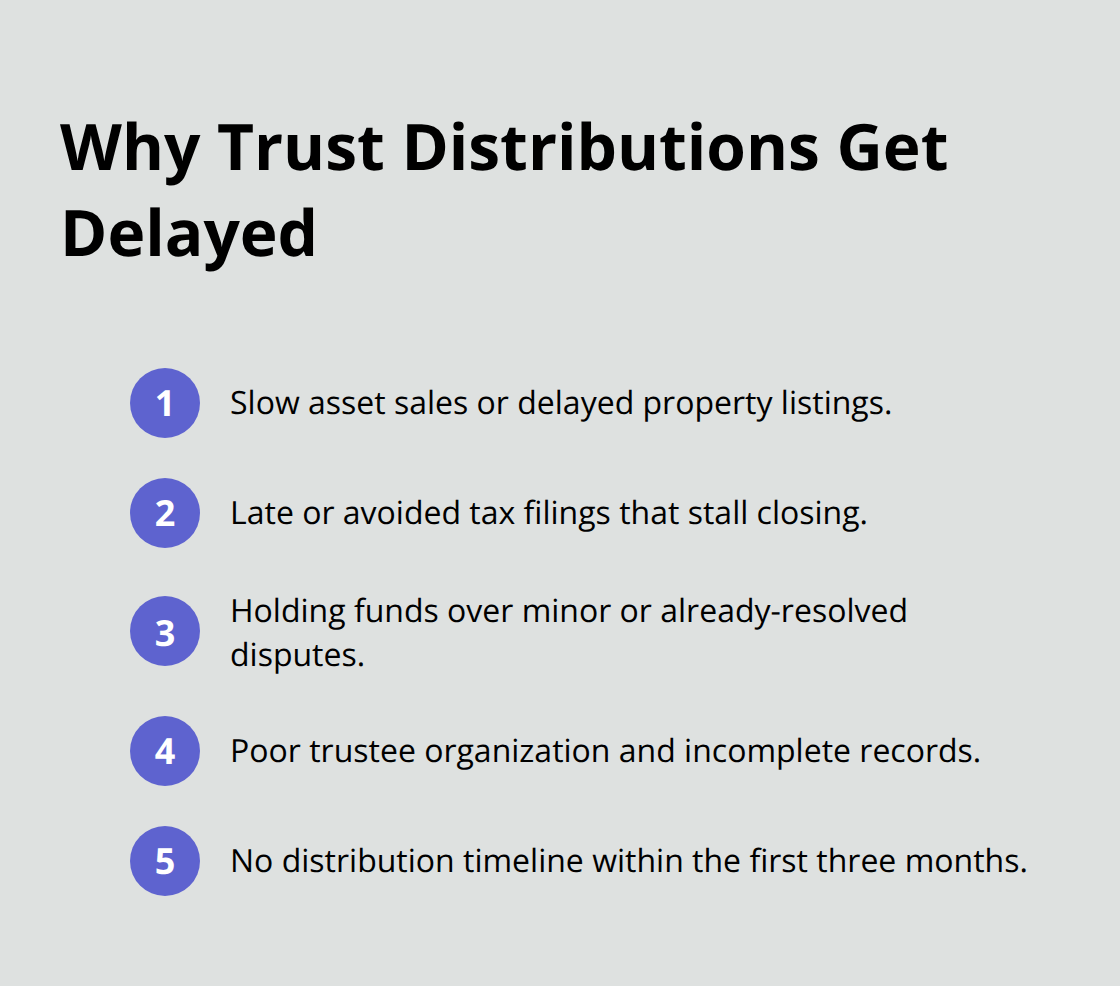
The problem intensifies when trustees lack organization or fail to prioritize beneficiary distributions. If your trustee hasn’t provided a timeline for distribution within the first three months, that’s a red flag worth addressing immediately in writing.
Transparency Breakdowns That Hide Financial Reality
Transparency breakdowns create the deepest frustration for beneficiaries. A trustee who provides vague responses to accounting requests or avoids explaining fee deductions leaves beneficiaries guessing about their money. Some trustees claim confidentiality protections that don’t actually exist under California law, using secrecy as a shield against accountability. When beneficiaries finally see detailed accountings, discrepancies surface frequently: unauthorized investment fees, excessive trustee compensation, or asset sales at below-market prices.
Asset Valuation Disputes and Professional Appraisals
Asset valuation disputes rank high on this list because trustees sometimes use outdated appraisals or fail to obtain professional valuations at all. Real estate holdings prove particularly problematic since property values fluctuate, and beneficiaries who lack professional valuation knowledge struggle to challenge questionable assessments. If your trustee refuses to provide current professional valuations for significant assets, demand them in writing and specify that you want independent appraisals. Courts consistently rule in favor of beneficiaries when trustees fail to obtain proper valuations, and California Probate Code Section 13050 supports your right to petition for court supervision if administration becomes contentious.
Taking Control of the Situation
The solution isn’t accepting whatever explanation your trustee offers-it’s requesting specific documentation and escalating when answers remain unsatisfactory. Written requests create accountability and establish a clear record of what you’ve asked for and when. Trustees who resist transparency often reveal deeper problems once beneficiaries push back with formal demands. These issues don’t resolve themselves, and waiting only allows problems to compound. Understanding what can go wrong positions you to recognize warning signs early, which brings us to the practical steps you can take to protect your interests before problems spiral.
Securing Your Interests as a Beneficiary
Request Accountings Throughout Administration
Start requesting accountings immediately, not after administration concludes. California Probate Code Section 16061 gives you the right to demand a detailed accounting at any time during trust administration, and trustees must respond within a reasonable period. Request these accountings in writing every six months rather than waiting passively for voluntary disclosures. A written request establishes a clear timeline and creates documentation that matters if disputes arise later. Specify exactly what you want: a complete list of assets received, sales proceeds, expenses paid, fees charged, and remaining balances.

When trustees know beneficiaries are actively monitoring their work, they become far more careful about decisions.
Demand Professional Asset Valuations
Ask for professional appraisals of significant assets like real estate or business interests rather than accepting trustee estimates. If your trustee claims an appraisal isn’t necessary, that signals they may be hiding something. Professional valuations typically cost between $500 and $2,000 for residential property but prevent far costlier disputes down the road. California courts consistently side with beneficiaries who demand proper valuations, and trustees who resist these requests face heightened scrutiny. Know that California law doesn’t allow trustees to hide behind confidentiality claims when you request specific financial information about your distributions and trust assets.
Understand Your Legal Rights and Protections
California Probate Code Section 13050 gives you the power to petition the court for supervision if administration becomes problematic. Courts can compel trustees to provide accountings, remove trustees for misconduct, and order repayment of misused funds. If your trustee ignores written requests, provides incomplete responses, or takes more than a year on routine administration without clear explanation, you should consider consulting an attorney to assess your situation. Don’t assume your trustee’s delays or vague answers are normal-they’re warning signs that warrant professional evaluation. Many beneficiaries wait too long before seeking guidance, allowing problems to compound and making resolution more expensive and difficult. The earlier you address transparency issues, the faster you can move forward with your distributions. Law Offices of Roshni T. Desai offers free consultations to help you evaluate whether your trustee’s actions warrant legal intervention.
Final Thoughts
Trust administration for beneficiaries requires you to act, not wait. California law grants you specific powers-the right to demand accountings at any time, petition the court for supervision, and challenge trustee decisions that harm your interests. Beneficiaries who request accountings regularly, demand professional valuations, and push back on vague answers catch problems early, while those who remain passive often discover serious issues only after distributions face delays or mishandling.
Knowing when to consult an attorney separates beneficiaries who resolve issues quickly from those trapped in prolonged disputes. If your trustee hasn’t provided a timeline for distribution within three months, if accountings remain vague or incomplete, or if you suspect unauthorized fees or questionable asset sales, an attorney can evaluate your situation and advise on next steps. Many beneficiaries postpone this consultation, hoping problems resolve on their own-they rarely do, and waiting only compounds the damage.
We at Law Offices of Roshni T. Desai understand the frustration beneficiaries face when trust administration stalls or lacks transparency. We offer free consultations to evaluate whether your trustee’s actions warrant legal intervention, and we provide flexible home or office visits to fit your schedule. Contact Law Offices of Roshni T. Desai to discuss your beneficiary concerns and move forward with confidence in your rights.