



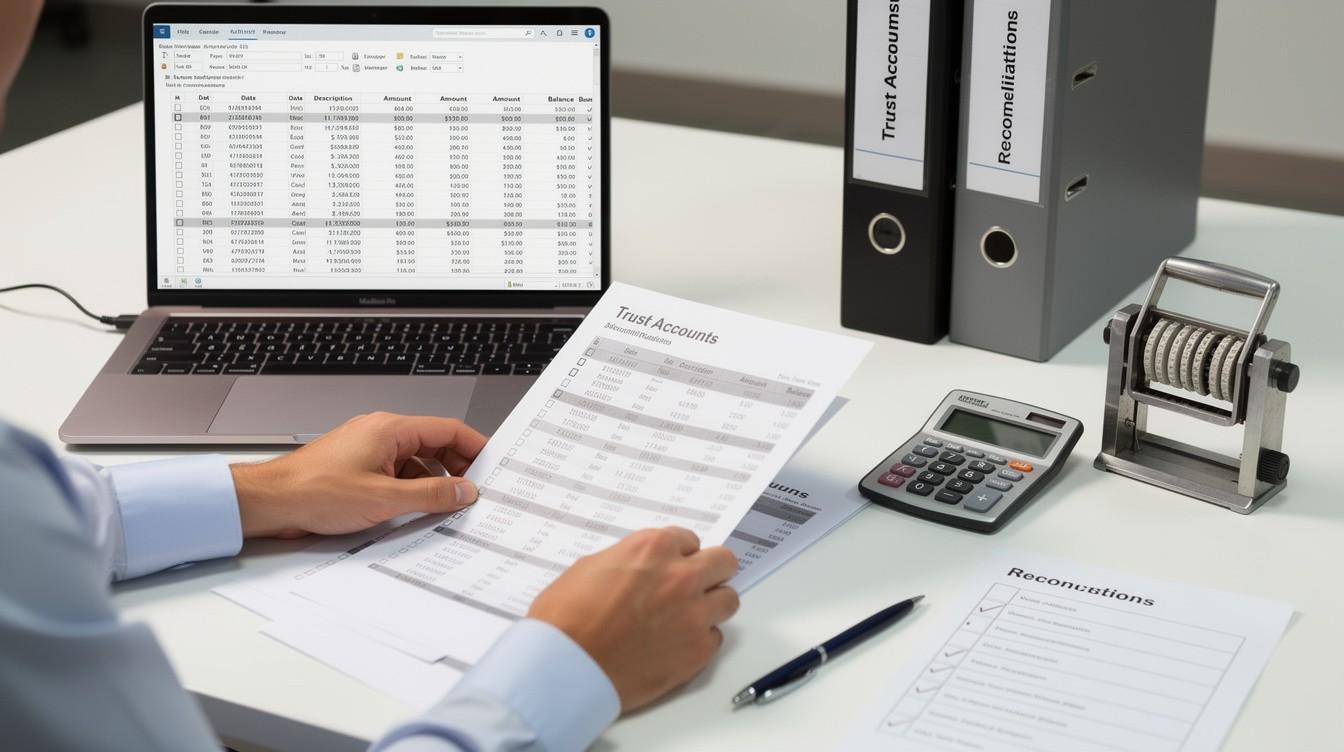
Trust Accounting Processes: Keeping Records Clear and Compliant
Trust accounting processes are the backbone of proper estate administration. When trustees fail to maintain clear records, beneficiaries suffer and legal problems multiply.
At Law Offices of Roshni T. Desai, we’ve seen how disorganized accounting creates disputes that could have been prevented. This guide walks you through the systems and practices that keep trust accounts compliant and transparent.
Why Trust Accounting Matters in Estate Administration
Legal Requirements Trustees Cannot Ignore
Trust accounting isn’t optional paperwork-it’s the legal foundation that protects everyone involved in an estate. State laws require trustees to maintain detailed records of every transaction, and courts enforce these requirements strictly. California Probate Code Section 16062 mandates that trustees provide beneficiaries with annual accountings that show all income, expenses, and distributions. Failing to comply with these requirements triggers surcharge actions, where beneficiaries sue trustees personally to recover losses caused by poor record management. The stakes are real: a trustee who cannot account for trust funds faces potential liability for the entire amount plus attorney fees and court costs.
How Poor Records Create Disputes
The most common accounting mistakes stem from mixing personal and trust finances, missing documentation for distributions, and inaccurate asset valuations. When a trustee withdraws funds without recording the purpose, beneficiaries reasonably question whether money was stolen or mismanaged. Disputes over distributions account for a significant portion of trust litigation in California probate courts, and many of these conflicts arise from gaps in record-keeping rather than actual wrongdoing.
Why Documentation Protects Everyone
Trustees who maintain organized records-showing exact dates, amounts, recipients, and purposes-eliminate ambiguity and demonstrate good faith management. Proper accounting also protects trustees themselves by creating a clear audit trail that defends against false accusations. The difference between a smooth trust administration and years of legal conflict often comes down to whether the trustee documented transactions consistently from month one or scrambled to reconstruct records years later when questions emerged.
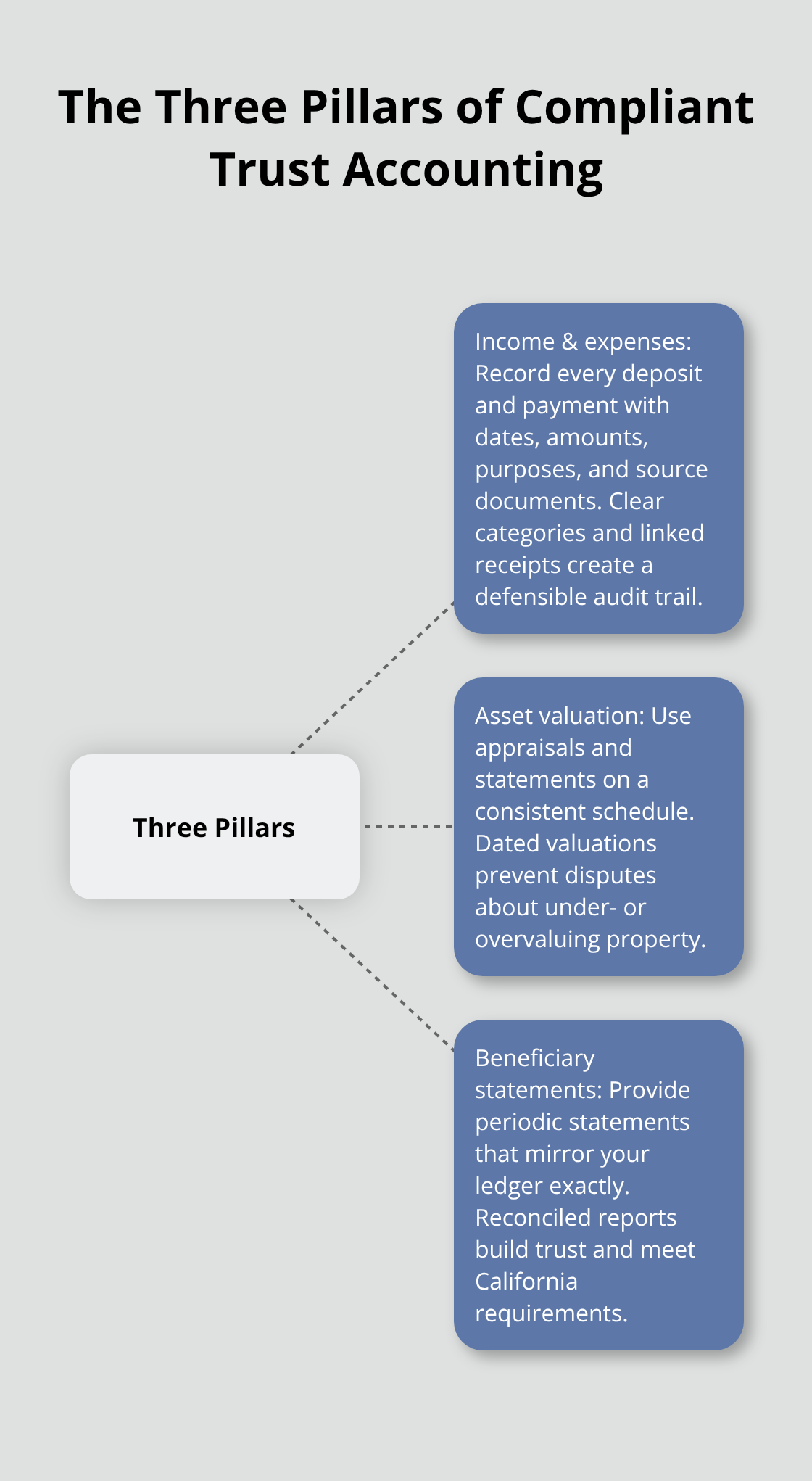
These accounting failures don’t happen by accident. They result from trustees lacking clear systems to track income, expenses, and asset values-the three pillars that keep trust accounts compliant and transparent.
Essential Components of a Compliant Trust Accounting System
A compliant trust accounting system rests on three distinct recording practices, each serving a different but equally vital function. Income documentation captures every penny the trust receives, from investment dividends to rental payments, along with the date and source. Expense records show what leaves the trust account, including trustee fees, property taxes, and beneficiary distributions, with supporting documentation that explains the business purpose. Asset tracking maintains current valuations of real estate, investment accounts, and personal property so the trust’s value remains clear. Together, these three components create an accounting foundation that satisfies state law, prevents disputes, and gives trustees a defensible record if questions ever arise.
Recording Income and Expenses With Precision
The most practical approach separates income into categories that match your trust’s actual revenue streams. If the trust owns rental property, create a separate line for rent received each month, not a vague annual total. Investment accounts should show dividend deposits and capital gains separately from principal. For expenses, use date-stamped receipts or invoices as your source documents, not memory or approximation. California probate courts expect trustees to produce original documentation when disputes emerge, and a spreadsheet without supporting receipts won’t satisfy that requirement. Most trustees fail because they track spending in a general ledger without linking each entry to an actual invoice or bank statement.
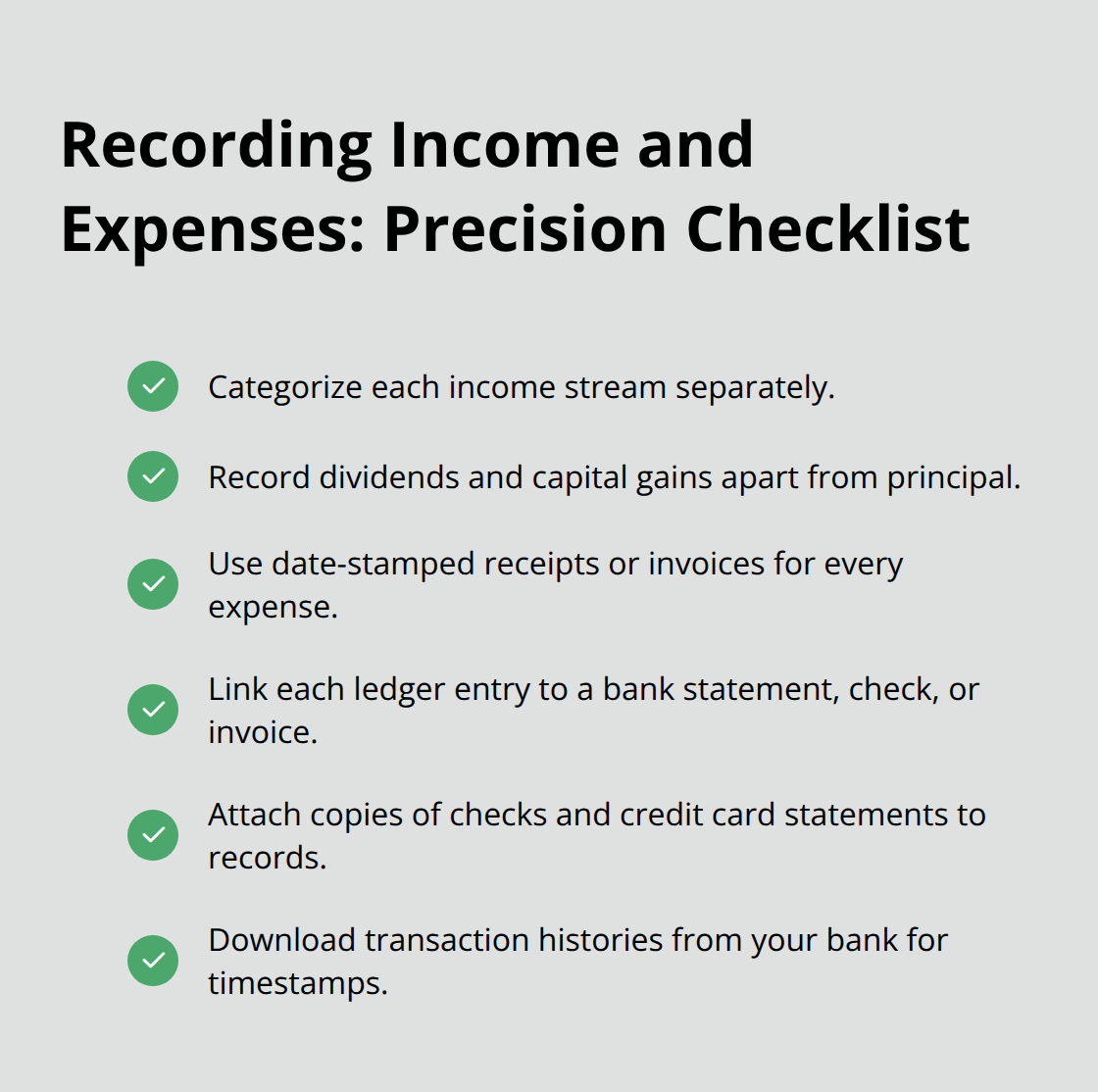
Attach copies of checks, credit card statements, and vendor invoices to your records so a third party can verify every transaction independently. Digital banking makes this easier than ever-most institutions provide downloadable transaction histories that automatically timestamp each entry.
Valuing Assets and Updating Records Regularly
Asset valuation determines what the trust actually owns and what beneficiaries are entitled to receive. Real property requires a professional appraisal at the time of the trust creator’s death to establish the stepped-up basis for tax purposes, and you should update valuations every three to five years if the trust remains open. Investment accounts show their value daily through your brokerage statement, so record the account balance on a consistent date each month. Personal property like vehicles, jewelry, or art needs documentation through insurance valuations or professional appraisals if the items are significant. Many trustee conflicts emerge because beneficiaries question whether assets were undervalued to hide distributions or overvalued to justify trustee fees. A trustee who maintains dated appraisals and regular account statements eliminates this ambiguity entirely. The key is consistency-pick a valuation date each quarter or year and document asset values on that same date every time.
Creating Beneficiary Statements That Match Your Records
Beneficiary statements are your formal communication tool and your legal protection. These statements show opening balances, all income received, all expenses paid, all distributions made, and closing balances for the reporting period. California Probate Code Section 16062 requires trustees to provide these accountings at least annually, and many trusts require quarterly or semi-annual statements. The statement must match your supporting documentation exactly-if your income log shows a $5,000 dividend deposit on March 15, that same $5,000 appears on the beneficiary statement for the same period. Trustees who prepare statements from memory or rough notes frequently make arithmetic errors that trigger beneficiary suspicion and litigation. Software tools like Quicken for trusts or specialized trust accounting platforms automate this reconciliation so your statement balances are mathematically certain. Trustees should generate statements directly from their accounting system rather than retyping data into separate documents, which introduces transcription errors.
Why Professional Review Prevents Costly Mistakes
Even trustees who maintain meticulous records benefit from having an outside professional review their work. An accountant or attorney can spot inconsistencies, missing documentation, or valuation issues that the trustee missed. This review process (conducted annually or when major transactions occur) protects trustees from unintentional errors that beneficiaries might later challenge. Professional guidance also ensures your accounting methods comply with current California probate law, which changes periodically. The cost of a professional review is minimal compared to the expense of defending a surcharge action or correcting years of accounting mistakes.
With your three pillars in place and your records verified, the next step involves establishing the systems and schedules that keep your accounting accurate over time.
Best Practices for Maintaining Clear and Accurate Trust Records
Select Software That Matches California Requirements
Digital trust accounting software has moved from optional convenience to practical necessity for any trustee managing accounts beyond a few thousand dollars. Trustees who still rely on spreadsheets or paper records spend significantly more time on administrative tasks and introduce transcription errors that create reconciliation problems. You should select software that integrates directly with your bank and investment accounts, automatically importing transactions so you’re not manually entering data from multiple sources. Quicken for trusts, TrustBooks, and specialized trust accounting platforms like AppFolio Trust Accounting all offer automatic transaction categorization and built-in beneficiary statement generation. The critical distinction lies in choosing software that produces reports in a format California probate courts recognize-most accounting software designed for general business use doesn’t generate the specific beneficiary accountings required by California Probate Code Section 16062.
Once you select your platform, commit to entering all transactions within three business days of occurrence rather than batching data entry weekly or monthly, which creates gaps in your records and makes reconciliation harder when discrepancies emerge.
Reconcile Monthly and Review Quarterly
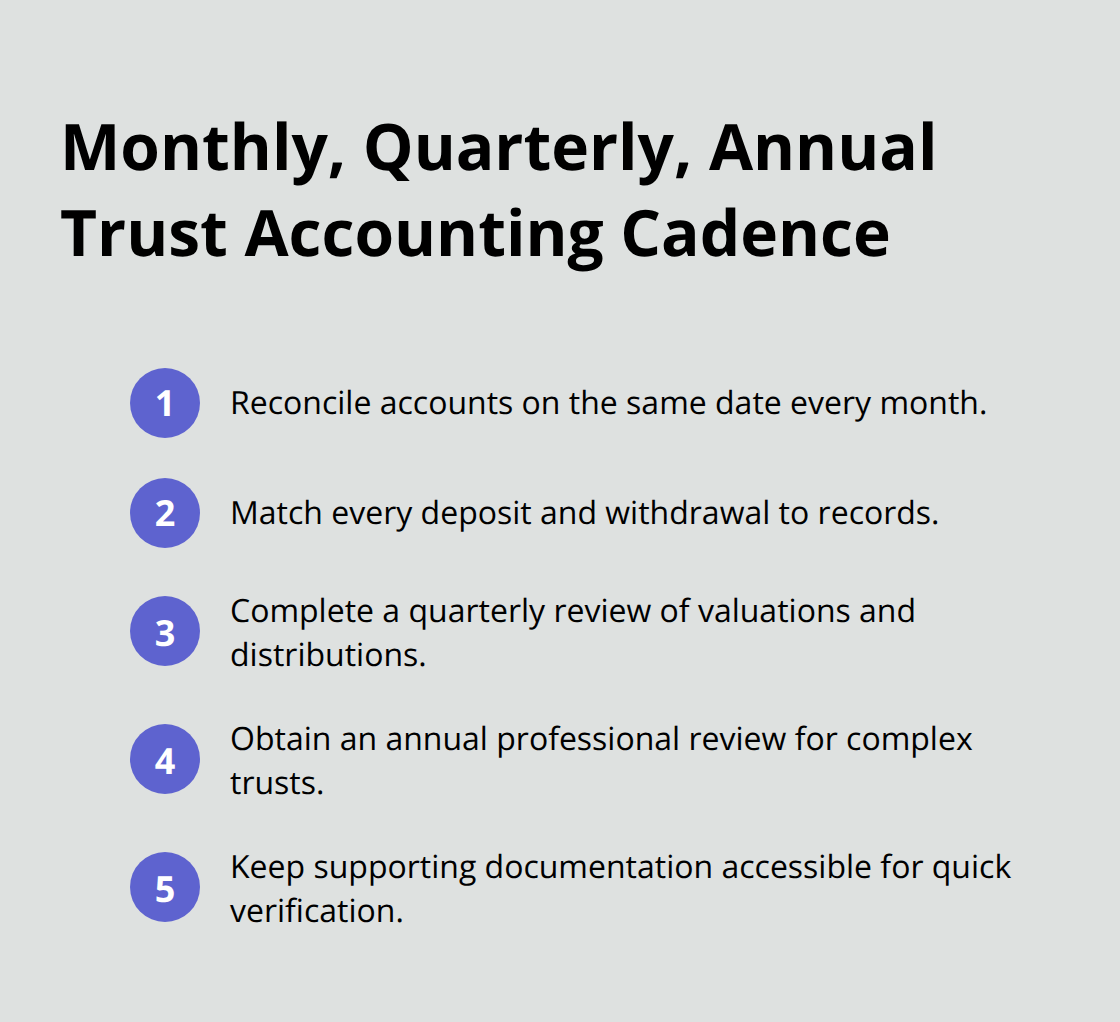
A monthly reconciliation schedule prevents small errors from becoming large problems that surface years later during disputes. On the same date each month, compare your trust accounting records to your bank statements and investment account statements, verifying that every deposit and withdrawal matches your recorded entries. This monthly process takes two to four hours depending on transaction volume but catches mistakes immediately while you can still locate supporting documentation. Many trustees discover during litigation that they failed to reconcile for years, leaving them unable to explain discrepancies between their records and bank statements.
After monthly reconciliation, schedule a comprehensive quarterly review where you verify asset valuations, confirm all distributions to beneficiaries match your records, and ensure your beneficiary statement balances match your general ledger. If the trust has significant real estate or investment holdings, engage an accountant annually to review your work and provide a written reconciliation report-this professional verification document becomes invaluable if beneficiaries later challenge your accounting accuracy.
Trustees who complete these reviews consistently rarely face surcharge actions because their records withstand scrutiny, while trustees who skip reconciliation or delay it until disputes arise typically face years of litigation and substantial legal costs defending their administration.
Final Thoughts
Trust accounting processes demand consistency, documentation, and accountability from the moment a trustee takes office. The three pillars we’ve covered-income and expense documentation, asset valuation, and beneficiary statements-form the foundation that keeps trust administration compliant with California law and transparent to beneficiaries. Trustees who implement these practices from day one avoid the disputes, surcharge actions, and legal costs that plague administrators who scramble to reconstruct records years later.
Professional guidance reduces risk substantially. An accountant or attorney reviewing your trust accounting annually catches errors before they escalate into litigation, ensures your methods comply with current probate law, and provides documentation that defends your administration if beneficiaries ever question your work. The cost of this professional review is negligible compared to defending a surcharge action or correcting years of accounting mistakes. Digital accounting software becomes essential if you manage multiple trust accounts, since manual spreadsheets introduce transcription errors that multiply across accounts and create reconciliation nightmares.
We at Law Offices of Roshni T. Desai help trustees navigate trust administration with personalized guidance tailored to your specific situation. Whether you need help establishing accounting systems, reviewing existing records, or resolving disputes with beneficiaries, contact us for a free consultation to discuss your trust accounting needs and develop a compliance strategy that protects you and your beneficiaries. Visit Law Offices of Roshni T. Desai to schedule your consultation today.