




Pour-Over Will California: How It Works With Your Living Trust
A pour-over will in California works hand in hand with a living trust, acting as a safety net that catches property you never moved into your trust during your lifetime. Many people sign a trust, intend to fund it, and then buy a new account, inherit something, or simply forget to retitle an asset. A pour-over will tells the world where that leftover property should go, so your trust plan can still guide the outcome instead of leaving loose ends for your family to untangle.
At the Law Offices of Roshni T. Desai, we help Southern California families build estate plans that fit together and work the way they expect, so you can move forward with confidence. This guide explains what a pour-over will actually does under California law, how it is created and carried out, and the common mistakes that can weaken it when your loved ones need it most.
What a Pour-Over Will Actually Does in California
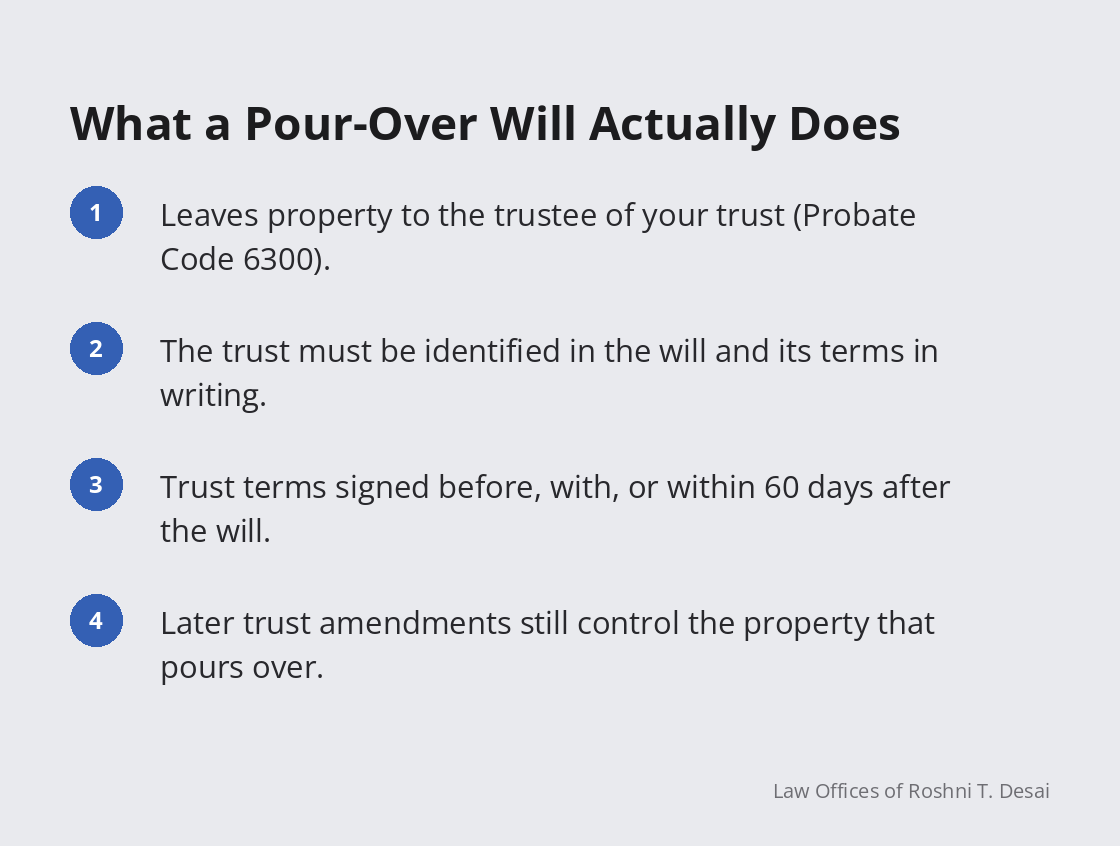
A pour-over will is a will that leaves some or all of your property to the trustee of your trust rather than directly to individual beneficiaries. California authorizes this arrangement through the Uniform Testamentary Additions to Trusts Act, found in Probate Code sections 6300 through 6303. Under section 6300, a will may make a gift to the trustee of a trust established, or to be established, by the person making the will, as long as the trust is identified in the will and its terms are set out in a written instrument. The result is that property passing under the will “pours over” into the trust and is handled according to the trust’s instructions.
How It Works With a Living Trust
California recognizes several ways to create a trust. Probate Code section 15200 lists methods that include a declaration by an owner that the owner holds property as trustee, a transfer of property during the owner’s lifetime to another person as trustee, and a transfer by will or other instrument taking effect at death. A typical revocable living trust is created during life, and a pour-over will adds a second path into that same trust for property that was not transferred before death. Together, the two documents point all of your property toward one set of instructions.
The Timing Requirement for the Trust Document
Section 6300 sets a timing rule that many people never hear about. The trust’s terms must be set forth in a written instrument, other than a will, that is executed before, concurrently with, or within sixty days after the execution of the will, or in the valid last will of a person who died before the testator. In practice, most people sign the trust and the pour-over will at the same meeting, which keeps the documents clearly connected and avoids questions about whether the timing rule was met.
Changes and Amendments to Your Trust
Life changes, and so do trusts. Section 6300 provides that a gift to a trust in a will is not invalid because the trust can be amended or revoked, or because the trust was amended after the will was signed or even after the testator’s death. Unless the will says otherwise, the property that pours over becomes part of the trust and is administered under the trust’s terms, including amendments made before or after death. This flexibility lets you update beneficiaries or trustee choices in your trust without rewriting your will each time.
How a Pour-Over Will Is Created and Carried Out
A pour-over will is still a will, so it must meet the same formal requirements as any other will in California. After death, the property it controls generally moves through the court process for wills before reaching the trust. Understanding both stages helps you see why a pour-over will is a backup plan rather than a substitute for funding your trust.
Signing and Witnessing Requirements
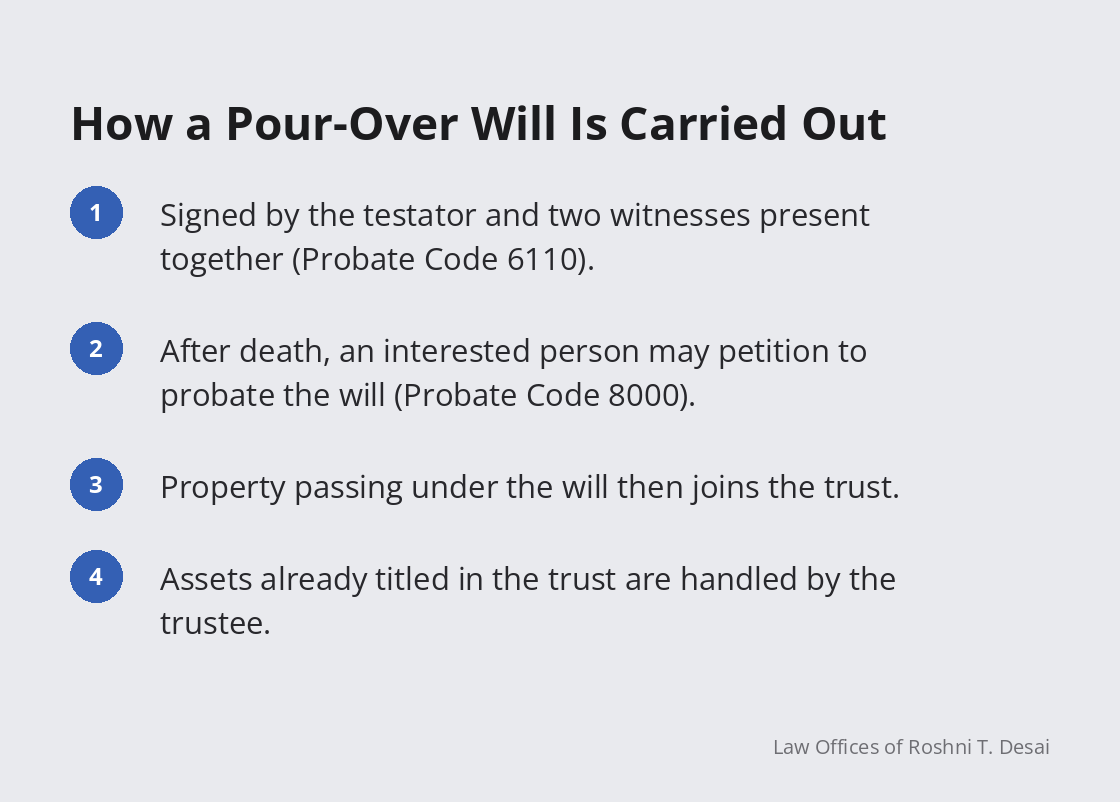
Probate Code section 6110 requires a will to be in writing and signed by the testator, by another person in the testator’s name in the testator’s presence and at the testator’s direction, or by a conservator under a court order. The will must also be signed, during the testator’s lifetime, by at least two witnesses who were present at the same time, who witnessed either the signing of the will or the testator’s acknowledgment of the signature or of the will, and who understand that the document they sign is the testator’s will. Section 6110 allows a court to treat an improperly witnessed will as valid only if clear and convincing evidence shows the testator intended it to be the will, which is a burden families should not have to carry.
Naming the Trust and the Trustee
Because section 6300 requires the trust to be identified in the will, careful drafting matters. A well-prepared pour-over will names the trust by its title and date and directs that the property go to the trustee then serving. The will usually also names an executor to handle the estate before the property passes to the trust. When the executor and the trustee are the same trusted person, the hand-off from estate to trust tends to be simpler, though different people can serve in each role.
What Happens After Death
Property that is already titled in the name of the trust is managed by the trustee under the trust’s terms. Property that passes under the pour-over will is different. Probate Code section 8000 provides that, after a death, any interested person may petition the court to probate the decedent’s will and to appoint a personal representative. Once the estate is administered, the property covered by the pour-over will passes to the trustee and joins the rest of the trust. California also offers simplified procedures for collecting some smaller estates without full administration under Probate Code section 13100 and related sections, and whether one applies depends on the specific property and circumstances.
Why Funding the Trust Still Matters
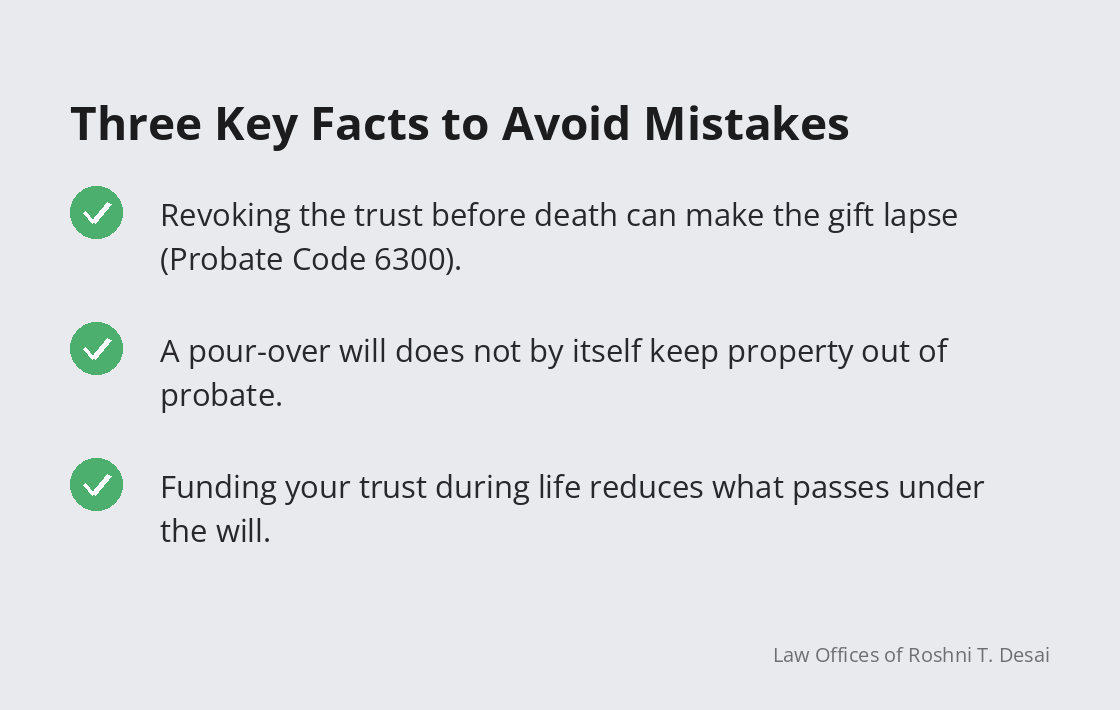
A pour-over will makes sure leftover property reaches your trust, but it does not keep that property out of the court process. The more property you place in the trust during your lifetime, the less your family may need to handle through probate. Reviewing deeds, financial accounts, and other assets after you sign your trust is one of the most practical steps you can take to make your plan work as intended.
Common Mistakes With Pour-Over Wills
Pour-over wills are simple in concept, yet small errors can undermine them. Most problems come from treating the will as a substitute for a funded trust or from letting documents fall out of sync over time.
Revoking the Trust Without Updating the Will
Section 6300 provides that, unless the will says otherwise, revoking or terminating the trust before the testator’s death causes the gift to the trust to lapse. If someone revokes a trust and creates a new one without updating the pour-over will, the will may point to a trust that no longer exists. Keeping the will and trust aligned whenever you restate or replace a trust helps prevent this gap.
Assuming the Will Avoids Court Involvement
Some people believe a pour-over will lets everything skip probate because it sends property to a trust. As discussed above, property passing under the will generally goes through the court process first. Families who learn this only after a death may face a longer path than they expected, especially when significant property was never retitled into the trust.
Informal Signing and Missing Witnesses
A pour-over will that is not properly witnessed may be challenged. Signing at home without two qualified witnesses present at the same time, or using witnesses who do not understand they are witnessing a will, can create disputes under section 6110. Signing with proper formalities from the start protects your plan and spares your loved ones an avoidable argument.
Forgetting About Newly Acquired Property
Estate plans are often signed years before they are needed. In the meantime, people open new bank or investment accounts, buy or refinance real estate, or receive an inheritance of their own. Each new asset that is not titled in the trust’s name may end up passing under the pour-over will instead. Building a habit of asking whether a new asset belongs in your trust, and reviewing your plan after major life events such as a marriage, a move, or the birth of a grandchild, keeps your trust working as the main vehicle for your plan and leaves the pour-over will to handle only what truly slips through.
Final Thoughts
A pour-over will in California is an important partner to a living trust. It catches property left outside the trust, sends it to your trustee, and lets your trust’s instructions, including later amendments, control how that property is handled. It works best when it is properly signed and witnessed, clearly identifies your trust, and stays aligned with any changes you make.
The strongest plans combine a pour-over will with a trust that is funded during your lifetime. That combination gives your family clear instructions and reduces the amount of property that must pass through the court process after you are gone.
If you are creating a living trust or reviewing an existing plan, contact the Law Offices of Roshni T. Desai to speak with our team in Southern California. We will review your documents, explain how they work together, and help you take the next step with confidence.