




Finding a Local Trust Administration Attorney in Santa Ana, California You Can Trust
Trust administration requires careful attention to detail and the right legal guidance. When you’re searching for a local trust administration attorney in Santa Ana, knowing what to look for makes all the difference.
We at Law Offices of Roshni T. Desai have spent over 25 years helping families navigate trust and probate matters. This guide walks you through the qualities that matter most when selecting an attorney for your situation.
What to Look For in a Trust Administration Attorney
Experience Matters More Than General Legal Knowledge
Experience with trust administration in California matters far more than general legal knowledge. When you evaluate an attorney, look for someone who regularly handles trust matters under California Probate Code rather than someone who handles estate law alongside other practice areas. Ask directly how many trusts they’ve administered in the past five years and what types of trusts they’ve managed-revocable living trusts, irrevocable trusts, special needs trusts, and charitable trusts each present different challenges. An attorney who has worked with complex estates involving business interests, real estate holdings, or significant investment portfolios navigates your situation more effectively than one whose experience centers on straightforward asset distributions.
Verify Credentials and Licensing
The State Bar of California maintains a directory where you can verify whether an attorney holds certification as a Specialist in Estate Planning, Trust and Probate through the California Board of Legal Specialization, which represents proven, tested knowledge in this field. Check their current license status and disciplinary history on the State Bar’s website to confirm they maintain good standing. This verification step protects you from hiring someone with a questionable record or inactive license.
Understand Fee Structures and Communication Practices
Communication style determines whether the process feels manageable or stressful. Some attorneys send quarterly updates; others respond only when you initiate contact. Some charge flat fees for trust administration; others bill hourly at rates between $150 and $500 per hour depending on location and experience. Ask upfront about their fee structure and what’s included, then request a written engagement letter outlining scope, responsibilities, and estimated costs before you hire them.
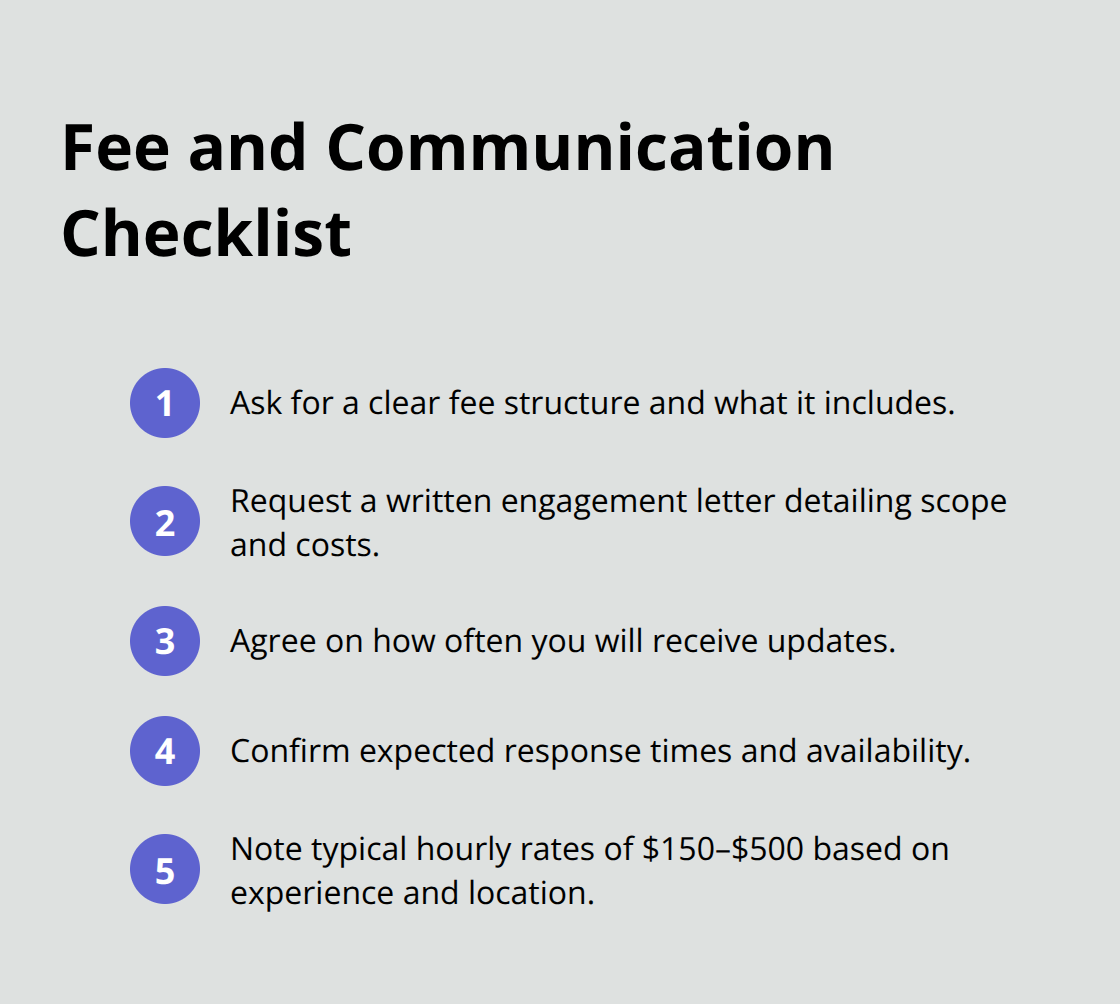
Availability matters too-if your attorney takes weeks to return calls or doesn’t offer flexible consultation options (like home or office visits), the administrative process becomes unnecessarily difficult.
Assess How They Communicate and Listen
The right attorney communicates in plain language, not legal jargon, and explains trust terms, trustee duties, and next steps in ways you actually understand. They ask detailed questions about your specific situation rather than offering generic advice. When you interview potential attorneys, notice whether they listen more than they talk, whether they ask clarifying questions about your family situation and assets, and whether they seem genuinely interested in understanding your concerns rather than rushing through a consultation. Red flags include attorneys who can’t clearly explain their fees, lack an online presence or client reviews, use high-pressure sales tactics, or overpromise outcomes (a trustworthy attorney acknowledges that trust administration timelines vary depending on complexity and that even straightforward trusts sometimes require legal intervention to resolve unforeseen issues).
Identify Red Flags and Warning Signs
Attorneys who rush consultations, avoid direct fee discussions, or lack verifiable client feedback warrant caution. Those who promise guaranteed outcomes or claim they can eliminate all delays should raise concerns-trust administration involves court filings, tax deadlines, and beneficiary notifications that follow fixed timelines regardless of attorney skill. The best candidates answer your questions thoroughly, provide references from past clients, and explain how they stay current with California probate law changes. When you’ve narrowed your choices, schedule a consultation to walk through your specific trust, discuss fiduciary duties, review timelines, and confirm the attorney understands your family’s needs and asset complexity.
What Happens When Trust Administration Goes Wrong in Santa Ana
Beneficiary Disputes Destroy Families and Drain Estates
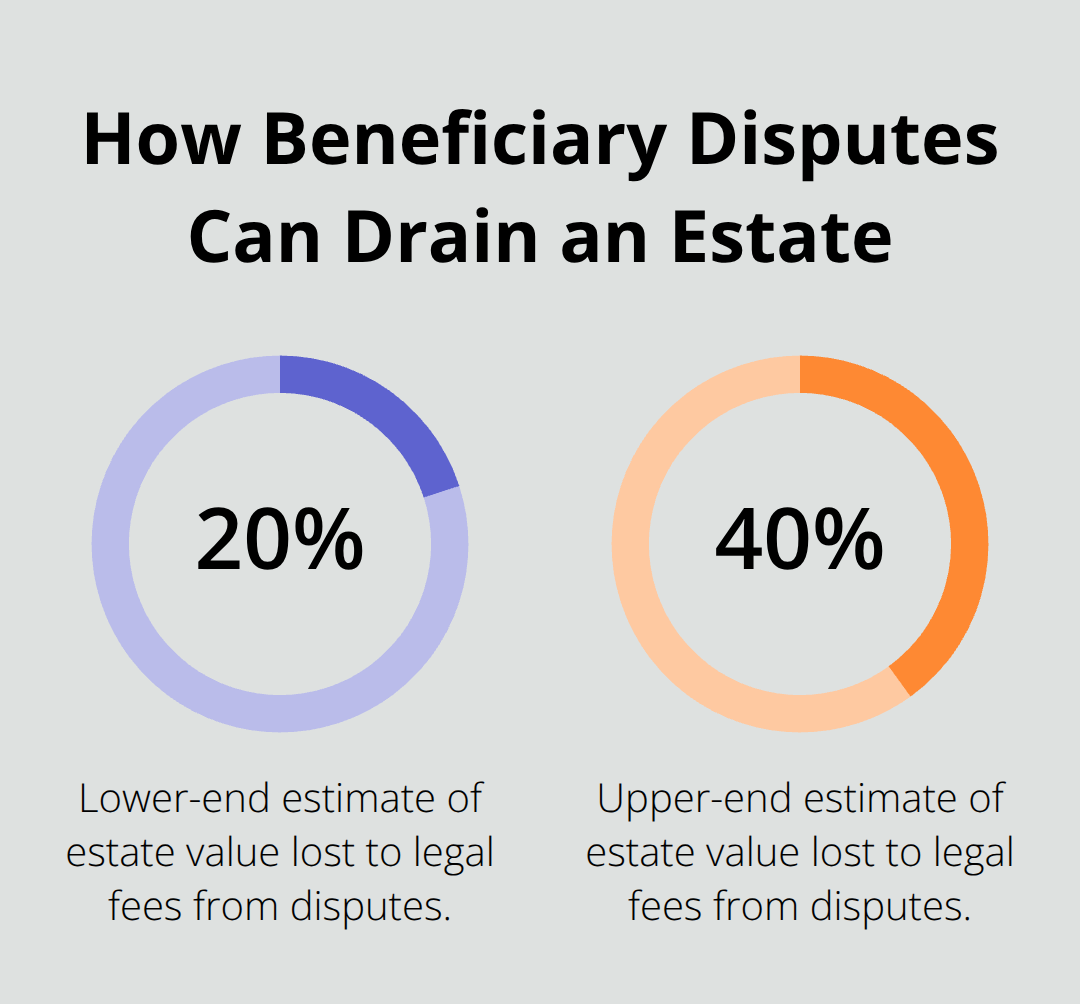
Beneficiary disputes rank among the most destructive issues that derail trust administration in Santa Ana. When a trustee distributes assets unevenly, fails to communicate timely, or appears to prioritize personal interests over beneficiary welfare, family members challenge the trustee’s decisions or even the trust’s validity. California Probate Code Section 16061 allows beneficiaries to petition the court if they believe a trustee breached fiduciary duties, and these disputes frequently escalate into costly litigation that consumes estate assets and destroys family relationships. The State Bar of California tracks disciplinary cases involving trust mismanagement, and many stem from trustees who lacked legal guidance on their obligations to provide written notice, maintain detailed asset records, and distribute funds within reasonable timelines. Mediation resolves many conflicts before they reach court, but prevention works better than resolution. An attorney who explains trustee duties upfront and documents every decision protects beneficiaries from disputes that could otherwise drain the estate by 20 to 40 percent in legal fees alone.
California Probate Code Requirements Trip Up Unprepared Trustees
California Probate Code requirements create another layer of complexity that trips up unprepared trustees and self-administered estates. The code mandates specific timelines for notifying beneficiaries and creditors, filing tax returns, and obtaining court approval for certain transactions involving real estate or business interests. Santa Ana courts follow these procedures strictly, and missed deadlines trigger penalties, asset freezes, or court-ordered accountings that cost thousands in additional legal work. Managing complex assets-particularly real estate holdings, investment portfolios, or family business interests-demands knowledge of tax implications under IRS Form 1041, potential property tax reassessment triggers, and California’s lack of state estate tax (which differs significantly from federal requirements).
Real Estate Assets Require Specialized Knowledge
Real estate holdings within an estate present unique challenges that many general trust attorneys overlook. Property transfers, title issues, and potential reassessment complications add months to administration timelines when handled by attorneys without real estate knowledge. We at Law Offices of Roshni T. Desai hold dual licensure as both an attorney and real estate professional, which streamlines property transactions and prevents costly delays when estates include residential or commercial properties. Without this dual approach, trustees often hire separate professionals, creating communication gaps and higher overall costs. A single attorney who understands both the legal requirements and the practical asset management issues keeps the administration moving forward efficiently while protecting the estate from preventable complications.
Why We Stand Out in Santa Ana Trust Administration
Over 25 Years Administering Trusts Across Southern California
We at Law Offices of Roshni T. Desai have spent over 25 years administering trusts and handling probate matters across Southern California. Trust and probate administration forms the core of what we do-not general estate law mixed with other practice areas. We have managed revocable living trusts, irrevocable trusts, special needs trusts, and complex estates that include real estate, business interests, and substantial investment portfolios. When you work with us, you’re not the first case of its kind we’ve encountered, and we’ve seen the specific problems that derail administration in Santa Ana.
Understanding California Probate Code and Tax Deadlines
We understand California Probate Code requirements that trip up self-administered estates, the notification timelines beneficiaries expect, and the tax filing deadlines that courts enforce strictly. Most importantly, we know how to prevent the disputes that drain estates by 20 to 40 percent in legal fees. Our knowledge of these requirements protects your estate from costly delays and legal complications that arise when trustees lack proper guidance on their obligations to provide written notice, maintain detailed asset records, and distribute funds within reasonable timelines.
Dual Licensure Streamlines Property Transactions
Our dual licensure as both an attorney and real estate professional eliminates a major friction point in trust administration. When an estate includes property (whether residential, commercial, or investment real estate), we handle the legal requirements and the practical transaction work ourselves. This prevents the costly communication gaps and delays that happen when trustees hire separate attorneys and real estate agents.
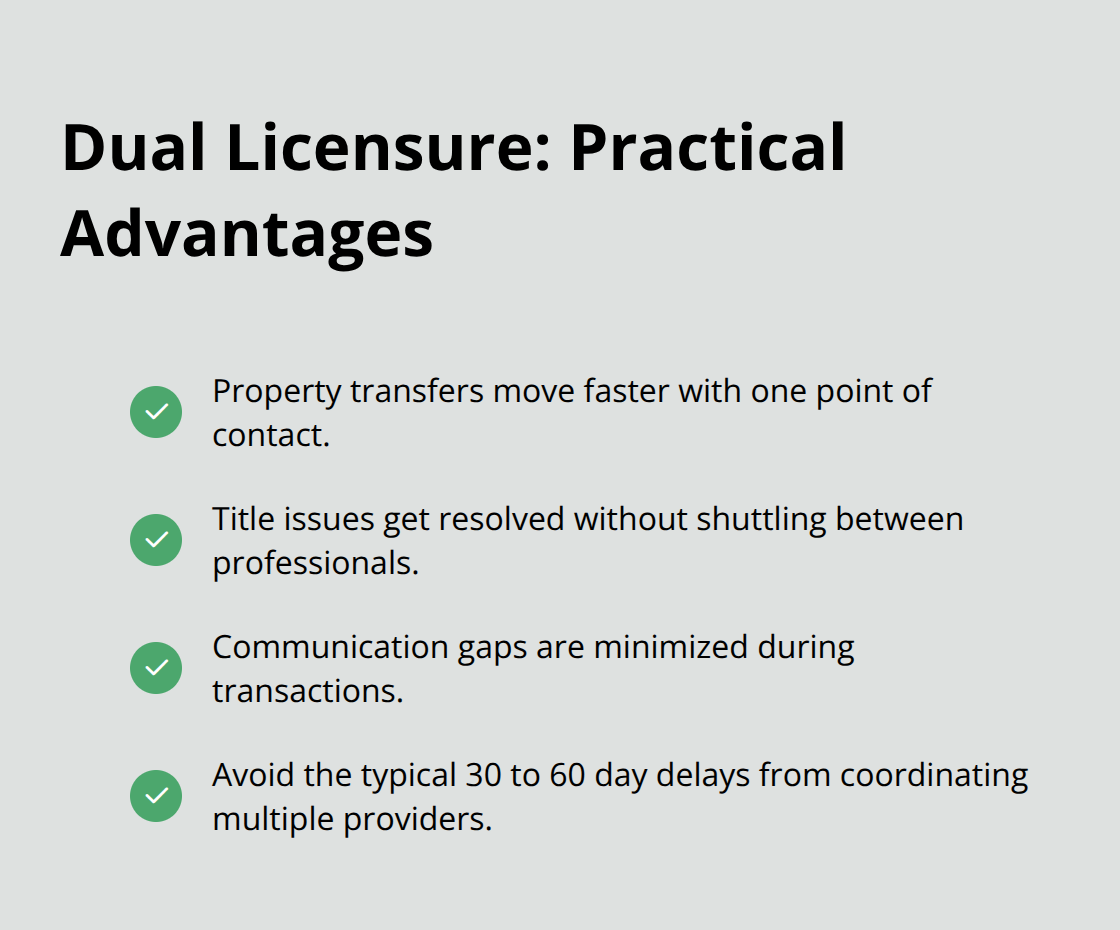
Property transfers move faster, title issues get resolved without shuffling between professionals, and you avoid the 30 to 60 day delays that typically accompany coordinating multiple service providers.
Flexible Consultation Options for Your Comfort
We offer free consultations with flexible options that include home or office visits, because trust administration discussions often involve sensitive family dynamics and personal circumstances that feel more comfortable in your own space. Rather than forcing you into a downtown office during business hours, we meet where and when it makes sense for your situation.
Final Thoughts
When you select a local trust administration attorney in Santa Ana, prioritize someone with direct experience administering trusts under California Probate Code, clear communication in plain language, and transparent fee structures. Verify their credentials through the State Bar of California, confirm they hold current licensure, and ask about their track record with trusts similar to yours. Red flags like rushed consultations, vague fee discussions, or overpromised outcomes warrant moving on to another candidate.
Trust administration in Santa Ana involves navigating specific California requirements, managing beneficiary expectations, and handling assets that may include real estate or complex investments. An attorney who understands these local challenges protects your estate from costly mistakes and keeps the process moving forward without unnecessary complications. When an estate includes property, dual licensure in law and real estate eliminates the communication gaps and delays that typically arise when trustees coordinate multiple professionals.
Contact Law Offices of Roshni T. Desai today to schedule your free consultation and discuss your trust administration needs. We offer flexible consultation options that work around your schedule, whether that means meeting at your home, your office, or our location. Peace of mind comes from knowing a qualified local trust administration attorney is guiding your family through the process and protecting your estate from preventable complications.