




Probate Administration Guidelines for Orange County, California Estates
Probate administration in Orange County involves strict timelines, court procedures, and multiple legal requirements that catch many families off guard. Without proper guidance, the process can stretch for months and create unnecessary conflict among heirs.
We at Law Offices of Roshni T. Desai help families navigate these probate administration guidelines with clarity and confidence. This guide walks you through what to expect and how to protect your estate.
What Are the Critical Deadlines You’ll Face in Orange County Probate?
Orange County probate moves on a fixed timeline set by California law, and missing even one deadline can cost you months of delays and thousands in additional fees. The moment you receive Letters of Administration from the court, a 120-day clock starts ticking.
The Four-Month Inventory and Appraisal Deadline
Within four months of appointment, you must file an Inventory and Appraisal with the court using Judicial Council Forms DE-160 and DE-161. This deadline is non-negotiable. If real property is involved, a probate referee will appraise those assets and charge approximately 0.1% of the appraised value, with a minimum fee of $75 and a maximum of $10,000. For a $1,000,000 estate, you’ll pay around $1,000 in referee fees alone.
You also have four months to mail Notice to Creditors to all known or reasonably ascertainable creditors using Form DE-157. This notice triggers a four-month claim period where creditors can submit claims against the estate. Fail to send this notice on time, and you risk personal liability for unpaid debts.
Filing the Petition and Securing Court Approval
You must file Form DE-111 within 30 days of the person’s death and deliver the original will to the court at the same time. The filing fee in Orange County is $435, though additional costs for publication and notice service add up quickly. Once you file, the court schedules a hearing, and this is where Orange County’s reputation for backlogs matters.
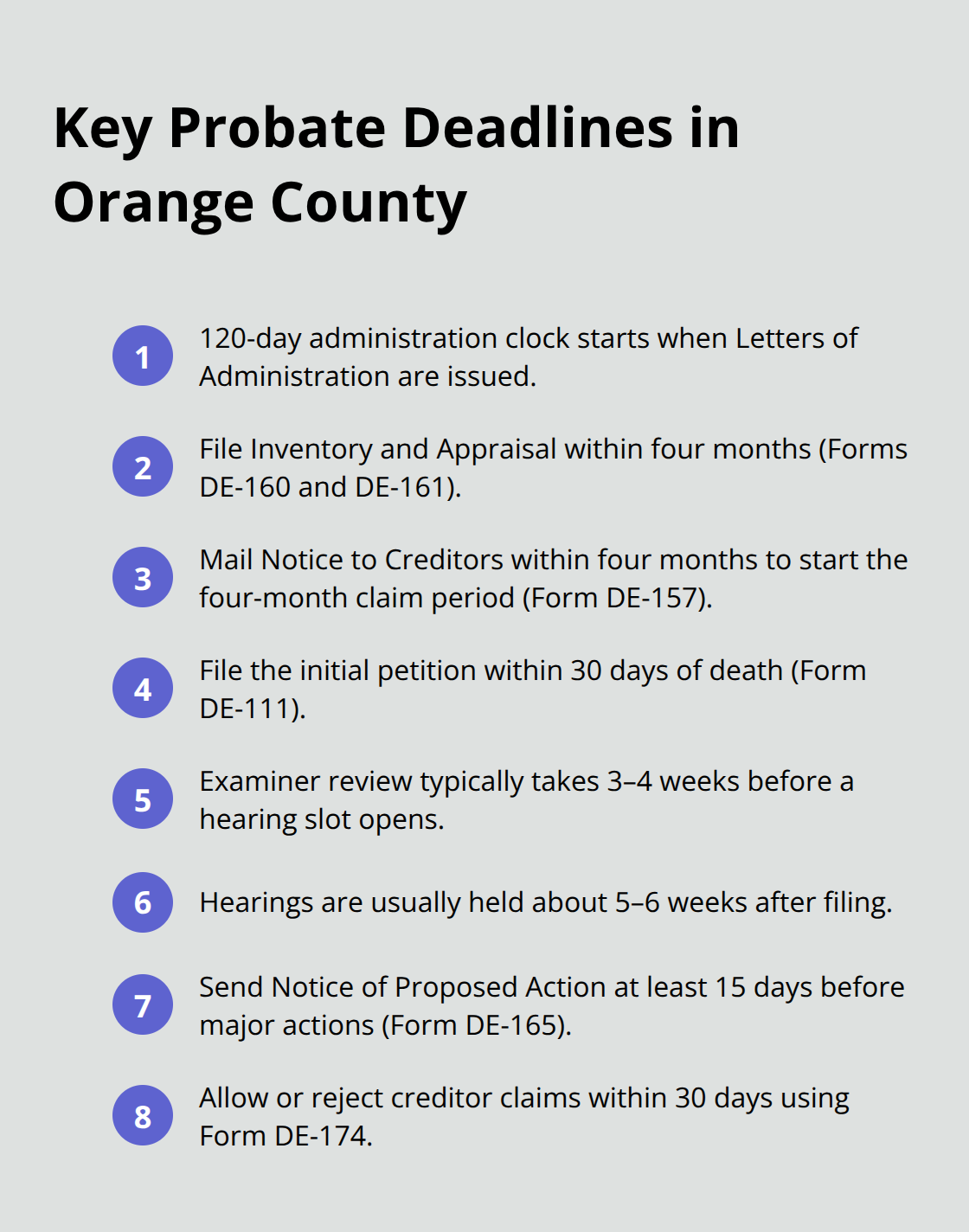
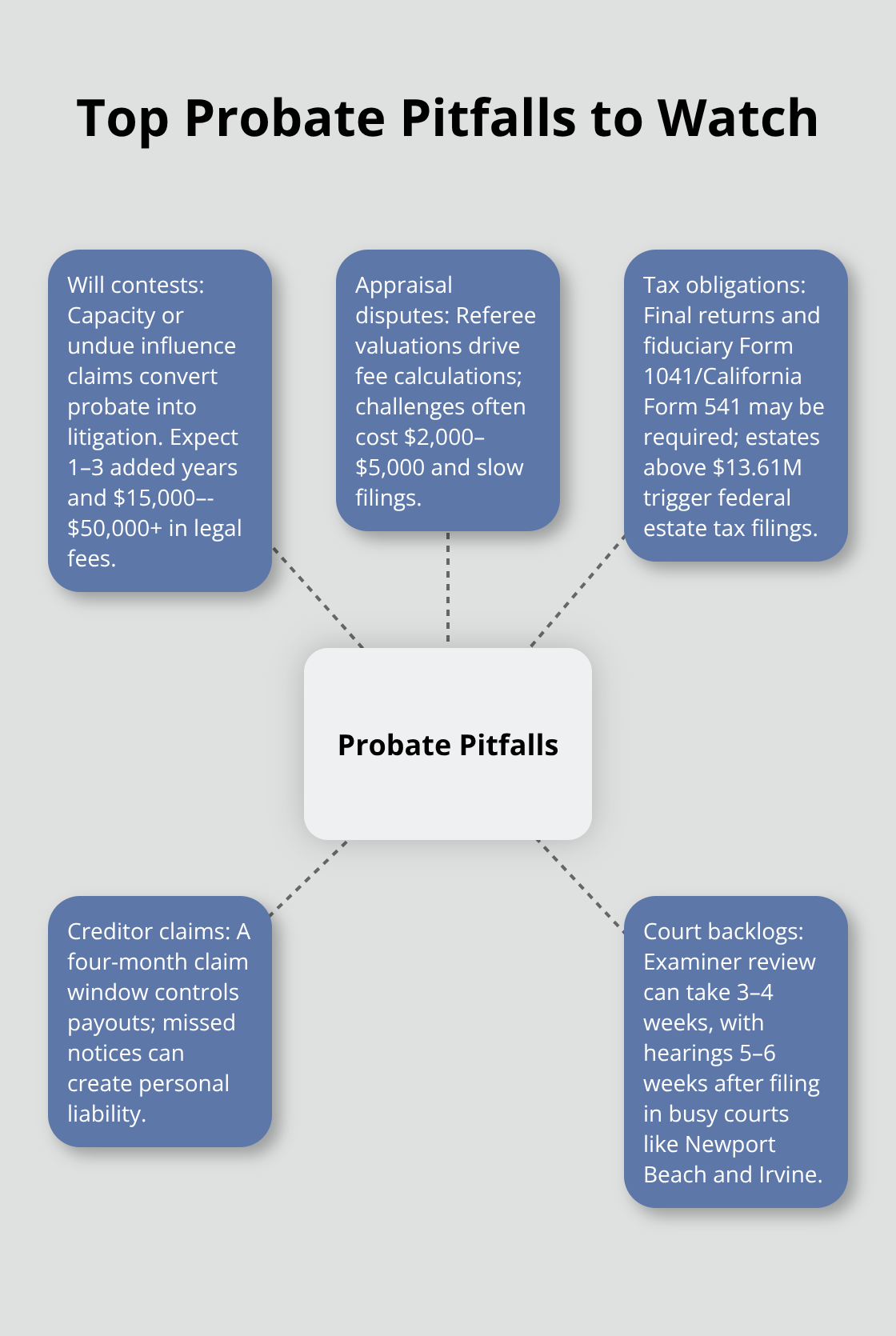
County examiner notes typically require 3-4 weeks of review before a hearing date opens up, and the actual hearing occurs 5-6 weeks after filing. Newport Beach, Irvine, and Huntington Beach face heavier backlogs than less populated areas, so expect the longer timeline in those communities. At the hearing, the judge appoints you as the personal representative and issues Letters of Administration. Without those Letters, you cannot legally access the deceased’s bank accounts, sell property, or manage assets.
Notifying Heirs and Managing Creditor Claims
You must mail Notice of Proposed Action using Form DE-165 at least 15 days before taking major actions like paying yourself a fee, selling real property, or distributing assets to heirs. If any heir or interested party objects within that 15-day window, you cannot proceed independently and must petition the court for approval. This built-in check prevents hasty decisions.
For creditor claims, you have 30 days from receiving a claim to allow or reject it using Form DE-174. If you reject a claim, mail the form to the creditor and file the original with the probate clerk. Secured creditors like mortgage lenders must be notified separately, and continuing mortgage payments from estate funds prevents foreclosure during probate.
Understanding Your Overall Timeline
The entire process from petition to final discharge typically takes 9 to 18 months in Orange County for straightforward estates, though complex cases involving real estate disputes or family disagreements routinely stretch to 2-4 years. These timelines demand attention to detail and knowledge of local court procedures. When disputes arise over will validity or asset distribution, the complexity multiplies-and that’s where many families encounter their biggest obstacles.
What Problems Derail Orange County Probate Cases
Will Contests and Disputes Over Validity
Family conflict over will validity ranks among the most destructive obstacles in Orange County probate administration. When one heir questions whether the deceased had mental capacity when signing the will, or claims undue influence from another family member, the entire process stalls while the court investigates. These disputes transform a straightforward probate into contested litigation that can add 1–3 years to your timeline and cost $15,000 to $50,000 or more in legal fees.
The California Probate Code requires formal notice to all interested parties before you distribute assets. If you suspect a will contest is coming, address it early rather than hoping it disappears. Waiting only compounds the problem and leaves heirs in limbo while attorneys battle over the will’s validity.
Property Valuation and Appraisal Conflicts
Property valuation disputes create a second major bottleneck in Orange County probate. When a probate referee appraises real estate for the Inventory and Appraisal filing, their valuation becomes the official estate value for fee calculation purposes. If heirs disagree with that valuation-especially in markets like Newport Beach and Irvine where property values fluctuate-you may need to hire an independent appraiser to challenge the referee’s estimate.
This adds $2,000 to $5,000 in additional costs and delays the filing timeline. For estates with significant real estate holdings, the difference between a low and high appraisal can shift statutory fees by thousands of dollars. Accurate valuation matters from day one because it affects both the probate timeline and the total cost to the estate.
Tax Obligations and Creditor Management
Tax and debt management creates the third major complexity in Orange County probate administration. You must file the decedent’s final federal and California income tax returns and the fiduciary Form 1041 if the estate generates income during administration. California has no inheritance tax, but the estate itself may owe income taxes on distributions to beneficiaries, and federal estate tax returns apply to estates exceeding $13.61 million according to 2024 IRS thresholds.
Creditor claims pile up during the four-month notice period, and you cannot distribute assets until you determine which claims are valid and which you should reject. Secured creditors like mortgage lenders demand continued payments, or they will foreclose on the property. Unsecured creditors like credit card companies file claims that must be evaluated within 30 days.
If you miss the creditor claim deadline or fail to notify known creditors properly, you risk personal liability for unpaid debts even after you distribute the estate. One missed deadline or miscalculated tax obligation can unwind your entire distribution plan and force the estate back into court. These three problem areas-will contests, property disputes, and tax complexity-demand attention from someone who understands both California probate law and the specific pressures that Orange County families face.
The next section explains how to address these obstacles before they derail your administration timeline.
How Probate Administration Works in Orange County
Probate administration demands someone who understands both the procedural timeline and the real obstacles that derail families in Orange County. The will contest, the property dispute, the creditor claim filed on day 119-these problems require immediate, informed action, not generic advice. Effective probate administration centers on identifying problems before they compound and addressing them with precision.
Preventing Property Valuation Disputes Before They Escalate
When you file the Inventory and Appraisal within the four-month deadline, the probate referee’s valuation becomes the official estate value for fee calculation purposes. If that valuation withstands scrutiny from the start, heirs cannot later claim undervaluation cost them money. Property disputes emerge when the referee’s estimate conflicts with what heirs believe the property is worth-a common problem in Orange County markets like Newport Beach and Irvine where values fluctuate significantly.
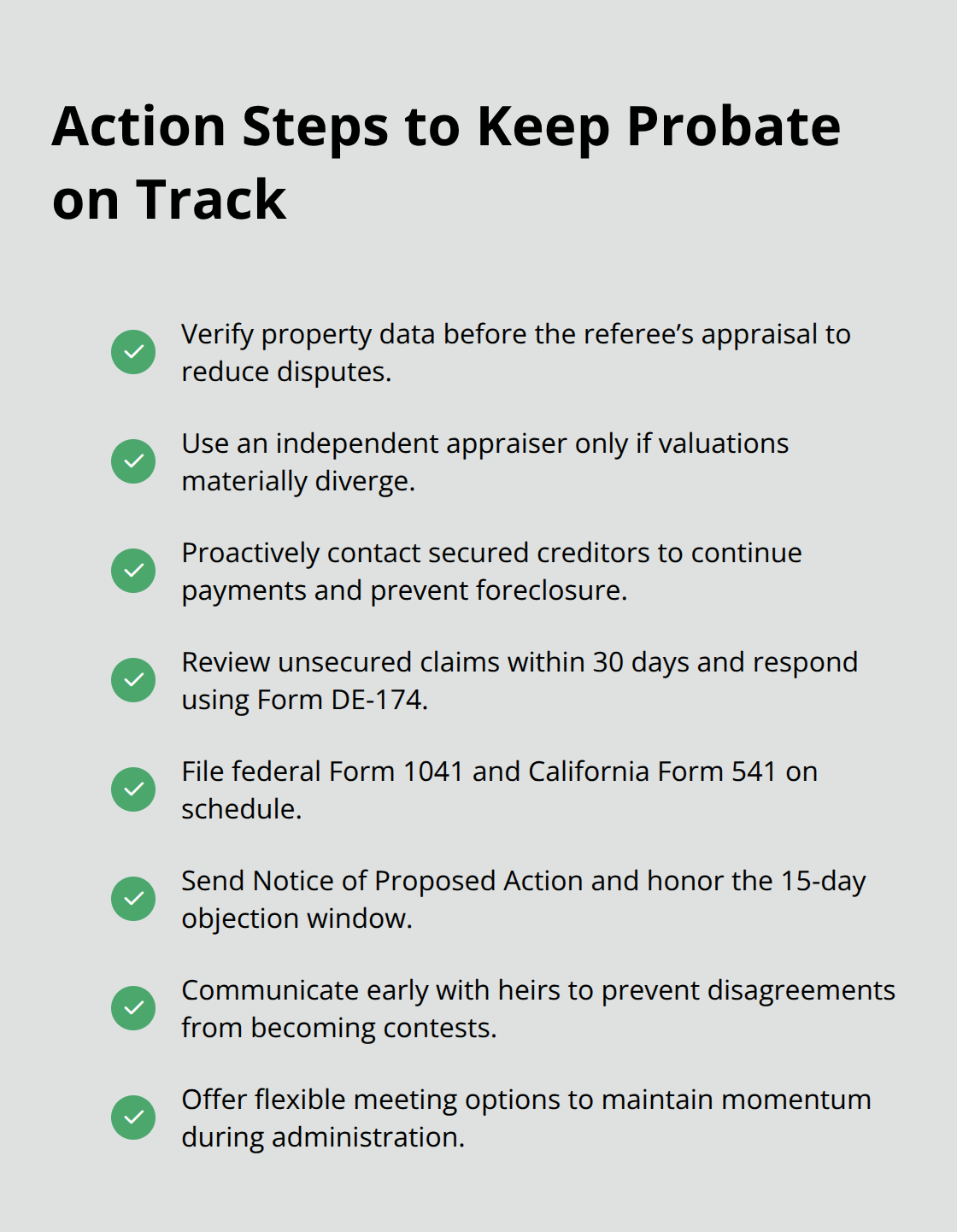
Addressing valuation concerns early prevents the need for independent appraisers (which cost $2,000 to $5,000 and delay your filing timeline). For estates with significant real estate holdings, the difference between a low and high appraisal shifts statutory fees by thousands of dollars. Accurate valuation from day one affects both the probate timeline and the total cost to the estate.
Managing Creditor Claims and Secured Debt Strategically
The creditor claim period creates a critical vulnerability in probate administration. Rather than waiting passively for claims to arrive, you should analyze the estate’s known debts and contact secured creditors proactively to arrange continued payments that prevent foreclosure during administration. For unsecured claims that do arrive, you must evaluate them within the 30-day window using California Probate Code standards, rejecting invalid claims before they drain estate funds.
Secured creditors like mortgage lenders demand continued payments, or they will foreclose on the property. Unsecured creditors like credit card companies file claims that must be evaluated within 30 days. If you miss the creditor claim deadline or fail to notify known creditors properly, you risk personal liability for unpaid debts even after you distribute the estate.
Handling Tax Obligations and Notice Requirements
Tax and debt management creates substantial complexity in Orange County probate administration. You must file the decedent’s final federal and California income tax returns and the fiduciary Form 1041 if the estate generates income during administration. California has no inheritance tax, but the estate itself may owe income taxes on distributions to beneficiaries, and federal estate tax returns apply to estates exceeding $13.61 million according to 2024 IRS thresholds.
Coordinating with accountants to file the necessary federal Form 1041 and California Form 541 returns on schedule prevents penalties or interest that reduce distributions to heirs. You also must handle the Notice of Proposed Action filings and manage the 15-day objection windows so you avoid acting unilaterally on major decisions only to face a court petition from an objecting heir. Orange County’s backlogs mean that if you must petition the court for approval on contested matters, the delay multiplies significantly.
Addressing Family Disagreements Before They Become Contested Probate
Will contests and disputes over asset distribution rank among the most destructive obstacles in Orange County probate administration. When one heir questions whether the deceased had mental capacity when signing the will, or claims undue influence from another family member, the entire process stalls while the court investigates. These disputes transform a straightforward probate into contested litigation that adds 1–3 years to your timeline and costs $15,000 to $50,000 or more in legal fees.
Clear communication with all interested parties before you take major action prevents the escalation from family disagreement to formal will contest. When heirs disagree on distribution timing or asset allocation, facilitating the conversation with clear explanations of what California law permits and what the court will require stops disputes from hardening into litigation. The cost difference is stark: addressing a potential dispute early through clear communication costs a few hundred dollars in attorney time, while a contested probate in Orange County runs $15,000 to $50,000 or more and adds 1–3 years to your timeline.
Streamlining Property Sales and Real Estate Transactions
Estate property sales create a common source of delays and miscommunication when separate agents and lawyers work independently. Dual licensure as both an attorney and real estate professional streamlines estate property sales directly, eliminating redundant fees and preventing the mistake of selling estate property without proper probate authorization. Meeting at the estate property to assess condition, title issues, or liens that affect the sale strategy ensures the transaction moves forward without surprises.
Probate administration happens while families are grieving and managing competing demands. Many families cannot easily travel to a downtown office or coordinate schedules around traditional business hours. Flexible scheduling-home or office visits-acknowledges that real probate work occurs on your timeline, not the law firm’s. When creditor disputes emerge, handling the negotiation and documentation prevents you from being caught between conflicting demands.
Final Thoughts
Orange County probate administration follows a predictable path when you understand the deadlines, anticipate the obstacles, and act with precision. Will contests, property valuation disputes, and tax complexity derail families who attempt probate without guidance, but these same obstacles become manageable when you address them early and systematically. Professional probate administration eliminates the guesswork that costs families time and money.
The probate administration guidelines you follow in Orange County are the same statewide, but the local execution matters enormously. Newport Beach, Irvine, and Huntington Beach face heavier court backlogs than less populated areas, and knowing how to navigate those delays prevents your estate from languishing in the system for years. Coordinating with accountants on tax filings, managing creditor claims within the 30-day window, and communicating clearly with heirs before disputes harden into litigation transforms probate from a source of family conflict into a structured process that protects everyone’s interests.
We at Law Offices of Roshni T. Desai help families navigate probate administration with clarity and confidence through flexible scheduling and personalized guidance that acknowledges the demands families face while grieving. Contact Law Offices of Roshni T. Desai today to protect your estate and move forward with confidence.