




Probate Administration for Executors: Practical Steps for Executors in Southern California
Being named executor brings real responsibility. You’re managing someone’s final wishes while navigating California’s probate system, handling assets, notifying beneficiaries, and settling debts.
We at Law Offices of Roshni T. Desai help executors handle probate administration successfully. This guide walks you through each step, from understanding your legal duties to distributing assets, so you can manage the process with confidence.
What Does an Executor Actually Have to Do
Your Fiduciary Duty and Personal Liability
As executor, you hold the highest duty in law. This isn’t an honorary title-it’s a legal position with concrete responsibilities that can expose you to personal liability if you mishandle them. California law requires you to act as a reasonably prudent, impartial, honest, and fair fiduciary. That means self-dealing is off limits entirely. Selling estate assets to yourself at below-market value, for example, breaches your fiduciary duties and can trigger lawsuits from beneficiaries.
The statute of limitations for claims against you runs from discovery of wrongdoing, and for minor beneficiaries it runs from their 18th birthday-delays can stretch decades depending on when someone uncovers the breach. Even well-intentioned actions can land you in court. Courts can truncate your liability period through court-approved accountings and petitions, which may bar many causes of action against you.
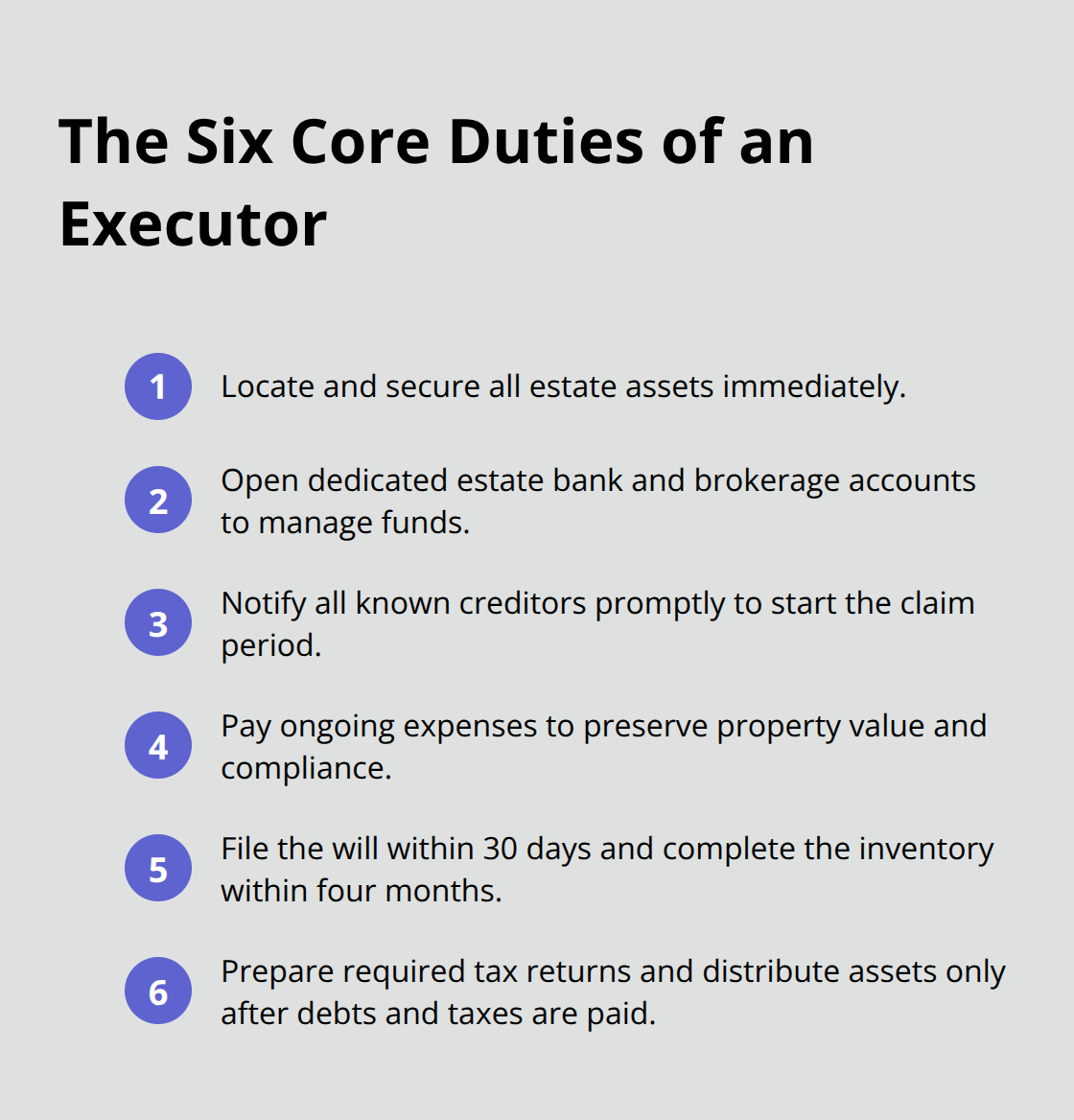
The Six Core Duties You Must Complete
Your responsibilities follow a clear sequence. First, you locate and secure all assets the deceased owned-bank accounts, real estate, vehicles, retirement accounts. You set up estate bank and brokerage accounts to manage income during probate.
Second, you notify known creditors promptly; they have four months from your appointment to file claims. Third, you pay ongoing expenses to maintain assets like mortgage payments, utilities, and insurance. Fourth, you file the will with the California probate court within 30 days of appointment and inventory all estate assets within four months.
Fifth, you prepare and file tax returns-both the final personal income tax return for the year of death and Form 1041 for estate income tax if the estate generates income. California has no state estate tax, but federal estate tax may apply if the estate exceeds the 2024 federal exemption of 13.61 million dollars according to the IRS. Sixth, after debts and taxes are paid, you distribute remaining assets according to the will or California’s intestate succession laws.
Timeline and Record-Keeping Requirements
The probate process typically stays open about a year, with most estates closing in six to nine months-though litigation extends timelines significantly. The key is maintaining detailed records of every action, notifying beneficiaries regularly about progress, and obtaining court approval before you make major distributions or sell estate assets. Missing deadlines triggers penalties and delays; the rigidity of California’s probate system demands strict compliance.
The complexity of these duties-combined with the personal liability you face-makes professional guidance valuable. We at Law Offices of Roshni T. Desai offer free consultations to map out your specific duties, understand your personal liability risks, and develop a compliance plan tailored to your estate’s circumstances.
How to Move Through Probate Administration
Secure Assets and Set Up Estate Accounts
Once the court issues your Letters of Administration or Letters Testamentary, you have 30 days to file the will with the probate court. Immediately after, you must secure what the deceased owned. Gather bank statements, investment account records, property deeds, vehicle titles, and retirement account documents. Contact each financial institution directly and request a list of accounts in the deceased’s name. Many banks require Letters from the court before releasing information, so bring certified copies to each institution.
Real estate requires appraisal by a probate referee within four months of your appointment; this determines fair market value for tax purposes and beneficiary distributions. For personal property like jewelry, art, or collectibles, hire an independent appraiser if the items exceed a few thousand dollars. Set up an estate bank account immediately to separate estate funds from your personal accounts, then transfer liquid assets into it. This single step prevents commingling and makes accounting transparent when you file records with the court.
Notify Creditors and Beneficiaries Within Required Timeframes
You must notify creditors and beneficiaries simultaneously while securing assets. Mail formal written notice to all known creditors and publish a notice in the local newspaper where the deceased lived; creditors then have four months from your appointment to file claims against the estate. Notify beneficiaries named in the will and heirs under California’s intestate succession laws with details about the probate timeline and what to expect.
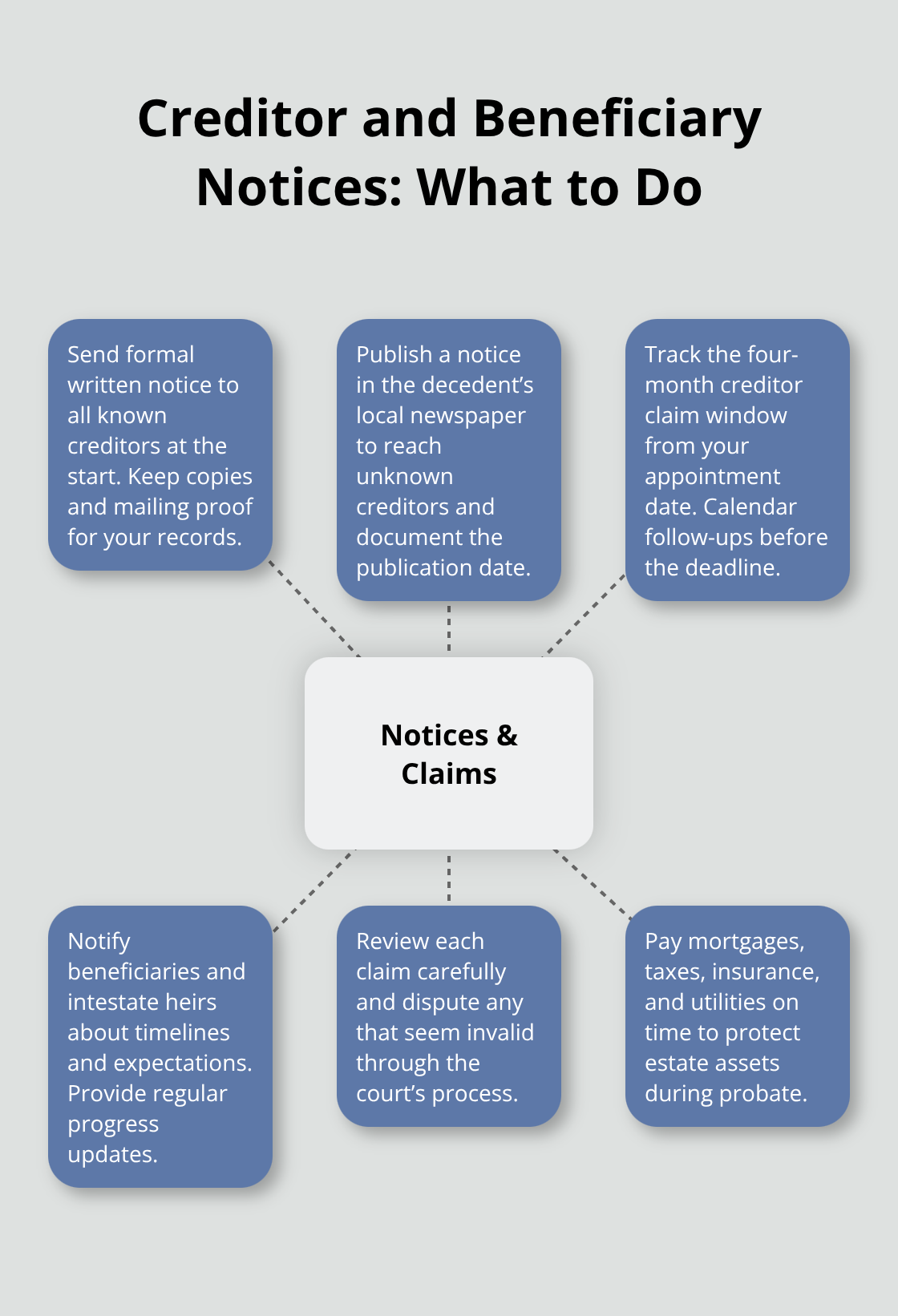
Pay ongoing expenses immediately-mortgage payments, property taxes, utilities, insurance premiums-because letting assets deteriorate costs the estate money and violates your duty to preserve them. Once creditors’ claims arrive, review each one carefully; dispute any that seem invalid and work with the court if conflicts arise.
File Tax Returns and Resolve Claims
After four months pass and valid claims are resolved, prepare tax returns for the deceased’s final year and file Form 1041 for estate income if applicable. California has no state estate tax, but federal estate tax may apply if the estate exceeds the 2024 federal exemption of $13.61 million according to the IRS. Only after taxes and debts are satisfied should you distribute remaining assets according to the will or California law.
The entire sequence typically takes nine to twelve months for straightforward estates, though disputes or complex asset situations extend that timeline considerably. Your detailed records and timely notifications reduce personal liability exposure throughout this phase. The next critical step involves understanding how to handle distributions and close the estate properly-a process that requires careful attention to beneficiary rights and court procedures.
Professional Help Reduces Your Personal Liability
Probate administration exposes you to decades of potential liability. The statute of limitations for beneficiary claims runs from discovery of wrongdoing, and for minor beneficiaries it doesn’t start until they turn 18-meaning a breach uncovered years later can still trigger a lawsuit. Courts can truncate liability through approved accountings, but only if you handle the process correctly from the start. An attorney catches mistakes before they become legal problems. An accountant ensures your tax filings are accurate and complete, protecting you from IRS penalties and estate tax complications. Both professionals cost far less than defending a breach of fiduciary duty claim, which can drain the estate and consume years of your time.
When to Hire Professional Help Immediately
You should hire an attorney now if the estate exceeds $184,500, the probate threshold in California as of 2024. Estates above this amount trigger formal probate, which requires court petitions, hearings, and strict compliance with deadlines. Missing a single deadline-like the 30-day requirement to file the will or the four-month inventory deadline-creates penalties and delays that beneficiaries will blame you for.
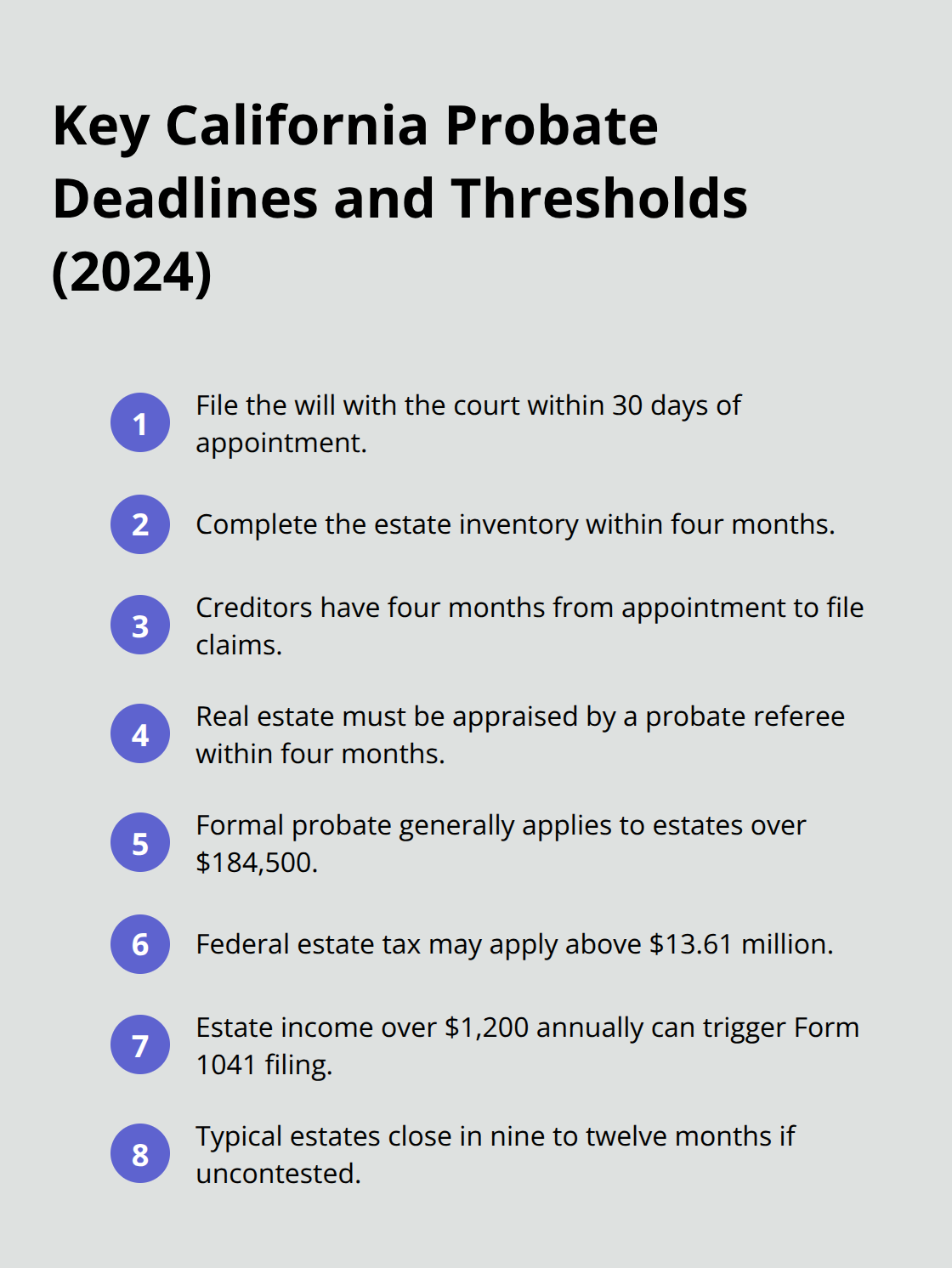
If the estate includes real property, multiple beneficiaries, contested claims, or significant debt, hire an attorney before you take any action. If you’re uncertain whether you’ve already breached your fiduciary duties, an attorney can review your actions and advise you on remedial steps. An accountant becomes essential if the deceased owned a business, held rental properties, or left a complex investment portfolio. The estate tax situation also matters; while California has no state estate tax, federal estate tax applies to estates exceeding $13.61 million according to the IRS as of 2024, and federal income tax applies to estate income above $1,200 annually. An accountant ensures you don’t overpay or underpay these obligations.
How Professional Guidance Protects You
A probate attorney reviews your actions against California law and beneficiary rights, then advises whether court approval is needed before distributions. An attorney with experience in estate-related property sales and transactions can streamline those transactions, reducing costs, delays, and communication hassles when the estate includes residential or commercial property. The personalized approach means you’re not paying for boilerplate solutions-you’re receiving guidance tailored to your estate’s actual complexity. Attorneys with decades of probate administration experience have handled situations similar to yours and know which pitfalls to avoid. Professional support reduces stress by removing the administrative burden that consumes months of your time and protects you from personal liability.
Getting Started With Professional Support
Contact a probate attorney for a free consultation to evaluate your specific situation and outline a compliance roadmap. This initial conversation identifies which deadlines matter most, which assets require appraisal, and which professional services you genuinely need versus those you can handle yourself. Many executors attempt probate alone, then realize midway through that they’ve made decisions they can’t undo. A consultation with Law Offices of Roshni T. Desai provides personalized, compassionate guidance across Southern California for probate administration and related estate matters. The firm offers flexible home or office visits to accommodate your schedule and provides free initial consultations to map out your path forward.
Final Thoughts
Probate administration for executors in Southern California demands attention to detail, strict adherence to deadlines, and a clear understanding of your fiduciary duties. The process typically takes nine to twelve months for straightforward estates, but the consequences of missteps can follow you for decades. Your personal liability exposure runs from discovery of wrongdoing, and for minor beneficiaries it extends until they turn 18-meaning a breach uncovered years later can still trigger a lawsuit that drains both your time and the estate’s assets.
Secure assets immediately, notify creditors and beneficiaries within required timeframes, file tax returns accurately, and distribute assets only after debts and taxes are resolved. Maintain detailed records of every action, obtain court approval before major distributions or property sales, and communicate regularly with beneficiaries about progress. These steps reduce your personal liability exposure and keep probate administration moving forward.
Most executors benefit from professional guidance-an attorney catches mistakes before they become legal problems, while an accountant ensures your tax filings are complete and accurate. Contact Law Offices of Roshni T. Desai for a free consultation to evaluate your specific situation and outline a compliance roadmap. The firm provides personalized, compassionate estate planning and probate services across Southern California with flexible home or office visits to accommodate your schedule.