




Proactive Probate Attorney: Planning Ahead To Prevent Delays
Probate delays cost families thousands of dollars and months of frustration. Most of these problems are preventable with the right planning done today.
A proactive probate attorney helps you build a solid estate plan before issues arise. We at Law Offices of Roshni T. Desai show families how to avoid the common mistakes that derail probate and protect what matters most.
What Actually Stops Your Estate From Moving Forward
Missing Documentation Creates Months of Delays
Probate delays rarely happen by accident. Most families face extended timelines because of three preventable problems that pile up during administration. Missing documentation is the biggest culprit. When a personal representative starts managing an estate, they need deeds, bank statements, investment account information, tax records, and titles to all property. If these documents scatter across different locations or disappear entirely, the executor wastes weeks or months hunting them down. Courts will not approve distributions without a complete accounting, and incomplete records trigger additional filings and delays. An executor who finds a master list of assets and account numbers stored in one secure location can inventory the estate in days instead of months. This single step cuts probate timelines dramatically.
Family Disputes Turn Months Into Years
Family conflicts are equally destructive to probate timelines. When a will is unclear, outdated, or missing entirely, heirs often disagree about who should manage the estate or how assets should be divided. These conflicts turn into litigation that stretches probate from months into years. A clearly drafted will that reflects your actual wishes prevents most of these disputes before they start. Heirs who understand your intentions rarely challenge the estate plan, and the administration moves forward without court intervention.
Court Backlogs and Administrative Processing
Court backlogs and administrative processing times add another layer of delay that families cannot control. Probate in North Carolina typically takes many months due to required court filings, creditor notices, and the need for clear title to assets. However, choosing informal probate whenever possible avoids the slowdowns caused by formal probate, which requires court approvals for nearly every decision. Starting the personal representative’s duties early (inventorying the estate and preparing accounting) shortens the overall timeline considerably.
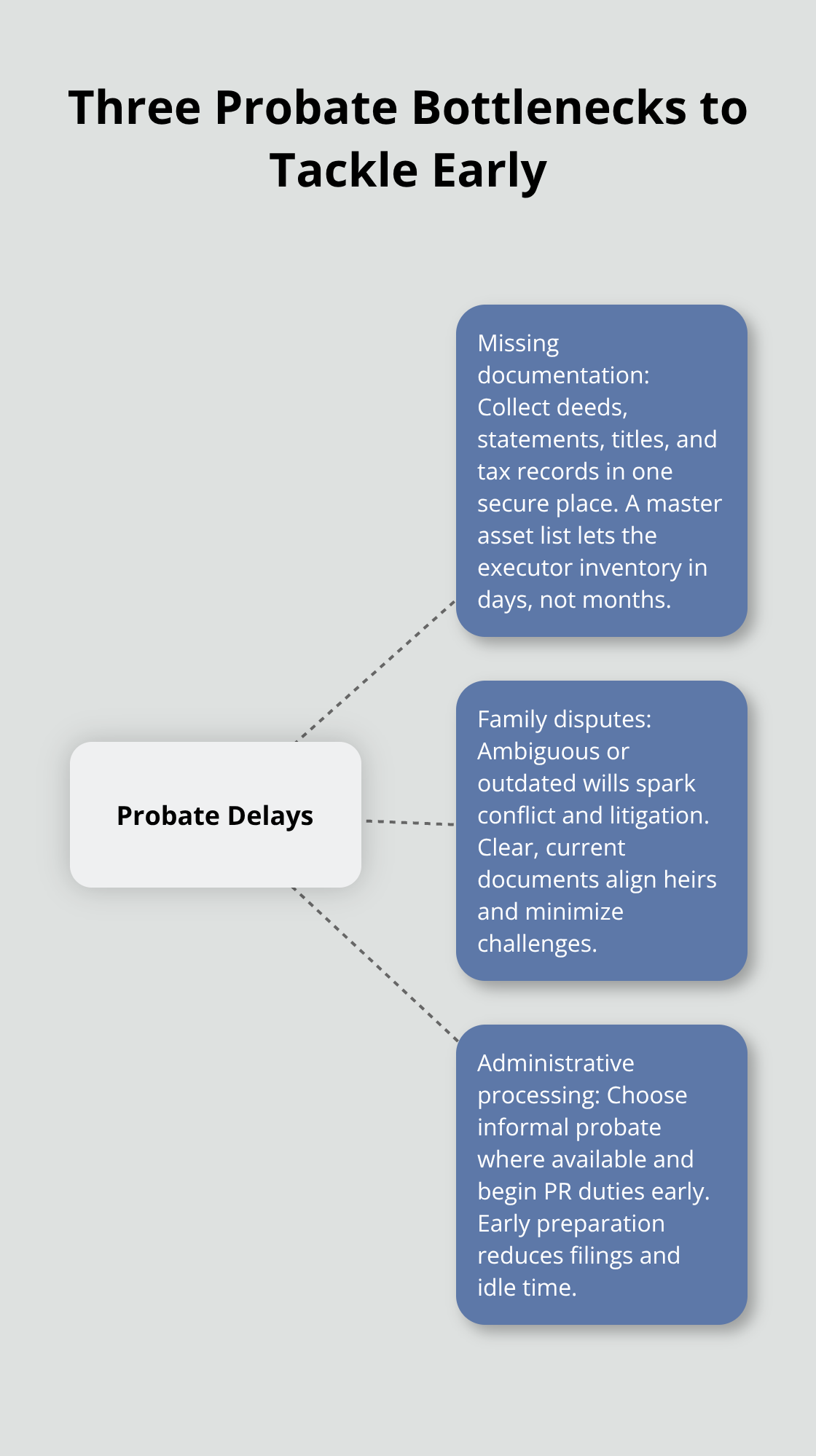
The personal representative’s lack of awareness about their duties or late action is often the actual cause of delays, not the court system itself.
What Happens Next
These three obstacles-missing documents, family disputes, and administrative delays-all respond to one solution: proactive planning that addresses them before probate begins. The right estate plan removes uncertainty and gives your personal representative a clear roadmap to follow.
What You Must Do Right Now to Stop Probate Before It Starts
Update Your Will to Match Your Current Life
The difference between a fast probate and a nightmare that stretches two years comes down to decisions you make today. A will written ten years ago when you were married to a different person, had no children, or owned completely different assets creates chaos during probate. Courts see outdated wills as red flags for challenges, and heirs often dispute unclear language that leaves room for interpretation. You should review your will every three to five years or immediately after major life changes like marriage, divorce, births, or significant property purchases. A clearly drafted will costs far less to update now than it costs to litigate disputes later.
Use Revocable Living Trusts to Bypass Probate Entirely
Revocable living trusts solve the probate problem that wills cannot fix. A revocable living trust keeps assets outside court supervision entirely, meaning your successor trustee can distribute property to beneficiaries immediately after your death without waiting for court approval or probate proceedings. You retain complete control during your lifetime and can change terms whenever you wish. To make this work, you must transfer your major assets-real estate, investment accounts, bank accounts-into the trust’s name. This step takes time upfront but eliminates months of probate delays later.
Apply Direct Beneficiary Designations to Financial Accounts
Naming beneficiaries directly on bank accounts and investment accounts through payable-on-death and transfer-on-death designations bypasses probate for those specific assets. In North Carolina, estates with personal property valued at twenty thousand dollars or less and free of liens may qualify for collection by affidavit under North Carolina General Statute section twenty-eight A-twenty-five-one, a streamlined process that avoids formal probate altogether. You should update beneficiary designations after life changes to prevent unintended consequences like accidentally leaving retirement accounts to an ex-spouse.
Organize and Store Your Documents Properly
The practical steps that stop most delays require you to execute a revocable living trust, apply POD and TOD designations on financial accounts, review beneficiary designations annually, and store all documents in a secure, accessible location for your trustee or executor. Proper organization means your personal representative can start work immediately without hunting for missing paperwork. A master list of assets, account numbers, and document locations (kept in one safe place) transforms the first weeks of probate administration from chaotic scrambling into focused action.
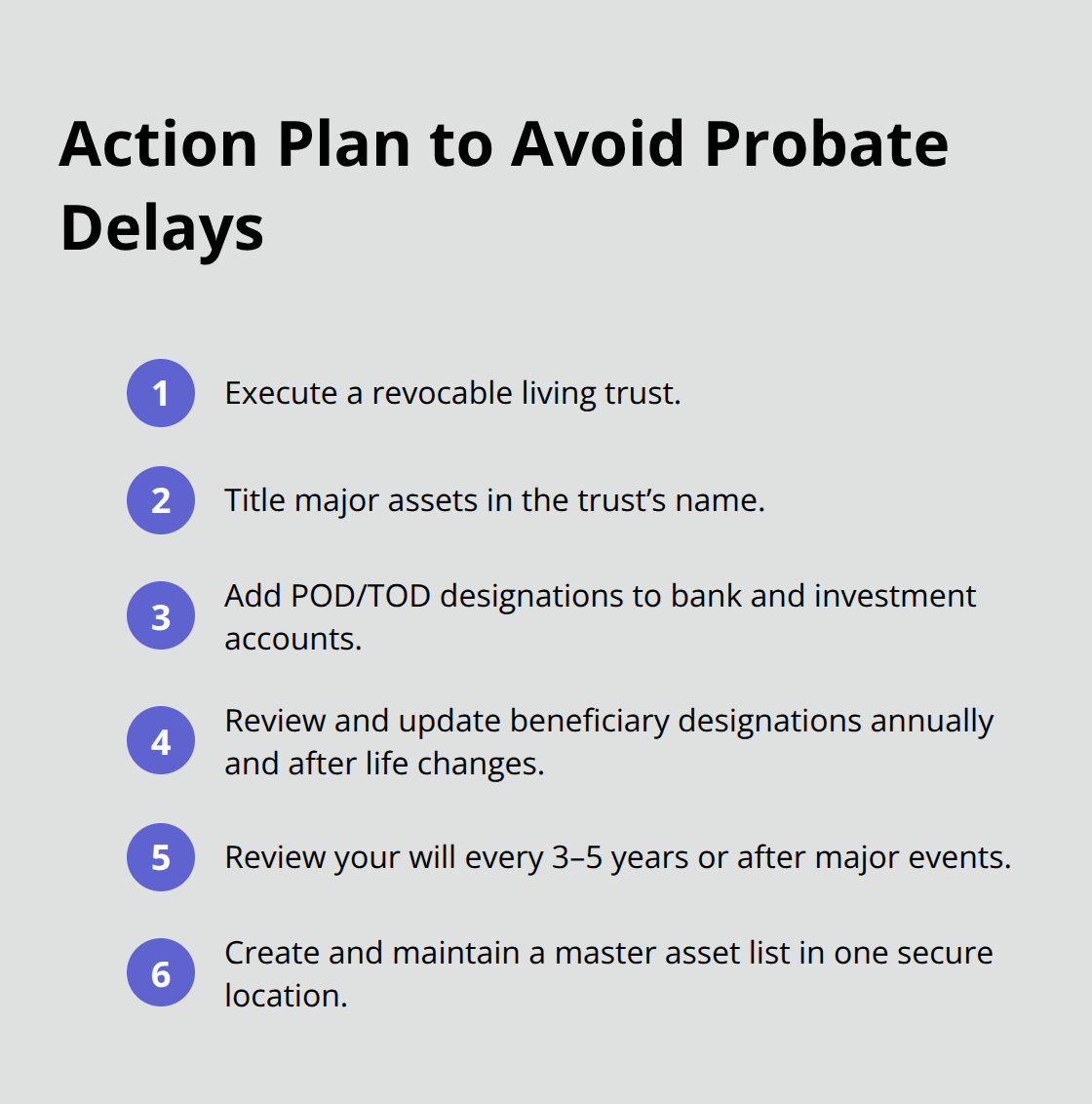
These foundational steps address the documentation problems that plague most estates. Yet even the best-organized documents fail without the right person managing them-which is why your choice of executor or trustee matters as much as the documents themselves.
Mistakes That Drain Your Estate and Delay Your Heirs
Blended Families Require Explicit Asset Naming
Blended families expose a critical gap in most estate plans. When you remarry and have children from a prior relationship, a generic will or trust creates immediate conflict. Your current spouse may expect to inherit everything, while your adult children from your first marriage believe they deserve their share. Without explicit language addressing this situation, probate courts often interpret ambiguous documents in ways that contradict your actual wishes. The result is litigation between your surviving spouse and your children that can stretch probate from months into years.
You must name specific beneficiaries for specific assets and make clear whether your spouse receives everything, a percentage, or only certain property. If you own real estate, investment accounts, or a business, the document should state exactly who inherits each asset and in what order if the primary beneficiary dies before you do. This level of detail costs more upfront but prevents thousands in legal fees fighting over your estate later.
Tax Basis and Asset Protection Decisions Cost Heirs Significantly
Tax implications and asset protection represent another area where families lose money unnecessarily during probate. Many people transfer assets into a revocable living trust but fail to consider how that decision affects the tax basis their heirs receive. When you die, your heirs receive a step-up in basis, meaning their inherited assets are valued at fair market value on your death date rather than your original purchase price. This can save them tens of thousands in capital gains taxes if they sell inherited property shortly after your death.
However, certain assets held in trusts or owned jointly may not receive this full benefit, costing heirs significant tax liability. Additionally, if you own a business, rental properties, or substantial investment accounts, creditors can pursue those assets during probate if your estate plan does not include proper asset protection structures. A personal residence in a trust offers some protection, but a business interest or investment portfolio may require additional planning through entities like limited liability companies or irrevocable trusts.
The Right Executor or Trustee Prevents Years of Delays
Choosing the wrong executor or trustee guarantees delays regardless of how well-organized your documents are. Your executor must inventory the estate, file tax returns, pay debts and creditors, and manage all distributions within strict legal timelines. If you appoint someone who is disorganized, unresponsive, or unfamiliar with financial management, these tasks stretch across years instead of months.
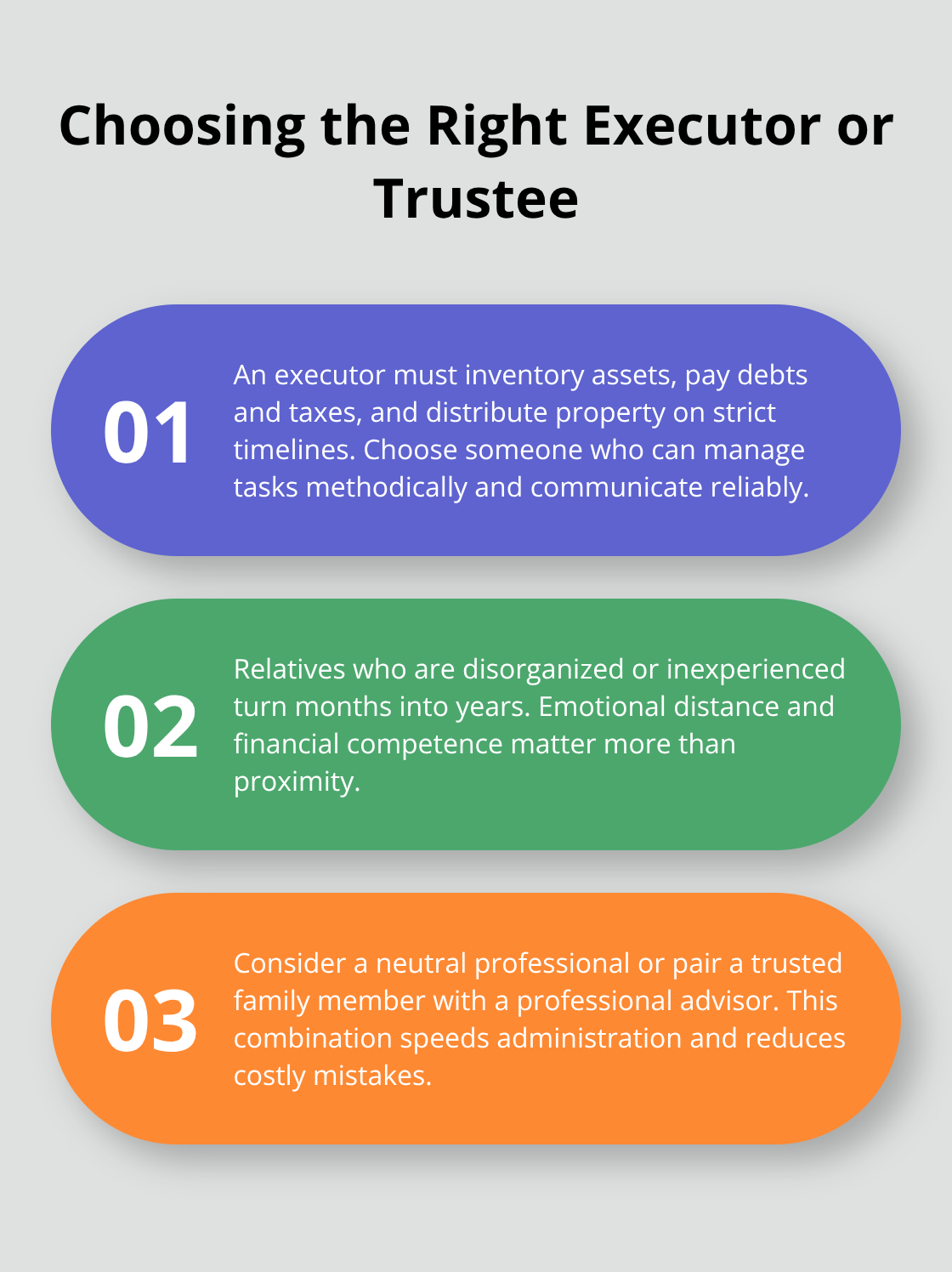
Family members often make poor executors because they lack the discipline to prioritize estate work over their own schedules or they lack the financial knowledge to handle complex accounts and tax obligations. A neutral professional executor or a trusted family member paired with a professional advisor moves probate forward faster and prevents costly mistakes.
Final Thoughts
Waiting to plan your estate costs your family far more than planning costs you today. Families who delay probate planning face months of administrative chaos, thousands in unnecessary legal fees, and years of family conflict that could have been prevented with a single conversation and updated documents. The personal representative managing your estate without clear guidance wastes time on tasks that should take days, and heirs waiting for distributions often face financial hardship while probate crawls through the court system.
A proactive probate attorney helps you avoid these outcomes by building a complete plan before problems arise. We at Law Offices of Roshni T. Desai work with families to create personalized estate plans that address your specific situation, whether you have a blended family, own a business, hold property in multiple states, or simply want to protect what you have built. Our approach covers wills, living trusts, powers of attorney, and probate administration tailored to your goals.
The right time to plan is today, not after a health crisis or when probate becomes unavoidable. We offer free consultations with flexible home or office visits so you can discuss your situation without pressure or cost. Visit us online to learn how we help families plan ahead and protect what matters most.