




Living Trust Administration Expert: Streamlining Family Wealth In SoCal
Most California families don’t realize that without a living trust, their assets face years of probate delays and public exposure. The costs can easily reach 3–7% of your estate’s value, and family members often get locked out of accessing funds when they need them most.
A living trust administration approach keeps your wealth private, avoids court involvement, and transfers assets in months instead of years. We at Law Offices of Roshni T. Desai help Southern California families build and manage trusts that actually work for their situation.
What Happens to Your Assets Without a Living Trust
Probate in California is a court-supervised process that forces your family to wait while the state validates your will, pays creditors, and distributes assets. The timeline alone is brutal: simple estates take 4–6 months, but estates with real estate or multiple beneficiaries typically drag on for 9–18 months. During this entire period, your family cannot access bank accounts, sell property, or touch investments without court permission.
The Real Cost of Probate
Costs pile up fast-attorney fees, court filing fees, and executor compensation typically consume 3–7% of your estate’s value, according to California probate standards. A $500,000 estate could easily lose $15,000 to $35,000 in probate costs alone. Worse, every detail becomes public record: creditors see your assets, distant relatives learn about your wealth, and anyone can walk into the courthouse and review your family’s financial information.
Frozen Assets Create Immediate Hardship
Your assets literally freeze during probate. Bank accounts remain locked. Real estate cannot be sold without a court order. Investment accounts sit untouched while beneficiaries struggle with immediate expenses-funeral costs, mortgage payments, living expenses. This creates real hardship for families who need liquidity right away.
Family Conflicts Escalate Quickly
Family members often argue about who gets what, especially when sentimental items are involved or distributions feel unequal. These conflicts escalate quickly when assets are inaccessible and emotions run high. Probate makes everything worse because the process is slow, expensive, and public, giving creditors and distant heirs reasons to file claims or contest the will. Relationships suffer, and thousands in unnecessary costs vanish before your family receives their inheritance.
A living trust administration approach offers a completely different path forward-one that keeps your wealth private, avoids court involvement, and transfers assets in months instead of years.
How Living Trusts Keep Your Wealth Private and Moving
Privacy Protects Your Family’s Financial Details
A living trust administration keeps your assets completely out of public view. When you use probate, your entire financial life becomes a courthouse record that anyone can access. Creditors, distant relatives, and people with dubious intentions learn exactly what you owned, where it was held, and who inherited it. With a living trust, none of this information enters public records. The trust remains private, and your family’s financial details stay confidential. This privacy advantage alone justifies the upfront cost of setting up the trust properly. Southern California families who value discretion find this difference transformative, especially when dealing with significant assets or family dynamics that benefit from confidentiality.
Speed Eliminates Financial Stress When Families Need Funds
Trust administration in California typically takes 9–18 months for estates with real estate or multiple beneficiaries. Simple estates close in 4–6 months through a trust. The difference matters because a successor trustee acts immediately after death without waiting for court approval. Bank accounts transfer within weeks. Real estate can be sold or refinanced without judicial orders.
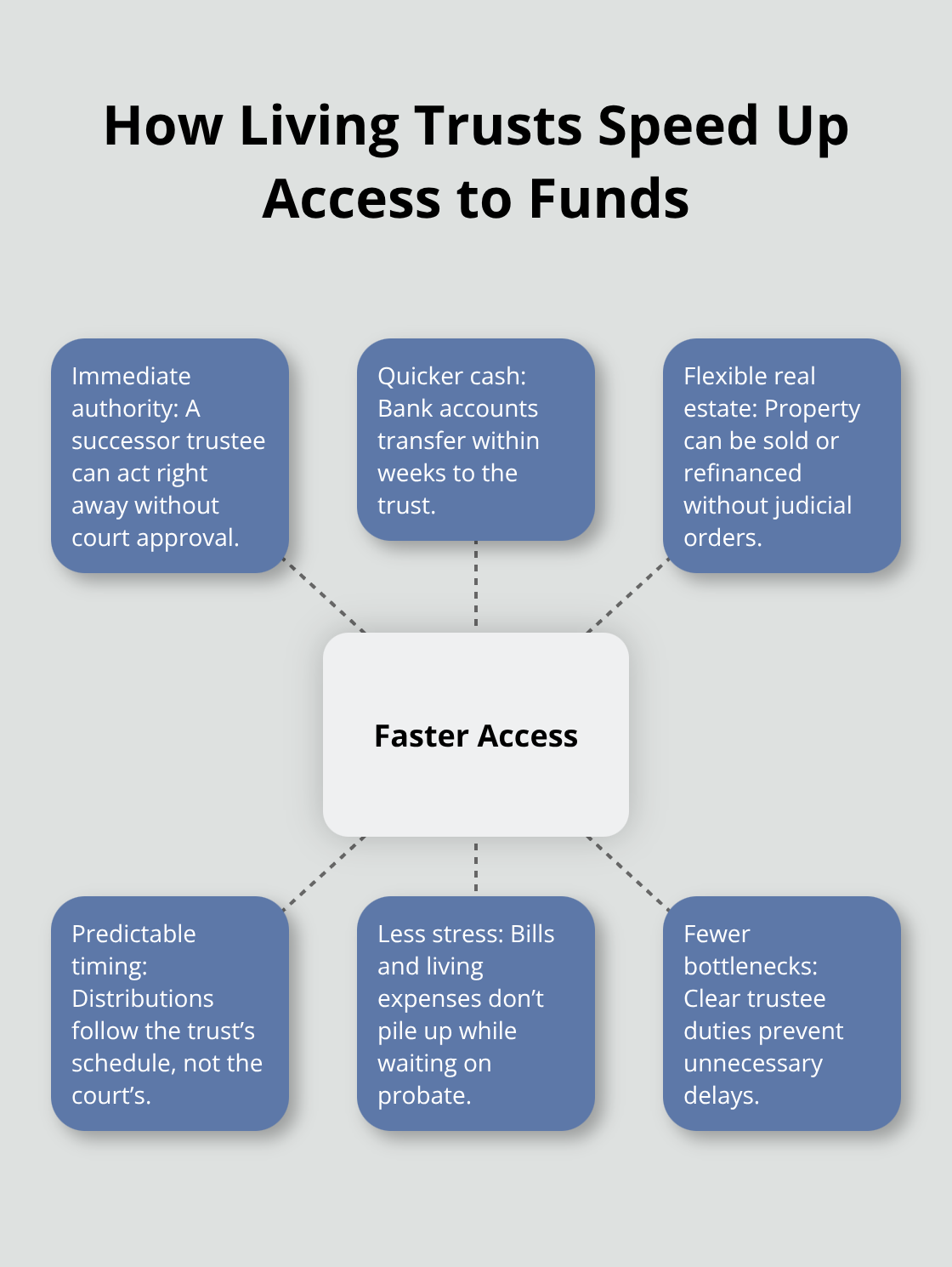
Beneficiaries receive distributions on the timeline the trust specifies, not the court’s schedule. This speed prevents the financial stress families face when mortgage payments, medical bills, or basic living expenses come due while probate crawls forward. A successor trustee who understands their responsibilities clearly can execute distributions without unnecessary delays.
Court Involvement Drains Your Estate Through Hidden Fees
Probate costs in California range from 3–7% of estate value according to standard probate calculations. A living trust avoids these court-supervised fees entirely.
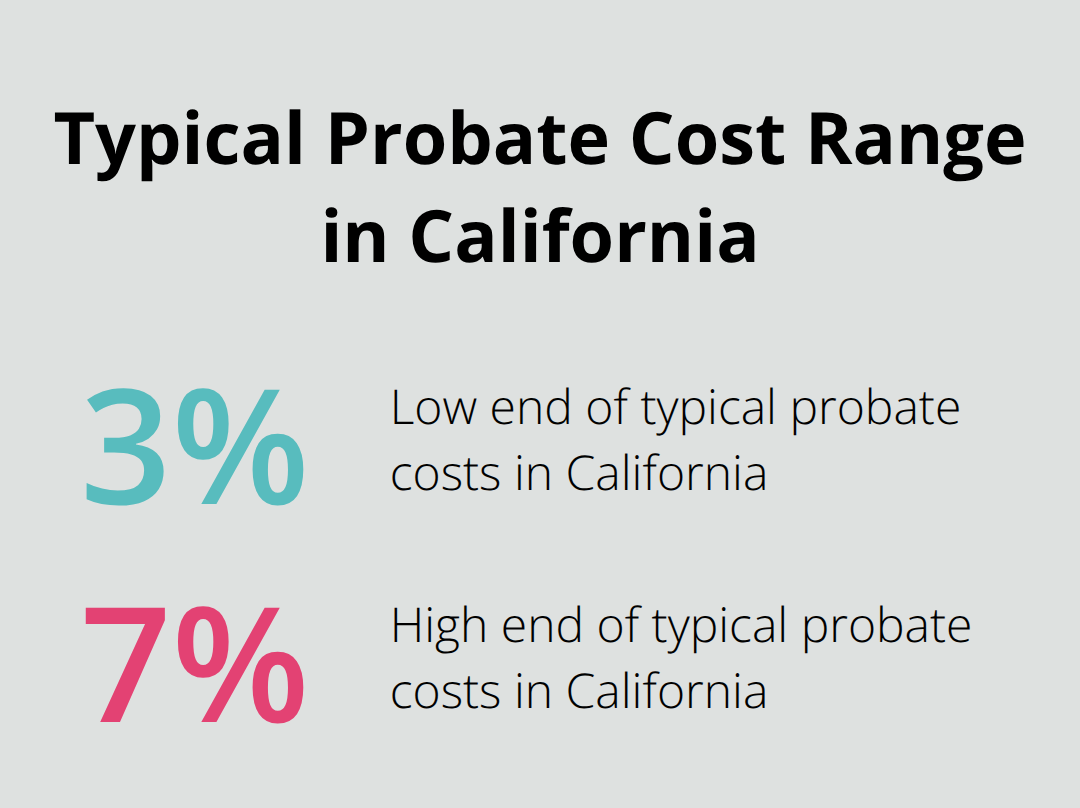
You skip attorney fees tied to court appearances, filing fees, executor bonds, and the endless paperwork that comes with judicial oversight. The trust administration process is straightforward: the successor trustee gathers assets, pays final debts and taxes, and distributes what remains to beneficiaries according to the trust’s terms. Funeral costs get paid first, then other obligations, then distributions flow to beneficiaries. This ordered approach prevents the costly disputes and delays that emerge when probate court involvement invites creditor claims or beneficiary challenges. For a $500,000 estate, this difference translates to keeping $15,000–$35,000 that would otherwise vanish in probate costs alone.
Successor Trustees Execute Your Plan Without Judicial Delays
A successor trustee steps into action immediately upon your death or incapacity. This person (or professional firm) manages your assets, settles your debts, and distributes your wealth according to your written instructions. Unlike probate, where a judge must approve each major decision, a successor trustee operates with the authority you granted in the trust document. They open a trust bank account, secure all assets, file necessary tax returns, and handle distributions without court permission. This autonomy accelerates the entire process and keeps costs low. When you name a trustworthy successor trustee and provide clear instructions, your family avoids months of waiting and thousands in unnecessary expenses.
The foundation of a smooth trust administration rests on how well you fund the trust during your lifetime and how clearly you communicate your wishes to your successor trustee. Understanding these practical steps transforms your trust from a document into a working tool that actually protects your family.
Building and Managing Your Living Trust the Right Way
Fund Your Trust or Watch It Fail
Proper trust funding separates families who actually protect their wealth from those who merely own a document. A trust sitting in a drawer accomplishes nothing if your assets remain in your personal name. You must retitle bank accounts, investment accounts, real estate, and other property directly into the trust during your lifetime. This process-called funding-is non-negotiable. California probate law sets a $184,500 threshold, meaning assets above this amount still require probate if they’re not in your trust. When you properly fund your trust, those assets bypass probate entirely and transfer directly to your successor trustee upon your death.
The actual work is straightforward but demands attention to detail. Open a separate bank account in the trust’s name to track expenses, income, and distributions with clear accounting. Retitle real estate by filing a new deed with your county recorder’s office. Contact your investment firms and insurance companies to change ownership from your personal name to the trust. Many families discover too late that half their assets weren’t funded, forcing those unfunded items through probate anyway. The fix requires sitting down with a checklist of everything you own and systematically retitling each item. Update this list whenever you acquire new property or significant assets.
Select a Successor Trustee Who Can Actually Execute Your Plan
Your choice of successor trustee directly affects how smoothly your family navigates trust administration after you’re gone. A successor trustee needs three core qualities: trustworthiness, strong organization, and the emotional intelligence to preserve your legacy without creating family conflict. You can name a family member, a trusted friend, or a professional trustee like a bank or trust company. Family members are often free but may lack the financial knowledge or objectivity needed to manage complex estates fairly. Professional trustees charge fees but bring impartiality and knowledge to sensitive situations.
Many families choose a co-trustee arrangement, pairing a family member with a professional to balance personal connection with unbiased oversight. Discuss the role with your chosen successor trustee beforehand and provide written instructions that spell out your expectations clearly. Always name one or more alternates in case your primary choice cannot serve. If you fail to name a successor trustee or all named successors decline to serve, a California court may appoint one for you-which introduces delays, court fees, and potential bond requirements that drain your estate.
Understand What Your Successor Trustee Actually Does
Your successor trustee’s responsibilities shift depending on whether they’re managing your affairs during your incapacity or administering your estate after death. During incapacity, they manage your finances and coordinate care decisions. After death, they become responsible for gathering all assets, securing them, filing final tax returns, paying debts and funeral expenses, and distributing remaining assets to beneficiaries according to your trust terms. This demands meticulous record-keeping, timely tax filings, and transparent communication with beneficiaries to prevent disputes. A successor trustee who understands their responsibilities clearly can execute distributions without unnecessary delays and keep your family informed throughout the process.
Final Thoughts
Southern California families consistently choose living trusts over wills because the difference is tangible and immediate. A will forces your family through probate court, where assets freeze for 9–18 months and costs consume 3–7% of your estate’s value. A living trust keeps your wealth private, transfers assets in months, and eliminates court involvement entirely.
Protecting your family’s wealth starts with three concrete steps. First, inventory everything you own-bank accounts, real estate, investments, insurance policies, and personal property. Second, decide who manages your affairs if you become incapacitated and who administers your estate after death. Third, fund your trust by retitling your assets into it during your lifetime, since assets that remain in your personal name will still require probate.

We at Law Offices of Roshni T. Desai help Southern California families implement living trusts that actually work. Schedule your free consultation with us today and take control of your family’s financial future.