



Probate Administration Guidance SoCal: A Clear Path Through Complexity
Probate administration in Southern California involves navigating court filings, managing assets, and communicating with beneficiaries-all while dealing with tight deadlines and complex rules.
Most people underestimate how much time and money mistakes cost during this process. We at Law Offices of Roshni T. Desai have seen families struggle with missed deadlines, improper document handling, and property transfer errors that could have been prevented.
This guide walks you through what probate actually requires and how to avoid the costly missteps that delay estates and drain resources.
What Probate Administration Actually Requires
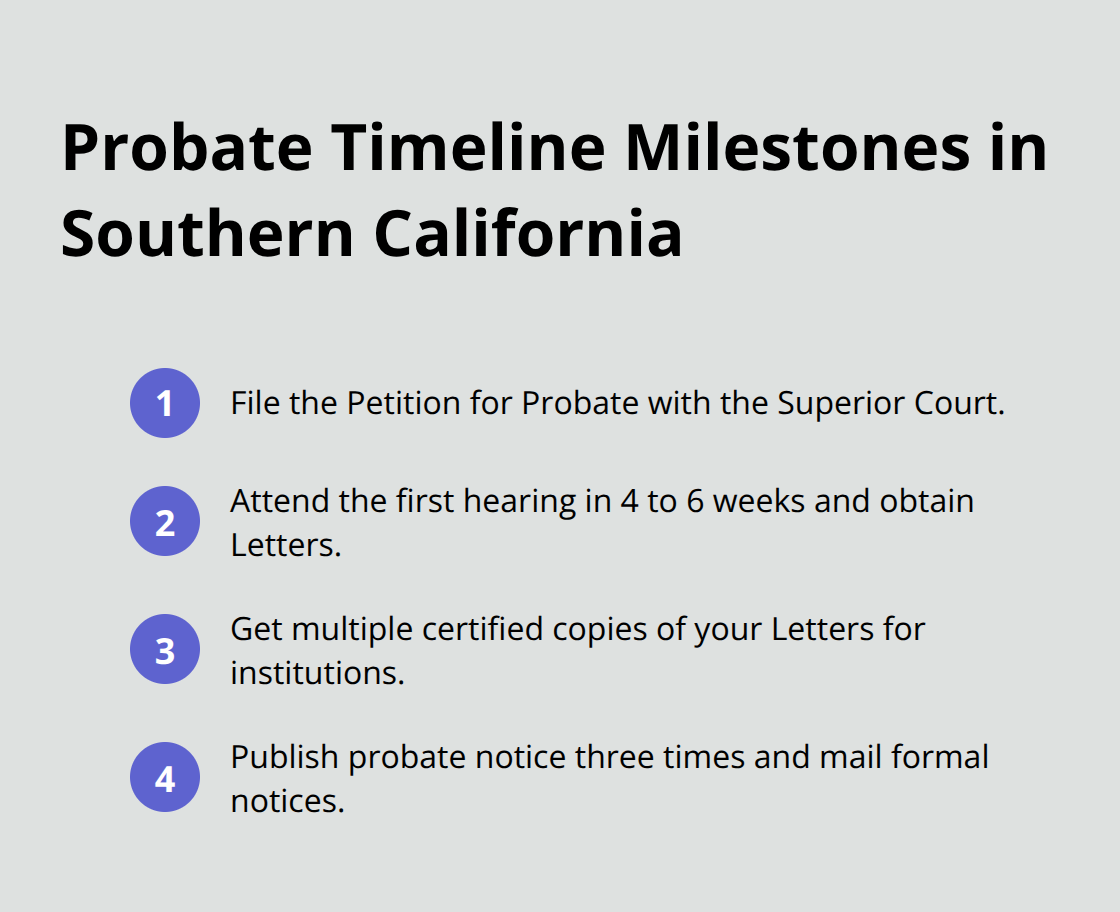
Probate administration in Southern California follows a structured court process that typically takes 18 to 24 months from start to finish, though some estates complete in as little as one year if there are no complications. The timeline begins when you file a Petition for Probate with the Superior Court in the county where the deceased person lived. California law requires that you file specific documents: the Petition for Appointment, the decedent’s will if one exists, and a certified death certificate. The court sets your first hearing within 4 to 6 weeks of filing, and the judge appoints you as the personal representative, issuing Letters Testamentary or Letters of Administration that give you legal authority to act on behalf of the estate. You’ll need several certified copies of these Letters because banks, insurance companies, and government agencies require them before releasing assets. During this initial phase, you must publish notice of the probate in a local newspaper at least three times and mail formal notice to everyone named in the will and to the decedent’s legal heirs.
This notification requirement protects creditors and beneficiaries, but it also means your probate becomes part of the public record.
What You Must Inventory and When
Once appointed, you have a critical responsibility to locate and protect all estate assets, then file an Inventory and Appraisal with the court. This document lists bank accounts, real estate, vehicles, securities, and personal property with their current values. For nonmonetary assets like real estate or valuable collections, the court may require you to hire a Probate Referee to provide a formal valuation. Simultaneously, you must notify creditors through a published Notice of Administration to Creditors and formal notice to known creditors. California law gives creditors four months to file claims against the estate, and this timeline is fixed-you cannot distribute assets to beneficiaries until this window closes. During those four months, you’ll handle outstanding debts, file the decedent’s final income tax return with a qualified CPA, and pay estate taxes if applicable. All of these expenses come from the estate itself, not from your personal funds, and you maintain detailed accounting records throughout.
How and When Assets Move to Beneficiaries
The second probate hearing, typically called the Judgment of Final Distribution, occurs 6 to 12 months after your first hearing. At this hearing, the judge reviews your accounting, approves the final distribution plan, and authorizes you to transfer assets to beneficiaries according to the will or California intestacy law. If the estate includes real estate that needs to be sold, you’ll file a Report of Sale with the court for approval before completing the transaction. The court must approve all property sales, which adds another layer of oversight but protects beneficiaries from unfair dealings. After all assets are distributed and you’ve received signed receipts from beneficiaries, the court issues you a discharge that releases you from further liability. However, real estate transfers and title changes require careful attention to detail because errors in deeds or property transfers create problems for beneficiaries years later.
Why Property Transfers Demand Precision
Real estate transactions within probate demand accuracy that many personal representatives overlook. A deed prepared incorrectly, a title transfer that misses a required signature, or a property sale that skips court approval can trigger disputes among beneficiaries or cloud the title for years. The Law Offices of Roshni T. Desai handles these property transactions with particular care because Ms. Desai holds both attorney and real estate licenses, which streamlines the entire transfer process and reduces the delays that typically plague estate property sales. This dual perspective means property issues are caught early and resolved efficiently.
Understanding these core steps prepares you for what lies ahead, but knowing the process is only half the battle. The other half involves recognizing the mistakes that derail estates and drain resources-mistakes that happen far more often than most people realize.
Common Probate Mistakes That Cost Time and Money
Missed Filing Deadlines Create Cascading Problems
Missed filing deadlines rank as the single most destructive mistake in Southern California probate cases. The court sets specific dates for every submission-your Inventory and Appraisal must be filed, creditor notices must be published on schedule, and your final accounting requires submission before the second hearing. When you miss even one deadline, the judge continues the hearing, which delays distributions by months and signals to beneficiaries that the process is stalling. One missed deadline triggers a cascade of problems: beneficiaries lose confidence, creditors file claims during extended timelines, and the personal representative faces questions about competence.
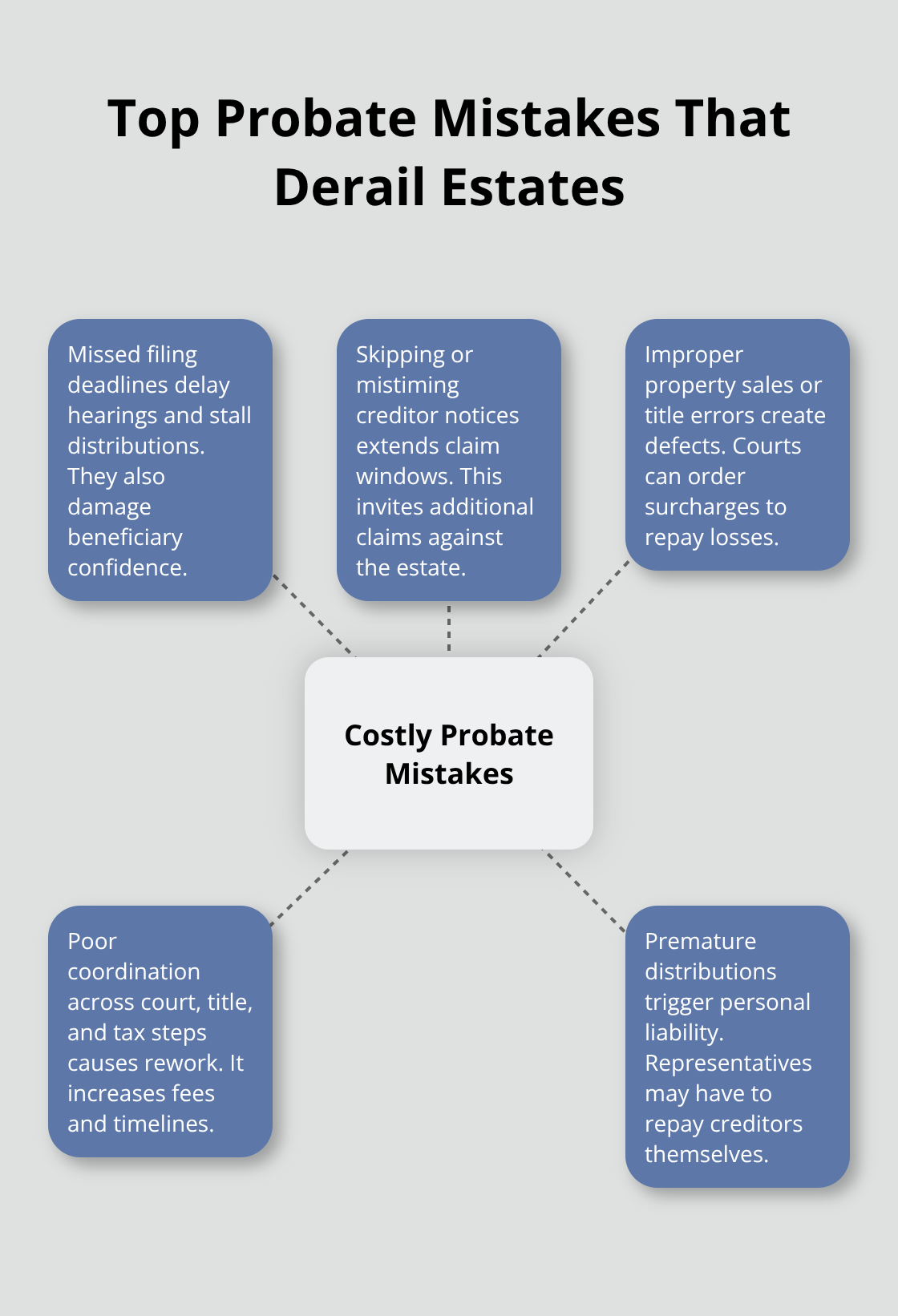
California probate rules offer no grace periods for late filings, and judges won’t overlook procedural violations just because you didn’t know the rules. The cost compounds quickly-extended timelines mean higher attorney fees if you hire one later, and beneficiaries grow frustrated enough to hire their own counsel to challenge your administration.
Underestimating Debts and Taxes Leaves You Personally Liable
Underestimating debts and taxes represents the second major pitfall. Many personal representatives assume the decedent had no outstanding debts, only to discover medical bills, credit card balances, property taxes, and income taxes owed to the state and federal government. California law requires you to publish creditor notices and wait a full four months before distributing assets, yet some personal representatives skip this step or distribute assets before the window closes. If you distribute assets and then creditors file claims, you become personally liable to pay those claims from your own pocket-the law holds the personal representative responsible for improper distributions. Property taxes on real estate in the estate continue accruing until the property transfers, and the decedent’s final income tax return often reveals additional liability because the final year includes income through the date of death. The IRS and California Franchise Tax Board don’t negotiate on deadlines, and penalties for late filing or payment come directly from estate funds that should go to beneficiaries.
Property Sales and Title Transfers Demand Absolute Precision
Property sales and title transfers within probate demand absolute precision, yet this area generates the most expensive mistakes. A deed prepared with missing information, an incorrect legal description, or a signature that doesn’t match the court’s authorization creates title defects that surface years later when beneficiaries try to sell or refinance. Some personal representatives handle property sales without court approval, violating California probate law and exposing themselves to surcharge-meaning the court orders them to compensate the estate from their own funds for losses caused by the improper sale. Real estate transactions also require careful coordination between probate court approval, title company requirements, and tax implications. If you sell property without obtaining the proper court approval through a Report of Sale, the title company may refuse to insure the transfer, leaving the new owner without title protection.
These mistakes happen because probate administration demands knowledge across multiple areas-court procedure, tax law, and real estate transactions. The Law Offices of Roshni T. Desai handles these issues with particular care because Ms. Desai holds both attorney and real estate licenses, which streamlines property transactions and reduces the delays that typically plague estate property sales. This dual perspective means property issues are caught early and resolved efficiently, but the broader point remains: personal representatives without real estate knowledge make costly errors that take years and thousands of dollars to correct. Understanding where probate fails prepares you to recognize which mistakes threaten your specific situation-and which ones demand professional guidance to avoid.
How We at Law Offices of Roshni T. Desai Streamline Probate Administration
Building Administration Plans Around Your Estate
We at Law Offices of Roshni T. Desai construct administration plans around your specific estate rather than forcing every case through the same template. The first step involves understanding what assets you hold, who your beneficiaries are, and what complications exist-medical debt, contested wills, multiple properties, or family disputes. This assessment determines whether your estate qualifies for simplified procedures, whether property sales will trigger tax complications, or whether creditor claims pose real risk. We then create a timeline that accounts for court backlogs in your specific county, because Southern California probate courts don’t all operate on the same schedule. Some counties move cases through faster than others, and we factor that reality into our planning. We also identify which documents the court will scrutinize most heavily in your situation, which means we prepare those filings with extra precision from the start rather than waiting for a judge to reject them and force you to refile. This upfront work prevents the cascading delays that plague personal representatives who didn’t plan ahead.
Managing Court Filings and Beneficiary Communication
We handle the actual court filings and manage all deadlines with systematic tracking so you don’t have to navigate probate administration alone. We communicate directly with the court on your behalf, which reduces the back-and-forth that slows many administrations. We also prepare you for what beneficiaries will ask and how to answer them honestly without overpromising timelines-managing expectations prevents the frustration that leads to beneficiary lawsuits against the estate. This direct communication keeps everyone informed and reduces the anxiety that typically surrounds probate administration.
Handling Property Transactions with Real Estate Knowledge
Property transactions within probate demand the kind of dual perspective that separates efficient administrations from ones that drag on for years. Ms. Desai holds both attorney and real estate licenses, which means real estate issues aren’t handed off to another professional-they’re handled in-house with full coordination between probate law and real estate practice. If your estate includes property that needs to sell, we prepare the court petition for sale approval and coordinate with title companies to identify title issues before they become problems. We manage the actual transaction to ensure the deed transfers correctly and the title company will insure the transfer. We’ve seen too many estates where a property sells but the deed contains errors that cloud the title for years, forcing beneficiaries to pay for corrective filings or title insurance claims.
We also handle the tax implications of property sales, because selling real estate in probate triggers stepped-up basis calculations and potential capital gains liability that personal representatives often don’t anticipate. The four-month creditor claims window also affects property sales strategy-we don’t recommend selling property before that window closes if creditors might have claims, because selling assets too quickly can leave the estate without liquid funds to pay legitimate debts. We coordinate all these moving parts so property transfers happen correctly the first time, beneficiaries receive clear title without defects, and the estate avoids the thousand-dollar corrections that follow sloppy transfers.
Final Thoughts
Probate administration in Southern California demands precision across court filings, asset management, and property transactions, but these challenges become manageable when you understand what’s required and plan accordingly. The mistakes we’ve outlined-missed deadlines, underestimated debts, and botched property transfers-occur because personal representatives attempt probate alone without grasping the full scope of requirements. The right guidance transforms this complexity into a structured process that protects beneficiaries and prevents the costly errors that haunt estates for years.
We at Law Offices of Roshni T. Desai provide probate administration guidance for SoCal families across Southern California, with Ms. Desai’s dual licensure as attorney and real estate professional ensuring property transactions move forward without title defects. We offer free consultations with flexible scheduling, so you can discuss your specific situation without pressure or upfront costs. Whether your estate involves straightforward assets or complications like multiple properties and family disputes, we build an administration plan around your actual circumstances.
Contact us today to schedule your free consultation and move your estate forward efficiently and correctly.