




Probate Realty Closing Assistance: Smoother Transactions
Selling a property through probate is fundamentally different from a standard real estate transaction. Court rules, executor responsibilities, and multiple stakeholders create layers of complexity that most real estate agents simply aren’t equipped to handle.
At Law Offices of Roshni T. Desai, we provide probate realty closing assistance that addresses these specific challenges. Our approach combines legal knowledge with real estate experience to move transactions forward efficiently.
Why Probate Property Sales Demand More Than Standard Real Estate Knowledge
Court Supervision Changes Everything
Probate sales operate under court supervision that fundamentally changes how transactions work. When a property enters probate, the executor cannot simply list it and accept the first offer. Instead, court rules require approval of the sale price, terms, and buyer before any closing can happen. In many states, including California, courts mandate a probate hearing where the judge reviews the transaction and confirms it serves the estate’s interests. This adds 4–8 weeks to typical timelines and requires precise documentation at every step. A missed filing deadline or incomplete paperwork causes the court to delay approval, pushing closing dates back months.
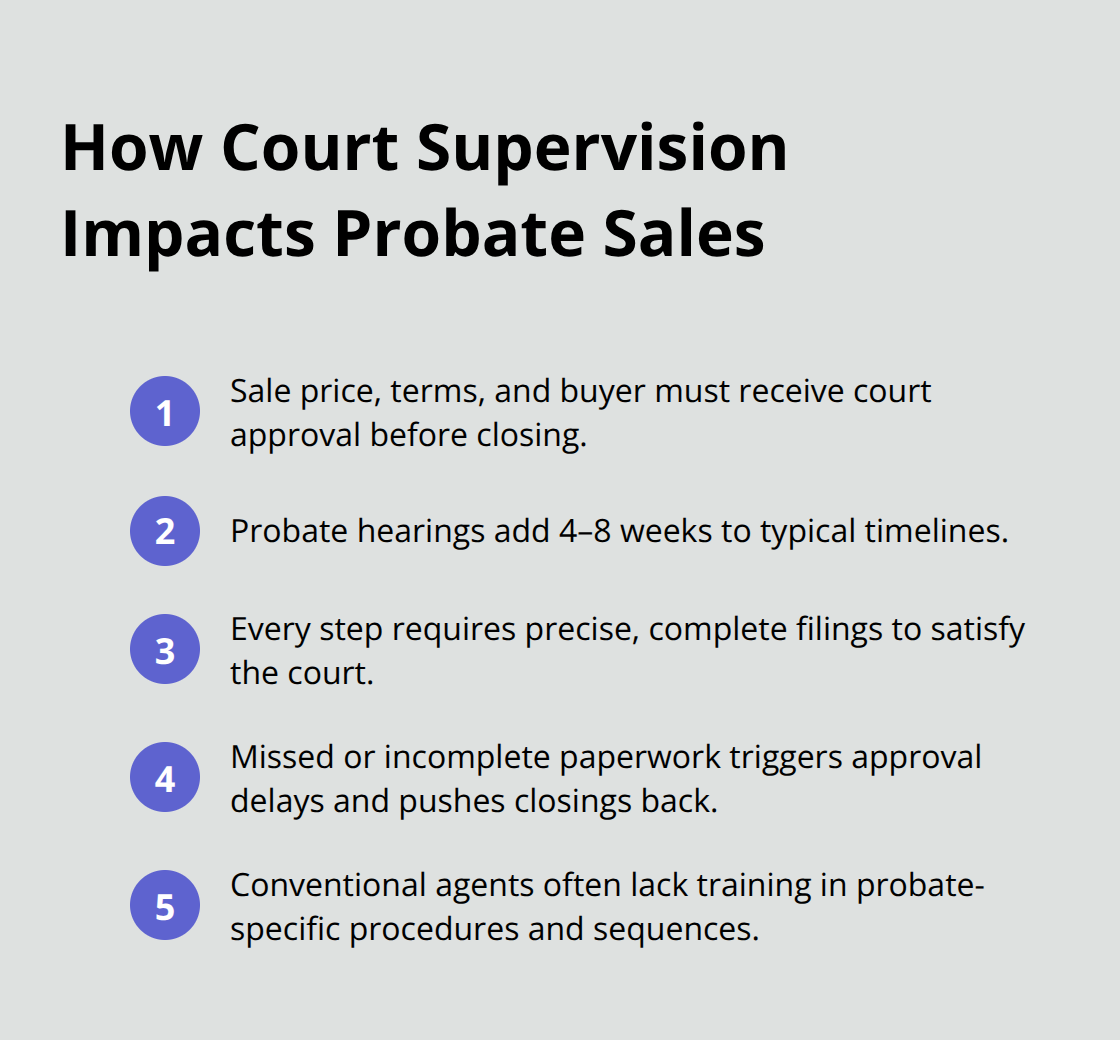
Standard real estate agents trained only in conventional sales rarely understand these court procedures, probate-specific forms, or the approval sequence needed to satisfy judicial requirements.
Executors Face Personal Liability
Executors and administrators bear personal liability for how they handle the sale, which creates pressure that standard real estate transactions never impose. If an executor accepts an offer without court approval, the sale can be invalidated. If they fail to disclose encumbrances or title issues, beneficiaries can sue them personally for losses. This legal exposure means executors need guidance that combines real estate knowledge with legal understanding of fiduciary duty and probate statutes.
Multiple Stakeholders Create Coordination Challenges
The coordination challenge multiplies when multiple heirs have opinions on the sale price, timeline, or buyer terms. Disagreements between beneficiaries can stall a transaction for months while disputes are resolved. Additionally, probate sales often involve properties in poor condition, outstanding liens, or unclear ownership records-issues that require legal investigation to clear before closing. Without professional support that bridges real estate and legal knowledge, executors navigate these obstacles alone, making decisions that expose the estate to liability or result in significantly lower sale prices.
Bridging Legal and Real Estate Knowledge
The complexity of probate sales demands professionals who understand both the legal framework and the real estate process. Executors need someone who can coordinate court filings, communicate with multiple heirs, investigate title problems, and move the transaction forward without exposing the estate to unnecessary risk. This dual perspective-combining legal credentials with real estate licensing-addresses the specific demands that probate transactions impose. When you face these obstacles, the right support transforms a stalled, risky process into one that protects the estate and moves toward closing efficiently.
How Dual-Licensed Professionals Eliminate Probate Closing Delays
Probate closings stall when the legal side and the real estate side operate separately. An attorney handles court filings while a real estate agent markets the property, and the two rarely communicate effectively about timing or requirements. This disconnect creates missed deadlines, incomplete documentation, and frustrated heirs watching months slip away. When one professional holds both attorney and real estate licenses, the coordination problem disappears entirely. Court approval timelines align with buyer negotiations. Title investigations happen before marketing starts. Heir concerns receive attention through legal and financial perspectives simultaneously.
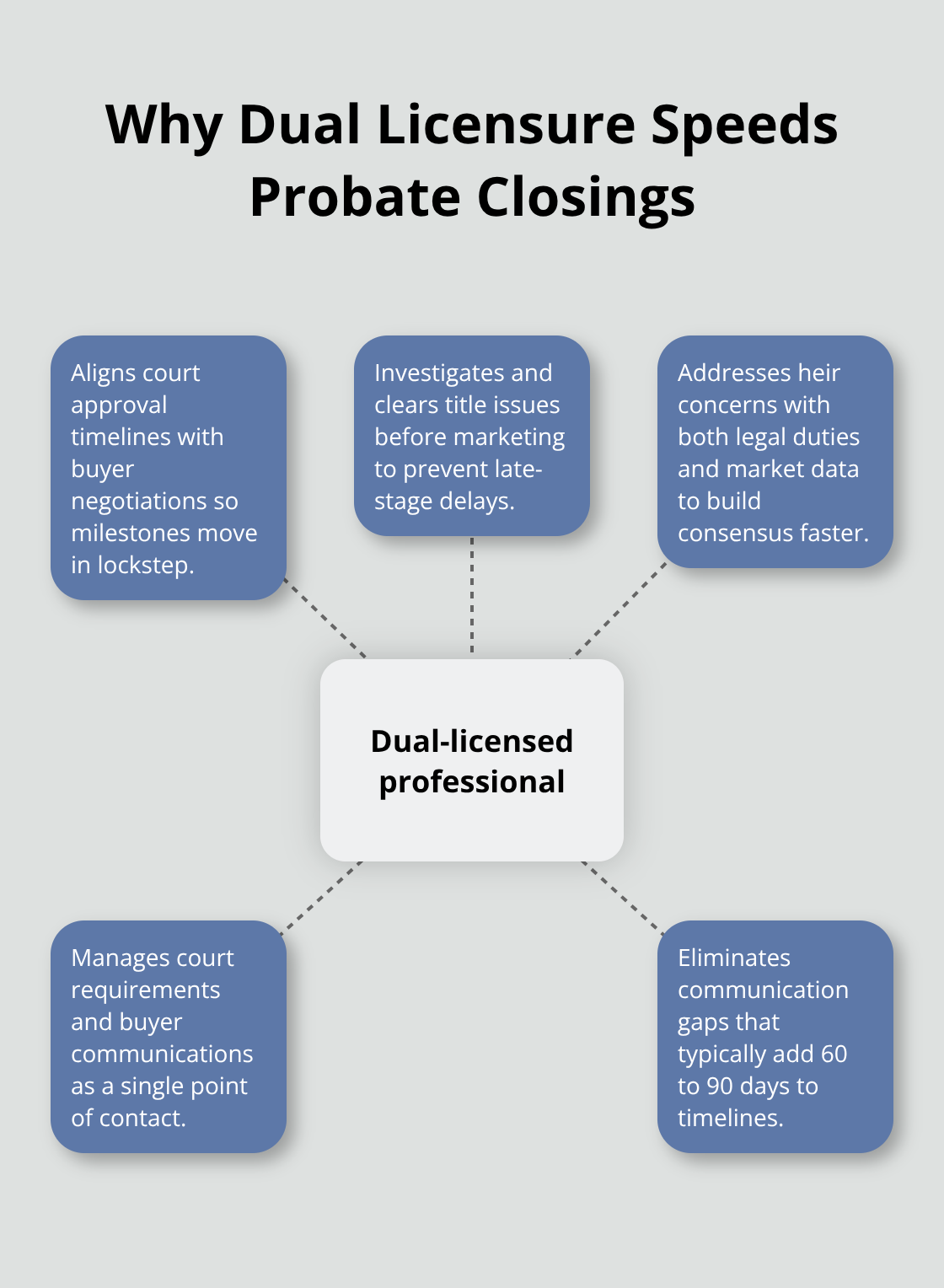
Ms. Desai’s dual licensure as both an attorney and real estate professional at Law Offices of Roshni T. Desai demonstrates how this integration works in practice-one person manages probate court requirements while simultaneously handling property positioning and buyer communication. This eliminates the communication gaps that typically cost estates 60 to 90 days in extended timelines.
Synchronizing Court Deadlines with Market Activity
Court-ordered sales require specific documentation submitted on exact dates. A missed filing deadline forces a continuance request, which pushes closing 4 to 8 weeks forward. Simultaneously, the property must reach the market, attract showings, and collect offers within a competitive timeframe. A dual-licensed professional orchestrates these parallel processes instead of hoping two separate professionals coordinate. The attorney prepares probate forms while the real estate professional identifies qualified buyers and structures offers that satisfy both court standards and market conditions. When the executor receives an offer, the attorney immediately assesses whether it meets statutory requirements while the real estate professional evaluates market competitiveness. This parallel workflow compresses what normally takes months into weeks. Real estate timelines typically run 30 to 45 days from listing to offer acceptance, but probate courts need 20 to 30 days for hearing scheduling and approval. A coordinated approach frontloads legal preparation so court deadlines never delay market activity.
Managing Multiple Stakeholders Without Extended Disputes
Probate properties involve executors, beneficiaries, creditors, and sometimes contesting heirs, each with competing interests. Disagreements over sale price, terms, or buyer selection can paralyze transactions for months while disputes resolve through mediation or court intervention. A professional trained in both law and real estate mediates these conflicts more effectively because they speak both languages. When heirs disagree on pricing, the professional presents objective market data while explaining fiduciary duties and legal exposure. When creditors raise concerns about proceeds, the professional coordinates payment sequencing and explains legal priorities. When a buyer requests repairs, the professional translates probate sale requirements (properties sell as-is) into clear terms that prevent renegotiations. This dual perspective accelerates consensus because stakeholders receive explanations rooted in both legal obligation and market reality rather than one-sided advocacy from separate professionals.
Clearing Title Issues Before Marketing Begins
Title problems frequently derail probate closings because they surface late in the transaction. A lien, ownership dispute, or recording error discovered after offers arrive creates renegotiations and delays. A dual-licensed professional investigates title before the property reaches the market, identifying and resolving encumbrances upfront. This proactive approach prevents buyers from withdrawing offers due to title concerns and keeps the transaction on schedule. When title issues exist, the professional coordinates with creditors, previous owners, or the court to clear them before marketing starts. Buyers then make offers on a clean title, and the closing proceeds without the complications that typically add weeks to probate transactions.
What Delays Probate Closings and How to Prevent Them
Court Approval Deadlines Create Cascading Delays
Court approval delays happen because judges require specific documentation submitted on exact dates, and a missed filing deadline forces a continuance that pushes closing 4 to 8 weeks forward. The court needs 20 to 30 days to schedule hearings after the executor submits an offer for approval, which means timing the property listing and offer collection around court calendars is non-negotiable. Many executors don’t realize that submitting incomplete probate forms or missing required certifications triggers automatic delays-the court won’t review the sale until every box is checked. This documentation burden falls entirely on the executor, who often lacks experience with probate court procedures and statutory requirements.
Title Problems Discovered Too Late
Title issues compound delays because encumbrances, liens, or ownership disputes must be cleared before the court will approve the sale. A property with an unpaid property tax lien, for example, cannot close until the executor arranges payment or negotiates a lien release with the taxing authority. This investigation should happen before marketing starts, not after offers arrive, because discovering title problems late forces renegotiations with buyers and pushes closing dates back by weeks. When title defects surface during buyer negotiations, the transaction stalls while the executor coordinates with creditors and the court to resolve encumbrances.
Stakeholder Disagreements Paralyze Transactions
Managing multiple stakeholders-executors, beneficiaries, creditors, and sometimes contesting heirs-creates friction that stalls transactions when disagreements arise over sale price or terms. Heirs frequently disagree on whether to accept an offer, especially when they have different financial needs or views on the property’s value. Creditors may object to sale terms if they worry about recovering what the estate owes them. These conflicts require someone who understands both the legal obligations of probate sales and the financial realities that drive stakeholder concerns, because explaining fiduciary duty alone doesn’t resolve disputes when heirs feel their interests are being overlooked.
Coordinating Legal and Market Timelines
Probate sales require coordination between court deadlines and market activity, yet most transactions fail to synchronize these parallel processes. Court-ordered sales demand specific documentation on exact dates (20 to 30 days for hearing scheduling), while real estate timelines typically run 30 to 45 days from listing to offer acceptance. When these timelines operate independently, one side always waits for the other. A professional who understands both probate law and real estate can frontload legal preparation so court deadlines never delay market activity. This approach compresses what normally takes months into weeks by orchestrating court filings and buyer negotiations simultaneously rather than sequentially.
Preventing Delays Through Proactive Preparation
Title investigation before marketing begins prevents the late-stage complications that derail closings. When a professional clears encumbrances upfront, buyers make offers on clean title, and the transaction proceeds without the renegotiations that typically add weeks. Establishing consensus with heirs before accepting offers eliminates the disputes that paralyze transactions for months. Preparing complete probate documentation before court submission prevents the automatic delays that result from missing certifications or incomplete forms.
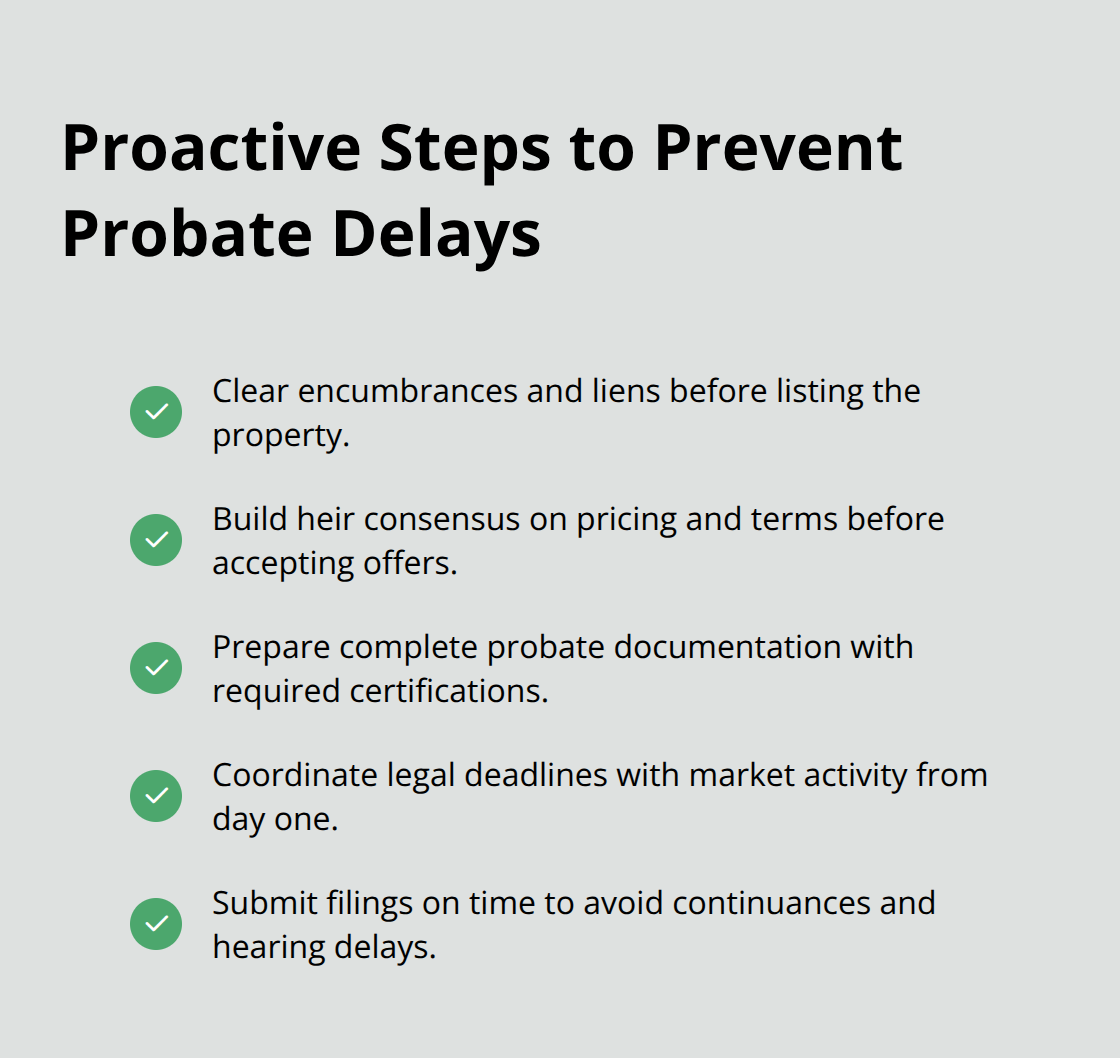
These preventive steps require someone who coordinates legal requirements with real estate strategy, ensuring that court approval timelines align with buyer negotiations rather than conflict with them.
Final Thoughts
Probate property sales demand knowledge that standard real estate transactions never require. Court procedures, fiduciary responsibilities, and multiple stakeholders create obstacles that generic real estate training cannot address. An executor managing a probate sale alone faces personal liability, missed court deadlines, and disputes between heirs that can delay closing by months.
Probate realty closing assistance that combines legal understanding with real estate experience protects estates and beneficiaries in ways that separate professionals cannot match. When an attorney and real estate professional operate independently, communication gaps emerge, deadlines slip, and costs mount. When one person holds both credentials, court filings align with buyer negotiations, title problems get resolved before marketing starts, and stakeholder disagreements receive attention from someone who understands both legal obligations and market realities.
The stakes are too high to rely on professionals who lack probate knowledge. Executors need guidance that prevents personal liability, protects the estate’s value, and moves the transaction toward closing without unnecessary delays or expenses. Contact Law Offices of Roshni T. Desai to discuss how professional guidance can streamline your closing and protect your interests.