



Probate Real Estate Coordination: Aligning Property Deals With Probate Timelines
Selling property during probate requires careful timing and coordination. Court approvals, state regulations, and multiple stakeholders can stretch timelines significantly, and missteps often lead to costly delays or underpriced sales.
At Law Offices of Roshni T. Desai, we help families navigate probate real estate coordination to align property deals with court requirements. This guide covers the key strategies that prevent common pitfalls and keep sales on track.
How Probate Timelines Actually Work
Court Approval Adds Months to Your Sale
Court approval adds 4 to 8 weeks to most probate sales, and this delay happens regardless of how quickly you find a buyer. In California and many other states, probate law requires the court to hold a hearing to confirm the sale price, terms, and buyer before closing can occur. This means your timeline doesn’t start when you list the property-it starts when the executor files the sale petition with the court. From that filing date, you’re looking at roughly 20 to 30 days just to schedule the hearing, and another 2 to 4 weeks for the court to issue its confirmation order.
If the sale involves any complications (such as a property in poor condition or multiple heirs with conflicting interests), the court may postpone the hearing, which can add another 30 to 60 days. The National Association of Realtors emphasizes that executors and administrators bear personal liability for how they handle the sale, meaning they can face lawsuits from beneficiaries if the sale doesn’t serve the estate’s interests or if proper court approval isn’t obtained.
Property Condition Compresses or Expands Your Timeline
Property condition directly compresses or expands your timeline more than almost any other factor. A home needing significant repairs often sits longer on the market because fewer buyers are willing to take on probate sales with added renovation costs. Probate properties typically sell as-is, so buyers cannot rely on seller-paid repairs, which means you must price the property accurately from day one to attract serious offers.
If you underprice a distressed probate home, you lose equity the estate cannot recover. Conversely, overpricing delays the sale indefinitely. State-specific probate rules also affect your flexibility-some states allow the executor to sell below appraised value without court approval if the price meets a certain threshold, while others require court approval regardless of price. Idaho, for example, has its own probate timeline variations that differ from California or other states.
The Sweet Spot for Listing Your Property
The sweet spot for listing a probate property is 60 to 90 days after the executor is appointed, because the estate’s attorney has completed initial filings and you can coordinate court deadlines with real estate marketing simultaneously. If you wait longer, you risk extending the overall timeline from 6 to 12 months into a 12 to 18 month process.
Start title investigation and property assessment immediately after appointment, before you list, so you can clear encumbrances and resolve ownership questions upfront rather than discovering them during negotiations. This proactive approach prevents title defects from derailing negotiations later and allows buyers to submit offers on a clean title, keeping the closing on schedule.
With your timeline and property condition mapped out, the next challenge involves coordinating the various parties who must approve and oversee the sale.
Who Approves the Sale and What Do They Need From You
The Executor’s Authority Must Be Documented First
The executor’s authority to sell comes directly from the court, and that authority must be documented before any offer can move forward. The court issues Letters Testamentary or Letters of Administration, which prove the executor has legal power to act on behalf of the estate. Without these letters in hand, no title company will insure the sale, no lender will fund the purchase, and no closing can occur.
The executor must present these letters to the real estate agent, the buyer’s attorney, and the title company before negotiations begin. If the letters are expired or limited in scope, the court must issue new ones, which adds another 15 to 20 days to your timeline. Many executors don’t realize that these letters have expiration dates or that they must be renewed if the probate process stretches beyond the original appointment period. Start the renewal process at least 30 days before expiration to avoid halting the sale mid-transaction.
Court Documentation and Title Clearance
Beyond the executor’s authority, the court requires approval of the sale price, terms, and buyer before any closing can happen. This includes a current appraisal, disclosure of any liens or encumbrances, proof that property taxes are current, and confirmation that no creditor claims are pending against the property. Title companies conduct a preliminary title search and report any defects, such as unpaid liens, easements, or ownership disputes that must be cleared before closing.
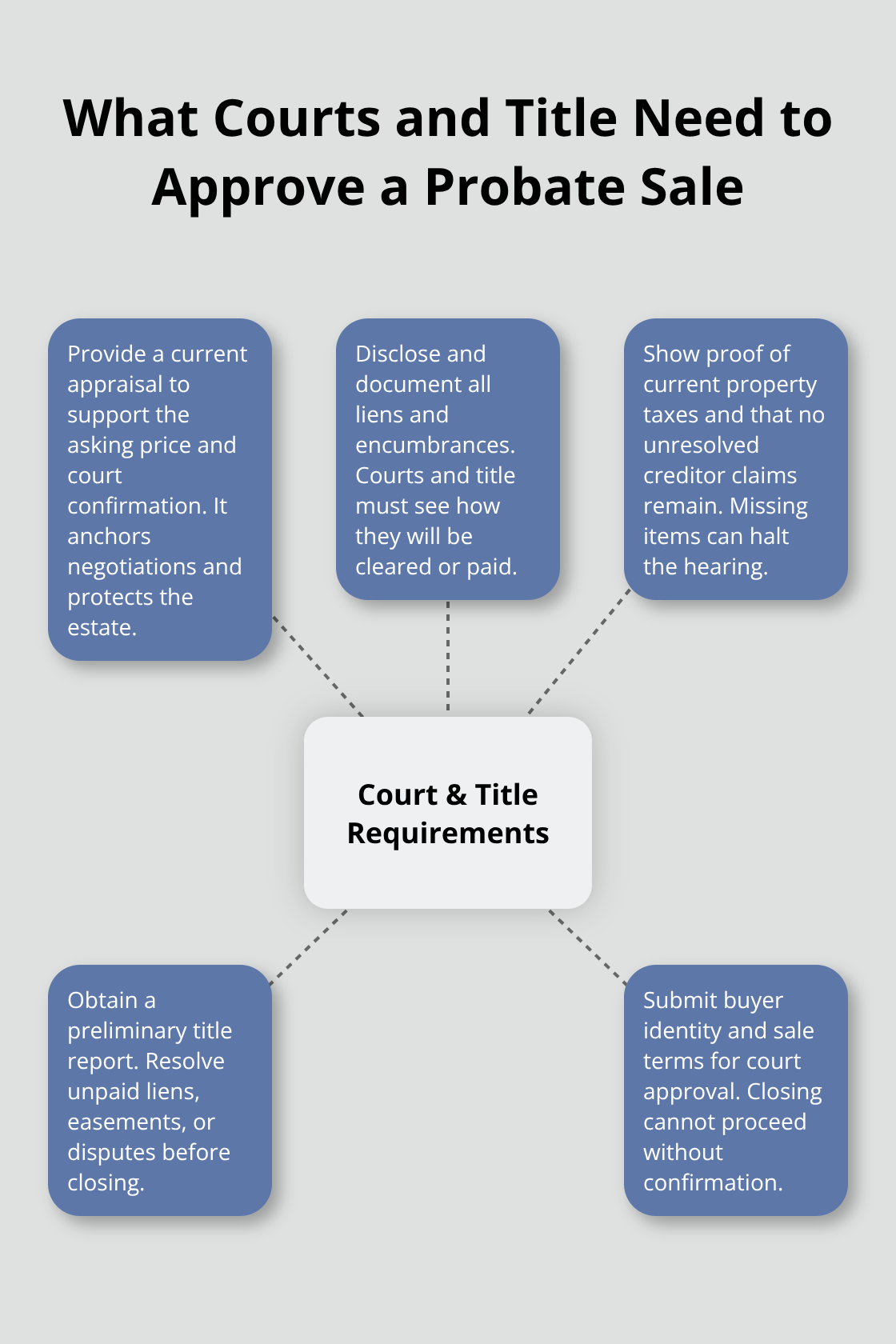
If the property has a reverse mortgage or significant tax liens, the executor must file a petition with the court to seek permission to sell the property subject to those encumbrances or to use sale proceeds to pay them off. Idaho probate courts, like those in other states, require this level of documentation before scheduling the confirmation hearing. Gathering these documents takes 20 to 30 days if the property is straightforward, but 45 to 60 days if title issues exist. The executor should hire an estate attorney to manage these filings and coordinate with the title company simultaneously, rather than treating them as sequential tasks. Parallel processing cuts weeks off the timeline and prevents the situation where the sale stalls because a lien wasn’t discovered until the buyer’s lender flagged it during underwriting.
Aligning Multiple Heirs Before Marketing
Managing multiple heirs and beneficiaries introduces emotional and legal complexity that slows decisions considerably. When two or more heirs have equal ownership interests, they must all agree on the sale price, terms, and buyer before the executor can accept an offer. Disagreements over price alone can delay a sale for months, especially if heirs live in different states or have competing financial interests.
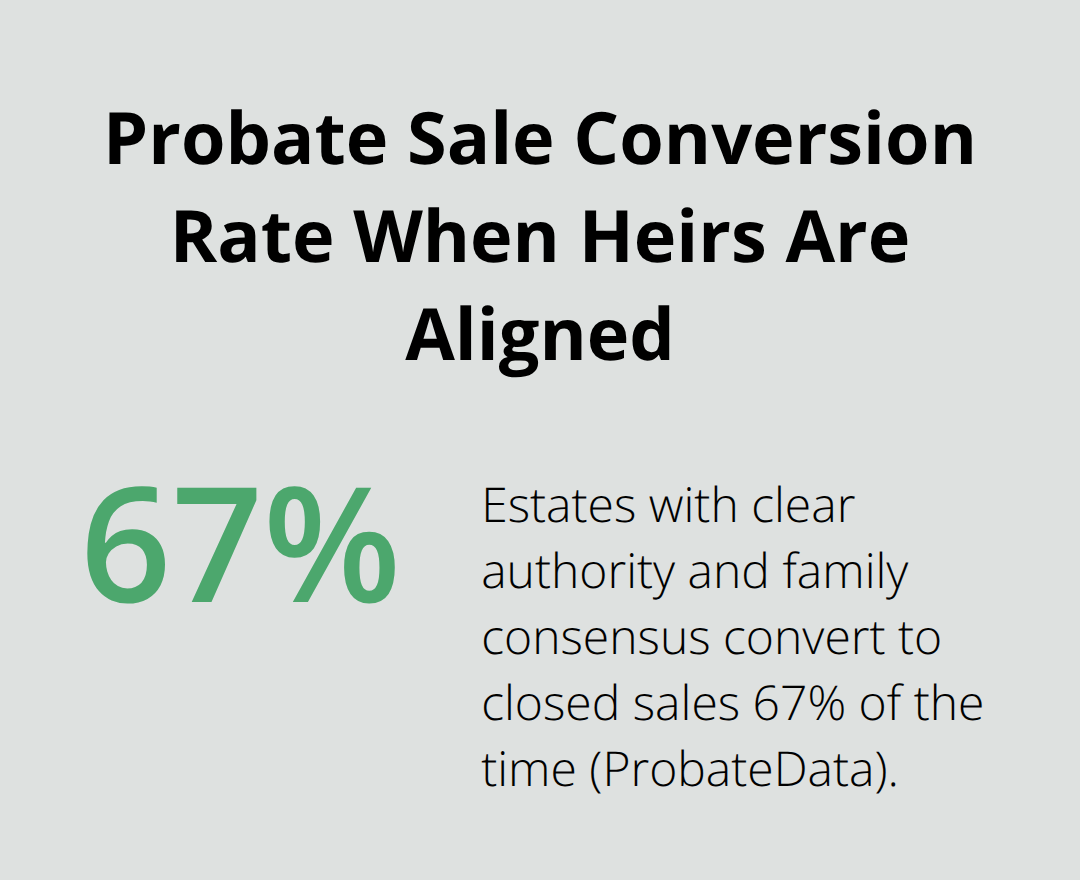
Establish consensus in writing before the property is listed. Have the executor send a formal letter to all heirs outlining the proposed listing price, the reasoning behind it (based on a professional market analysis of comparable properties), and the expected timeline. Ask each heir to sign off on this plan. This step prevents the scenario where an offer arrives, the executor accepts it, and then a beneficiary contests the price in court, forcing the buyer to withdraw. If heirs cannot agree, the executor must petition the court for permission to proceed with the sale anyway, but this adds 30 to 60 days and costs $2,000 to $5,000 in additional legal fees. Properties with contested ownership or multiple heirs show conversion rates around 8 to 12 percent according to ProbateData, compared to 67 percent for estates with clear authority and family consensus. The message is clear: invest time upfront to align heirs before marketing the property.
Inspections and Appraisals Require Upfront Planning
Inspections and appraisals in probate sales follow different rules than standard real estate transactions. The buyer typically pays for the inspection and appraisal, but the executor cannot make repairs based on inspection findings because probate properties sell as-is. This creates a critical tension: the buyer expects to identify problems during inspection, but the executor cannot fix them. Some buyers withdraw after inspection because repair costs are too high, which means you lose months of market time and must re-list.
Obtain an independent appraisal and a professional property inspection before listing. Share the inspection report with potential buyers in the listing materials so they know exactly what condition the home is in. This transparency reduces inspection surprises and attracts buyers who are genuinely prepared for an as-is purchase. An appraisal completed before listing also prevents the buyer’s appraisal from coming in lower than the court-approved sale price, which can trigger renegotiations or loan denials. The appraisal serves another purpose: it provides the court with an objective valuation that supports the asking price. If the executor lists the property for significantly less than the appraised value, the court may reject the sale as not serving the estate’s interests. Expect to spend $400 to $800 on the inspection and $300 to $500 on the appraisal, but these costs are paid from the estate and are worth the protection they provide.
With the executor’s authority confirmed, court documentation in place, and heirs aligned, the next challenge involves navigating the actual sale process and managing the unique requirements that probate transactions impose on buyers and closing timelines.
Common Pitfalls in Probate Real Estate Transactions
Underpricing Properties Costs Estates Real Money
Underpricing is the most damaging mistake executors make, and it happens because of pressure, not necessity. When an estate faces mounting costs-attorney fees running $3,000 to $7,000, court filing fees, property taxes, and maintenance bills-executors often accept the first reasonable offer to end the process quickly. This mentality costs estates real money. A property appraised at $500,000 that sells for $450,000 due to rushed pricing leaves $50,000 on the table that beneficiaries will never recover. According to ProbateData, forced sales without proper market positioning result in estates losing 10 to 20 percent of potential value.
The solution is straightforward: obtain a professional appraisal before listing, set the price based on comparable sales in your market, and resist the urge to discount simply because the process feels overwhelming. If heirs pressure you to sell quickly, show them the math-the cost of holding the property for an additional 60 to 90 days to achieve fair market value almost always falls below the carrying costs of taxes, insurance, and maintenance.
Incomplete Documentation and Missing Heirs Create Bottlenecks
Incomplete documentation and missing heirs create delays that stretch months into seasons. Missing a single document-an updated appraisal, proof of property tax payment, or a beneficiary’s signature-can derail the entire sale because title companies won’t issue a policy until everything is cleared. When heirs are spread across multiple states or unreachable, obtaining their written consent to the sale becomes a bottleneck.
Courts in California and Idaho require all heirs to receive notification of the sale plan; if even one heir cannot be located, the executor must petition the court for permission to proceed, adding 30 to 60 days and $2,000 to $5,000 in legal costs. Hiring an estate attorney early to conduct a thorough title search and complete all documentation before marketing the property prevents these delays. This upfront investment of $2,000 to $4,000 stops the scenario where the buyer’s lender discovers a problem during underwriting, the sale collapses, and you must start over.
Tax Implications and Hidden Encumbrances Reduce Net Proceeds
Tax implications compound delays because unpaid estate taxes, property taxes, or capital gains taxes must be settled before distribution to beneficiaries. If the property has appreciated significantly since the owner’s death, capital gains taxes can consume 15 to 25 percent of the sale proceeds, catching unprepared executors off guard. The executor must file a federal estate tax return within nine months of death if the estate exceeds $13.61 million in 2024, and state inheritance taxes may apply depending on your state.
Cost overruns occur when the executor discovers liens, reverse mortgages, or HOA assessments that weren’t disclosed in the initial probate filing. These encumbrances must be paid from sale proceeds, reducing what beneficiaries receive. A thorough title search before marketing identifies these issues early, allowing you to address them before buyers submit offers rather than discovering them mid-transaction.
Final Thoughts
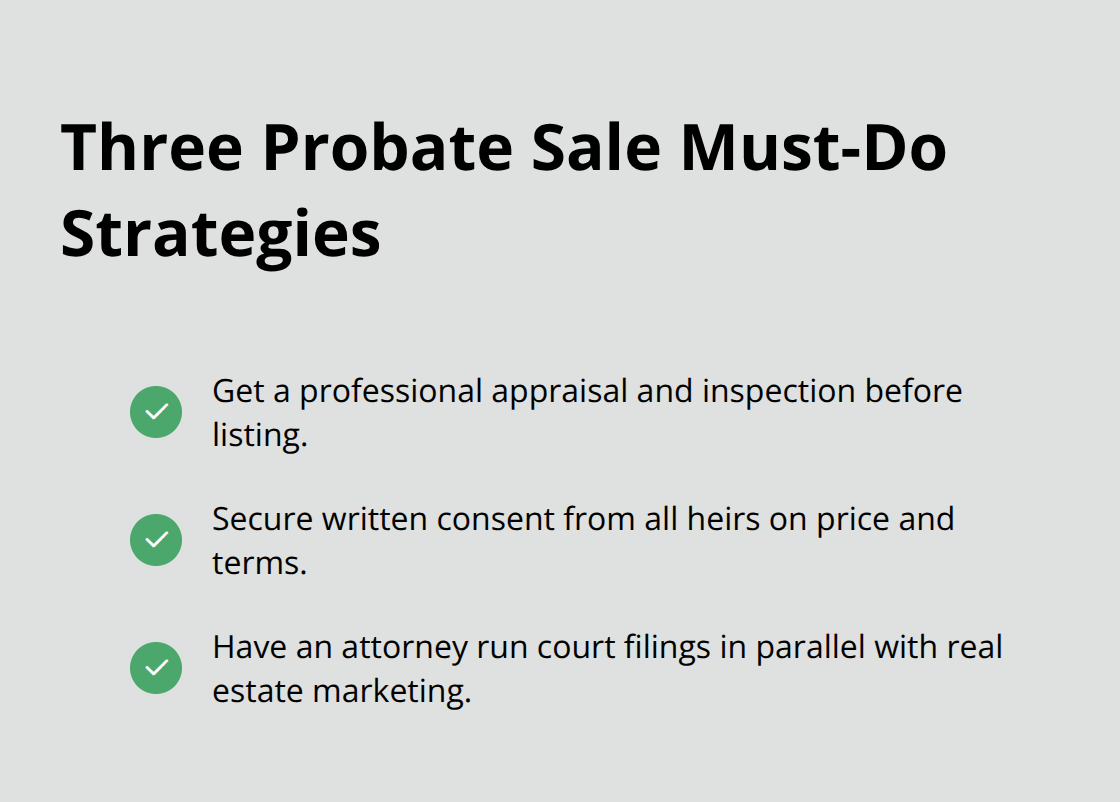
Probate real estate coordination succeeds when you start early, document everything, and align all parties before marketing the property. The three strategies that matter most are obtaining a professional appraisal and inspection before listing, securing written consent from all heirs on price and terms, and hiring an attorney to manage court filings in parallel with real estate marketing. These steps compress what would otherwise be a 12 to 18 month process into a more manageable timeline and prevent the costly delays that come from discovering title issues, missing documentation, or family disagreements mid-transaction.
Professional coordination matters because probate sales involve competing deadlines, emotional decisions, and legal requirements that standard real estate transactions do not. An executor managing this alone often misses renewal dates on court authority, underprices the property to end the process quickly, or fails to clear liens before buyers submit offers. The result is lost equity, extended timelines, and frustrated beneficiaries-outcomes that dual perspective as both attorneys and real estate professionals helps prevent through simultaneous coordination of court filings, title clearance, and property marketing rather than treating them as separate tasks.
Probate property sales are not inherently problematic; they simply require different planning. You can achieve fair market value, keep beneficiaries informed, and close on schedule when you invest upfront in documentation, appraisals, and stakeholder alignment. If you are managing a probate estate or facing questions about how to sell property during probate administration, contact Law Offices of Roshni T. Desai for a free consultation to discuss your specific situation and timeline.