




California Trust Administration Attorney: Advocate for Your Trust Needs
Trust administration requires managing assets, handling taxes, and navigating family dynamics-all while following California law. Many trustees face overwhelming complexity and costly mistakes without proper guidance.
We at Law Offices of Roshni T. Desai help families protect their legacies by providing clear direction through every step of trust administration. A California trust administration attorney can make the difference between a smooth process and years of conflict.
What Trust Administration Actually Requires
Managing and Identifying Trust Assets
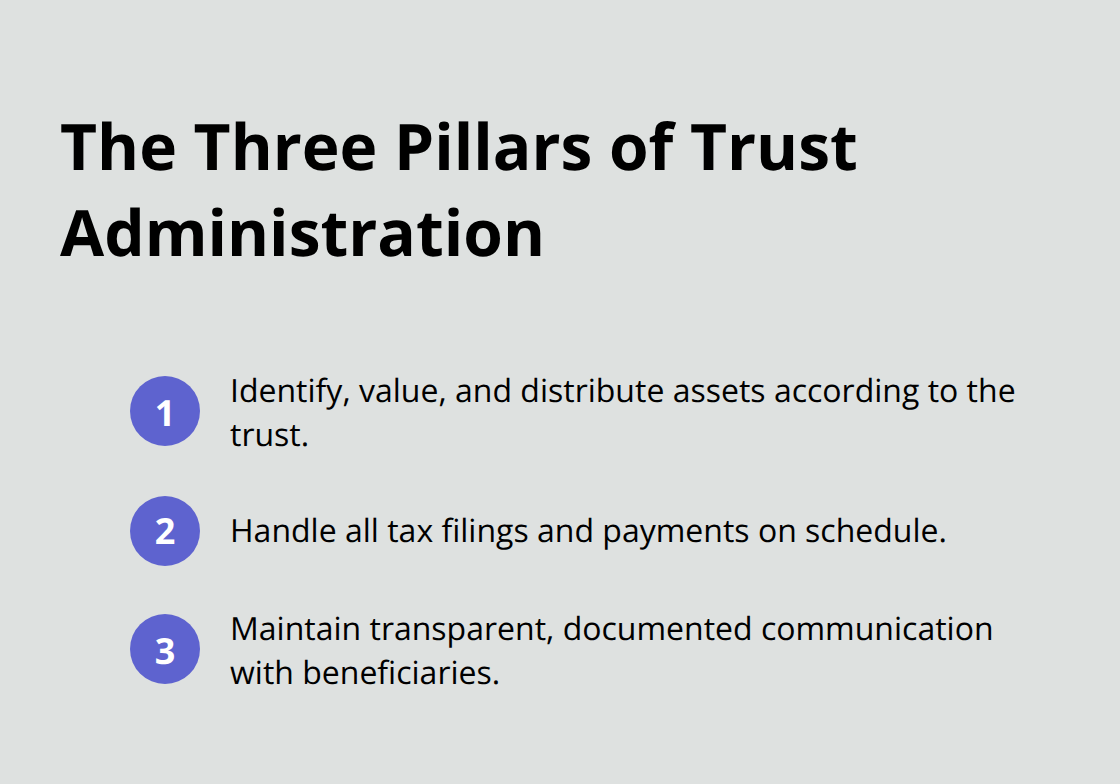
Trust administration in California demands three interconnected responsibilities that require attention to detail and strict adherence to state law. First, as trustee you must identify all trust assets, obtain their current valuations, and distribute them according to the trust document’s instructions. This sounds straightforward until you encounter real complications: a trust holding rental properties in multiple counties, investment accounts spread across different institutions, or digital assets with unclear ownership. The scope of asset management expands quickly when you factor in the time required to locate documents, contact financial institutions, and verify ownership across multiple jurisdictions.
Handling Tax Obligations
Second, you face tax obligations that many trustees underestimate. The IRS requires trustees to file a fiduciary income tax return (Form 1041) if the trust has income above $600 annually, and California imposes similar filing requirements. You must also handle final income tax returns for the deceased, calculate and pay estate taxes if applicable, and manage capital gains taxes when assets transfer to beneficiaries. These tax responsibilities overlap with asset management, creating a compressed timeline that catches many trustees off guard.
Managing Beneficiary Disputes
Third, disputes frequently emerge among beneficiaries who question your decisions, disagree over asset valuations, or believe the trustee acts improperly. California law gives beneficiaries substantial rights to challenge trustee actions, and these conflicts can stall distributions for months or years. California Probate Code Section 16000 requires trustees to act with prudence and in the best interests of beneficiaries, but this standard leaves room for disagreement and litigation.
The Reality of Simultaneous Demands
Trust administration demands simultaneous management across multiple fronts. You might spend one day gathering bank statements and property deeds, the next day calculating depreciation on real estate for tax purposes, and the following day responding to a beneficiary’s formal written objection to your proposed distribution plan. Trust disputes have increased significantly, with beneficiary challenges now common even in straightforward trusts. Many trustees discover too late that missing a single deadline or mishandling one asset category triggers cascading problems that compound over time.
These three core responsibilities-asset management, tax compliance, and beneficiary communication-form the foundation of trust administration. When you add California’s specific legal requirements and the potential for family conflict, the role becomes substantially more complex than most trustees anticipate.
Where Trust Administration Breaks Down
Navigating Overlapping Legal Requirements
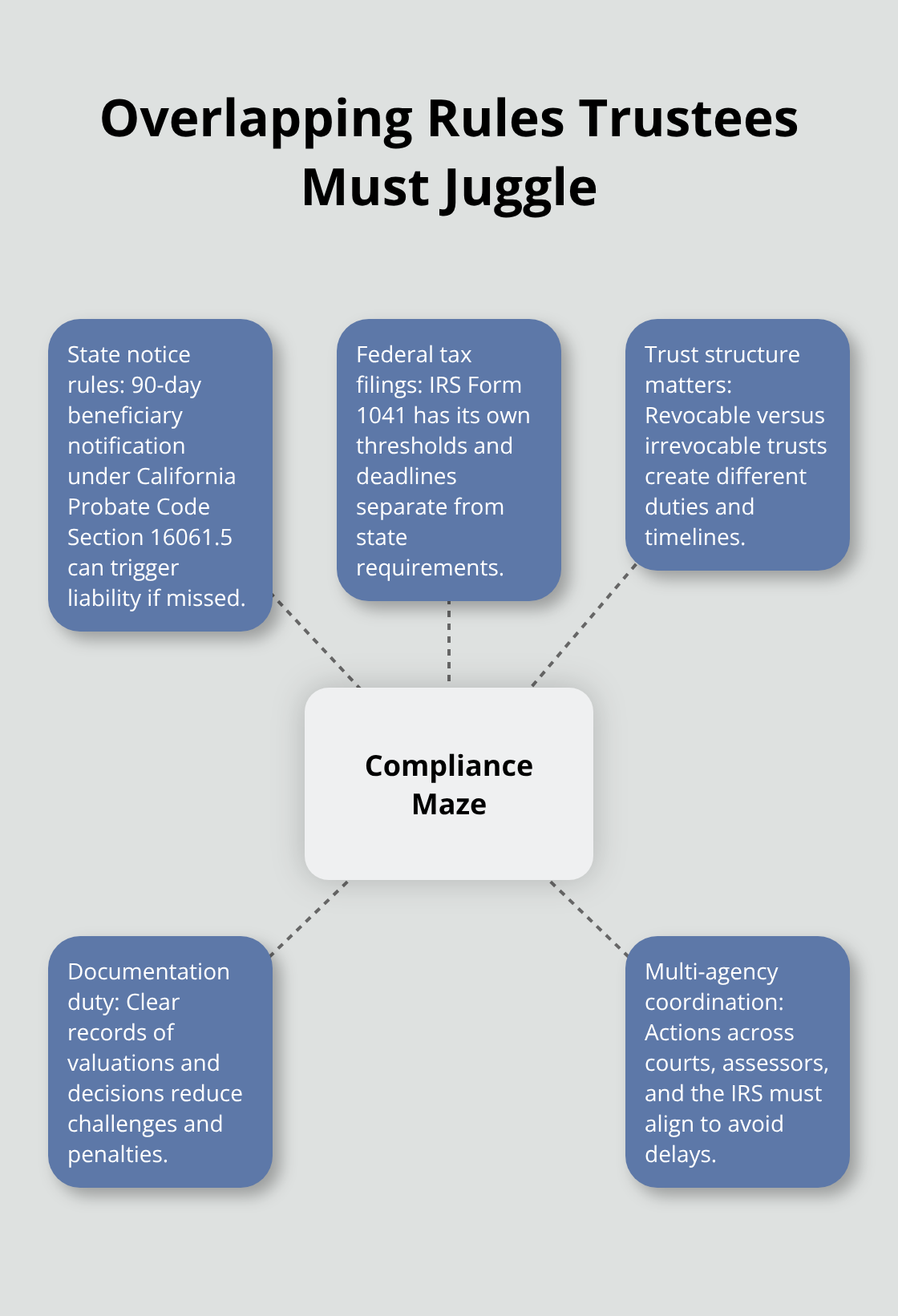
Trust administration in California hits real obstacles when trustees navigate overlapping state and federal requirements that shift based on trust structure, beneficiary status, and asset composition. California Probate Code Section 16000 mandates trustees act with prudence, but the IRS Form 1041 filing rules operate independently with their own deadlines and income thresholds. A trustee managing a revocable living trust faces different tax obligations than one administering an irrevocable trust, yet most trustees receive no clear guidance on which rules apply to their specific situation. Missing a single deadline-whether it’s the 90-day notification requirement under California Probate Code Section 16061.5 or the federal fiduciary return filing deadline-triggers penalties, interest charges, and beneficiary litigation.
Managing Assets Across Multiple Locations
The complexity intensifies when trust assets span multiple states or when property was titled inconsistently over decades. One trustee managed a trust holding real estate in three counties, investment accounts at four different institutions, and a small business with unclear ownership documentation. The tax filing alone required coordinating with three separate county assessors’ offices and the IRS, consuming four months of administrative work before any beneficiary distributions could occur. Property types compound this problem significantly-a trust holding a family home, rental properties, investment accounts, and retirement assets requires different handling procedures for each category, and mistakes in one area cascade into others.
Communication Failures That Trigger Conflict
Family conflict during trust administration rarely stems from disagreement over the trust document itself. Instead, it arises from poor communication, unmet expectations, and perceived unfairness in how the trustee handles discretionary decisions. Research from the American Bar Association indicates that beneficiary disputes increase substantially when trustees fail to provide regular accounting statements or explain their reasoning for asset valuations and distribution timing. A trustee who mishandles the sale of real estate might trigger capital gains tax issues that reduce available funds for distributions, creating legitimate beneficiary complaints about the trustee’s competence.
Building Trust Through Transparency
Communication breakdowns accelerate when beneficiaries discover information indirectly rather than hearing it first from the trustee. Establishing a written communication schedule, providing quarterly account statements regardless of whether distributions occur, and documenting all major decisions in writing prevents most family conflicts before they escalate into formal objections or litigation. Trustees who treat beneficiary communication as an ongoing administrative responsibility equal in importance to asset management and tax compliance maintain stronger relationships and avoid costly disputes.
These obstacles-legal complexity, multi-location asset management, and communication gaps-create the conditions where trust administration derails. Understanding where problems originate helps trustees and beneficiaries recognize when professional guidance becomes necessary to keep the process moving forward.
Why You Need a Trust Administration Attorney
The Real Cost of Trustee Mistakes
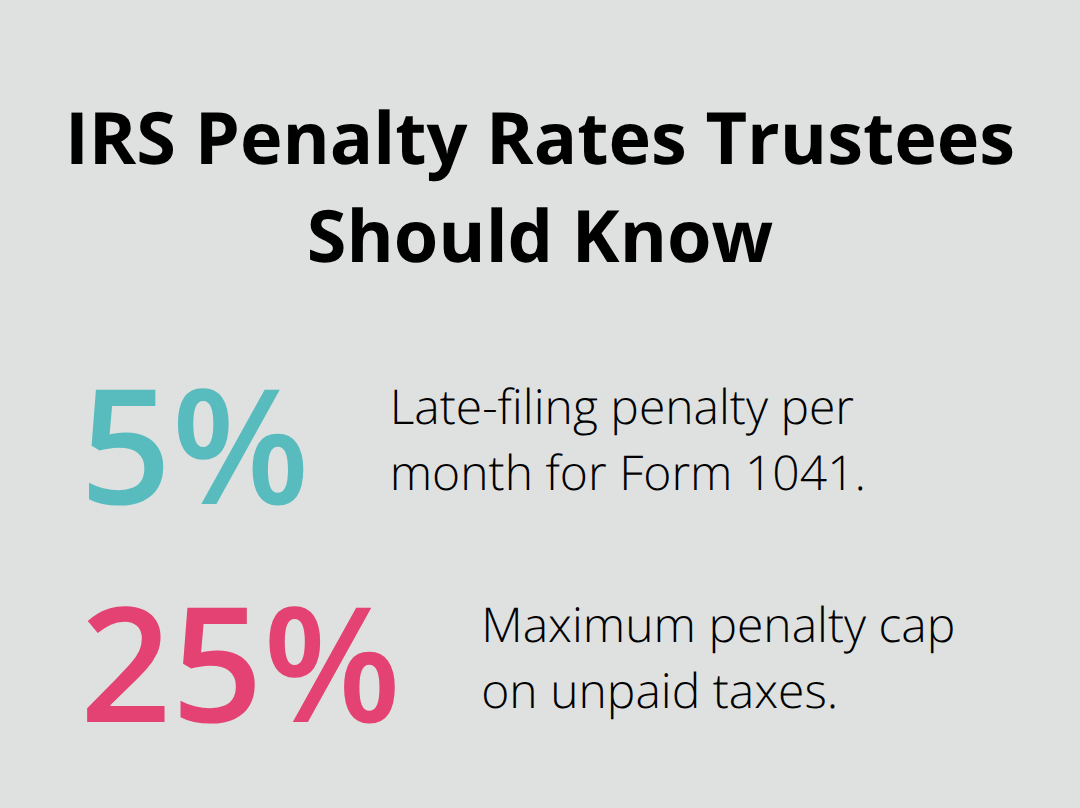
Trust administration becomes significantly more expensive and time-consuming when trustees make preventable mistakes. The American College of Trust and Estate Counsel reports that beneficiary litigation over trust administration costs average $15,000 to $50,000 per dispute, with complex cases exceeding $100,000. These costs emerge not from complex trusts alone, but from straightforward trusts where trustees mishandle tax filings, miss critical deadlines, or fail to document decisions properly. A trustee who files Form 1041 late triggers IRS penalties starting at 5% per month, capped at 25% of unpaid taxes. Missing the 90-day beneficiary notification deadline under California Probate Code Section 16061.5 exposes the trustee to personal liability for damages beneficiaries claim resulted from delayed notice.
One trustee distributed trust assets before calculating final capital gains taxes, reducing beneficiary distributions by $28,000 when the tax liability came due. These mistakes compound because beneficiaries rightfully question trustee competence once an error surfaces, transforming administrative disputes into formal objections and litigation. A trust administration attorney prevents these specific, quantifiable problems by managing tax filings on proper schedules, documenting all discretionary decisions in writing, and calculating asset valuations correctly before distributions occur.
Navigating Conflicting Beneficiary Interests
Trustee responsibilities expand beyond asset management when beneficiaries hold conflicting interests or when trust language leaves room for interpretation. California Probate Code Section 16000 requires trustees to act prudently and in beneficiaries’ best interests, but this standard creates gray areas when beneficiaries disagree over distribution timing, asset sales, or trustee compensation. A trustee managing a trust with a surviving spouse and adult children faces genuine tension when deciding whether to sell real estate quickly for cash distributions or hold property for long-term appreciation.
Each choice benefits some beneficiaries while disadvantaging others, and documenting the reasoning behind these decisions protects the trustee from later challenges. An attorney helps trustees navigate these decisions by providing written guidance on fiduciary duties, explaining how California law addresses common conflicts, and creating documentation that demonstrates compliance with the trustee’s legal obligations. This proactive approach prevents disputes from escalating into litigation where beneficiaries challenge trustee actions retrospectively, often years after distributions occur. Trustees who work with an attorney from the start reduce beneficiary conflict dramatically because the attorney’s involvement signals that professional standards guided every decision.
Protecting Yourself and Your Beneficiaries
Professional guidance protects both trustees and beneficiaries by establishing clear procedures and transparent communication from the beginning. We at Law Offices of Roshni T. Desai, with over 25 years of experience, help trustees navigate these complex decisions and create the documentation that prevents future disputes. An attorney’s involvement transforms trust administration from a solo responsibility into a structured process where each decision rests on solid legal footing.
Final Thoughts
Trust administration demands attention across three interconnected areas: managing assets properly, handling tax obligations on schedule, and maintaining transparent communication with beneficiaries. Missing deadlines or mishandling valuations creates expensive problems that cascade through the entire process, with beneficiary disputes costing $15,000 to $50,000 on average. These conflicts often stem from preventable mistakes rather than genuinely complex trusts.
A California trust administration attorney transforms trust administration from an overwhelming solo responsibility into a structured process where each decision rests on solid legal footing. An attorney documents your reasoning, manages tax filings on proper schedules, and prevents the communication breakdowns that trigger family conflict. Professional guidance recognizes when decisions benefit some beneficiaries while disadvantaging others, and creates the documentation that protects you from later challenges.
Contact Law Offices of Roshni T. Desai to discuss your trust administration needs and learn how professional guidance prevents costly mistakes and family conflict. We offer free consultations with flexible scheduling, whether you prefer meeting at our office or your home.