




California Trust Attorney Reviews: What to Look For
Choosing the right California trust attorney can feel overwhelming when you’re sorting through reviews and credentials. We at Law Offices of Roshni T. Desai know that most people don’t know what to look for beyond star ratings.
This guide walks you through the specific qualifications, red flags, and questions that actually matter when evaluating a trust attorney for your family’s needs.
What Credentials Actually Matter in a Trust Attorney
Bar Licensing and Board Certification
California requires all trust attorneys to hold an active license from the State Bar of California and maintain good standing status-this is the bare minimum floor, not a credential to celebrate. You can verify this instantly on the State Bar’s website by searching the attorney’s name. What separates competent trust attorneys from mediocre ones is board certification in Estate Planning, Trust & Probate Law through the California Board of Legal Specialization. This certification demands that an attorney has spent a substantial portion of their practice focused on trust and estate work, passed a rigorous exam, and met continuing education requirements.
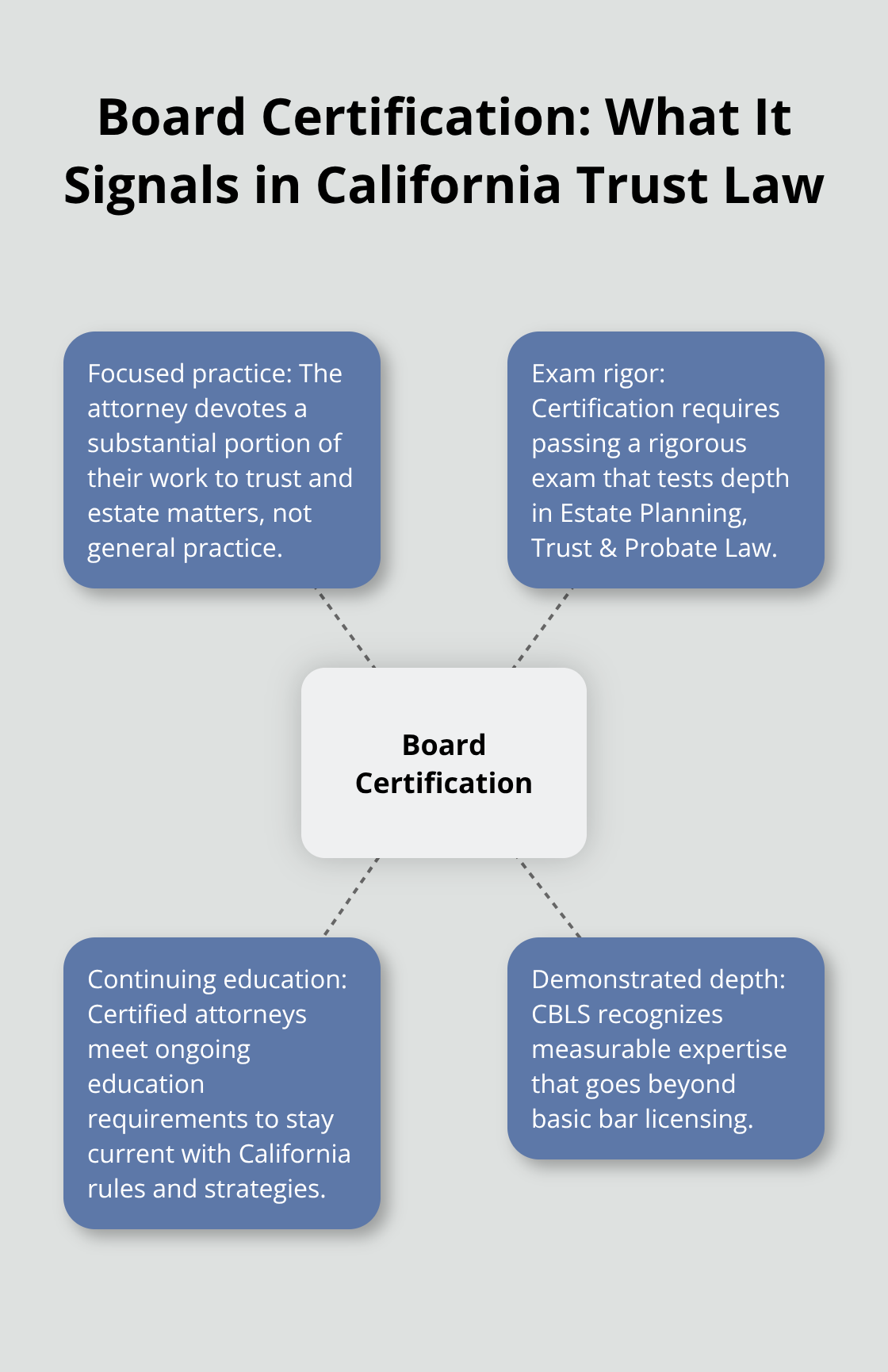
According to the California Board of Legal Specialization, board-certified attorneys in this field have demonstrated measurable depth that general practitioners simply don’t possess.
Professional Memberships and Affiliations
Many attorneys list memberships in organizations like ACTEC, NAELA, or SNA, which signal commitment to the field, but these memberships alone don’t guarantee competence. Don’t accept vague claims about trust experience-ask directly whether the attorney holds board certification. The real test is whether the attorney can walk you through how they’ve funded trusts for past clients, handled California community property rules for married couples, and managed post-death trust administration when disputes arose.
Demonstrable Track Record and Practical Experience
A California trust attorney should describe specific examples of trusts they’ve drafted for situations similar to yours-whether that’s blended family planning, special needs trusts, or property-heavy estates. Ask about their experience with the documents that actually prevent probate: revocable living trusts, pour-over wills, and beneficiary designation coordination. The attorney should also demonstrate familiarity with recent California probate code updates and how those changes affect planning strategies. If an attorney can’t explain the difference between a revocable and irrevocable trust without jargon, or hesitates when you ask about funding strategies, move on.
When you evaluate any California trust attorney, insist on clarity about which documents they’ve actually drafted, how many trusts they administer annually, and whether they personally handle your case or hand it off to junior staff. The attorney should be able to describe specific examples of trusts they’ve drafted for situations similar to yours and demonstrate familiarity with recent California probate code updates. Local experience matters more than marketing-a competent attorney walks you through real client scenarios and explains how they’ve navigated the complexities that most people never anticipate.
Red Flags That Disqualify a California Trust Attorney
State Bar Complaints and Disciplinary History
State Bar complaints reveal patterns that reviews alone won’t show. Search the California State Bar’s website for any attorney you’re considering, and look specifically for disciplinary actions related to trust mishandling, fee disputes, or failure to communicate. A single complaint doesn’t automatically disqualify someone, but multiple complaints about similar issues signal a real problem. The State Bar distinguishes between closed matters (resolved) and open investigations, so understand the difference before dismissing a candidate. If an attorney has three or more complaints about fee transparency or trust administration within the past five years, that pattern warrants avoidance. Google the attorney’s name with terms like complaint, lawsuit, or disciplinary action-legitimate concerns often surface in legal forums or local news archives.
Vague Pricing and Hidden Costs
Opacity about pricing and what’s actually included in your trust package disqualifies an attorney immediately. An attorney who quotes a flat fee for a revocable living trust without asking detailed questions about your assets, family structure, or goals cuts corners. A written engagement letter upfront should spell out exactly what documents you receive, what the total cost is, and what happens if your situation turns out to be more complex than initially thought. If an attorney refuses to provide this in writing or gets vague when you ask whether trust funding assistance is included, walk away. Many trust mills offer cheap package deals that look good until you realize the attorney never actually funded your trust into the new legal entity-leaving you with an expensive piece of paper that doesn’t accomplish probate avoidance.
Poor Communication and Client Neglect
Client reviews that mention surprise fees, hidden costs, or feeling rushed through the process are red flags. Negative feedback describing poor communication, delayed responses to emails, or feeling abandoned after signing documents suggests the attorney treats clients as transactions rather than relationships. One negative review happens; multiple reviews describing the same problem (unresponsiveness, unclear explanations, feeling ignored) indicate a systemic issue with how the firm operates. Pay attention when clients report that the attorney failed to explain complex concepts in plain language or that they felt confused about next steps after signing.
These warning signs help you eliminate unsuitable candidates before you waste time in a consultation. The questions you ask during that first meeting will separate attorneys who genuinely understand your situation from those who simply want to close your file.
What to Ask a California Trust Attorney in Your First Meeting
Probe Their Understanding of Your Situation
The consultation separates attorneys who understand your actual situation from those running a cookie-cutter operation. Start by describing your specific circumstances in detail-your assets, family structure, and concerns-then watch how the attorney responds. A competent trust attorney will ask clarifying questions rather than immediately pitch a standard package. They should probe why you think you need a trust, whether probate avoidance is actually your priority, and whether a revocable living trust makes sense for your situation or if other documents would serve you better. If the attorney nods along without asking questions, they’re not tailoring anything to you.
Request Plain-Language Explanations and Specific Strategies
Ask directly how they would structure your trust given what you’ve shared, and request they explain the reasoning in plain language rather than legal terminology. Insist on understanding which assets would transfer into the trust, how beneficiary designations coordinate with the trust, and what happens after you sign the documents. An attorney worth hiring will outline a specific funding strategy-which real property needs retitling, which bank accounts need updating, which beneficiary designations need coordination-rather than hand you a stack of papers and wish you luck.
Demand Written Fee Agreements and Transparency
Pricing opacity is where many California trust attorneys hide poor service. Request a written engagement letter before you commit, and that letter must specify the total flat fee for your trust package, exactly which documents are included, and whether trust funding assistance is provided at no additional cost or billed separately. Ask what happens if your situation turns out more complex than initially discussed-does the fee change, and how much? Many attorneys quote $2,500 to $7,500 for a basic revocable living trust, but that range varies wildly depending on whether funding, property coordination, and post-signing support are included.
Verify References and Post-Signing Support
Request at least two references from past clients with situations similar to yours, and contact those references directly by phone rather than rely on written testimonials. Ask those former clients whether the attorney was responsive, whether the process moved at a reasonable pace, whether they felt rushed, and critically, whether the attorney actually helped them fund the trust afterward or simply delivered documents and disappeared. California probate is expensive and slow, with timelines extending nine months to over a year, so an attorney who helps you avoid probate through proper planning and funding saves your family thousands in court fees and months of delay.
Final Thoughts
Finding the right California trust attorney requires you to evaluate credentials, spot red flags, and ask direct questions before you commit. Board certification in Estate Planning, Trust & Probate Law matters far more than general licensing alone, and state bar complaints reveal patterns that online reviews miss. During your consultation, insist on plain-language explanations tailored to your specific situation, request written fee agreements upfront, and contact references from past clients to verify the attorney actually funds trusts rather than simply handing you documents.
Schedule consultations with two or three candidates who meet these standards and bring a complete asset list to each meeting. Observe whether the attorney asks clarifying questions about your family structure and assets or pushes a standard package without customization. Walk away immediately if pricing remains vague, the attorney seems unresponsive, or you feel rushed through the process-California trust attorney reviews online offer useful signals, but they cannot replace direct conversation about your needs and verification of disciplinary history.
We at Law Offices of Roshni T. Desai offer personalized estate planning services across Southern California with free consultations and flexible scheduling. California probate costs 5 to 10 percent of your estate and stretches nine months to over a year, so proper planning saves your family thousands in court fees and months of delay. Your family’s future depends on selecting an attorney who understands your situation and commits to funding your trust correctly.