




California Trust Trustee Duties: Clarity For Executors And Beneficiaries
Trustees in California carry significant legal responsibilities that many don’t fully understand. When trust administration goes wrong, both trustees and beneficiaries can face costly disputes and delays.
We at Law Offices of Roshni T. Desai help families navigate these complex situations. This guide breaks down California trust trustee duties, common pitfalls, and how beneficiaries can protect themselves.
What Trustees Must Do Under California Law
Fiduciary Duties That Bind Trustees
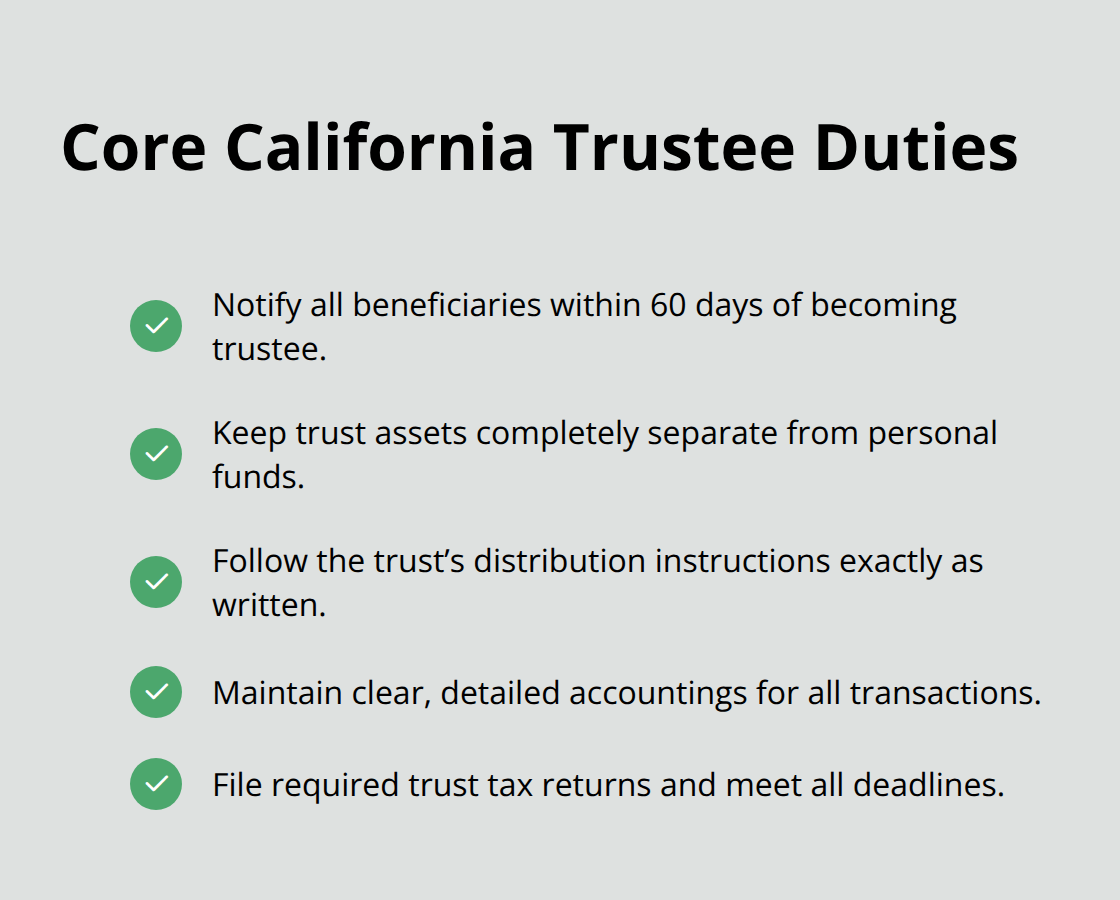
California law imposes strict fiduciary duties on trustees, and these aren’t suggestions-they’re binding legal obligations. A trustee must act in the beneficiaries’ best interests, not their own, and this standard applies regardless of whether the trustee is a family member or a professional. The California Probate Code requires trustees to manage trust property with the care, skill, prudence, and diligence of a prudent investor. This means a trustee cannot simply leave trust assets sitting in a savings account earning minimal interest or make risky investments without proper analysis.
Keeping Trust Assets Separate and Protected
Trustees must keep trust property separate from personal funds-mixing them together, even temporarily, violates fiduciary duty and can expose the trustee to personal liability. This separation protects both the trust estate and the trustee’s personal assets from creditor claims against either party. Many trustees fail to understand that commingling creates legal exposure that extends far beyond the trust itself.
Notifying Beneficiaries of Their Rights
Communication with beneficiaries is equally non-negotiable. Within 60 days of becoming trustee, California law requires notification to all beneficiaries of their legal rights, the trust’s existence, and the trustee’s contact information. Many trustees skip this step, which creates unnecessary conflict and legal exposure that could have been prevented with a simple notice.
Following Distribution Instructions Precisely
Distribution decisions must follow the trust document precisely, not what the trustee thinks is fair or what beneficiaries request. If the trust says assets go to one person at age 25 and another at age 35, the trustee cannot accelerate or delay distributions based on personal judgment. Trustees must maintain detailed accounting records showing every transaction, investment decision, and distribution (California law allows beneficiaries to request this information regularly). A trustee who cannot produce clear documentation of how trust money was spent faces serious challenges in defending their administration.
Managing Tax Obligations and Deadlines
The trustee must file tax returns on behalf of the trust and handle tax obligations promptly. Failing to meet these filing deadlines results in penalties that reduce the trust estate and create additional liability for the trustee. These tax responsibilities often catch trustees off guard because many assume the beneficiaries or accountants will handle them automatically.
Trustees who misunderstand these duties or assume they have discretion where none exists frequently trigger disputes that could have been avoided. Understanding these core responsibilities from the start prevents months of conflict later-and sets the stage for recognizing when trustees actually do cross the line into misconduct.
Where Trustees Go Wrong
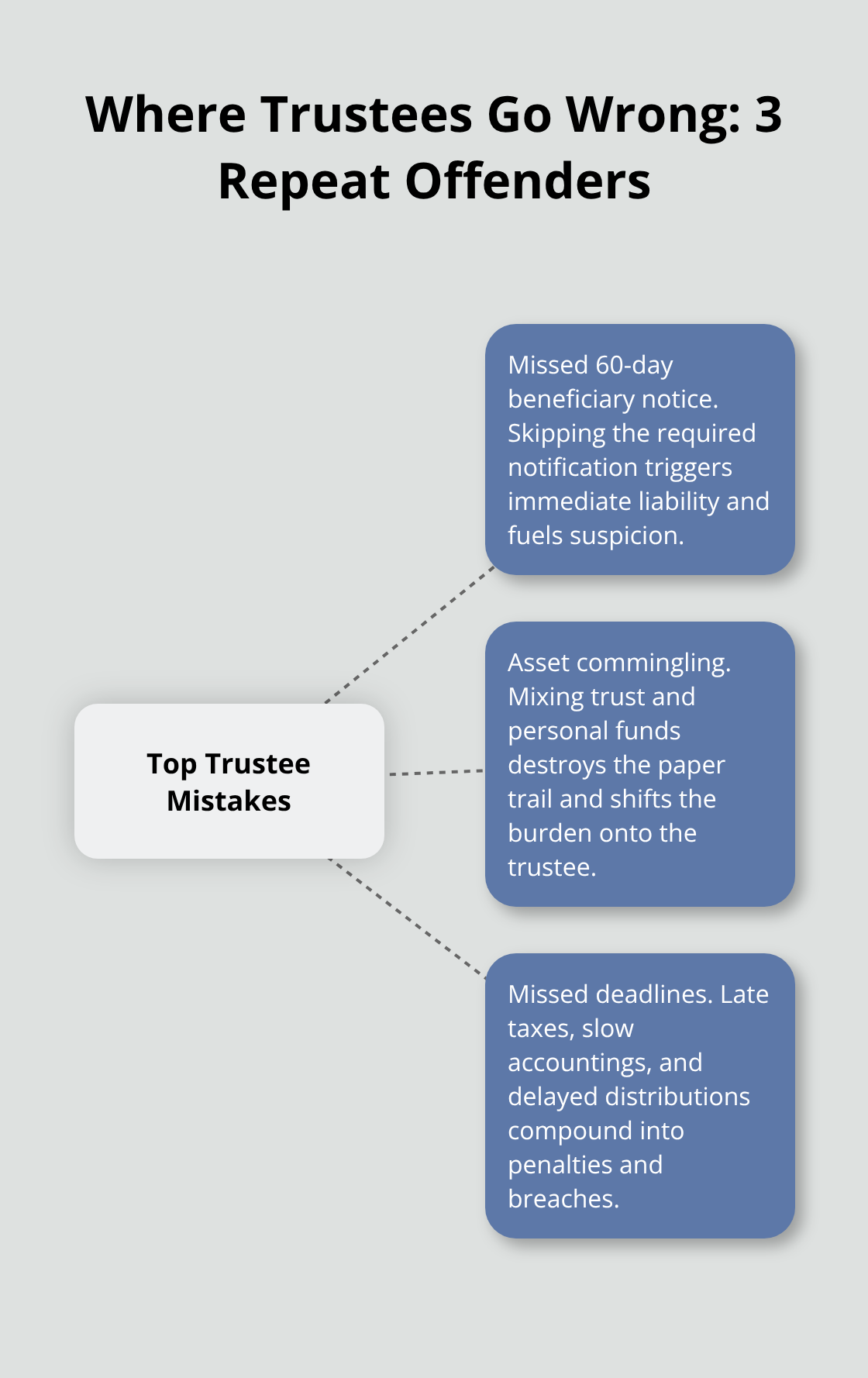
The gap between what trustees think they should do and what California law actually requires is where most problems start. Trustees often operate with incomplete information or outdated assumptions, and these gaps create expensive legal disputes that could have been prevented. The most damaging mistakes fall into three categories that appear repeatedly in trust disputes across California.
The 60-Day Notification Requirement That Trustees Skip
California Probate Code Section 16061.5 mandates that trustees notify all beneficiaries within 60 days of becoming trustee. This notification must include the trustee’s name and contact information, confirmation that a trust exists, the beneficiaries’ legal rights, and instructions on how to request trust accountings. Many trustees fail this step entirely, assuming that beneficiaries will eventually figure things out or that informal communication suffices. This creates immediate liability because beneficiaries can later challenge the trustee’s actions, claiming they had no opportunity to object. Courts view this notification requirement as non-discretionary, meaning no legitimate excuse exists for missing it. The consequences extend beyond legal exposure-beneficiaries who don’t receive proper notice often hire attorneys out of suspicion or frustration, which transforms a simple administration into a contested matter. This mistake triggers disputes that could have been resolved with a single certified letter sent within the required window.
Asset Commingling That Destroys the Trustee’s Defense
Trustees frequently mix trust funds with personal accounts or combine multiple trusts into one account for convenience. This commingling violates fiduciary duty under California Probate Code Section 16000 and creates an indefensible position if beneficiaries later question how money was spent. When trust assets sit in a personal checking account alongside the trustee’s own funds, the trustee cannot produce clear documentation showing which transactions involved trust property and which involved personal funds. Beneficiaries and courts interpret this ambiguity against the trustee, meaning the trustee bears the burden of proving they didn’t misappropriate funds. Separate accounts cost nothing to maintain (most banks offer no-fee trust accounts), yet trustees skip this basic protection repeatedly. The financial impact of commingling extends to tax consequences as well, since trust income and personal income become difficult to separate at tax time, potentially triggering IRS audits and penalties that reduce the trust estate.
Missed Deadlines That Compound Into Liability
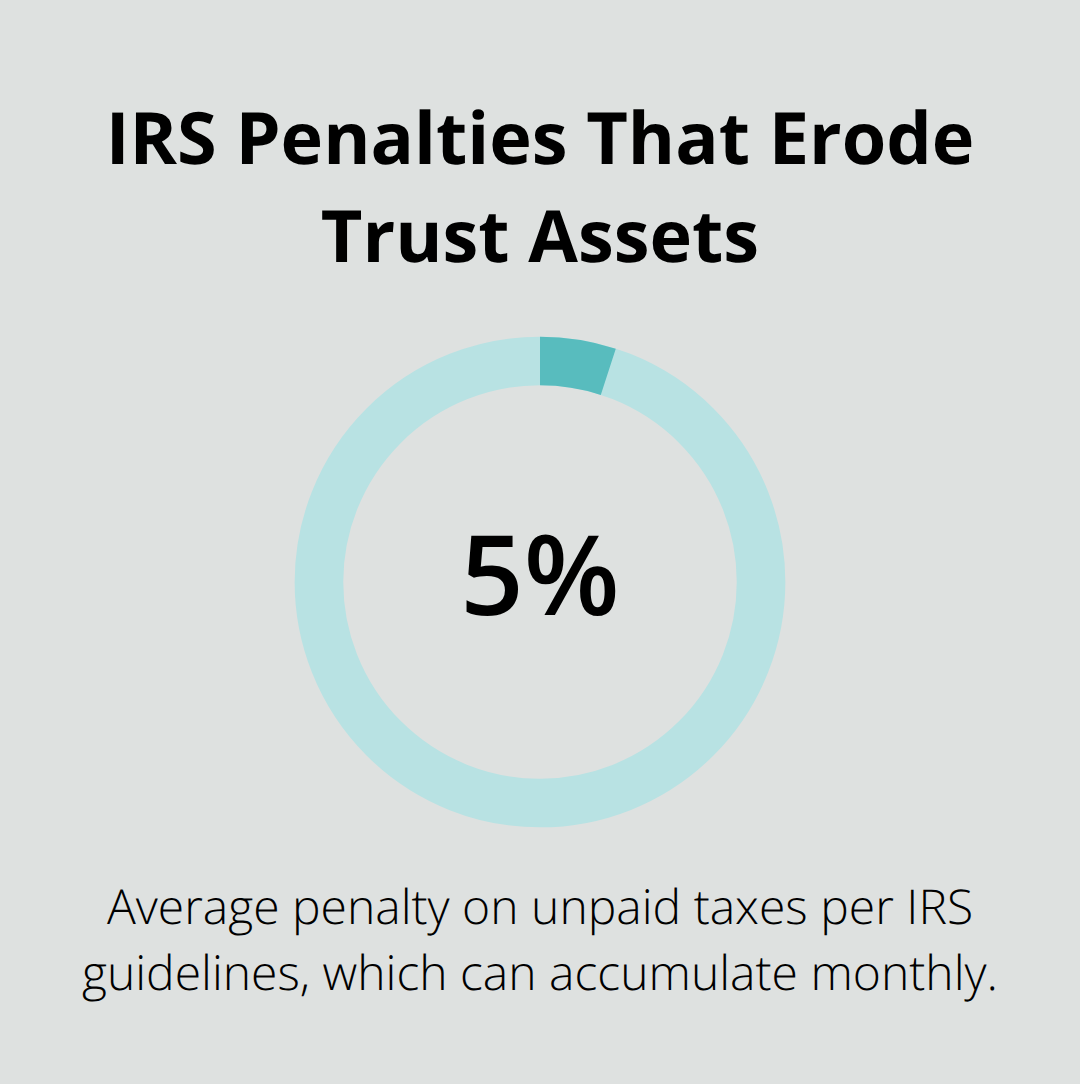
Trust administration deadlines exist throughout the process, and missing them creates cascading problems. Tax returns for the trust must be filed by April 15 if the trust has taxable income, and missing this deadline triggers penalties that reduce what beneficiaries receive. Accountings must be provided to beneficiaries upon request, typically within 30 days, and delays here invite beneficiaries to assume the trustee is hiding something. Distribution deadlines specified in the trust document must be met, and postponing them without legal justification constitutes breach of fiduciary duty. Many trustees underestimate how quickly time passes during administration, particularly when handling complex estates with real property or business interests. A trustee who files a tax return three months late has already damaged their credibility and exposed themselves to penalties averaging 5 percent of unpaid tax amounts according to IRS guidelines (these penalties accumulate monthly). These deadline failures rarely involve complex legal questions-they reflect poor planning and inadequate systems for tracking dates and obligations.
When Trustee Mistakes Require Professional Intervention
Beneficiaries who spot these errors face a critical decision: whether to address the problem informally or seek legal guidance. Trustees who miss the 60-day notification window, commingle assets, or blow past deadlines have already created legal exposure that informal conversations won’t resolve. At this point, beneficiaries need an attorney who understands California trust law and can assess whether the trustee’s actions constitute simple negligence or intentional misconduct. The distinction matters because it determines what remedies are available and whether the trustee can be removed from their position.
How Beneficiaries Can Protect Themselves
Request Complete Accountings in Writing
Beneficiaries often wait too long before taking action, assuming that trustees will handle everything correctly or that raising concerns will damage family relationships. This passivity is a mistake. California law gives beneficiaries specific tools to monitor trust administration and stop problems before they spiral into expensive litigation.
Under California Probate Code Section 16061, beneficiaries can demand a complete accounting of all trust transactions within 30 days of the request. This accounting must itemize every investment, distribution, fee, and expense, with supporting documentation. Many trustees resist providing this level of detail, claiming it’s too burdensome or that beneficiaries don’t need it. They’re wrong. You have the legal right to this information regardless of the trustee’s preferences, and requesting it in writing (not verbally) creates a documented trail if the trustee refuses.
Identify Red Flags in Trust Records
When reviewing the accounting, look for red flags that signal trustee misconduct. Distributions that don’t match the trust document, unexplained fees or expenses, and investments that seem inappropriate for the trust’s timeline or risk tolerance all warrant investigation. Gaps in the documentation represent another serious warning sign. If the trustee invested trust money in risky ventures without clear justification or took unusually high fees without the trust authorizing them, that’s grounds for legal action.
Don’t accept vague explanations or promises to provide details later. Demand specificity, and if the trustee cannot produce clear records showing how every dollar was spent, that absence of documentation itself constitutes a problem. The trustee bears the burden of proving they acted properly, not the other way around.
Consult an Attorney Before Problems Escalate
The decision to hire an attorney should not wait until you’re certain the trustee committed fraud. Many beneficiaries delay legal consultation because they want to be absolutely sure before spending money on counsel, but this approach often costs more in the long run. A California trust attorney can review the trustee’s actions quickly and identify whether problems exist.
Consult with an attorney as soon as you notice the trustee missed the 60-day notification deadline, commingled trust assets into personal accounts, failed to provide accountings within 30 days of request, or missed tax filing deadlines. These situations don’t require ambiguity-they’re clear violations that warrant professional review. An attorney can send a formal letter demanding compliance, which often resolves problems without litigation.
Understand the Cost of Early Intervention
If the trustee ignores the letter or cannot remedy the violations, the attorney can file a petition to remove the trustee and request that the court impose sanctions or surcharge the trustee personally for losses to the estate. The cost of early legal intervention typically runs between $2,000 and $5,000 for an initial assessment and demand letter, whereas full litigation over trustee misconduct averages $15,000 to $50,000 or more depending on complexity. Catching problems early through professional review prevents the escalation that makes trust disputes so expensive.
Final Thoughts
California trust trustee duties form the foundation of proper estate administration, and trustees who follow these obligations avoid the disputes that drain trust assets and damage family relationships. Trustees must manage assets responsibly, follow distribution instructions precisely, keep detailed records, notify beneficiaries within 60 days, and meet all tax and administrative deadlines. Beneficiaries cannot assume trustees will act correctly-you must request accountings in writing, review them carefully for red flags, and take action immediately if the trustee missed the 60-day notification deadline, commingled assets, or failed to provide records within 30 days of your request.
Early legal intervention typically costs $2,000 to $5,000 and prevents the $15,000 to $50,000+ litigation expenses that result from letting problems escalate. An attorney can assess whether the trustee’s actions constitute simple negligence or intentional misconduct, then send a formal demand letter that often resolves violations without court involvement. These clear violations warrant professional review, and waiting only compounds the damage to the trust estate.
If you’re concerned about trustee conduct or need guidance on your rights as a beneficiary, contact Law Offices of Roshni T. Desai for a free consultation. We help families navigate trust administration and resolve disputes between trustees and beneficiaries across Southern California.