




Disclaiming an Inheritance California: How to Refuse a Gift From an Estate or Trust
Disclaiming an inheritance in California is a formal way to say “no thank you” to property someone left you, whether it came through a will, a living trust, a beneficiary designation, or the rules that apply when a person dies without a will. A disclaimer that is done correctly can redirect an asset to the next person in line, keep a family plan on track, and avoid complications for everyone involved. A disclaimer that is done late or after you have already used the property may not work at all.
We at Law Offices of Roshni T. Desai help beneficiaries, executors, and trustees across Southern California sort through these decisions calmly and carefully, so you can move forward with confidence. This guide walks you through what a disclaimer actually does under the California Probate Code, how the filing process works, and the mistakes that most often cause a disclaimer to fail.
What Disclaiming an Inheritance Actually Means in California
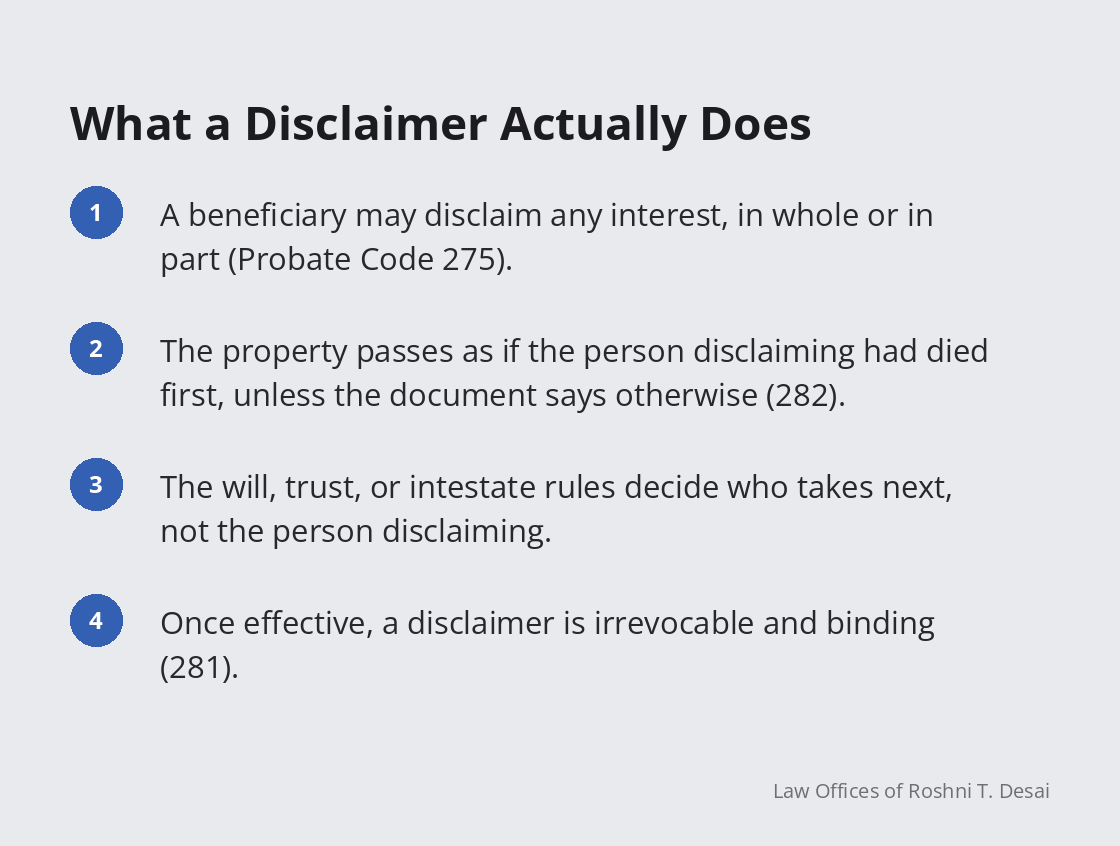
California addresses disclaimers in Part 8 of Division 2 of the Probate Code, beginning at Section 260. The core rule is simple. Probate Code Section 275 states that a beneficiary may disclaim any interest, in whole or in part, by filing a disclaimer as provided in that part of the code. In practical terms, a disclaimer is a written refusal to accept property or a property right that would otherwise pass to you. Once it takes effect, the law treats the asset as though it never became yours, and it moves on to whoever is next in line under the will, the trust, the beneficiary designation, or the intestate succession rules.
Why People Choose to Refuse an Inheritance
The reasons vary from family to family. Some beneficiaries are already well provided for and would prefer that a parent’s house or account pass directly to their own children. Others inherit property they do not want to manage, such as a share of a rental building that would pull them into ongoing obligations with relatives. Whatever the motivation, the decision deserves careful thought, because a disclaimer cannot simply be undone later if circumstances change.
Where the Disclaimed Property Goes
Many people assume they can disclaim an asset and choose who receives it instead. That is not how a disclaimer works. Under Probate Code Section 282, unless the creator of the interest provided a specific disposition in the event of a disclaimer, a present interest passes as if the person disclaiming had died before the person who created it. In other words, the will, the trust, or the intestate succession rules decide who takes next, not the person who disclaims. Before you sign anything, it is important to read the governing document closely, or to review the intestate rules, so you know exactly who will receive the property and whether that result matches your goals.
Partial Disclaimers and Specific Assets
A disclaimer does not have to be all or nothing. Because Section 275 allows a beneficiary to disclaim an interest in whole or in part, you might keep some assets and refuse others, or refuse only a fraction of a particular gift. A beneficiary might accept a parent’s personal belongings while disclaiming an interest in a vacation property, for example. Partial disclaimers require precise drafting, because the document has to describe exactly which interest is being refused and to what extent.
How the Disclaimer Process Works
The Probate Code sets out specific requirements for the form of a disclaimer, the people who may sign it, where it must be filed, and how quickly it should be completed.
What the Written Disclaimer Must Include
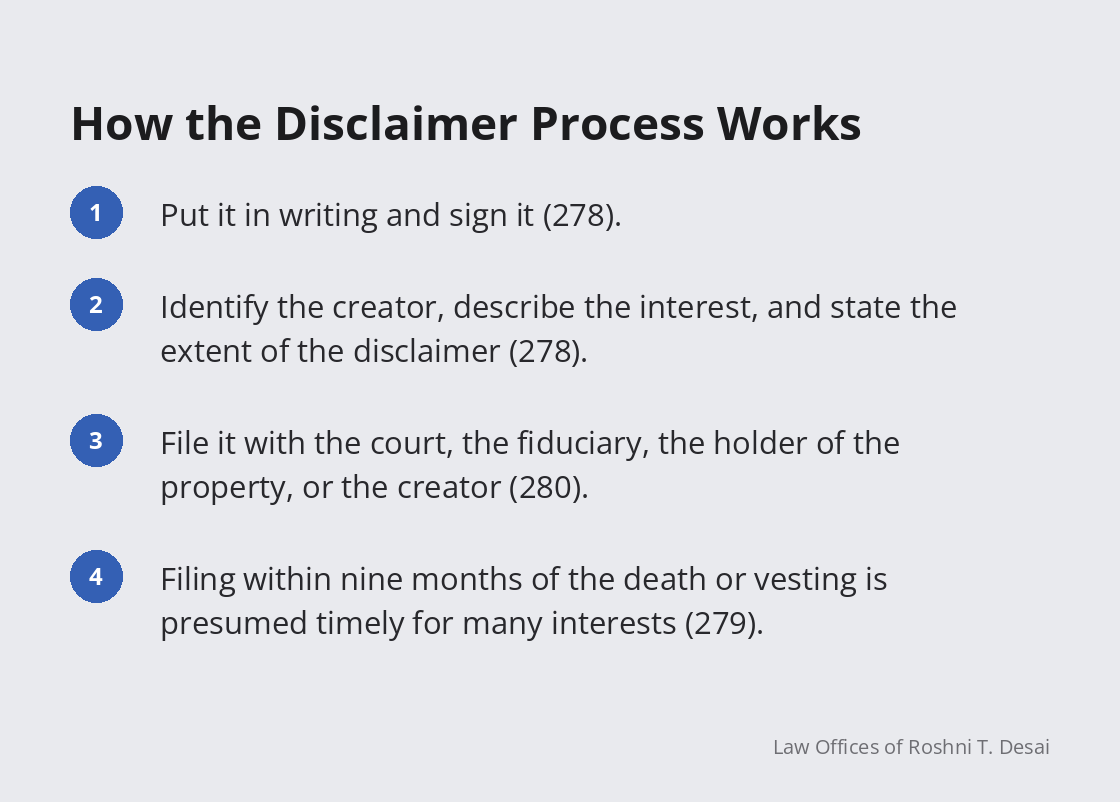
Probate Code Section 278 requires that a disclaimer be in writing and signed by the person disclaiming. The document must identify the creator of the interest, describe the interest being disclaimed, and state the disclaimer and its extent. A vague statement that you “do not want anything from the estate” may not be enough if it fails to describe the specific interest or how much of it you are refusing.
Where the Disclaimer Is Filed
Signing the document is only half of the job. Under Probate Code Section 280, a disclaimer is filed with one of several recipients. These include the superior court in the county where the decedent’s estate is being administered, or, if there is no administration, a county where administration would be proper. A disclaimer may also be filed with the trustee, personal representative, other fiduciary, or person responsible for distributing the interest, with any other person who has custody, possession, or legal title to the interest, or with the creator of the interest. When the disclaimer affects real property, Section 280 also allows it to be acknowledged and recorded in the same way as a grant of real property, which helps keep the public record clear.
The Nine-Month Timing Rule
Timing is where many disclaimers succeed or fail. Probate Code Section 279 requires a disclaimer to be filed within a reasonable time after the person able to disclaim learns of the interest. For many common interests, including gifts under a will, intestate inheritances, life insurance proceeds, joint tenancy survivorship interests, retirement accounts, and transfer on death designations, the statute conclusively presumes the filing was timely if it is made within nine months after the death of the person who created the interest or within nine months after the interest becomes indefeasibly vested, whichever is later. Interests created by a living trust follow a related nine-month rule that looks to the latest of several events, including when the beneficiary first learned of the interest. If a disclaimer is filed after these windows, Section 279 places the burden on the person disclaiming to show that the filing was still made within a reasonable time.
Disclaimers for Minors, Conservatees, and Decedents
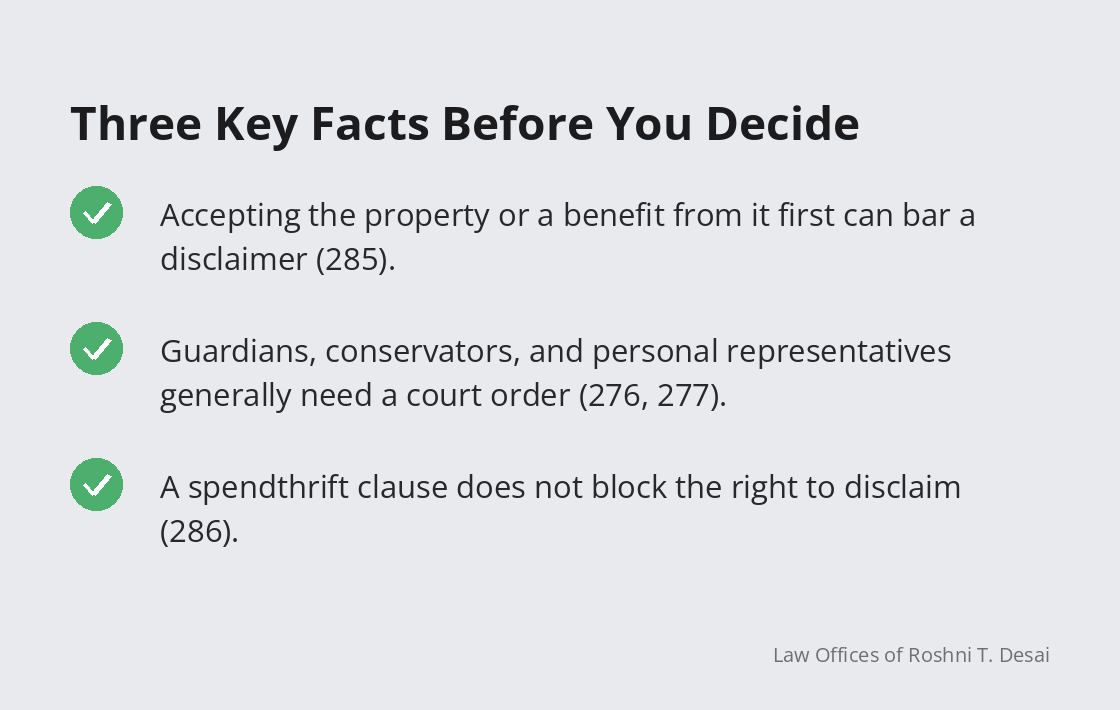
Sometimes the person entitled to an inheritance cannot sign for themselves. Probate Code Section 277 provides that a disclaimer on behalf of a minor is made by the guardian of the minor’s estate or, if none has been appointed, by a guardian ad litem, and that a guardian’s disclaimer is not effective unless it is made under a court order. The same section provides that a disclaimer on behalf of a person who has died is made by that person’s personal representative and generally requires a court order as well. Section 276 similarly requires a conservator to obtain a court order before disclaiming on behalf of a conservatee. Under Section 277, the court considers whether the minor or decedent, acting as a prudent person, would disclaim the interest if they had the capacity to do so.
Common Mistakes That Can Derail a Disclaimer
Because disclaimers are governed by precise statutory language, small missteps can have large consequences. The most common problems involve accepting the property before disclaiming, misunderstanding the permanent nature of the decision, and overlooking how a disclaimer interacts with the rest of the estate plan.
Accepting the Property First
The single most important rule is found in Probate Code Section 285, which states that a disclaimer may not be made after the beneficiary has accepted the interest. The statute lists several actions that count as acceptance if they happen before a disclaimer is filed. These include voluntarily assigning, conveying, encumbering, pledging, or transferring the interest or contracting to do so, signing a written waiver of the right to disclaim, accepting the interest or a benefit from it, or having the interest sold at a judicial sale. If you are considering a disclaimer, it is wise to avoid using or moving the property until the decision is final.
Treating the Decision as Reversible
Probate Code Section 281 states that a disclaimer, once effective, is irrevocable and binding on the beneficiary and on everyone claiming through the beneficiary, including the beneficiary’s creditors. That means you cannot disclaim an inheritance today and change your mind next year if family circumstances shift. The same is true of the opposite choice. Under Section 284, a person who could disclaim may instead file a written waiver of the right to disclaim, and once that waiver is filed it is also irrevocable.
Overlooking Spendthrift Provisions and Creditor Questions
Some beneficiaries assume they cannot disclaim because a trust includes a spendthrift clause that limits transfers of their interest. Probate Code Section 286 provides that the right to disclaim exists regardless of a spendthrift provision or similar restriction. Section 283 also states that a disclaimer is not a voidable transfer under the Uniform Voidable Transactions Act. Even so, a beneficiary with debts, a pending bankruptcy, or public benefits should get individual advice before disclaiming, because other laws outside the Probate Code may affect how a disclaimer is treated in those situations.
Final Thoughts
Disclaiming an inheritance in California can be a thoughtful way to honor a loved one’s wishes, simplify an estate, or allow property to pass to the next generation. The Probate Code allows a beneficiary to refuse all or part of an interest, but it also requires a signed written disclaimer with specific contents, filing with the proper person or court, attention to the nine-month timing rules, and care not to accept the property first. Because a disclaimer is permanent and the property passes according to the governing document rather than the wishes of the person disclaiming, each step deserves a careful review.
These decisions often arrive while a family is grieving and juggling many other responsibilities. Taking the time to understand who will receive the property, whether a court order is needed, and how the disclaimer fits into the rest of the estate or trust administration can prevent conflict and protect relationships.
If you are weighing whether to accept or refuse an inheritance, contact the Law Offices of Roshni T. Desai to speak with our team about your options. We will review the will, trust, or beneficiary designation, explain where the property would go, and help you take the next step with clarity.