




Estate and Probate Administration: A Calm, Clear Approach for SoCal Families
Probate doesn’t have to feel overwhelming. Many Southern California families face confusion about estate and probate administration, wondering what happens to their assets and how long the process takes.
We at Law Offices of Roshni T. Desai help families navigate this path with clarity and confidence. Our approach removes the guesswork so you can focus on what matters most.
What Happens During Probate Administration
Probate in California follows a structured court process that typically takes nine to twelve months, though complex estates can extend longer. The court validates your will first, confirming it’s authentic and legally binding. This validation step protects heirs by confirming the document reflects your actual wishes and wasn’t created under pressure or fraud. During this phase, the court appoints an executor or administrator to manage the estate. If you die without a will, California’s intestacy laws determine who inherits, which often creates conflict among family members and prolongs the timeline significantly.
Asset Documentation and Professional Valuation
Once the will receives validation, the executor must inventory every asset the deceased owned-real property, bank accounts, investments, vehicles, and personal items of value. California probate rules require a formal appraisal of real estate and significant personal property as of the date of death. This valuation matters because it establishes the tax basis for heirs and determines estate tax liability. Appraisers typically need four to eight weeks to complete thorough evaluations, and many families underestimate this timeframe. Getting accurate valuations upfront prevents disputes later and reduces the risk of IRS audits.
Settling Financial Obligations
The executor pays all debts, taxes, and administration expenses before distributing assets to heirs. This includes outstanding mortgages, credit card balances, medical bills, and funeral costs. Federal estate taxes apply only to estates exceeding $13.61 million as of 2024, according to the IRS, but California has no state estate tax, which simplifies matters for most Southern California families. However, income taxes on estate earnings still apply during the probate period. The executor must file final income tax returns and potentially estate income tax returns if the estate generates income. Court filing fees, attorney fees, and appraisal costs typically range from $3,000 to $15,000 for straightforward estates, depending on complexity and asset value.
Why Mistakes in This Phase Matter
Many families make costly errors during probate administration that extend timelines and drain resources. Incomplete documentation, missed deadlines, or improper asset valuations can trigger IRS inquiries or beneficiary disputes. These mistakes often stem from families attempting to navigate probate without professional guidance. The complexity of California’s probate rules combined with emotional stress makes it easy to overlook critical steps. Understanding what happens during each phase helps you recognize where problems typically arise-and why the next section covers the most common pitfalls families encounter.
Common Probate Mistakes That Cost Families Time and Money
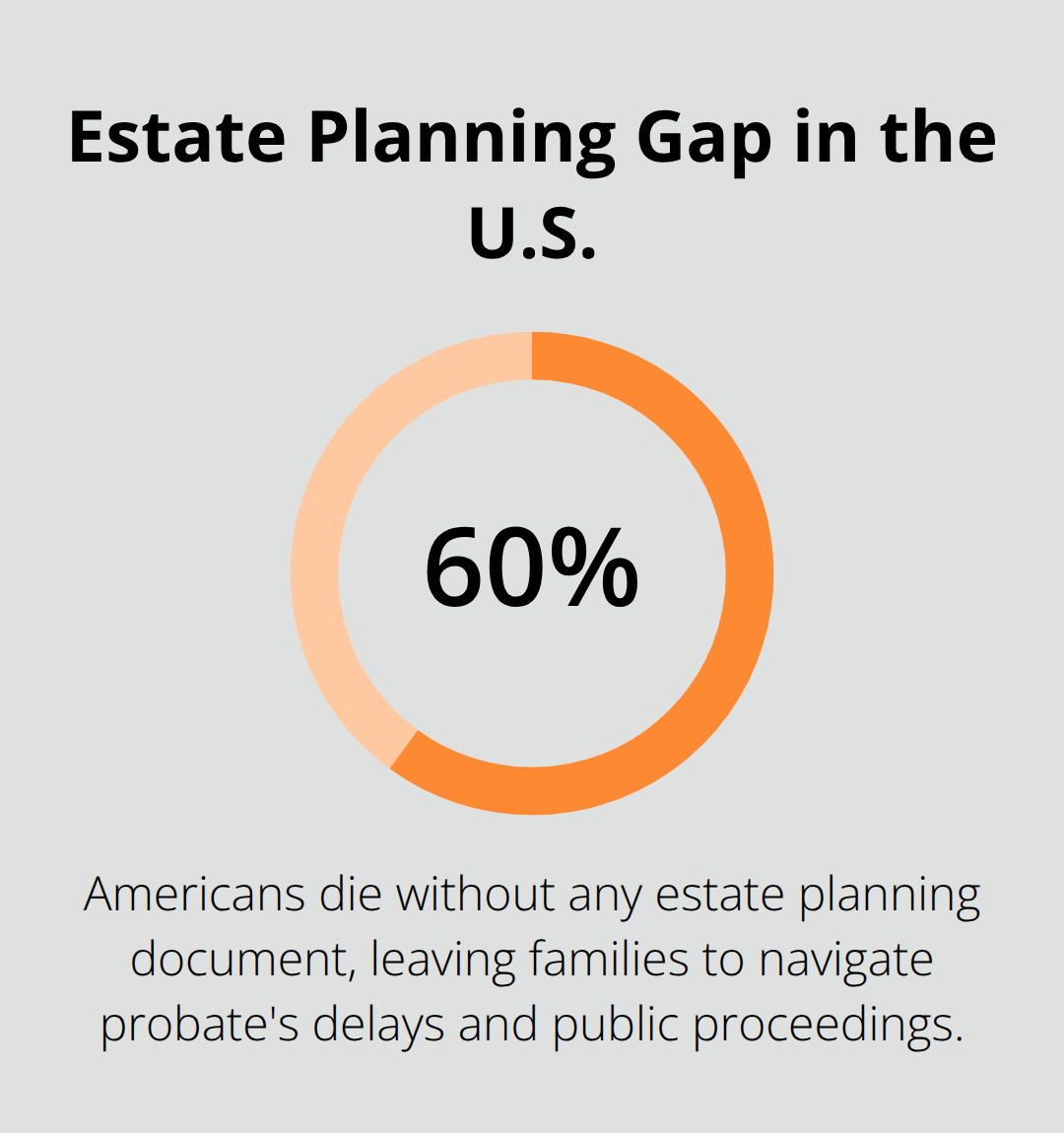
Families in Southern California often make three critical errors during probate that add months to the process and thousands to costs. The first mistake is avoiding trusts altogether. When someone dies with only a will, their estate automatically enters probate court, where it stays for nine to twelve months minimum. A revocable living trust bypasses probate entirely, allowing assets to transfer directly to beneficiaries within weeks. According to the American Academy of Estate Planners and Councils, approximately 60 percent of Americans die without any estate planning document, leaving their families to navigate probate’s delays and public court proceedings.
The True Cost of Skipping Trust Planning
The cost difference between probate and trusts is significant. Probate administration typically costs 3 to 7 percent of the estate’s total value in California, while a properly funded trust costs a fraction of that upfront and eliminates probate fees entirely. Many families believe they are too young or their estates too small for trusts, but this assumption costs them tens of thousands in unnecessary court costs and executor fees. A family with a $500,000 estate pays $15,000 to $35,000 in probate costs alone-money that could have stayed with heirs.
Property Titles and Beneficiary Designations Create Hidden Problems
The second major mistake involves property titles and beneficiary designations that don’t align with the person’s actual wishes. Real estate titled solely in the deceased’s name must go through probate before heirs can sell or refinance it, freezing the property for months. Bank accounts and investment accounts without named beneficiaries also enter probate, even if the deceased intended them to pass directly to family members. Life insurance policies, retirement accounts, and transfer-on-death accounts bypass probate only when beneficiary designations are current and correct.
Many people update their will but forget to update these designations, creating a mismatch between what the will says and what the accounts actually do. The beneficiary form on file with the bank or insurance company controls where that asset goes, regardless of what the will states. This single oversight (often made years earlier) can redirect thousands of dollars away from intended heirs.
Documentation Failures Trigger Delays and Family Conflict
The third mistake stems from inadequate record keeping. Executors cannot distribute assets without documenting every debt paid, every expense incurred, and every asset appraised. Missing receipts, unclear account statements, or vague property records force executors to reconstruct information months later, delaying distributions to heirs. Beneficiaries may challenge distributions if documentation is incomplete, triggering family disputes and legal costs that easily exceed $10,000.
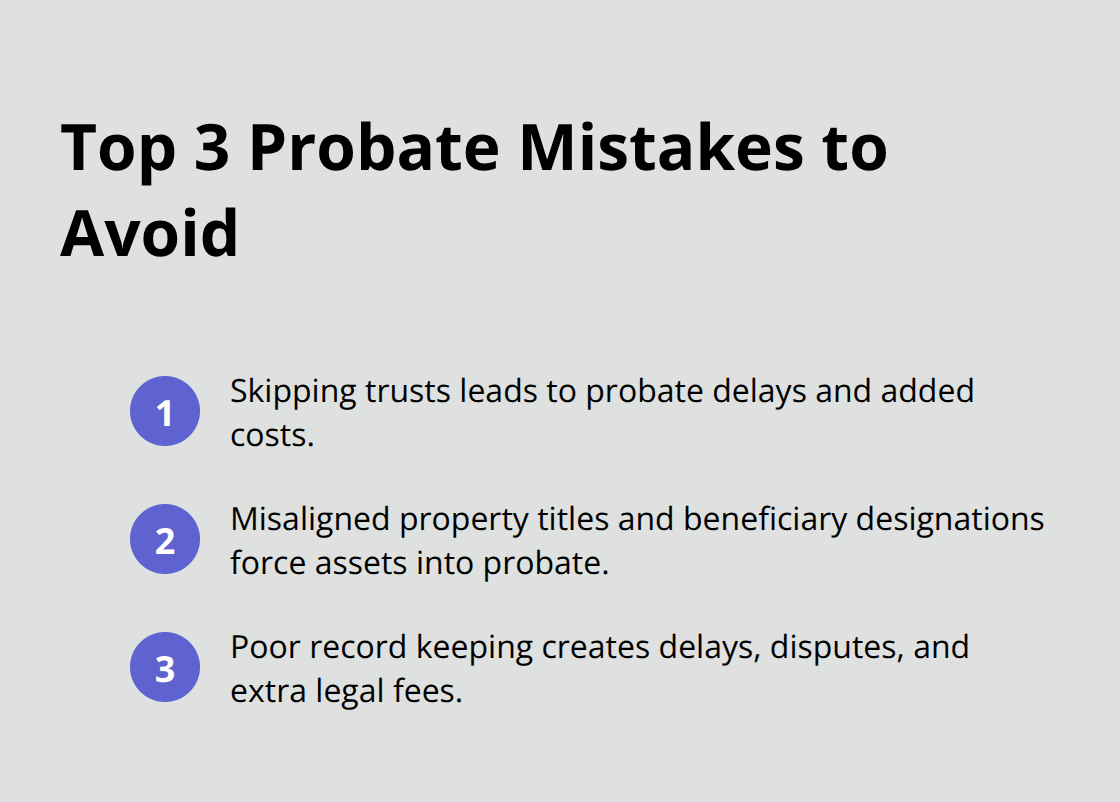
Maintaining a simple file with account statements, property deeds, insurance policies, and a list of digital assets takes minimal effort but saves executors and beneficiaries immense frustration during probate. These three mistakes-skipping trusts, misaligning titles and designations, and poor record keeping-create the foundation for the problems families face. Understanding how to avoid them positions your family to move forward smoothly, which is exactly what we address in the next section on how professional guidance simplifies the entire process.
How We Simplify Estate Administration
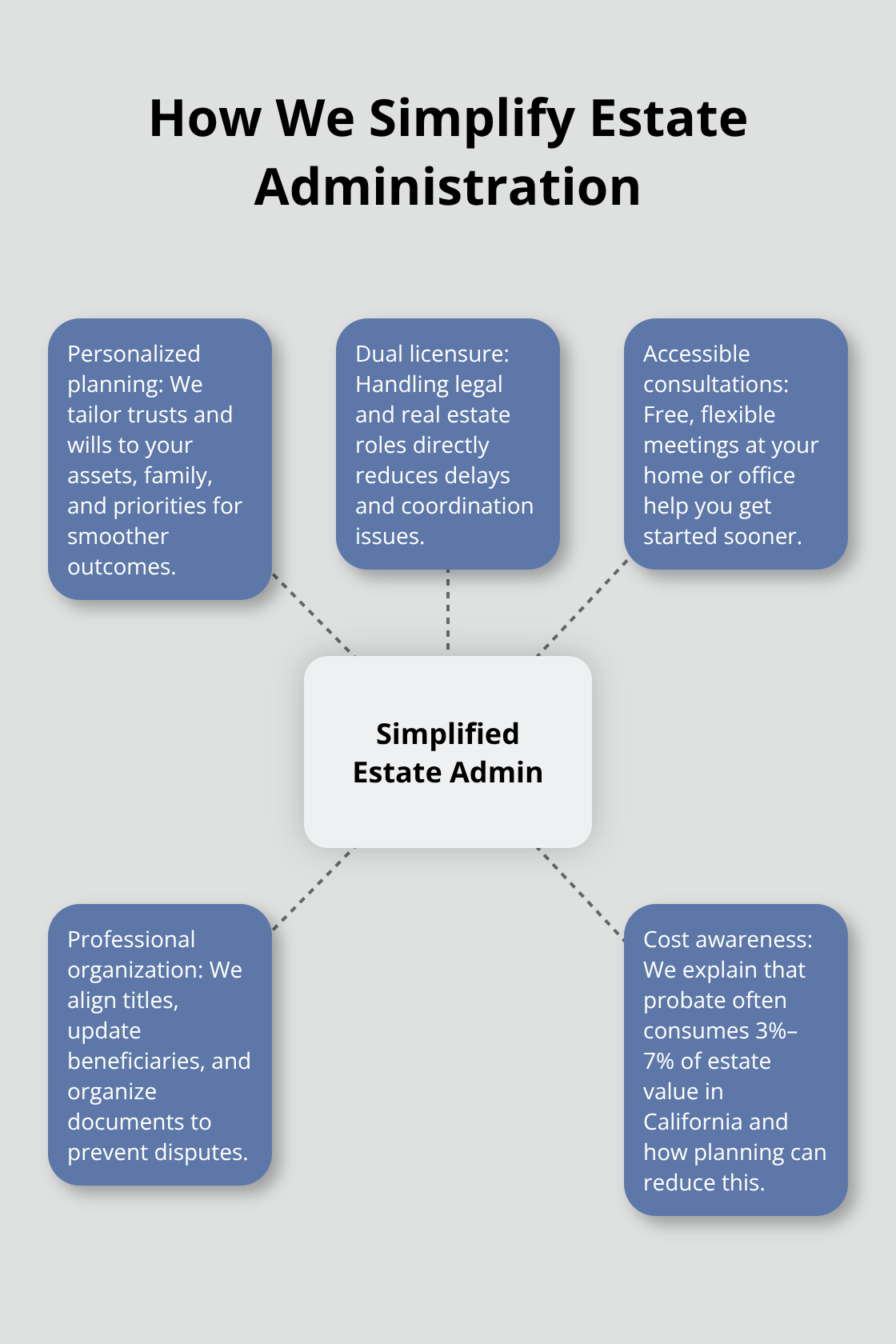
Navigating probate without professional guidance often leads to the exact mistakes covered in the previous section. We at Law Offices of Roshni T. Desai take a different approach by handling the complexity upfront so your family avoids costly delays and errors. Our process starts with understanding your specific situation rather than applying a generic template. During initial consultations, we ask detailed questions about your assets, family structure, and concerns-information that shapes whether a trust, will, or combination strategy works best for you. Many families discover they need trusts after learning that probate costs typically consume 3 to 7 percent of estate value in California.
Personalized Planning That Fits Your Family
We work with families across Southern California, and the pattern is consistent: those who plan ahead with proper trusts spend far less and experience significantly faster asset distribution. Your estate plan should reflect your actual priorities, not a one-size-fits-all approach that ignores your unique circumstances. We take time to understand what matters most to you-whether that’s protecting a family business, providing for minor children, or minimizing tax burden. This personalized foundation prevents costly mistakes later and gives your family confidence that your wishes will be carried out exactly as you intend.
Streamlined Property Transactions Through Dual Credentials
Our dual licensure as both an attorney and real estate professional streamlines estate-related property transactions in ways most firms cannot match. When an estate includes real property that needs to be sold or transferred, typical probate handling creates unnecessary delays and communication gaps between attorneys and real estate agents. We handle both roles directly, reducing transaction timelines and eliminating the coordination problems that usually add weeks or months to property sales.
This dual credential approach also reduces costs by cutting out intermediary fees and miscommunications that plague standard probate administration.
Accessible Consultations Remove Planning Barriers
Flexible consultations matter because estate planning should not require multiple trips to an office during stressful times. We offer free initial consultations with the option to meet at your home or office, removing barriers that prevent families from taking action. Many people delay estate planning because traditional legal offices feel formal and inconvenient, but proximity and accessibility change behavior. Families who meet in their own environment tend to ask more questions, share fuller details about their situation, and move forward with planning rather than continuing to procrastinate.
Professional Organization Prevents Future Problems
Documentation and record-keeping become significantly easier when you have professional guidance from the start. We help families organize their financial information, update beneficiary designations correctly, and ensure property titles align with their actual wishes. This systematic approach prevents the reconstruction nightmares that plague executors months into probate. When your documentation is complete and accurate before probate begins, distributions move faster and beneficiary disputes become far less likely.
Final Thoughts
Estate and probate administration doesn’t require months of stress or thousands in preventable costs. The families who move through this process smoothly act before crisis forces their hand. Planning ahead with proper trusts, updating beneficiary designations, and organizing financial records transforms what could be an overwhelming experience into a manageable one.
Your family’s financial security depends on decisions you make today. Waiting until probate becomes necessary means your heirs face nine to twelve months of court delays, public proceedings, and administration costs that consume 3 to 7 percent of your estate’s value. A revocable living trust eliminates these delays entirely, allowing assets to transfer to beneficiaries within weeks instead.
We at Law Offices of Roshni T. Desai help Southern California families navigate estate planning and probate administration with personalized solutions that fit your specific situation. Schedule a free consultation with us today-we offer flexible meetings at your home or office and will answer your questions about what estate and probate administration looks like for your family.