




Estate Liquidation Planning: Selling Assets with Care
Selling assets from an estate requires more than just listing items for sale. Without proper planning, you risk losing thousands to taxes, missing market opportunities, and making costly mistakes that could have been prevented.
We at Law Offices of Roshni T. Desai help families navigate estate liquidation planning with strategies that protect their assets and minimize tax exposure. This guide walks you through the common pitfalls, preparation steps, and tax-efficient approaches that make the difference between a rushed sale and a thoughtful one.
Common Mistakes in Estate Asset Sales
Rushing Sales Without a Strategic Plan
Most families rush estate liquidation without a clear strategy, and the financial damage is substantial. The IRS reports that improper asset sales during estate administration result in unnecessary tax liabilities that proper planning would have prevented. Selling without understanding the stepped-up basis rule alone can cost heirs tens of thousands in capital gains taxes. Many executors list properties at market value without considering whether waiting six months might yield a better price or whether selling certain assets in a specific order creates tax advantages.
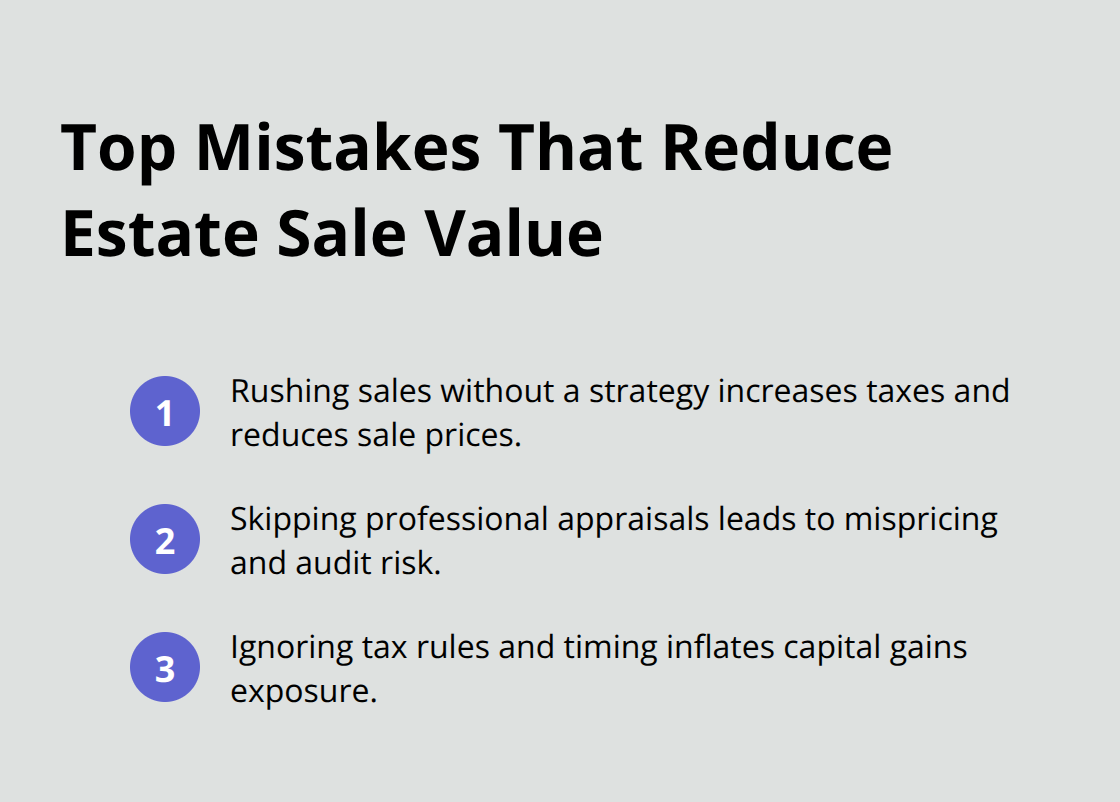
The mistake isn’t just about getting less money-it’s about paying more in taxes than necessary while leaving value on the table.
Skipping Professional Appraisals
Professional appraisals are non-negotiable, yet many families skip this step to save a few hundred dollars and lose thousands as a result. Without independent valuations, you either underprice assets and walk away from money or overprice them and watch them sit on the market. Tax authorities scrutinize estate valuations, and weak appraisals trigger audit risk and penalties. Capital gains taxes hit harder when assets are sold without documentation showing their fair market value at the date of death.
Getting professional appraisals upfront costs money but protects far more by creating the documentation that supports lower tax obligations and prevents disputes with the IRS. The documentation you build now becomes your shield against tax complications later.
Understanding Tax Exposure
Capital gains taxes represent one of the largest hidden costs in estate liquidation. Many heirs pay taxes on inflated profits that proper planning would have eliminated entirely. The stepped-up basis rule (a provision that resets an asset’s value at the owner’s death) offers significant tax relief, but only if you structure the sale correctly. Timing matters-selling assets in the wrong order or at the wrong time can trigger unnecessary tax brackets and penalties.
This is where preparation becomes your advantage. Understanding these tax implications before you list a single property positions you to make decisions that protect your inheritance rather than erode it.
How to Prepare Assets for Sale
Create a Complete Inventory
Getting assets ready for sale is where most families stumble, and it’s where preparation separates heirs who walk away with full value from those who leave money behind. You must create a complete inventory of everything being sold. This means photographing each item, documenting condition, recording serial numbers for high-value goods, and noting any special features that affect value. Many executors skip this work and rely on memory or rough notes, which creates problems when the IRS questions valuations or when buyers dispute condition claims.
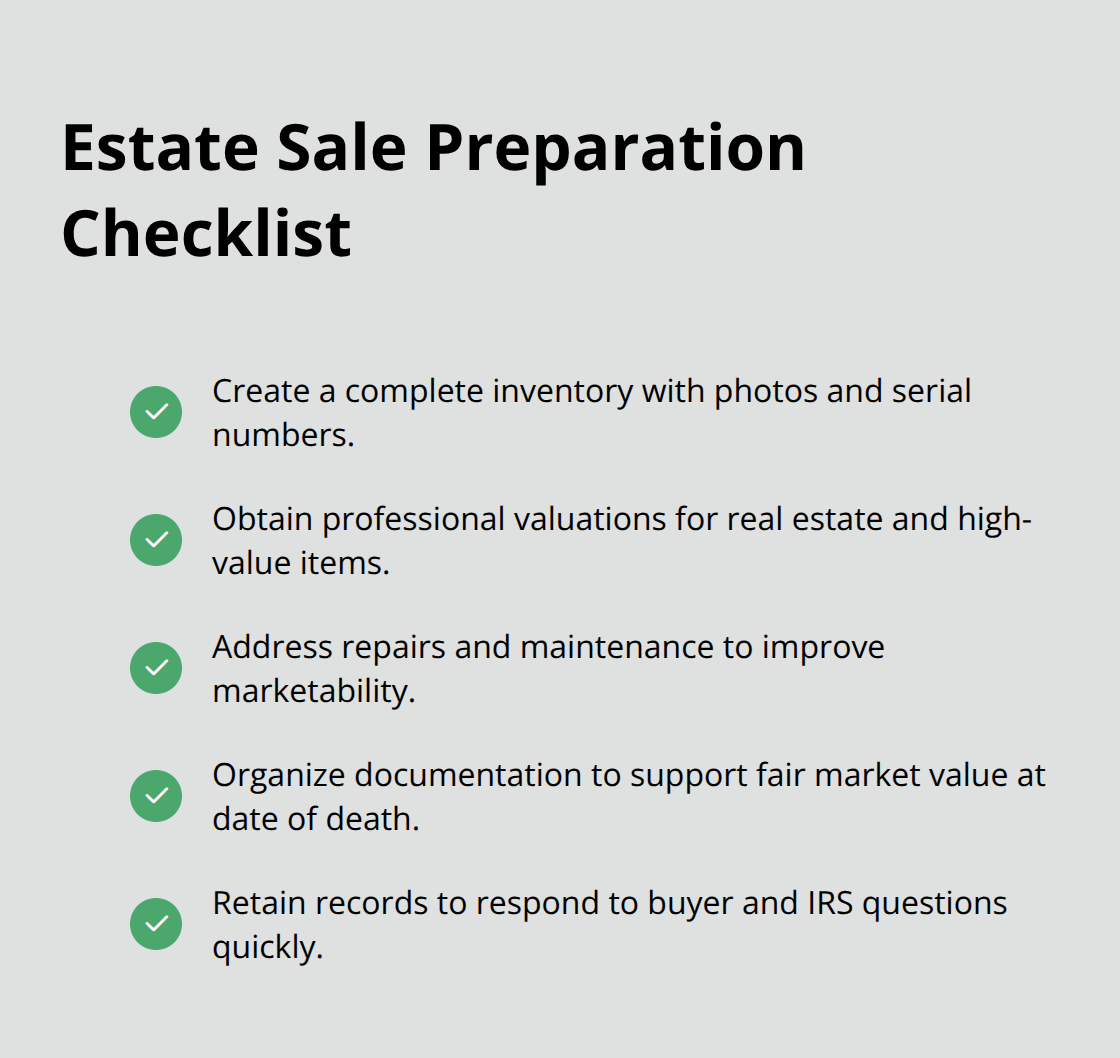
You spend time now documenting what you have, and you’ll have proof later if anyone challenges your numbers.
Obtain Professional Valuations
Professional valuations aren’t optional if you want accurate pricing and tax protection. A licensed appraiser should value real estate with knowledge of local market conditions, and that appraisal becomes your legal defense against capital gains disputes. For personal property, you should get separate valuations for anything worth over five thousand dollars. Antiques, jewelry, fine art, and collectibles need qualified appraisers who focus on those categories, not general estate sale companies trying to move inventory quickly. These valuations cost between three hundred and two thousand dollars depending on complexity, but they protect far more in tax liability. The documentation from professional appraisals establishes the asset’s fair market value at the date of death, which directly reduces your capital gains tax obligation. Without these appraisals, the IRS assumes higher values, which means higher taxes on the sale.
Address Repairs and Maintenance
Before listing anything, you should address necessary repairs and maintenance that affect marketability. A property with a leaking roof or deferred maintenance sells for significantly less than one in reasonable condition, and the cost to fix problems often proves cheaper than accepting a lower sale price. For real estate, a professional home inspection identifies what needs attention before listing. For vehicles, you should get them detailed and serviced. For personal property, you should clean and restore items to presentable condition. These steps aren’t about perfection; they’re about removing barriers that cause buyers to walk away or offer substantially lower prices. The investment in preparation typically returns three to five times its cost in improved sale prices.
Once your assets are properly documented, valued, and maintained, the next critical phase involves understanding how tax rules affect when and how you sell these items.
Tax-Efficient Strategies for Estate Asset Sales
Understanding the Stepped-Up Basis Rule
The stepped-up basis rule fundamentally changes how you should approach selling inherited assets, yet most families either ignore it or misunderstand its power. When someone dies, their assets receive a stepped-up basis, meaning the IRS resets the asset’s value to its fair market value on the date of death rather than the original purchase price. This single rule can eliminate capital gains taxes entirely on inherited property. If your parent bought a house for $200,000 forty years ago and it’s now worth $800,000, you inherit it at the $800,000 value. Selling it immediately after inheriting means zero capital gains tax.
Waiting two years to sell means paying capital gains tax on any appreciation beyond $800,000 during those two years. The difference between selling quickly versus holding inherited assets can be tens of thousands of dollars in unnecessary taxes. This isn’t theoretical-it’s the primary reason timing your estate asset sales matters more than most families realize.
Sequencing Sales to Minimize Tax Brackets
The order in which you sell assets directly impacts your total tax burden, and this is where most executors make expensive mistakes. Selling appreciated real estate in one tax year while liquidating investment accounts in another can trigger different tax brackets and alternative minimum tax calculations. Some assets generate ordinary income (like retirement accounts or rental property depreciation recapture) while others generate capital gains (like stocks or real estate appreciation).
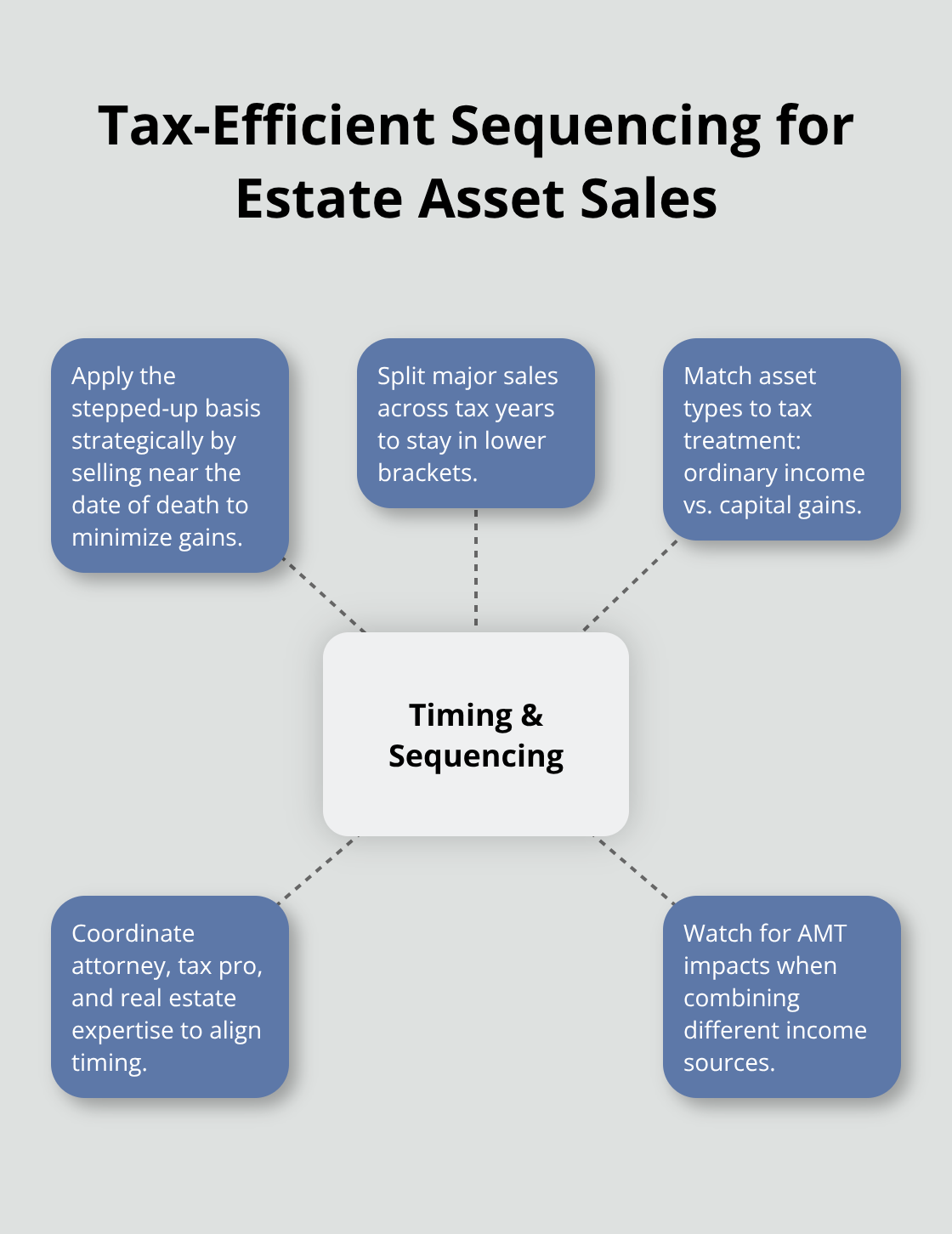
Selling high-income-producing assets in a year when the estate has lower income from other sources reduces overall tax rates. If you’re selling multiple properties, you might accelerate one sale into the current year and defer another into the following year to spread income across two tax returns and stay in lower brackets. This coordination prevents costly sequencing errors that you cannot undo once assets sell.
Coordinating Legal and Property Expertise
At Law Offices of Roshni T. Desai, Ms. Desai’s dual licensure as both an attorney and real estate professional streamlines the legal and property aspects of estate sales simultaneously. This coordination eliminates delays and positions your sale timing to align with your tax strategy rather than work against it. For high-value estates with multiple properties or significant appreciated assets, consulting with both a tax professional and an attorney before listing anything protects your inheritance from preventable tax mistakes.
Final Thoughts
Estate liquidation planning succeeds when you treat asset sales as a coordinated strategy rather than isolated transactions. The mistakes outlined earlier-rushing sales, skipping appraisals, and ignoring tax timing-all stem from attempting complex decisions without proper guidance. Families who retain full value from their estates invest time upfront in documentation, professional valuations, and tax coordination before listing anything.
The stepped-up basis rule alone justifies professional involvement, since selling inherited property at the wrong time or in the wrong sequence can cost tens of thousands in unnecessary capital gains taxes. A real estate professional who understands tax implications coordinates timing differently than one focused solely on quick sales. An attorney who handles both the legal and property aspects of estate administration prevents communication gaps that delay sales or create tax complications.
Contact a professional who understands both the legal structure of estate administration and the tax implications of asset sales. We offer free consultations with flexible scheduling at your home or office. Visit Law Offices of Roshni T. Desai to discuss your specific situation and learn how proper planning protects your inheritance from preventable mistakes.