




Estate planning probate coordination: Synchronizing Wills, Trusts, and Probate
Most people create a will and think their estate planning is complete. They don’t realize that wills alone leave gaps in asset protection, tax planning, and probate efficiency.
Estate planning and probate coordination requires synchronizing multiple documents so your family avoids costly delays and unnecessary taxes. We at Law Offices of Roshni T. Desai help families build coordinated plans that actually work.
How Wills and Trusts Actually Work Together
Public Records vs. Private Asset Transfer
A will becomes public record when it enters probate. Your family, creditors, and anyone else can access the details of what you owned and who received it. A trust, by contrast, remains private. This privacy difference alone makes trusts essential for families who want to keep financial information confidential.
Wills handle asset distribution after probate concludes, typically taking six months to two years depending on your state and the complexity of your estate. Trusts distribute assets immediately upon your death, outside probate entirely. This speed matters when your family needs access to funds quickly.
The Real Cost of Probate Delays
According to the American College of Trust and Estate Counsel, approximately 55% of American adults have no will or trust, leaving their families vulnerable to court delays and unnecessary costs. If you own real estate, have minor children, or possess assets worth more than $100,000, a will alone creates significant problems.
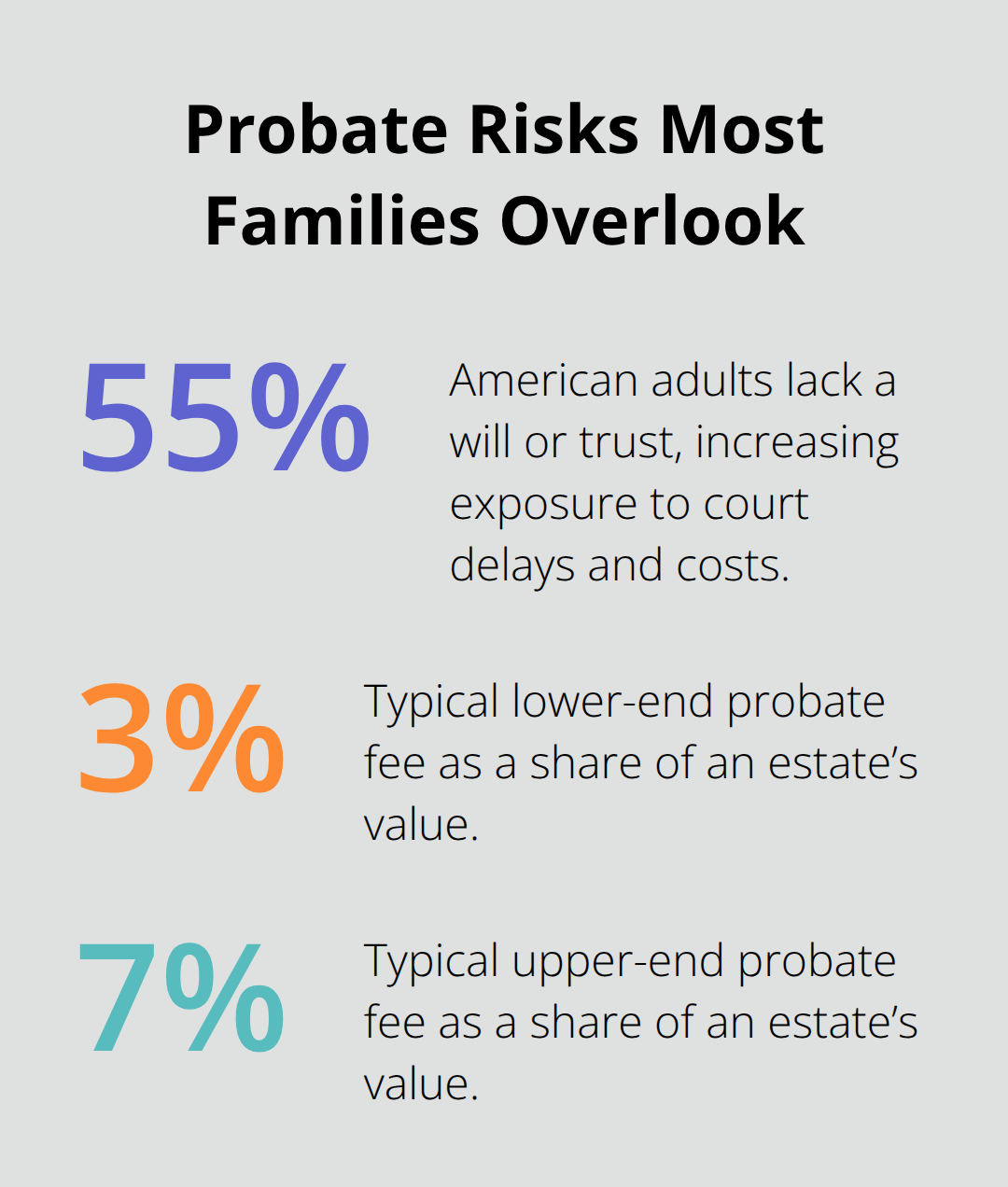
Probate fees typically consume 3% to 7% of your estate’s value, meaning a $500,000 estate could cost $15,000 to $35,000 just to process through the court system. These costs add up quickly when your family waits months for access to their inheritance.
How Trusts Control Your Assets Better
Trusts let you specify exactly how and when your beneficiaries receive money. You can direct that a child receives funds at age 25, 30, or 35 instead of all at once. You can protect assets from a beneficiary’s creditors, divorce proceedings, or poor financial decisions. A will cannot do this-wills simply transfer ownership, while trusts actively manage and protect what you leave behind.
Many people mistakenly believe a trust costs too much to create. The reality is that a properly funded revocable living trust costs significantly less than the probate fees you avoid.
The Coordination Problem Most Families Miss
The fatal flaw in most estate plans is incomplete coordination. Families create a trust but leave assets titled in their personal names. They name a beneficiary on a retirement account but never update it after divorce or remarriage. They write a will and a trust without ensuring the documents work together.
These gaps force your family back into probate anyway, defeating the entire purpose of having a trust. Proper coordination means your family avoids probate delays and your assets transfer exactly as you intended. The next section reveals the specific mistakes that create these coordination failures-and how to prevent them from derailing your family’s financial security.
Aligning Your Estate Documents with Probate Law
Coordination failures happen because most people treat their will and trust as separate documents instead of interconnected parts of one system. When assets remain titled in your personal name instead of transferred to your trust, probate claims those assets anyway, negating the trust’s protection. When beneficiary designations on retirement accounts and life insurance policies don’t match your overall plan, your family inherits assets in ways you never intended. The National Association of Estate Planners and Councils reports that 60% of families with trusts still experience probate delays because their assets were never properly transferred into the trust during their lifetime. This coordination gap costs families an average of $3,000 to $5,000 in additional legal fees and delays inheritance by several months.
Three Documents That Must Work Together
Your will, trust, and beneficiary designations form a three-part system. Your will should pour over into your trust, catching any assets you forgot to transfer during your lifetime and directing them into the trust upon your death. Beneficiary designations on retirement accounts, IRAs, and life insurance policies must align with your overall goals-not contradict them.

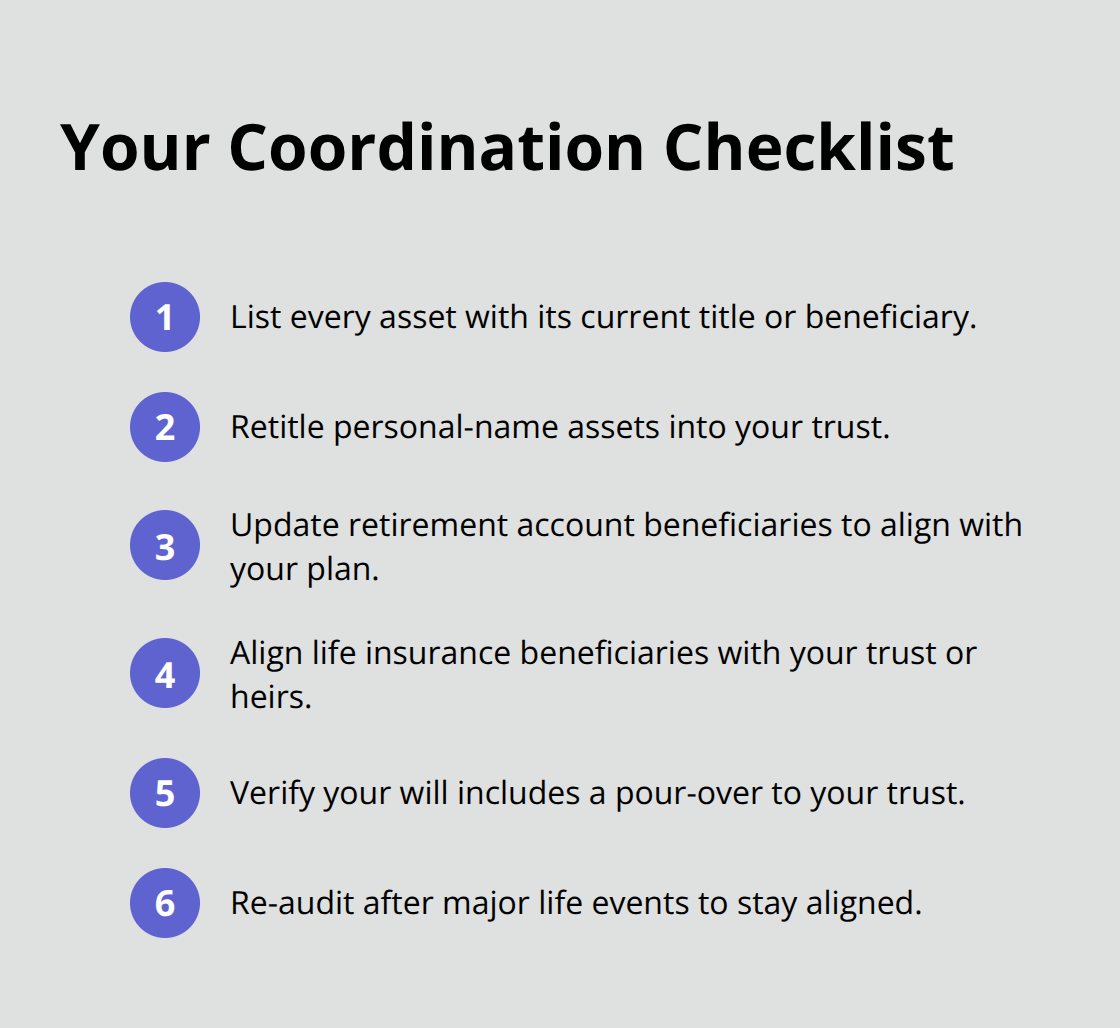
If your trust names your children as beneficiaries but your IRA still lists your ex-spouse, that IRA bypasses your trust entirely and goes directly to your ex. This mistake destroys years of careful planning. The fix is straightforward: audit every asset you own, verify its title or beneficiary designation, and confirm it matches your trust structure.
The Specific Coordination Steps That Matter
Start with a complete asset inventory listing everything you own-real estate, bank accounts, investment accounts, retirement funds, business interests, and personal property. Next to each asset, write down exactly how it’s titled or who the current beneficiary is. Then compare this to your trust document and see what doesn’t match. Assets titled in your personal name should be retitled into your trust’s name before you die. Retirement accounts typically cannot be retitled, but you can and must update the beneficiary designation to either your trust or directly to your intended beneficiaries. Life insurance policies work the same way. This process takes a few hours of focused work, not weeks.
Why Most Families Miss These Coordination Steps
Most coordination problems stem from people never completing this simple audit, then their family discovers the gaps after they pass away when it’s too late to fix anything. The assets that remain outside your trust still enter probate, which means your family waits months for access to funds and pays thousands in court fees. Your beneficiary designations (which bypass your trust entirely) may contradict your overall wishes, leaving some family members with nothing while others receive more than you intended. These oversights happen not because people lack intelligence, but because they lack a clear system for tracking and aligning their documents. The coordination work itself is straightforward-the challenge is knowing what to look for and when to take action. The next section reveals how proper coordination also protects your assets from taxes and creditors, turning your estate plan from a basic document into a comprehensive financial strategy.
Asset Protection and Tax Efficiency Through Proper Coordination
How Coordination Reduces Estate Taxes
Proper coordination between your will and trust directly reduces the taxes your family pays. Federal estate taxes apply to estates exceeding $13.61 million in 2024, according to the Internal Revenue Service, but state-level estate taxes hit much lower thresholds. California does not impose a state estate tax, but if your family owns property in other states or plans to relocate, you face combined tax exposure that coordination can minimize.
A revocable living trust alone does not reduce estate taxes, but when coordinated with other strategies like bypass trusts or irrevocable life insurance trusts, your family avoids thousands in unnecessary tax liability. The coordination work involves ensuring beneficiary designations on retirement accounts flow through your trust structure rather than directly to individuals, which allows you to control how those assets are taxed and distributed across generations. Many families with assets between $1 million and $3 million skip this coordination entirely and lose 20% to 40% of their wealth to taxes that proper planning would have prevented.
Shielding Assets From Creditors and Claims
Asset protection through coordination works because trusts shield your property from creditors in ways wills cannot. When you place real estate, investments, and business interests into an irrevocable trust during your lifetime, creditors cannot seize those assets if you face a lawsuit or judgment. This protection matters if you own a business, practice a profession with liability exposure, or hold significant real estate.
Coordination ensures that assets vulnerable to claims move into protective trust structures while those less at risk remain in simpler arrangements. The difference between a protected asset and an unprotected one often comes down to whether that asset sits inside or outside your trust framework. Your successor trustee executes one unified plan rather than juggling a will, multiple trusts, and scattered beneficiary designations.
Streamlining Administration and Reducing Costs
This streamlined approach reduces the time your family spends on paperwork after your death and cuts the legal fees they pay to administrators and attorneys who must untangle conflicting documents. When everything coordinates properly, your estate administration moves forward without the delays that plague families with fragmented plans. The administrative burden of managing multiple separate documents vanishes when your will, trust, and beneficiary designations work as one system.
We at Law Offices of Roshni T. Desai help families build these coordinated systems during their lifetime so probate becomes unnecessary and tax liability stays minimal.
Final Thoughts
Estate planning probate coordination protects your family from delays, taxes, and unnecessary court involvement. The coordination work you do today-retitling assets, updating beneficiary designations, and synchronizing your will with your trust-determines whether your family inherits smoothly or gets trapped in probate for months. Most families discover coordination gaps only after someone dies, when it’s too late to fix anything.
Your beneficiary designations contradict your trust, assets remain titled in your personal name instead of your trust, and your will and trust work against each other instead of together. These mistakes cost families thousands in additional legal fees and delay inheritance by months or years. The solution is straightforward: build your coordinated plan while you’re alive and able to make changes.
Complete the asset inventory, retitle property into your trust, update every beneficiary designation, and verify your will pours over into your trust. This coordination transforms your estate plan from scattered documents into a unified system that protects your legacy.
Visit Law Offices of Roshni T. Desai to schedule your free consultation and start building the coordinated estate plan your family deserves.