




Estate Probate Administration: Protecting Your Legacy
Estate probate administration often goes wrong when families skip basic planning steps. Mistakes like failing to update beneficiaries or losing track of assets can cost thousands in unnecessary fees and delays.
We at Law Offices of Roshni T. Desai help families avoid these costly errors by walking through what actually works.
Mistakes That Drain Your Estate Before Distribution
Outdated beneficiary designations cause far more damage than most families realize. When a policy or account names an ex-spouse, a deceased child, or simply lists the estate itself as beneficiary, those assets bypass your will entirely and go where you never intended. The IRS allows beneficiary forms to override your will completely, which means a forgotten designation redirects hundreds of thousands of dollars away from your heirs. Life insurance policies, retirement accounts like 401(k)s and IRAs, and transfer-on-death accounts all operate this way. Most families discover this problem only after death, when correction becomes impossible. You must review every single beneficiary form at least every three years, more often if you’ve experienced major life changes like marriage, divorce, or the birth of children. Contact your bank, insurance company, and investment firms to verify the current designations on file. If any form is missing or outdated, request corrected paperwork immediately and keep copies for your records.
Forgotten Accounts Drain Estate Resources
Small bank accounts, forgotten savings bonds, and overlooked insurance policies add up fast. Americans leave an average of $1,000 per household in unclaimed funds annually, but in probate situations the numbers climb much higher because heirs simply don’t know these accounts exist. Your executor cannot distribute assets they cannot find, which means months of delays while banks are contacted and old statements are tracked down. During this time, probate fees continue to accrue. Create a complete asset inventory right now that lists every account, its current balance, the institution name, account number, and the title (whether it’s in your name alone, joint, or in trust). Include life insurance policies, retirement plans, safe deposit boxes, and any property deeds. Store this list somewhere accessible to your family or executor, not locked away where nobody can find it.
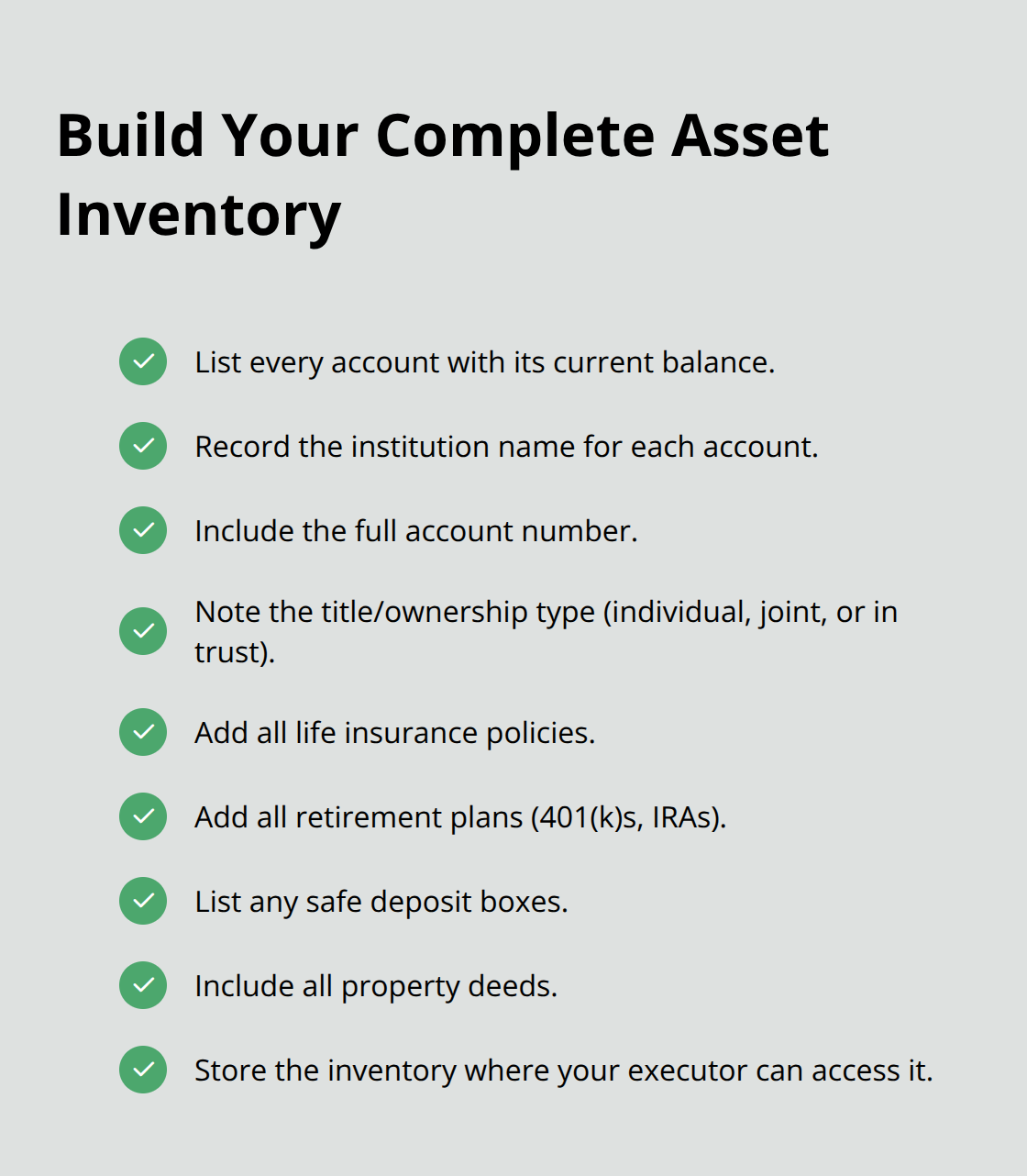
This single document cuts probate processing time in half and prevents assets from being missed entirely.
Disorganized Documents Create Chaos During Administration
When financial records scatter across multiple locations or remain stored in ways nobody understands, the probate process stalls immediately. Executors waste weeks searching for tax returns, deed records, account statements, and insurance policies. Courts in Maryland require an inventory of all assets within three months of appointment, and this deadline becomes impossible to meet when documents go missing or remain disorganized. Store all critical documents in one central location-either a physical folder or a secure digital system that your executor can access quickly. Include the original will, trust documents, deeds, insurance policies, bank statements, investment statements, and a list of all account usernames and passwords stored securely. Add a letter of instruction that explains what you want sold, what you want kept, and how you want personal items distributed (this preparation costs nothing but saves your estate thousands in administrative fees). These steps prevent months of unnecessary delay and help your executor move forward with confidence.
Why Professional Guidance Matters Now
Families who tackle probate administration alone often miss critical deadlines and overlook assets that should have been protected. The complexity of Maryland’s probate requirements-including the List of Interested Persons, Inventory filings, and First Account preparation within nine months-leaves little room for error. A significant mistake is trying to manage probate without legal guidance on tax obligations, as federal estate taxes apply to estates exceeding 13.61 million. We at Law Offices of Roshni T. Desai offer free consultations to help you understand whether your current plan exposes your family to these costly mistakes. Our approach focuses on identifying gaps in your beneficiary designations, organizing your asset records, and establishing structures that protect what matters most.
How to Skip Probate Before It Starts
Revocable Living Trusts Move Assets Without Court Involvement
A revocable living trust stands as the single most effective tool to move assets to your heirs without probate court involvement. Unlike a will, which must go through probate, a trust transfers assets directly to beneficiaries once you die, bypassing the court system entirely. This matters because Maryland probate requires filing an Inventory within three months of appointment and a First Account within nine months-deadlines that create pressure and expense. A properly funded living trust eliminates those court filings, the associated fees, and the months of waiting.
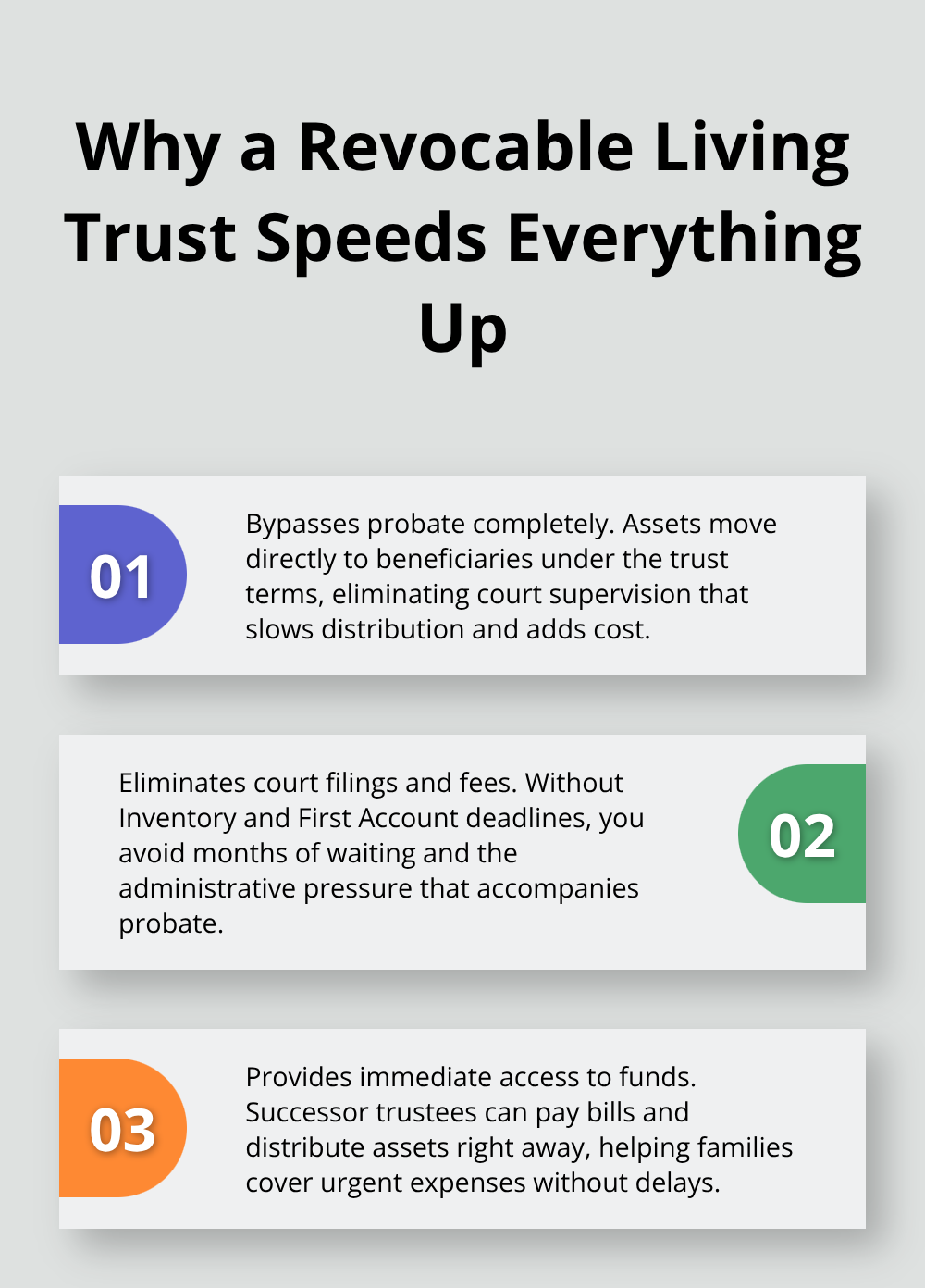
You create the trust while alive, fund it by retitling assets into the trust’s name, and name a successor trustee to manage distribution after death. Real estate, investment accounts, and business interests all move into the trust during your lifetime, which means they pass outside probate when you die. The trade-off is modest: you pay for trust preparation upfront (typically $1,500 to $3,000 for a comprehensive plan) instead of paying probate court fees and attorney time later.
Forbes research from May 2024 found that families save significant time and money when they avoid probate, and a trust is the primary mechanism to accomplish this. Your successor trustee can access funds immediately after death to cover expenses, pay creditors, and distribute assets without waiting for court approval. This flexibility proves invaluable when beneficiaries need funds for housing, medical care, or immediate expenses that cannot wait months for probate to conclude.
Alternate Executors and Trustees Protect Your Plan
Naming alternate executors and trustees protects your plan if your first choice becomes unwilling or unable to serve. Many families name only one executor, then face chaos when that person dies, moves away, or declines the role after the estate opens. Maryland law requires an appointed personal representative to file accounts, manage creditor claims, and prepare tax filings-responsibilities that demand reliability and availability.
Name at least one successor executor in your will and a successor trustee in your trust documents, ensuring both understand their potential duties before appointment. Store all critical documents together so your primary choice and backup can locate them immediately. Create a detailed asset map listing account numbers, financial institutions, property locations, and current balances, then provide copies to your executor and trustee so they can act without months of searching. This preparation cuts administration time substantially and prevents disputes over who should lead the process.
Review these designations every three to five years, as circumstances change and individuals may no longer be suitable choices. A successor who moved out of state or faces health challenges may no longer serve your family’s interests. Updating your documents proactively prevents your estate from stalling when the person you named cannot fulfill the role.
What Happens When Your Trust Takes Effect
Once your trust is properly funded and in place, the real advantage emerges after death. Your successor trustee steps in immediately without waiting for court appointment or Letters of Administration. This trustee accesses accounts, pays final bills, and distributes assets according to your instructions-all outside the public probate process. Beneficiaries receive their inheritance faster, and your family’s financial details remain private rather than becoming part of the public court record.
The trustee’s authority flows directly from the trust document itself, not from a judge’s order. This means no delays waiting for court approval, no publication of notices to creditors (though the trustee still must handle legitimate claims), and no monthly accounting requirements to satisfy a probate judge. Your family moves forward with dignity and speed while protecting assets that might otherwise sit frozen in probate for months.
The Role of Professional Probate Administration
Maryland’s Strict Deadlines Leave No Room for Error
Probate administration demands precision that most families cannot manage alone. Maryland’s probate system requires filing a List of Interested Persons within 20 days of appointment for regular estates, preparing a complete Inventory within three months showing date-of-death values for every asset solely owned by the deceased, and submitting a First Account within nine months detailing all receipts, disbursements, and distributions. Missing even one deadline triggers court sanctions, delays distributions to beneficiaries, and compounds administrative costs.
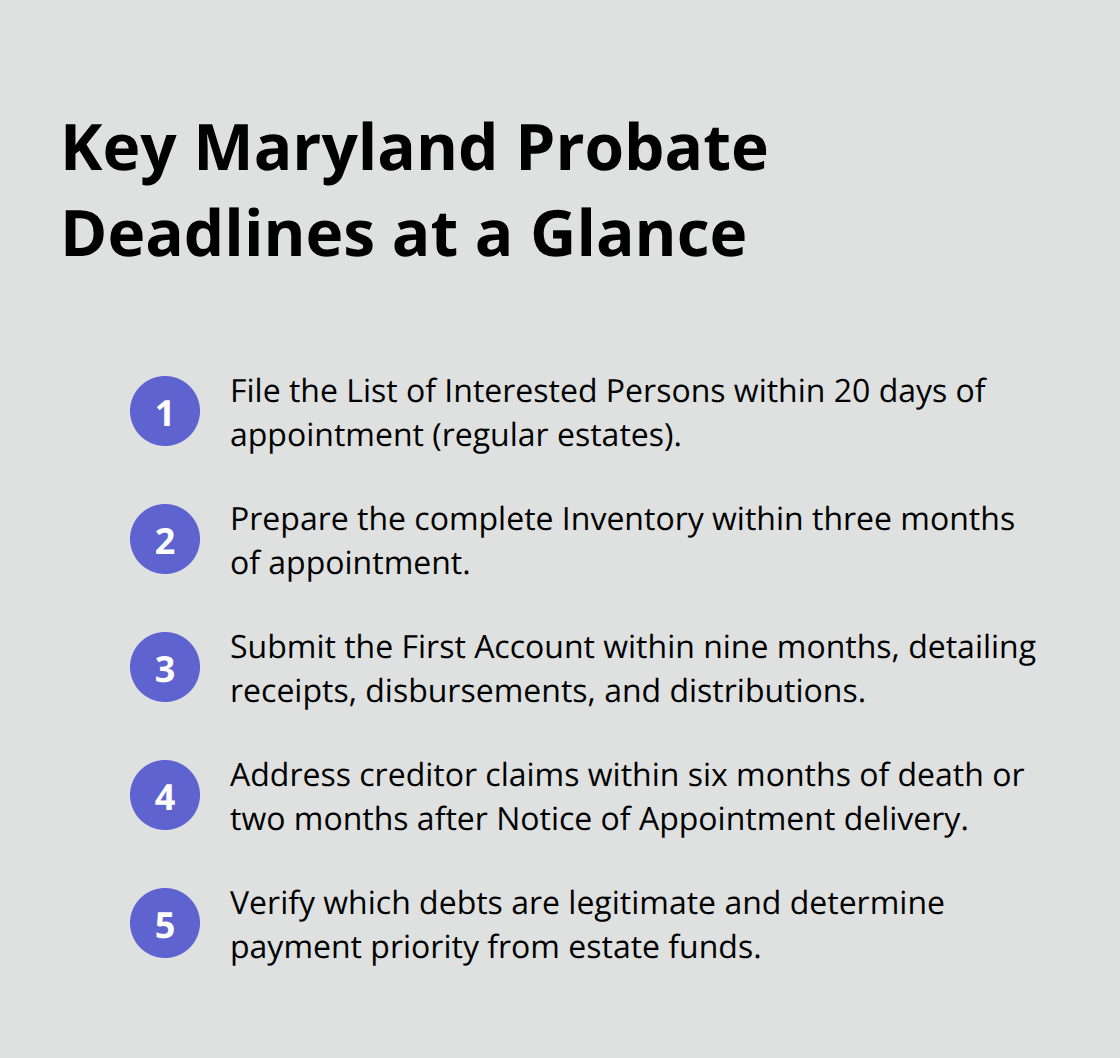
The personal representative must also handle creditor claims within the six-month window following the decedent’s death or two months after Notice of Appointment delivery, verify which debts are legitimate, and determine payment priority from estate funds.
Tax Filings and Asset Valuations Require Professional Knowledge
Tax obligations add another layer of complexity to probate administration. The executor files the deceased’s final income tax return on Form 1040 or 1040-SR, obtains an Employer Identification Number for the estate, and files Form 1041 if the estate generates more than $600 in annual income. For larger estates exceeding $13.61 million in assets, federal estate tax returns on Form 706 become necessary. Asset valuation requires professional appraisals for real estate, jewelry, art, and business interests to establish accurate date-of-death values for both distribution and tax purposes. These valuations directly affect tax liability and distribution amounts, making accuracy essential to protecting beneficiaries’ interests.
Family Disputes Intensify When Administration Stalls
Family disputes emerge predictably when administration drags on or when beneficiaries question how assets were valued or distributed. Creditor claims against the estate sometimes exceed available funds, forcing difficult decisions about which obligations receive payment first. Disagreements over whether to sell property quickly or hold it for appreciation, whether to continue operating a family business or liquidate it, and how to interpret ambiguous language in the will consume months of conflict that delay final distribution. Professional administration separates emotional family dynamics from financial necessity, allowing decisions to rest on legal requirements and fiduciary duty rather than personal relationships. An experienced probate administrator communicates clearly with all interested parties about timelines, asset values, and distribution calculations, reducing misunderstandings that fuel disputes. When genuine conflicts arise, having an impartial third party managing the estate protects all beneficiaries and shields the personal representative from accusations of favoritism or mismanagement. The cost of professional administration typically ranges from 3 to 7 percent of estate value, which proves modest compared to the legal fees and family conflict that result when administration stalls or assets are improperly handled.
Final Thoughts
Your family’s financial security rests on decisions you make today, not on hoping everything works out after you’re gone. Estate probate administration involves strict deadlines, complex tax filings, and asset valuations that demand accuracy from the start. Mistakes in beneficiary designations, disorganized records, or missed court deadlines cost families thousands in unnecessary fees and delays that could have been prevented.
Professional guidance separates emotion from financial necessity when administration matters most. When probate stalls or assets are mishandled, family relationships suffer and legal costs multiply rapidly. An experienced probate administrator communicates clearly with all interested parties, handles creditor claims properly, and meets tax obligations on time-protecting beneficiaries while shielding the personal representative from accusations of favoritism (the cost typically ranges from 3 to 7 percent of estate value, which proves modest compared to the conflict that results when families navigate probate alone).
Your next step is straightforward: gather your current beneficiary forms, create a complete asset inventory, and review whether your documents reflect your actual wishes. We at Law Offices of Roshni T. Desai offer free consultations to help you understand your current exposure and design a plan that protects what matters most. Contact us today to take control of your legacy.