




Executors Probate Guidance: Essential Steps for a Confident Administration
Serving as an executor brings real responsibility and complexity. Many executors feel overwhelmed by the legal requirements, court deadlines, and financial decisions they must navigate.
We at Law Offices of Roshni T. Desai created this executors probate guidance to walk you through each phase of estate administration. You’ll learn the steps that matter, the mistakes to avoid, and when to bring in professional support.
What Executors Actually Need to Do
Your Core Legal Obligations
An executor’s job boils down to three core responsibilities: managing the deceased’s assets, paying legitimate debts, and distributing what remains to beneficiaries. This isn’t optional or flexible-it’s a legal obligation backed by court oversight. You’re held to what’s called a fiduciary standard, which means you must act in the estate’s best interest, not your own. The court expects you to handle everything with the same care you’d use for your own finances. Violations can result in personal liability, meaning creditors or beneficiaries can pursue you individually for losses.
California’s Strict Timelines and Court Requirements
California probate courts take executor duties seriously. You must file specific documents within strict timelines: the initial petition within 30 days of receiving the will, an inventory within 90 days, and account statements at regular intervals. Missing even one deadline can trigger court sanctions or force you to post a bond to cover potential damages. The timeline from start to finish typically runs 6 to 12 months in California, though complex estates take longer.
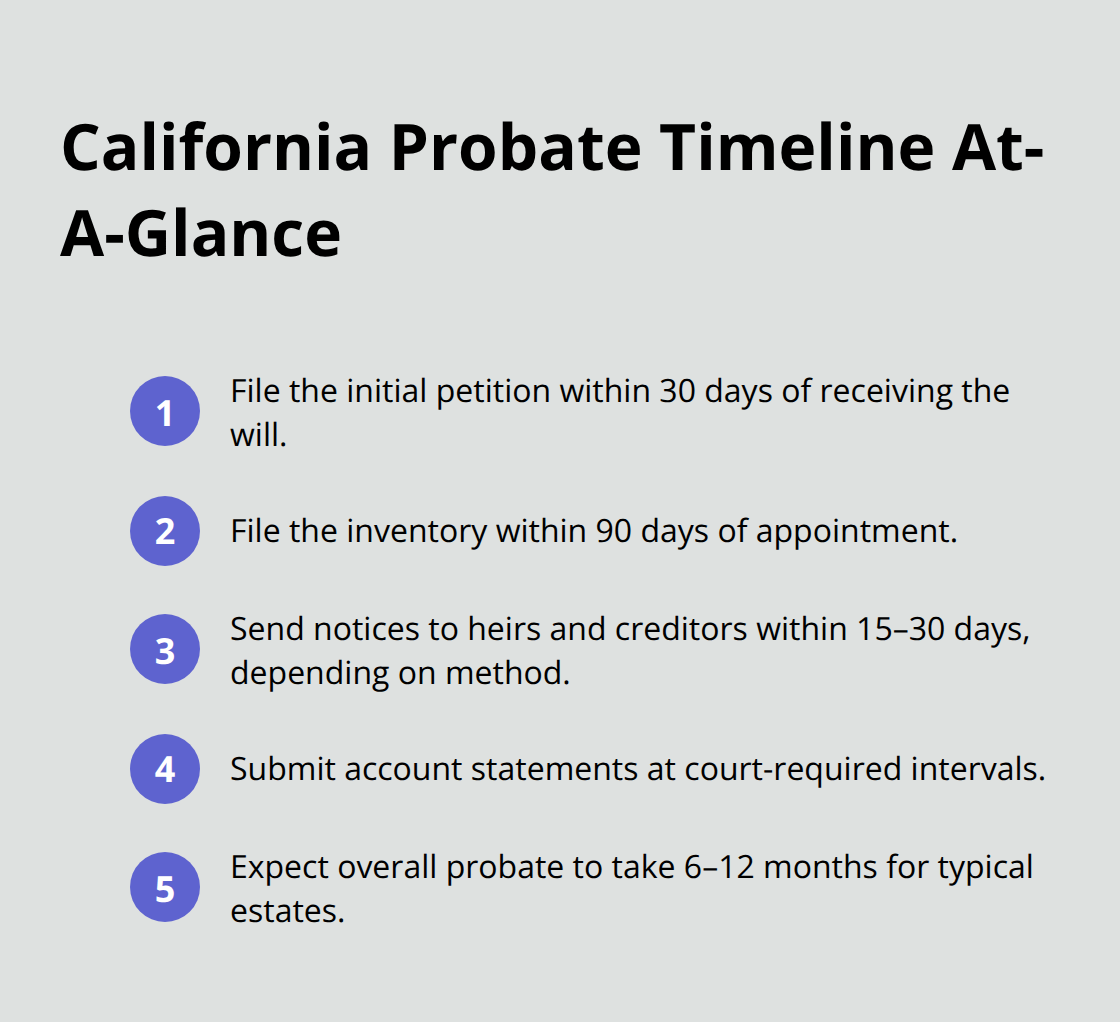
You must notify all heirs and creditors within specific windows, usually 15 to 30 days depending on the notification type. The probate court monitors your actions throughout this process, which provides protection but also demands documentation for everything-receipts, appraisals, sale agreements, and distribution records all need to be filed.
Managing Personal Liability Exposure
Personal liability keeps many executors awake at night. Beneficiaries can sue you if they believe you mismanaged assets or failed in your duties. Creditors can pursue you if you distribute assets before paying valid claims. You can limit this exposure through proper procedures.
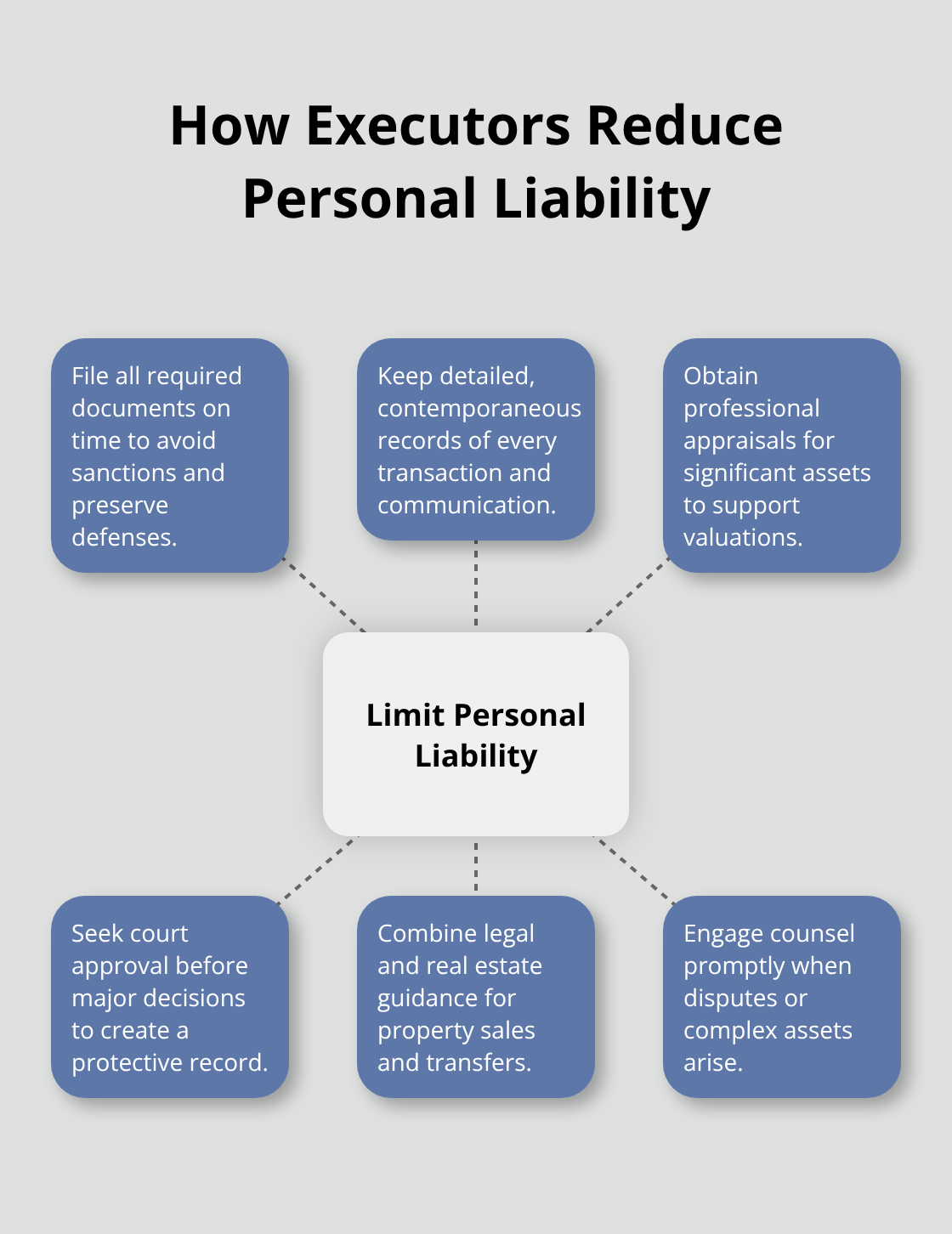
File all required documents on time, keep detailed records of every transaction, get professional appraisals for significant assets, and obtain court approval before making major decisions. When the estate involves real property, having professional guidance that combines legal knowledge with real estate understanding prevents costly delays and miscommunications during property sales or transfers. When complications arise-business interests, tax disputes, or contested claims-professional support protects you personally and helps beneficiaries receive what they’re entitled to.
How to Track Down Assets and Pay What the Estate Owes
Locate Every Asset Within Your First 60 Days
The first 60 days after probate opens determine whether administration runs smoothly or derails into confusion. Obtain a certified copy of the death certificate and file it with the court, then immediately contact the deceased’s financial institutions, employer, and insurance companies. Call directly rather than waiting for statements to arrive, and identify yourself as the executor. Request account balances, beneficiary designations, and outstanding loans or obligations. The National Foundation for Credit Counseling reports that 40% of estates face delays because executors fail to identify hidden accounts or debts within the first quarter of administration.
Create a Complete Asset Inventory
Build a spreadsheet listing every asset with account numbers, current balances, and contact information for each institution. Include bank accounts, investment accounts, retirement plans, real property, vehicles, and business interests. Request certified appraisals for real estate, vehicles worth over $5,000, and any collectibles or artwork-these appraisals become your documentation if beneficiaries later question valuations. For California estates subject to probate court oversight, you must file an inventory within 90 days, so completing this asset search within 60 days gives you a buffer.
Identify and Document All Debts
Search for debts simultaneously by reviewing the deceased’s mail, checking credit reports through all three bureaus, and contacting known creditors directly. California law requires you to publish a notice to creditors in a local newspaper, which typically costs $300 to $500 and provides a four-month window for creditors to file claims. This publication creates a legal barrier-creditors who miss the deadline generally cannot pursue the estate later. However, known creditors like mortgage lenders or credit card companies must receive personal notice regardless of publication.
Pay Obligations in the Correct Order
You must pay legitimate claims before distributing anything to beneficiaries. Pay estate administration costs first, then outstanding taxes and debts, then distribute remaining assets. If the estate lacks sufficient funds to pay all creditors in full, California follows a priority system: administration costs and taxes come first, then funeral expenses, then family allowances, then general creditors. Document every payment with receipts and file accounting statements with the probate court showing what came in and what went out.
Handle Real Property Sales Strategically
When real property needs to be sold to generate funds for debts or distributions, the combination of legal knowledge with real estate understanding prevents the miscommunications and delays that commonly plague property transactions during probate administration. This systematic approach protects you from personal liability while ensuring beneficiaries eventually receive what remains after legitimate obligations are satisfied. As complications emerge-contested valuations, tax questions, or property sale timing issues-the next section addresses the mistakes that derail many executors and how to sidestep them entirely.
Common Probate Mistakes Executors Make and How to Avoid Them
Failing to Track Assets Beyond the Initial Inventory
Asset inventory is not a one-time task that you complete within 90 days and forget. Many executors treat the initial list as a box to check for court requirements, then stop monitoring account values, pending sales, or newly discovered accounts that surface months later. This approach creates two serious problems: beneficiaries receive inaccurate distribution amounts, and you face personal liability if someone questions your final accounting. Update your asset spreadsheet monthly instead of annually. Record market value changes for investment accounts, note property sale progress, and document any new debts or claims that arrive. Keep receipts for every transaction in a dedicated folder-digital or physical-organized by category. California probate courts require detailed accountings, and incomplete documentation gives beneficiaries grounds to challenge your administration or pursue you personally for perceived mismanagement.
Missing California’s Strict Deadlines
California probate law imposes rigid timelines that executors cannot ignore. You must file an initial petition within 30 days of receiving the will, complete inventory filing within 90 days, and notify creditors within 15 to 30 days depending on the notification method. Missing any single deadline triggers court sanctions, forces you to post a bond, or allows creditors to pursue claims that should have been barred. Many executors miss these windows because they assume probate moves at a predictable pace or because they attempt filings alone without professional support. The state’s court system monitors compliance strictly, and delays compound quickly once you fall behind schedule.
Refusing Professional Help When Complications Arise
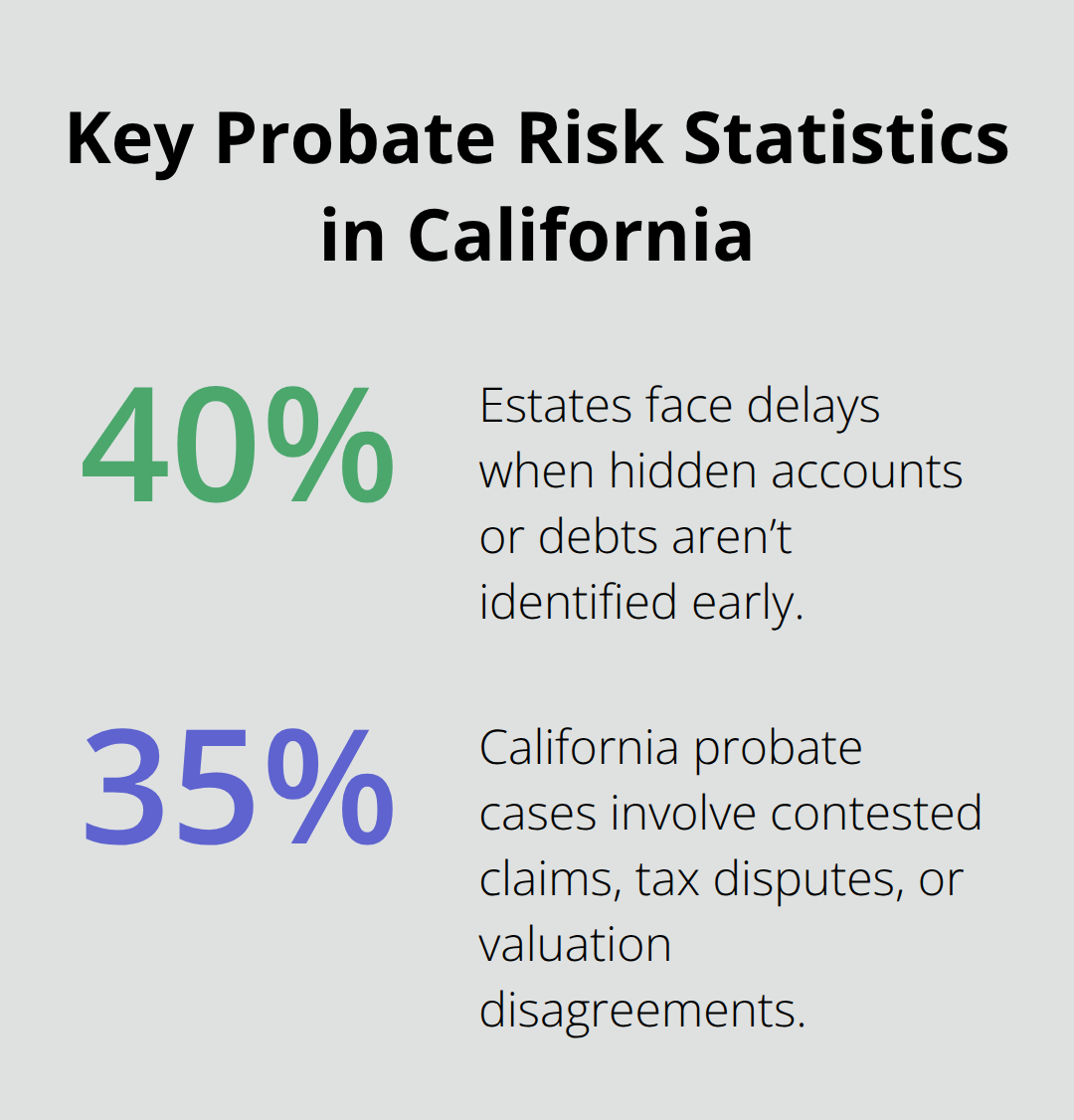
Attempting to navigate complex estates alone costs significantly more in time, stress, and potential liability than hiring an attorney from the start. Roughly 35% of California probate cases involve contested claims, tax disputes, or property valuation disagreements according to state court administration data. When the estate includes real property, business interests, multiple properties across states, or any indication of family conflict, professional support protects you immediately.
An attorney who also holds real estate licensure (as does Ms. Desai at Law Offices of Roshni T. Desai) streamlines property transactions and prevents the miscommunications that commonly plague probate sales. This combination of legal knowledge with real estate understanding reduces costs, eliminates delays, and protects your personal liability while guaranteeing accurate, timely administration.
Final Thoughts
Serving as an executor demands attention to detail, strict adherence to California’s timelines, and honest assessment of what you can handle alone versus what requires professional support. The executors probate guidance throughout this post emphasizes one consistent theme: proper procedures protect you personally while guaranteeing beneficiaries receive accurate distributions. Track assets monthly, file documents on time, document every transaction, and communicate clearly with all parties involved.
Simple estates with minimal assets, no real property, and cooperative beneficiaries may proceed without professional help. However, estates involving real property sales, business interests, multiple properties across states, tax disputes, or any family conflict demand legal guidance (attempting these situations alone exposes you to personal liability and creates delays that frustrate beneficiaries). We at Law Offices of Roshni T. Desai combine legal knowledge with real estate licensure, which streamlines property transactions and eliminates the miscommunications that commonly plague probate sales.
Ms. Desai brings over 25 years of experience handling wills, trusts, powers of attorney, and probate administration across Southern California. The firm offers free consultations with flexible scheduling at your home or office, making it simple to discuss your specific situation without pressure or commitment. Contact Law Offices of Roshni T. Desai to discuss your estate administration needs and determine the right path forward.