




Family Trust Planning Strategies: Protecting Loved Ones and Legacy
Most families think a will is enough to protect their legacy. It isn’t.
At Law Offices of Roshni T. Desai, we’ve seen how family trust planning strategies prevent costly mistakes, avoid probate delays, and keep your affairs private. A trust gives you control over how your assets flow to loved ones-both now and long after you’re gone. This guide shows you which trusts work best for your situation and how to avoid the pitfalls that derail so many families.
Why a Trust Beats a Will for Your Family
Probate Costs Time and Money Your Family Cannot Afford
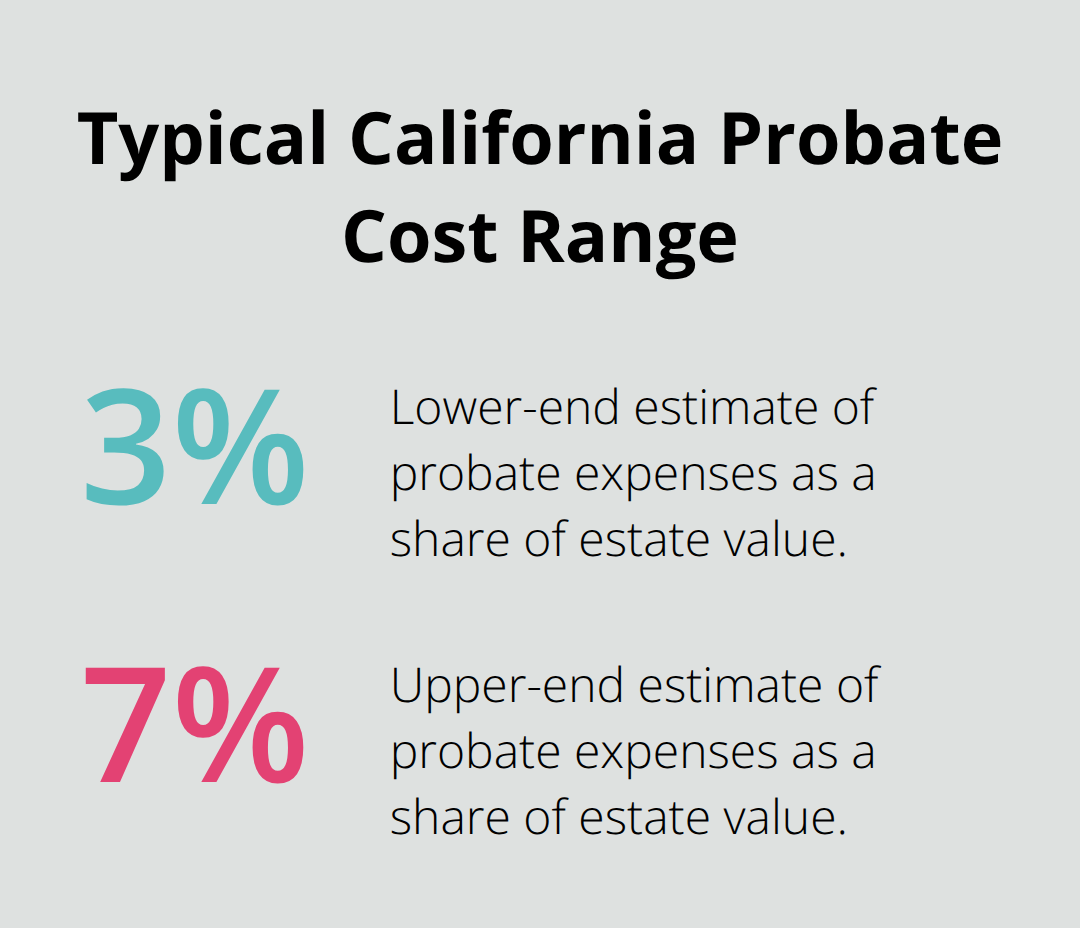
Probate takes time, costs money, and exposes your family’s financial details to public record. When you leave assets through a will alone, your heirs wait months or even years while courts validate the document, assess taxes, and distribute property. In California, probate typically takes 12 to 18 months minimum, and families often pay 3 to 7 percent of the estate’s value in court fees, attorney costs, and administrative expenses. A revocable living trust sidesteps this entirely.
Assets held in the trust transfer directly to beneficiaries outside probate, meaning your family gains access to money and property within weeks rather than years.
Privacy Protects Your Family’s Financial Details
Probate is a public process, which means anyone can access court documents listing your assets, debts, and who inherits what. A trust keeps these details confidential. Your beneficiaries receive their inheritance without neighbors, acquaintances, or distant relatives knowing the specifics of your estate. This privacy advantage alone makes trusts worth the upfront planning effort.
Trusts Provide Structure That Wills Cannot Match
A trust does something wills cannot: it provides structure for managing assets long after death. With a will, assets pass outright to adult beneficiaries at a set time, which creates risk. If your child receives a large inheritance at age 25 and lacks financial discipline, that money can vanish. A trust lets you set conditions. You can direct the trustee to distribute funds gradually-perhaps 25 percent at age 30, another 25 percent at 35, and the remainder at 40.
Protect Assets from Creditors and Poor Decisions
A trust also protects assets from a beneficiary’s creditors, divorce proceedings, or poor financial decisions. If a beneficiary has special needs, a supplemental trust structured correctly can provide support without disqualifying them from government benefits like Medicaid or SSI. For families with blended marriages, a trust prevents stepchildren from inheriting assets you intended for biological children, and it gives you authority to decide how much each side of the family receives. This level of control is impossible with a will alone.
Understanding these advantages sets the stage for selecting the right trust type for your specific family situation and goals.
Key Types of Family Trusts and When to Use Them
Revocable Living Trusts: Flexibility During Your Lifetime
A revocable living trust gives you complete control while you’re alive. You can modify it, add assets, remove beneficiaries, or dissolve it entirely whenever circumstances shift. You fund it with your home, bank accounts, investment portfolios, and other property. Those assets transfer to your beneficiaries outside probate when you pass. This flexibility makes revocable trusts ideal if your situation changes frequently, you remarry, or you’re uncertain about long-term distribution plans. However, revocable trusts offer no tax savings or creditor protection during your lifetime because the IRS treats them as your personal property.
Irrevocable Trusts: Permanent Control for Tax and Asset Protection
An irrevocable trust cannot be modified once created-you surrender control permanently. This surrender is precisely what makes it powerful. Assets placed in an irrevocable trust leave your taxable estate, which means they don’t count toward your federal estate tax exemption. For 2026, that exemption stands at $15 million per person or $30 million for married couples. If your estate exceeds those amounts, an irrevocable trust can save your family hundreds of thousands in estate taxes. Irrevocable trusts also shield assets from creditors because you no longer own them legally-the trust does. This protection appeals to business owners, professionals facing liability exposure, or families with significant wealth.
Specialized Trusts for Unique Family Circumstances
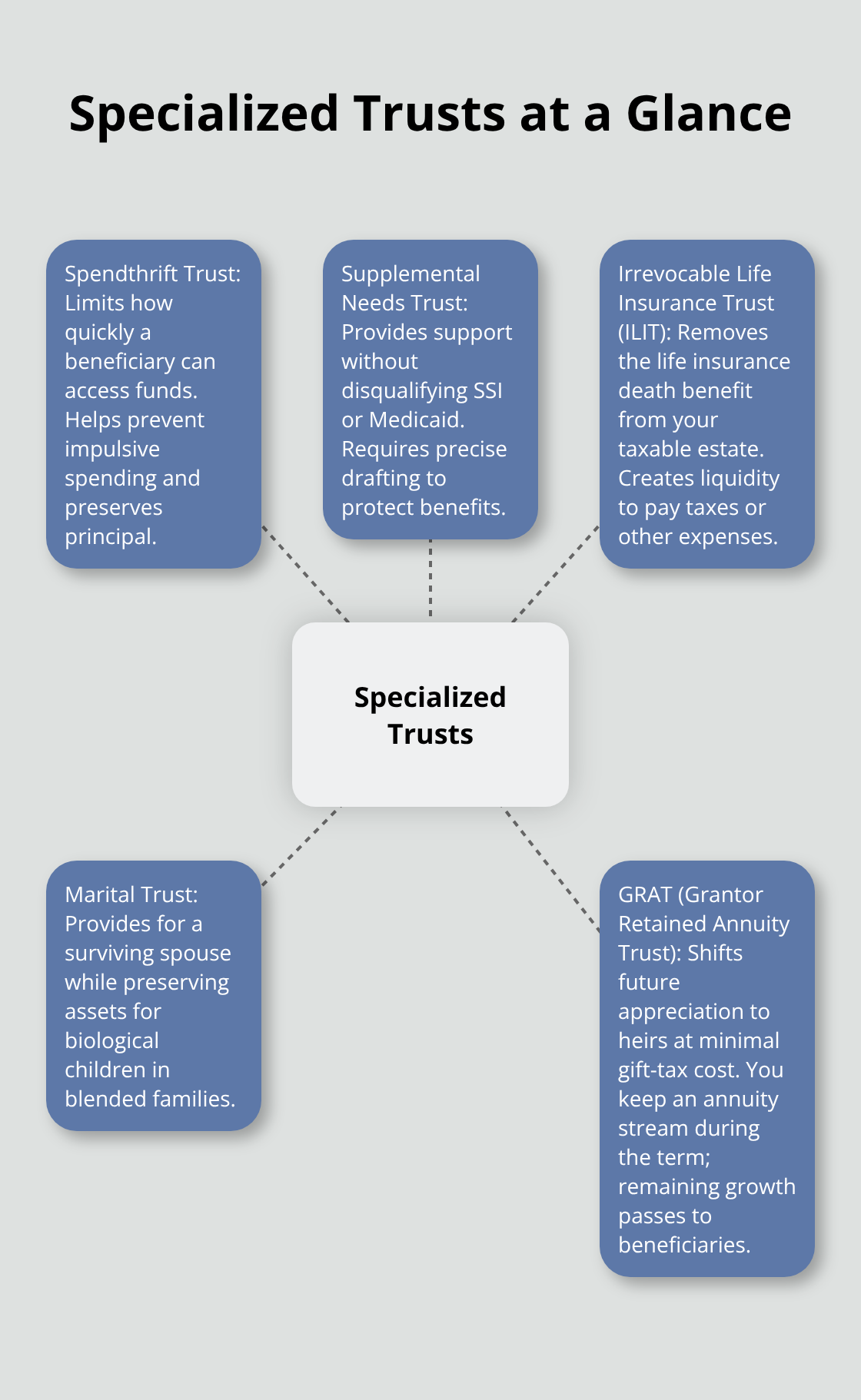
Specialized trusts address situations revocable and irrevocable structures alone cannot solve. A spendthrift trust restricts how quickly a beneficiary can access funds, which prevents a young heir from squandering an inheritance on poor decisions. A supplemental needs trust supports a disabled family member without disqualifying them from SSI or Medicaid, provided it’s drafted correctly. Life insurance trusts remove the death benefit from your taxable estate, ensuring those proceeds fund estate taxes or liquidity needs rather than inflating tax liability. For blended families, a marital trust protects assets you intend for biological children while still providing for a surviving spouse. For families with concentrated assets in a family business or appreciated stock, a grantor retained annuity trust transfers future growth to the next generation at minimal tax cost-you retain an income stream during the trust term, then remaining appreciation passes to beneficiaries tax-free.
Matching the Right Trust to Your Actual Situation
The wrong trust choice can cost your family money or create unintended consequences. Selecting the right structure depends on whether you prioritize tax reduction, creditor protection, control over distributions, or addressing special circumstances. Your family’s specific goals-not theoretical best practices-determine which trust serves your situation. This foundation of understanding prepares you to recognize the common mistakes that derail trust planning and how to avoid them.
Common Mistakes Families Make with Trust Planning
Funding Your Trust Requires Action, Not Just Documents
You draft a revocable living trust, sign all the documents, pay the fees, and then leave your assets outside it. Your home deed still reads your individual name. Your brokerage account beneficiary designation points to your estate instead of the trust. Your bank accounts remain titled in your personal name. Those assets pass through probate because they were never funded into the trust. The IRS and California state law recognize only assets titled in the trust’s name as trust property. If your home deed does not transfer into the trust, probate court controls its transfer when you die. If your brokerage account beneficiary designation does not name the trust, that account goes through probate too.
Funding requires concrete action: retitling your home through a new deed, contacting banks to change account registration, and updating beneficiary forms on retirement accounts and life insurance policies. Many families spend thousands on trust preparation and then abandon the funding process because it feels tedious.

This is the difference between a trust that works and a trust that sits on a shelf while your family pays probate costs anyway.
Life Changes Demand Trust Updates Every Few Years
You treat your trust like a set-it-and-forget-it document, but life changes, tax law changes, and your trust must change with it. If you married, divorced, had children, or experienced a significant shift in wealth, your trust likely no longer reflects your actual wishes. The federal estate tax exemption stands at $15 million per person for 2026 according to the IRS, but it will drop to roughly $7 million per person in 2027 unless Congress acts. If your plan relied on outdated documents or outdated tax strategies, you could face unexpected tax bills your family never anticipated.
States also update their laws. If you moved from one state to another, your trust may not comply with your new state’s requirements for trustee powers or distribution rules. Review your trust every three to five years, and immediately after any major life event like remarriage, inheritance, or business sale. This regular attention prevents your plan from becoming obsolete.
Selecting the Right Trustee Matters More Than You Think
You name your oldest child because they’re responsible, but they live overseas and lack financial knowledge. You name your best friend, but twenty years later they’re battling health problems and cannot manage complex investments or handle family conflict. A trustee needs maturity, financial literacy, availability, and the ability to remain neutral when family tensions arise (these qualities rarely coexist in one person, which is why many families struggle with this choice).
If your original choice no longer fits those criteria, update your trust documents now rather than forcing your family to petition the court to remove an unsuitable trustee after your death. That court process costs money and creates family discord that your trust was designed to prevent. A trustee who cannot handle the role becomes a liability, not an asset, to your family’s legacy.
Final Thoughts
A strong family trust planning strategy rests on three foundations: selecting the right trust structure for your goals, funding it completely, and reviewing it regularly as your life changes. Revocable trusts offer flexibility during your lifetime, while irrevocable trusts provide tax savings and creditor protection. Specialized trusts address unique situations like special needs or blended families, and the best structure means nothing if assets remain outside it or if tax laws shift and your plan becomes outdated.
Family trust planning strategies work because they give you control now and protect your loved ones later. They prevent probate delays that cost your family months or years, keep your financial details private, and let you set conditions on how and when beneficiaries receive their inheritance. They shield assets from creditors and poor decisions while reflecting your actual values and intentions rather than leaving those decisions to state law or court proceedings.
We at Law Offices of Roshni T. Desai handle wills, living and irrevocable trusts, powers of attorney, trust and probate administration, and small business succession across Southern California. Our dual licensure as an attorney and real estate professional streamlines estate-related property transactions to reduce costs and delays. Contact us today to start protecting what matters most.