




Heggstad Petition California: Bringing Missed Assets Into a Trust
A Heggstad petition in California can rescue a family’s estate plan when a loved one created a living trust but never quite finished moving every asset into it. It happens more often than people expect. A house, a rental property, or an account was meant to be part of the trust, yet when the trust maker dies, the title still shows their individual name. Without a solution, that asset might have to go through probate, which is exactly what the trust was designed to avoid.
At Law Offices of Roshni T. Desai, we help families throughout Orange County and Southern California complete trust administration with care, so you can move forward with confidence. This guide explains what a Heggstad petition actually is, how the petition process works under the California Probate Code, and the mistakes that most often slow down or derail these requests.
What a Heggstad Petition Actually Is in California
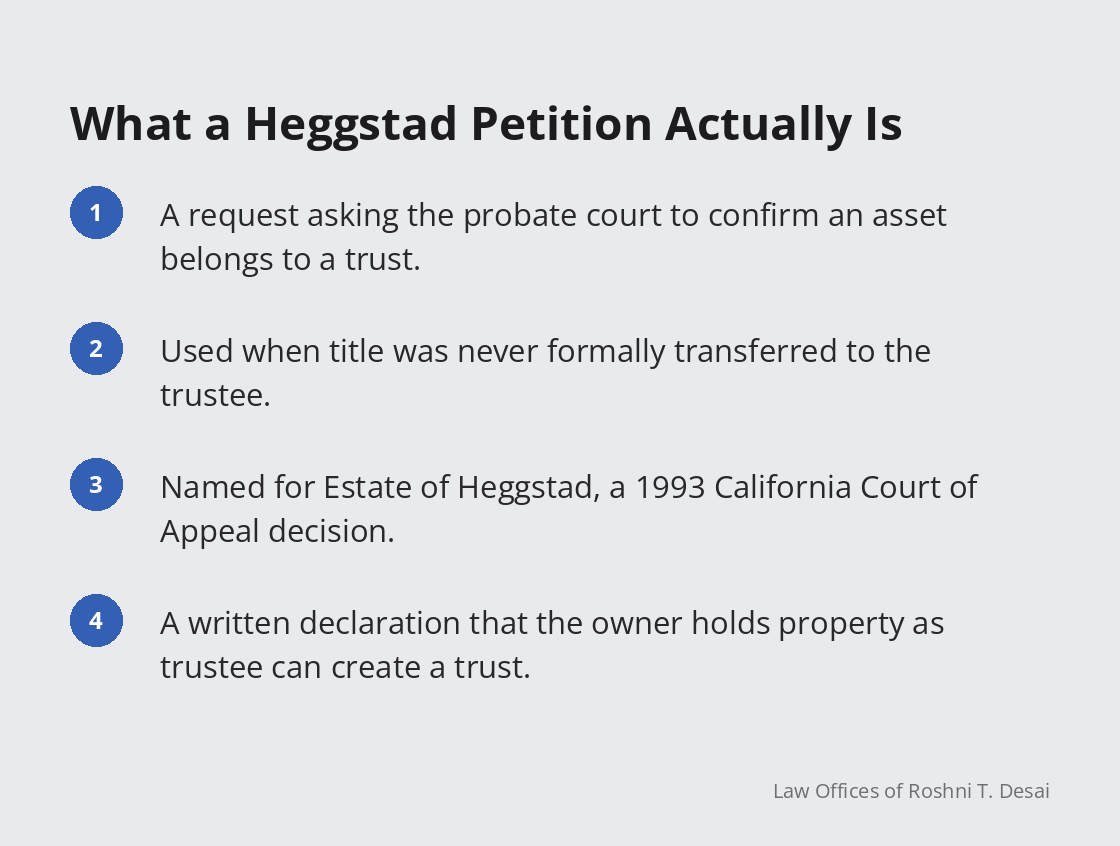
A Heggstad petition is a request asking the probate court to confirm that a particular asset belongs to a trust, even though the formal title was never transferred to the trustee. The name comes from a California appellate decision, and the procedure is carried out today through a part of the Probate Code that lets courts resolve disputes and questions about who owns property connected to a trust or estate.
Why Assets Get Left Out of a Living Trust
Signing a living trust is only the first step. To work as intended, the trust usually needs to be funded, which means retitling assets so the trustee holds them. Life gets busy, and it is common for someone to sign the trust, list their property on a schedule attached to it, and then never record a new deed or update an account. Sometimes a property is purchased after the trust is signed and titled in the person’s own name. Other times, a simple drafting error describes an asset incorrectly. In each situation, the trust maker clearly intended the asset to be part of the trust, but the paperwork does not show it.
The Case Behind the Name
The petition takes its name from Estate of Heggstad, a 1993 decision of the California Court of Appeal. In that case, the trust maker signed a revocable living trust naming himself as trustee and identified the trust property on an attached document titled schedule A. One property on that schedule remained in his individual name, with no deed transferring it to the trust. After his death, the probate court decided the property belonged to the trust. The Court of Appeal affirmed, holding that the settlor’s written declaration stating that he holds the property as trustee was sufficient to create a revocable living trust in that property.
The Legal Foundation in the Probate Code
Two parts of the California Probate Code support this result. Probate Code section 15200 provides that a trust may be created by a declaration by the owner of property that the owner holds the property as trustee. For real estate, section 15206 adds that a trust in relation to real property is not valid unless it is evidenced by a written instrument signed by the trustee, a written instrument conveying the property signed by the settlor, or operation of law. The procedural tool is Probate Code section 850, which allows a trustee or any interested person to file a petition where the trustee has a claim to real or personal property, title to or possession of which is held by another.
How the Heggstad Petition Process Works in California
A Heggstad petition is a court proceeding, so it follows specific rules about who may file, what must be included, and who must be notified. Understanding these steps helps trustees and families in Orange County and across Southern California set realistic expectations before they begin.
Who May File and What the Petition Must Show
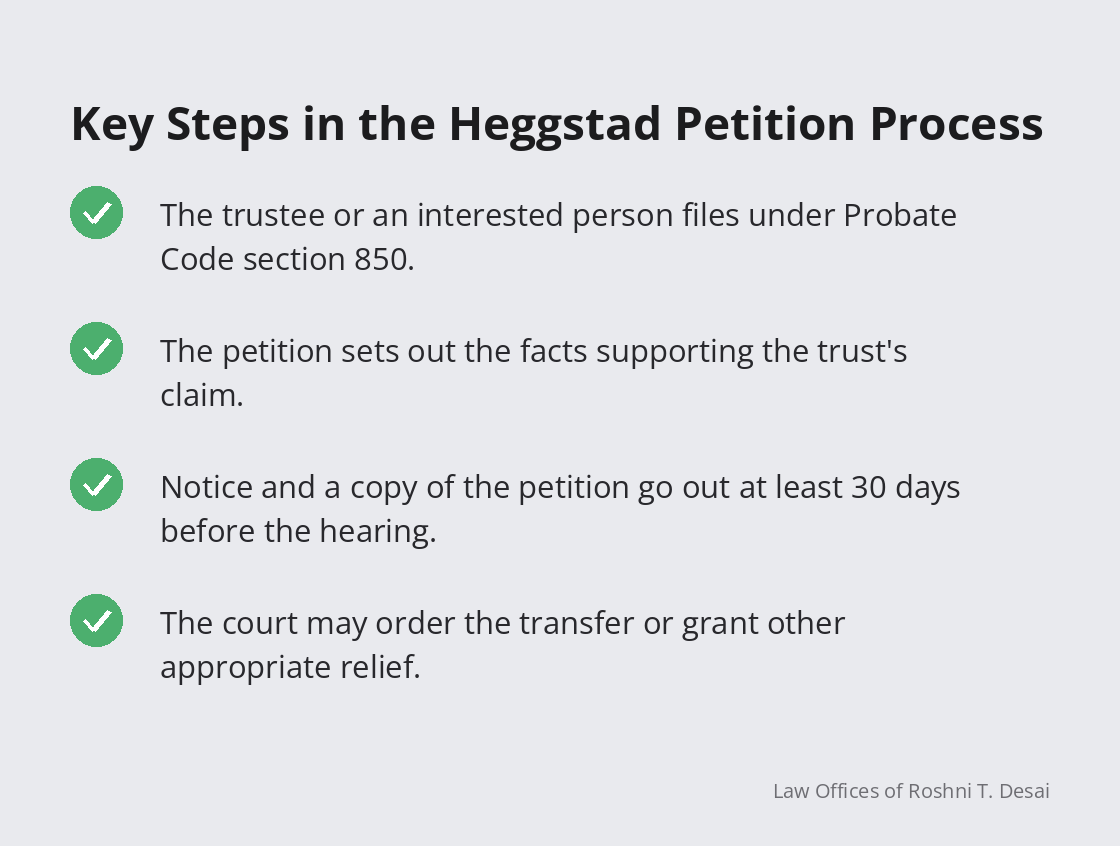
Under Probate Code section 850, the trustee or any interested person may file a petition asking the court to make an order. In the typical Heggstad situation, the successor trustee files because the trust has a claim to property that is still titled in the name of the person who died. Section 850 also requires that the petition set forth the facts upon which the claim is based. In practice, that usually means explaining how the trust was created, how the asset was identified in the trust documents, and why the asset should be treated as trust property rather than part of the probate estate.
Giving Proper Notice of the Hearing
Notice is one of the most technical parts of the process. Probate Code section 851 requires that, at least 30 days before the hearing, the petitioner cause notice of the hearing and a copy of the petition to be served on the trustee and on each person claiming an interest in, or having title to or possession of, the property, in the manner provided in the Code of Civil Procedure. Other interested persons must also receive notice, including the people listed in section 17203 when the matter concerns a trust. The notice must describe the property; for real property, it must state the street address or, if there is none, a description of its location and the assessor’s parcel number. It must also tell interested persons that they may file a response to the petition.
What the Court Order Accomplishes
If the court is satisfied that a transfer or other order should be made, Probate Code section 856 directs the court to make an order authorizing and directing the appropriate person to execute a conveyance or transfer to the person entitled to it, or granting other appropriate relief. Under section 857, the order is prima facie evidence of the correctness of the proceedings, and once the order is entered, the person entitled under it has the right to possess and hold the property as if it had been conveyed according to the terms of the order. For a trustee, that order provides the documentation needed to manage, sell, or distribute the asset as part of trust administration.
Mistakes That Slow Down a Heggstad Petition
Courts look closely at the paperwork behind a Heggstad petition, and avoidable errors can create delays or objections. Paying attention to the following issues can keep the process on track.
Relying on Vague Trust Documents
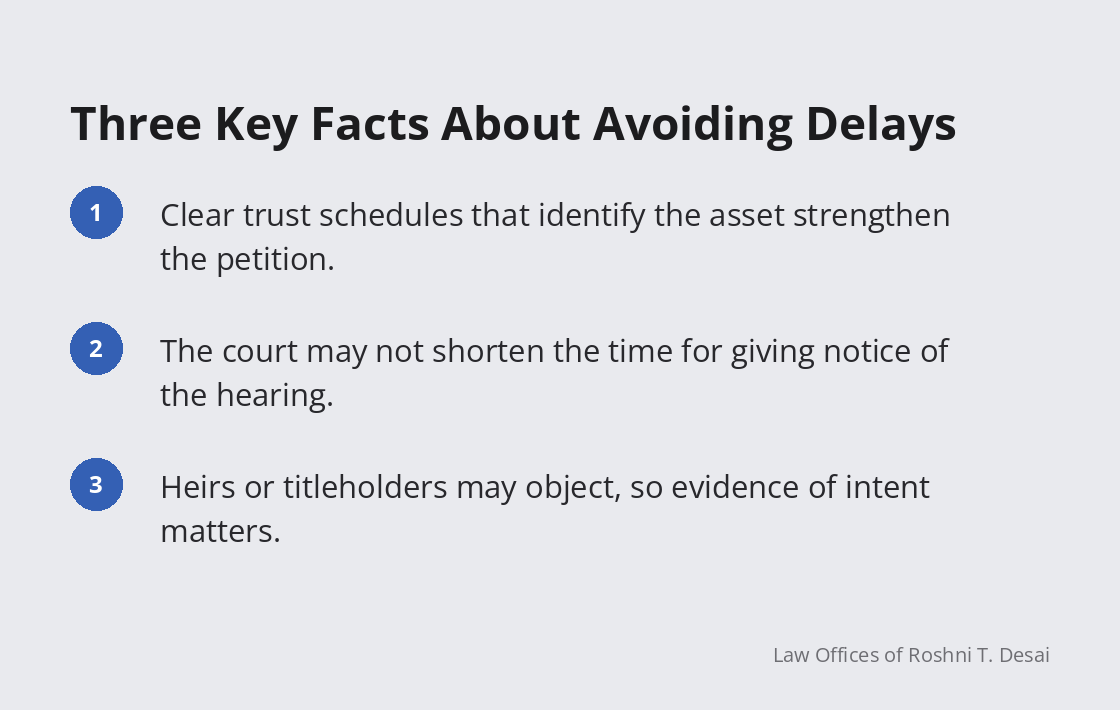
The strength of a Heggstad petition usually depends on how clearly the trust documents identify the asset. In the Heggstad case, the property appeared on a signed schedule attached to the trust, even though it was described imperfectly. When an asset is not mentioned at all, or the trust language only speaks in general terms, the court may have less to work with, and other options, including probate, may need to be considered. Gathering the trust, every schedule, any amendments, and related correspondence early gives a clearer picture of whether a petition is the right path.
Cutting Corners on Notice
Because notice rules are detailed, mistakes here are common. Section 851 states that the court may not shorten the time for giving notice of the hearing, so a missed deadline or an overlooked heir, beneficiary, or titleholder can mean rescheduling the hearing and starting the notice period again. Building a careful list of everyone entitled to notice, and confirming how each person must be served, protects the timeline and helps prevent later challenges.
Overlooking Competing Claims
A Heggstad petition can become contested if someone believes the asset should pass outside the trust. In the Heggstad case itself, another party objected to the petition and appealed the probate court’s order. Heirs who would inherit through probate, a person who holds title, or a beneficiary under a will may have a different view. Anticipating these positions and presenting clear evidence of the trust maker’s intent can make a meaningful difference in how smoothly the matter is resolved.
Waiting Too Long to Act
Some families put off dealing with an asset that was left outside the trust, hoping the issue will sort itself out. While the property remains titled in the name of the person who died, the successor trustee generally cannot manage, sell, or distribute it with the same ease as assets the trust already holds. Delays can also make it harder to locate documents, reach witnesses who remember the trust maker’s intentions, or coordinate with other parts of the administration. Reviewing every asset’s title early in trust administration helps uncover gaps while there is still time to address them in an orderly way, whether through a Heggstad petition or another appropriate option.
Final Thoughts
A Heggstad petition in California gives successor trustees a way to honor a loved one’s plan when an asset was meant to be in the trust but was never formally transferred. Rooted in a 1993 appellate decision and carried out through Probate Code section 850 and the related notice and order provisions, the process can bring an asset into trust administration without opening a full probate for that property.
Every trust and every family is different, and the right approach depends on the documents, the type of asset, and whether anyone is likely to object. You can learn more about how we guide trustees and families through this work on our trust administration attorney in Orange County page.
If you are a successor trustee who discovered an asset left outside the trust, contact Law Offices of Roshni T. Desai to speak with our team. We’ll review the trust documents, explain your options clearly, and help you take the next step with confidence.