




In-Home Trust Administration: Personal Service at Your Doorstep
Trust administration involves managing a deceased person’s assets, paying debts, and distributing property to beneficiaries. It’s a complex process that often overwhelms families during an already difficult time.
We at Law Offices of Roshni T. Desai offer in-home trust administration services that bring professional guidance directly to you. This approach eliminates the stress of office visits while ensuring every detail receives proper attention.
What Trust Administrators Actually Do
The Legal Duties That Bind Trustees
Trust administration demands handling assets, settling debts, filing taxes, and distributing property to beneficiaries-all while following strict legal rules and timelines. A trustee or personal representative holds fiduciary responsibility, meaning they are legally bound to act in beneficiaries’ best interests. This responsibility carries real liability.
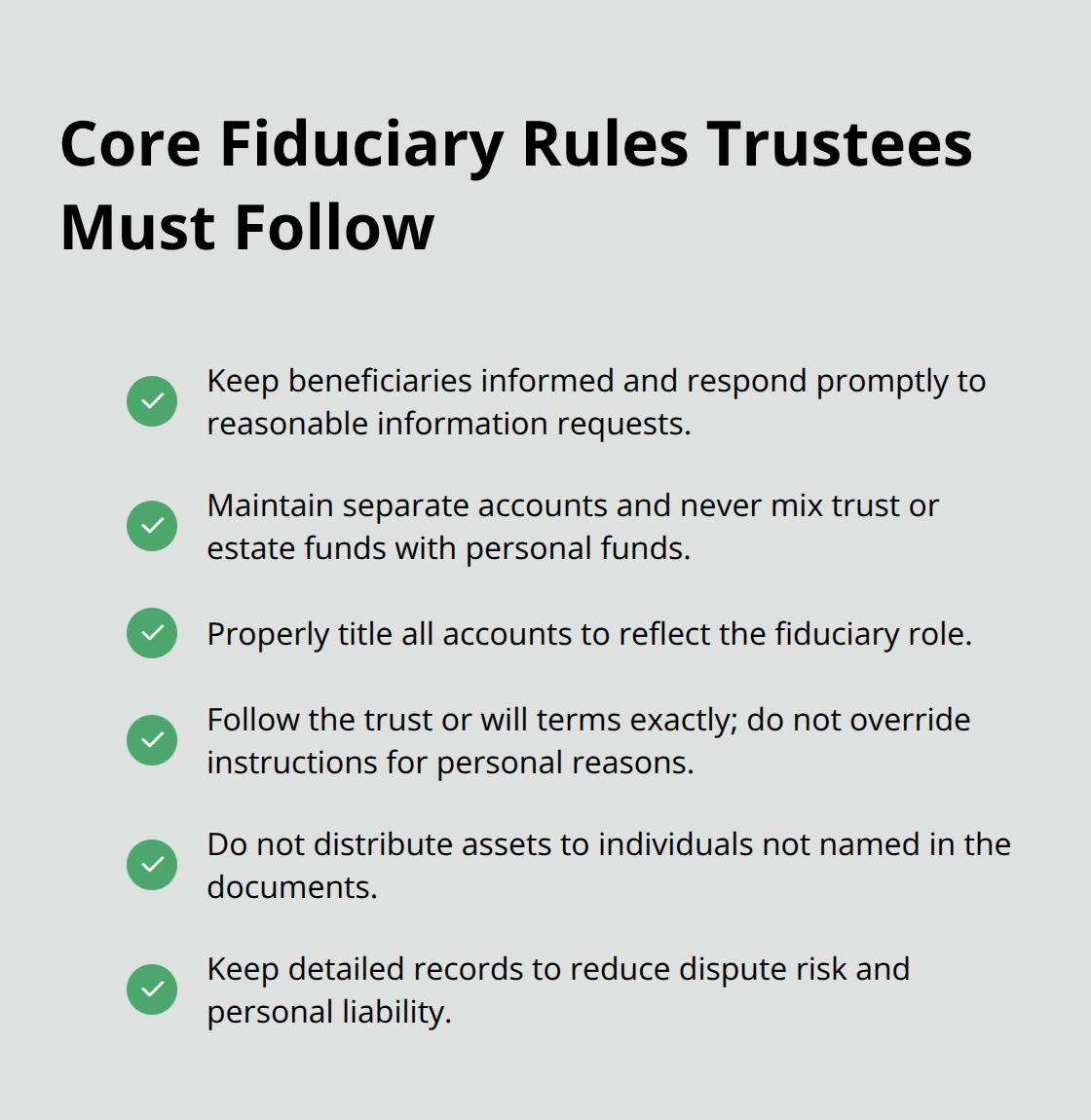
The Massachusetts Uniform Trust Code requires trustees to keep beneficiaries informed and promptly respond to information requests. Failure to communicate creates dispute risk.
A trustee must maintain separate accounts and never mix estate or trust assets with personal funds. Properly title accounts to reflect the fiduciary role (for example, “Mary Smith, Personal Representative of the Estate of Lola Jones”). Trustees cannot override the explicit terms of a will or trust for personal reasons. Distributions to individuals not named in the document create serious problems and legal exposure.
Documentation and Record-Keeping Requirements
Trustees must keep detailed records from day one with an inventory listing each asset and its value. Share this inventory with beneficiaries. Trustees must account for all financial transactions with clear itemization of receipts and disbursements. Missing documentation increases liability significantly.
Professional costs for attorneys, accountants, and appraisers are paid from the estate, not out of pocket. These expenses protect the trust and reduce the risk of costly mistakes later.
When Beneficiary Input Matters Most
Major decisions like real estate sales or significant investments benefit from beneficiary input. Seeking their perspective reduces lawsuits and family conflict. This doesn’t mean beneficiaries control the process-the trustee retains decision-making authority-but transparency builds confidence and prevents disputes.
Why Families Struggle Most
Families often make critical mistakes when managing trust assets themselves. Many don’t understand that co-mingling funds or ignoring beneficiary communication violates fiduciary duty. Others attempt property sales or investments without following the trust document’s instructions. Emotional decisions during grief cloud judgment. The combination of legal complexity, financial responsibility, and family dynamics creates stress that derails proper administration.
These challenges multiply when families lack guidance on what tasks require professional attention and which decisions demand immediate action. Understanding where to turn for support becomes the first step toward protecting the estate and the people who depend on it.
Why In-Home Trust Administration Works Better
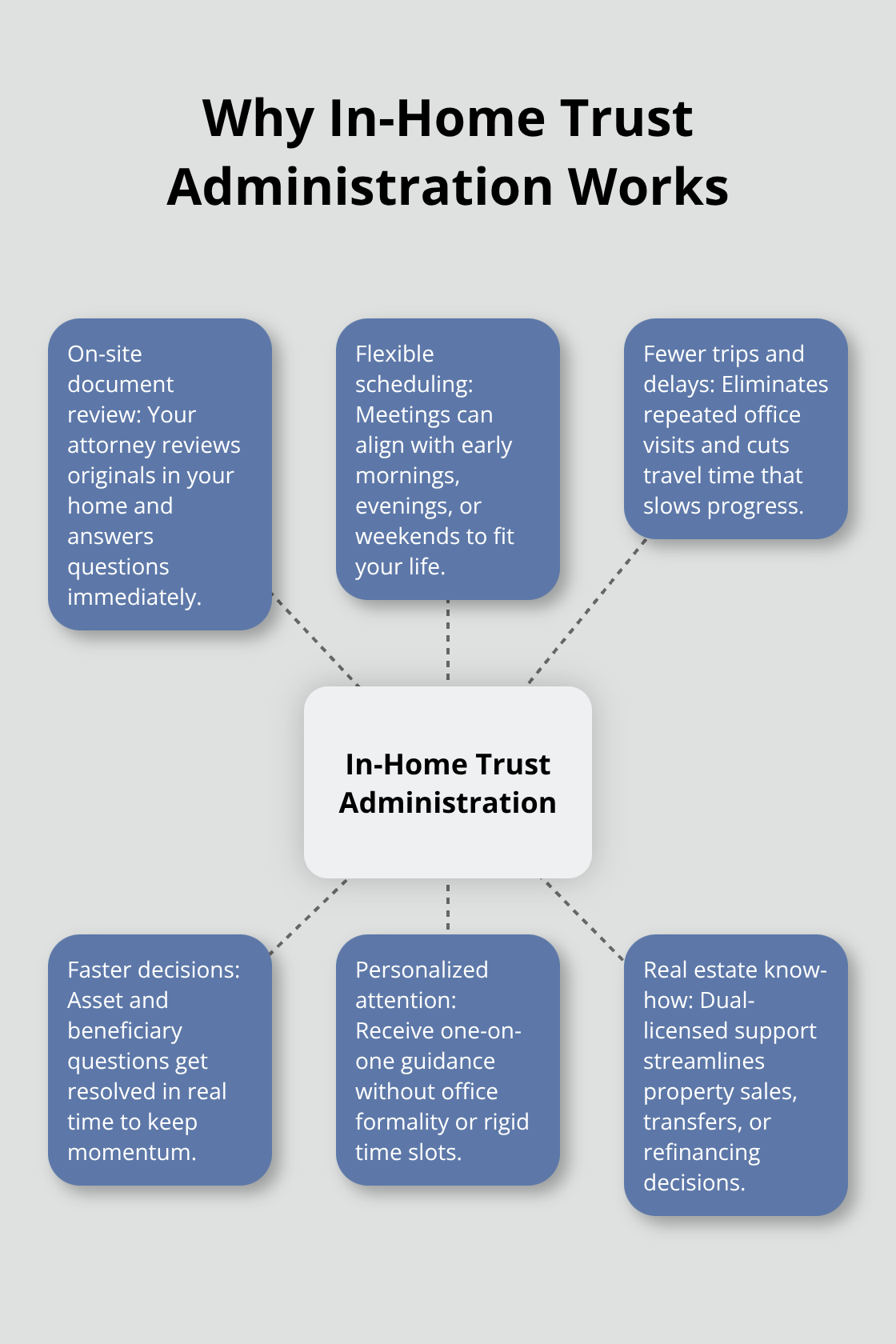
Traveling to an attorney’s office multiple times during trust administration wastes hours you cannot afford to lose. In-home trust administration brings professional guidance directly to your home, eliminating unnecessary trips while keeping you in control of your schedule. This approach matters because trust administration demands regular communication, document review, and decision-making over weeks or months. Meeting in your space allows your attorney to review original documents on-site, answer questions immediately, and work around your availability rather than forcing you to arrange childcare, time off work, or transportation.
The home-service industry has experienced explosive growth globally, driven by demand for convenience and premium personalized experiences, and trust administration follows this same principle. You receive one-on-one professional attention without the formality or time constraints of an office environment.
Direct Access to Documents and Decisions
Keeping original trust documents, asset statements, and beneficiary contact information scattered across your home creates friction during administration. In-home meetings allow your attorney to help you organize these materials on-site, creating a clear inventory system you can reference independently. This eliminates the need to gather everything before an office appointment or email sensitive documents back and forth. An attorney with dual licensure as both a legal professional and real estate specialist streamlines trust-related property decisions immediately, reducing the back-and-forth communication that typically delays estate sales or transfers. When a trustee needs to decide whether to sell property, refinance, or distribute real estate to a beneficiary, having someone who understands both the legal requirements and market realities prevents costly delays and miscommunications with real estate professionals.
Scheduling That Respects Your Reality
Trust administration often coincides with grief, work pressures, and family obligations. Flexible scheduling means you meet with your attorney during early mornings, evenings, or weekends rather than taking time from your job or caregiving responsibilities. This flexibility reduces the stress of juggling multiple demands while managing complex financial and legal matters. Many families appreciate the ability to have beneficiaries present during certain meetings without coordinating office space or formal appointment slots, creating a more transparent and collaborative process that reduces misunderstandings later.
How In-Home Meetings Accelerate Progress
In-home administration accelerates trust settlement because your attorney works within your environment rather than forcing you to adapt to office schedules. You avoid the delays that come from scheduling conflicts, travel time, and the need to prepare materials in advance. When questions arise about asset valuations, beneficiary concerns, or property decisions, your attorney addresses them immediately instead of waiting for follow-up emails or phone calls. This direct engagement means decisions move forward faster, reducing the months that trust administration typically requires. The combination of flexible access, organized documentation, and immediate problem-solving creates momentum that keeps the process on track.
What Comes Next in Your Administration
With your schedule protected and your documents organized, the actual trust administration tasks-inventory management, beneficiary notifications, and financial accounting-proceed with clarity and confidence. Understanding what these tasks involve and how they protect your interests sets the foundation for smooth administration.
What Happens to Assets, Beneficiaries, and Taxes During Administration
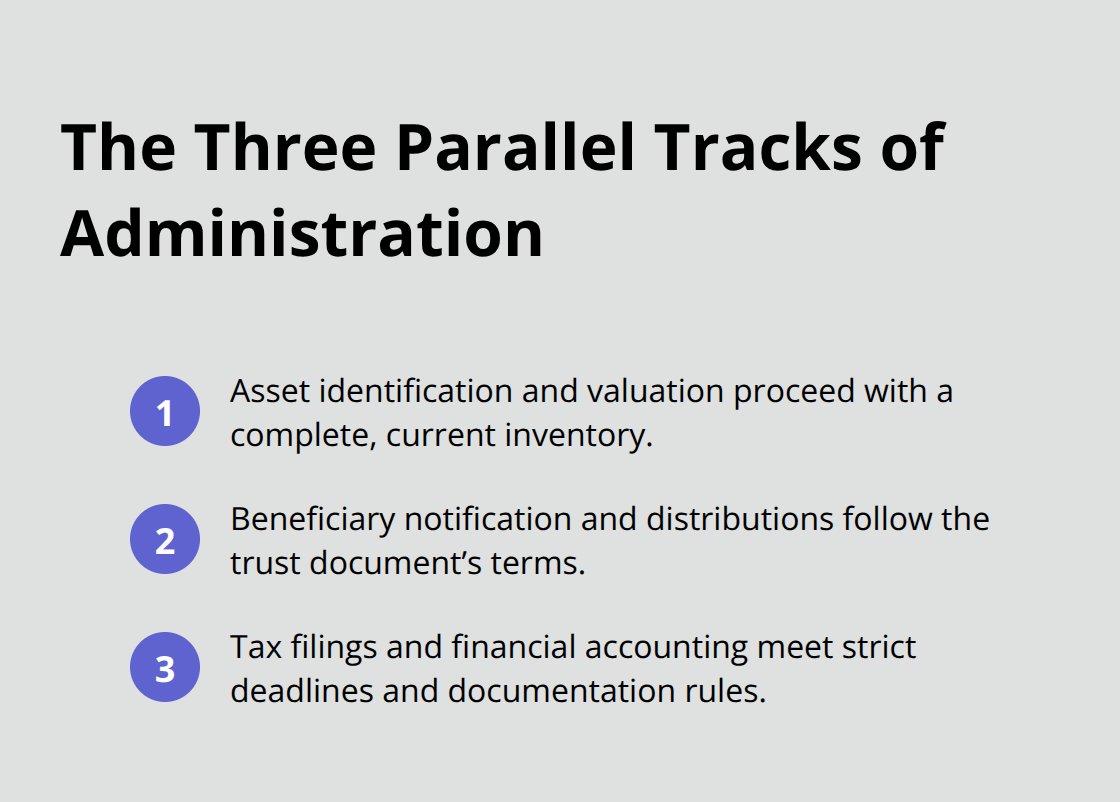
Trust administration moves forward on three parallel tracks that must progress simultaneously without errors. Each track demands attention to detail and clear documentation.
Identifying and Valuing Every Asset
The first track is asset identification and valuation. You need a complete inventory of everything the trust owns-real estate, bank accounts, investment portfolios, vehicles, jewelry, art, and business interests. Each asset requires current market valuation. Real estate demands an appraisal or comparative market analysis. Investment accounts require statements as of the date of death. Personal property needs research through comparable sales or professional appraisals.
Many families underestimate this work. A trustee who skips proper valuation creates liability because beneficiaries have no way to verify they received fair treatment. The inventory document becomes your protection and theirs. Share it with beneficiaries within a reasonable timeframe-waiting months signals disorganization and invites disputes.
Maintaining separate trust accounts during this process is non-negotiable. Money from the deceased’s accounts must flow into accounts titled in the trust’s name, never mixed with your personal funds. This separation protects both the estate and you from audit complications or accusations of self-dealing.
Notifying Beneficiaries and Making Distributions
The second track involves notifying beneficiaries and making distributions according to the trust document’s terms. Trustees must provide beneficiaries with information promptly and respond to reasonable requests. Vague communication creates conflict.
Send beneficiaries a written statement showing what assets exist, their values, and the timeline for distribution. Explain which expenses the estate will pay before distributions occur-attorney fees, accounting costs, property maintenance, tax preparation. If a beneficiary will receive real estate, discuss this early so they understand the process and timeline. If distributions will be delayed pending property sales or investment liquidation, explain why.
Clear communication prevents beneficiaries from assuming you’re hiding assets or mismanaging funds. Transparency at this stage eliminates misunderstandings that could lead to disputes later.
Managing Tax Filings and Financial Records
The third track is tax and financial accounting. Depending on the trust’s size and complexity, you may need to file a federal estate tax return, state estate tax returns, income tax returns for the trust itself, and final income tax returns for the deceased. These filings have strict deadlines. Missing them creates penalties and interest charges paid from estate assets.
A trustee must maintain detailed records of every receipt and disbursement-interest earned, dividends received, professional fees paid, property maintenance costs, distribution checks sent to beneficiaries. This accounting proves you fulfilled your fiduciary duty. Without it, beneficiaries can challenge your administration years later.
Coordinating All Three Tracks
These three tracks intersect constantly. Asset valuations affect tax calculations. Tax obligations determine what funds remain for distribution. Beneficiary communications must reference both asset values and tax timelines. Professional guidance helps you coordinate these elements so nothing falls through the cracks and beneficiaries receive clear documentation of how their inheritance was managed.
Final Thoughts
In-home trust administration eliminates the friction that typically delays estate settlements and creates family conflict. Your attorney reviews documents on-site, answers questions immediately, and works around your schedule rather than forcing you to arrange time off work or coordinate transportation. This direct access accelerates progress across all three tracks of administration-asset identification, beneficiary communication, and tax filing-while preventing the miscommunications that usually extend trust settlement by months.
Transparency built into in-home meetings protects everyone involved. Beneficiaries witness that assets receive careful management, records stay organized, and decisions follow the trust document’s terms. This visibility prevents disputes and builds confidence during an already stressful time. When your trustee holds dual licensure as both attorney and real estate professional, property decisions move forward without the delays that typically complicate sales or transfers.
We at Law Offices of Roshni T. Desai provide personalized trust administration services across Southern California with flexible home or office visits. Contact us to schedule your consultation and begin settling your trust with confidence and clarity.